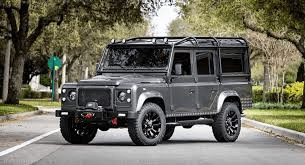
Ok, so maybe we can’t all own an up-armored Land Rover. Well, I’ve got one friend who has one but he’s the exception. My other friend, Ron Moeller (Deputy Assistant Secretary of War) has a pretty sweet bug-out truck, but that’s mostly classified. Since we can’t all match their style, let’s talk about some things we can do to make our own vehicles a little more ready.
We spend a lot of time in our cars. Since we can’t really avoid that, let’s make our cars a little better for preparedness. Having ridden in vehicles in collapsed societies, I can offer some tips here. As a detail leader, part of the role was making sure everything we might need was in place.
While we can’t really harden our vehicle to Mad Max standards, we can take precautions. The first step is a full sized spare tire. Sure, a regular spare tire is “good enough”, but they are meant for limited distances at limited speed. Investing in a full sized spare on a rim can you back to full speed and range quickly. They’re also far more puncture resistant. Remember the movie Roadhouse? What was the first thing Patrick Swayze bought? FULL SIZED SPARES. He knew he was headed for a period of civil strife – so are you.

Ensure that your car is well-maintained. Get your oil changes done. Make sure your brakes are sound. Replace the tires when they wear out and make sure you rotate them when you get an oil change. I know these things sound simple, but you’d be surprised at the number of people in “preparedness” whose cars are barely running. Maintenance is preparedness. Heck, I need brakes right now because I put it off too long.
We already know that I recommend filling up daily; I’d like to take this a step further. At home, try to maintain a full tank worth of gasoline in cans for each car. Yes, this means mutliple fuel cans, but think back to the Continental Pipeline issue. Keeping yourself out of the dangerous and long gas lines can be a life saver. The gas station lines during the Iraq invasion were infamous, with several shootings because people cut in line (note: security contractors cut in line too, but they were better armed and paid in gold – don’t ask me how I know). Once a quarter, fill your vehicles with the cans and refill them with fresh fuel.
Keep a repair kit in the car. Something as simple as a milk crate or box with a few minor repair items can work. Electrical tape (or duct tape) can fix a lot. A basic socket set, a wrench or two, including a crescent wrench (a “spanner” for you King’s subjects), and a screwdriver set are good foundations. Spare bulbs, fuses, and a small flashlight can help. A container of washer fluid and a container of antifreeze are good supplies. FixAFlat is hope in a can – it doesn’t actually work if you are going more than 1/2 mile. Understand that you can’t work miracles on the roadside, you can band-aid things and move to a better location.

Water is good to have on hand for both the vehicle and the occupants. I generally keep 4 USGI 2-quart canteens in the rear of the SUV. I rotate them out and refill them every quarter. It may seem like a lot, until you realize that you might have to walk home 100 miles. I like the US 2-quart canteen because the carrier has a shoulder strap and if I had to walk I could put them on cross-body. I keep a bottle of water purification tablets in the small pouch on the carrier.
Shelter is an important item – you might get stuck in bad weather, snow, or even the bright sun (Hello – Sunni Triangle in the summer). I generally keep a Helikon-Tex Super Tarp in the back of the vehicle for 3 seasons, and a USMC Combat II tent for the winter (winter requires a closed shelter that I can heat). A wool blanket and a Klymit Horizon comforter in it’s stuff sack complete the shelter items.
I generally travel with a “Bail Out Bag” – a small shoulder bag with some basic gear in it, in addition to my regular Get Home Bag. It’s just a way to plus-up your capabilities. Mine holds a radio and a spare battery, a larger Streamlight flashlight, GPS and compass, an ASP Protector baton, a full IFAK, and few other items. The main item is my Battleboard, which holds a Rite in the Rain notebook and a map of the local area. Toss in a couple of SPAM Singles are you’re golden.

I teach this in my Community Security Ops class – where to stage your bag. If you are driving and alone, put it on the passenger seat. If someone is in the passenger seat, the driver places their bag in the middle of the rear seat, with the top handle facing them. This way, the bag can be grabbed quickly. Everyone else in the car places their backpack against the transmission hump with the top handle facing up. If you have to exit the vehicle in a hurry, you can grab the top strap and go. Everyone carrying a Get Home Bag will ensure that everyone has a good supply of emergency gear at all times.
I hope these ideas help you plan on how to better prepare your vehicles and you.
If you’d like to support me (and help me pay for those stupid expensive brakes) you can donate below or sign up as a supporter at tacticalwisdom.locals.com.
 Tactical Wisdom