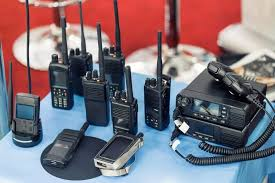
We frequently get asked, “what’s the one radio I need to stay in touch with my local folks and talk to my family 2 states over?”. Unfortunately, radios don’t work that way. As much as I’d love a single piece of equipment to handle all my needs, radio depends on the laws of physics, which are immutable. Here’s some Tactical Wisdom about sending messages:
Sending a message by the hands of a fool
is like cutting off one’s feet or drinking poison.
Proverbs 26:6
A radio that will put you in communication with someone 2 states away is an HF radio, meaning a frequency generally between 3 and 30 megahertz. That kind of radio is great for long range communications, because it bounces the signal off the atmosphere. What it’s not great for is local communications. HF Units also tend to be rather large and not very portable. Their antennas are very long.

To maintain local comms, you need a VHF/UHF handheld, like a Baofeng AR-5RM or AR-152 Pro. These radios have 10 watts, which is more than standard Amateur Radio handhelds like Yaesu or Icom units (5-6 watts). VHF is 30-300 Mhz and is fairly good in rural areas (I know one guy who gets 9 miles on his AR-152 radio). UHF is 300 MHz to 3 Ghz, which is better in urban area, as it penetrates obstacles better than VHF, but has less range. This is why a VHF/UHF handheld is so valuable, it gives you two options.
CB, or Citizen’s Band, is an older program that many claim is outdated, but NC Scout and I have been teaching it for a long time. It’s HF as it is around 27 Mhz, but it acts like VHF. It gets longer range than VHF and follows terrain well. It can also “skip” or bounce off the atmosphere for longer range. Antennas for CB’s are prohibitively long (108 inches) for handhelds, but they make good base station or vehicle radios. You can expect 2-20 miles of range, depending on terrain, weather, and other factors.

Some might consider the Ratel RT-950 Pro as a “single unit” radio to solve all your problems, but it doesn’t actually broadcast in HF, other than CB. While it can monitor VHF, UHF, and CB, it can’t do all three at once, since CB requires a different (longer) antenna. While it is a great SIGINT tool, since it recieves HF through 900 Mhz, it will only work as a VHF/UHF handheld in practical terms. Everything else it does is on the receive side.
DMR, or Digital Mobile Radio is a VHF/UHF radio that takes your analog voice signal and converts it to a digital signal. Without a lot of nerdy explanation, this makes it harder for someone to hear your message and allows you to get more range. A side benefit is that with DMR radios, you can send and receive text messages. This enables very fast and very secure messaging. DMR units are very capable and can also operate in analog so that you can communicate with others who don’t have DMR units.
Radio can be confusing and hard to understand. I highly recommend taking a basic class like Brushbeater’s RTO course to help you understand what you need and how to develop a plan. I also run a Communications for Preparedness class to help you get started.

Personally, I think you need a VHF/UHF handheld for local team communications, an HF unit for gathering news and staying intouch with family, as well as a good CB unit for your vehicle. If you’re getting a VHF/UHF handheld, you might as well invest in a DMR unit to have as many capabilites as you can.
I hope this helps clear some question up. Get radios, get them programmed (I do that for a small fee), and get trained. Then, carry a radio everywhere.
If you like this content, make a donation below (I just bought some radios and need to pay for them) or become a monthly supporter at tacticalwisdom.locals.com.
 Tactical Wisdom