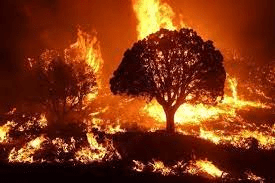
A group of us went “up north”, which is Michigan-speak for getting the heck out of the cities a week or so ago. We went to a friend’s cabin for a weekend of manly activities like fishing, boating, kayaking, and drinking adult refreshments. There were campfires and grills involved, a great time. On Saturday night, though, we began to see smoke and learned that we were adjacent to an area that had been ordered to evacuate due to a wildfire. We did what most men would do, we opened another bottle of whiskey and carried on with our evening.
Before this, I had received a DM from a Twitter mutual who told me that he lived inside a fire evacuation zone in Alberta but was staying behind. I asked him to keep a log so that we could use his experience to better prepare others. Over the next couple of weeks, we’re going to present a recap of those notes, with some analysis on how you can be better prepared. While his experience is a wildfire, the principles apply to many other situations as well (like a hurricane evacuation).
On May 3rd, he received an alert about a wildfire. The first thing our partner did was reach out to his network and find out who was where and begin gathering information. This is solid – intelligence gathering should shape all of your decisions. After gathering what he could, he decided to put together the bug out bag that he had never quite gotten around to building. This is an important point. We all talk a good game, but most of us have our gear strewn about in various states of readiness. You don’t know when something is going to happen, so get it in order. Yes, I know my gear room is atrocious. How’s yours?

In fact, God, through Jeremiah, COMMANDS you to have a bug out bag:
Gather up your belongings to leave the land,
you who live under siege.
Jeremiah 10:17
The next morning, he saw smoke trailing behind the house all day. It was hot with no rain forecast for at least 4 days. He stayed in touch with his family and friends all day and tracked the fire’s progress. Since there were no alerts, he stayed put. Here’s a solid lesson – Don’t wait on alerts IF you are going to leave. If your decision is to get out, get out EARLY, and beat the panic crowd. You can always come back. The opposite may not be true. Your route may be blocked or closed.
At about 10:30 PM, he got a text message about the entire nearby town being evacuated. The evacuation zone stopped just 6 km from his house. Our friend’s next action was to immediately pack the vehicle and bug out bag, just in case. This is a solid idea, even if you decide to stay. If you eventually have to leave or if looters come, your vehicle is already prepared to make a quick escape.
He loaded his guns into the truck, but not for defensive uses. His idea there was looters. If he had to leave, he didn’t want to leave guns behind for looters. Think about this if you have a safe with 47 long guns in it (you know who you are). He also was worried because during the floods in High River, Alberta in 2013, the RCMP broke into 745 homes and seized 609 firearms as “unattended”. While they gave them back, I doubt they would now. Our homeowner was also worried that under the current regime in Syrupistan, he could not replace his handguns if they were destroyed.
After loading the vehicle, he decided to pick an evacuation route. Well done here, as he decided to avoid the southern route that the authorities told everyone to take, and choose a route to the west, which would have had almost no traffic on it, rather than being stuck in traffic on the announced route.
He decided to stay and immediately informed his network of this, offering those who lived directly within the zone a place to stay. While they didn’t take him up on this, this was a solid idea. More people mean more division of labor. It’d be good to be able to take turns on fire watch.
Another good decision he made was to set an alarm to wake up every hour to check for updates, and make sure his house wasn’t on fire. Yes, it makes for poor sleep, but that’s the nature of disaster operations. Checking with his people, he learned that the 1.5-hour drive to Edmonton took an average of 5 hours, because of traffic. I harp on this point for this reason: Choose your own route that avoids everyone else’s.
Moses sent them to spy out the land of Canaan.
He said to them, “Go up there into the Negev. Then go up into the hill country.
Numbers 13:17
You didn’t know Moses ran a recon element, did you? For as long as humans have lived, they have sent out scouts. On the third day, Friday the 5th, that’s what our stalwart adventurer did. He knew that only one of his people was still in town, defending his large gun safe from the bad folks who probably stayed behind (they did, as we’ll see in a minute). He jumped on his motorcycle and went to do some scouting. The police had all the roads into town blocked, as well as all the highways. Remember earlier when I said your route might be closed if you wait too long? It was. That’s OK because our man had a freezer full of food and fresh groceries.

He spent the rest of the day monitoring social media and his phone for updates. The fire now surrounded him and the town on three sides. He pre-emptively set up his sprinklers to water down the house if needed, this was a solid idea. Sparks can’t start damp things very well.
The week ended with him just doing chores around his property while monitoring the situation. The biggest development was a news story about a resident who went back into the town to rescue his dog and found looters in his house. He fought the looters, and the police eventually caught them.
This story of looters attacking at the end of day 3 proves the Tactical Wisdom 72 Hour Theory. You are never more than 72 hours from a complete collapse of law and order. You might be well prepared, but are the lowest common denominators in your community? And with the police mostly manning checkpoints and protecting infrastructure like government buildings and hospitals, how quickly do you think they’ll get to you? No one is coming – expect to self-rescue.
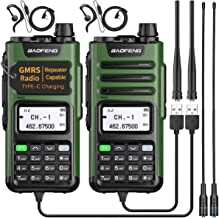
Here’s where radios could come into play. They had cell phones at this point, but what if the fire had destroyed the towers? Our guy having a radio and his friend 6 KM away having one, they would very likely have been in radio range since it was a predominantly rural area. This is between 3 &4 miles, well within the envelope for a Baofeng type or Ham type radio. Canada allows the same FRS frequencies with a 2-watt limit, but I doubt that Industry Canada (the Goose-Land FCC) was out rolling around checking power levels or what type of radio you were using. It’s a good use case for handhelds, with or without begging your overlords for permission first. (See? I recommended getting a license. Sort of.)
We’ll leave it here for now and return in a few days with another installment.
For more exclusive content – become a supporter at tacticalwisdom.locals.com. Those who watched the exclusive Baofeng Basics video over there LOVED it.
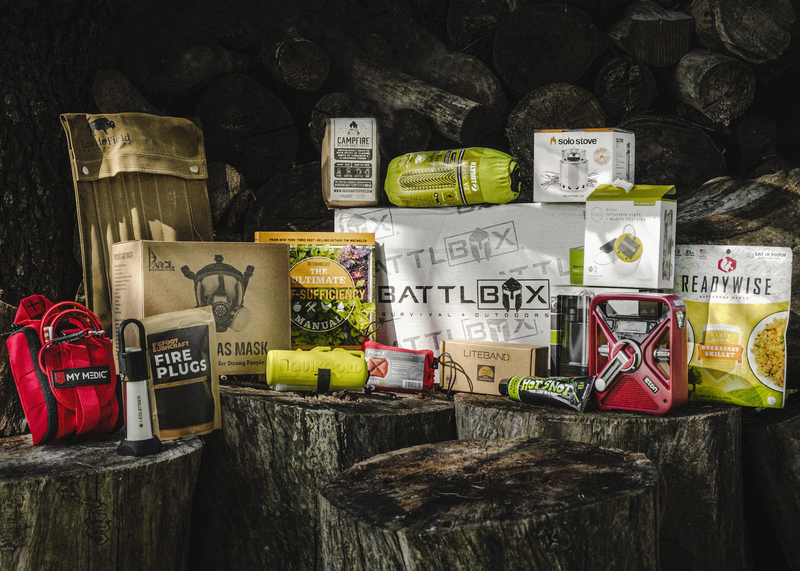
If you’d like to support us, either sign up at BattlBox on the link below (remember to use code JOE-D-25 to save 25%) or make a donation below.

Donation – June 2023
Donation to support my radio habit.
$5.00
 Tactical Wisdom
https://www.weather.gov/grb/peshtigofire
The Great Peshtigo Fire.
LikeLiked by 1 person
Great parallel
LikeLike
Excellent after action Joe!
I’ll make every effort to support my “new” tactical / logistics family asap.
I wish I could write (interestingly and coherently) I’ve been neck deep in this since 9/11…
LikeLiked by 1 person
I think that was a wake up to a lot of people.
LikeLike
2017 we had a big fire in the Columbia River Gorge. Was on the edge of the evac zone, had a car pull in my driveway the second night after the area was evaced. I probably ruined their dreams of treasure hunting. As soon as the evac order was given, I made sure I was ready to repel boarders. Packed our cars with some clothes, Important papers, photos, etc. for a bail out that didn’t come. I was very busy patrolling my acreage and making sure embers and scorched branches and twigs were dead out. Wildfire embers can travel miles before the thermals dump them out. Before fire season it is important to clean your homes rain gutters, feet of tinder just waiting for a spark, as is the dried roof moss (clean those roofs) Do you have sprinklers and hose splitters to cover your roofs and home’s perimeter to at least 25 meters? I sure do now. I go through a fire evac checklist every year now, make sure the water bag is ready to fill, Pulaski and shovels sharpened, and chainsaw is fueled and ready.
LikeLiked by 1 person
Great points!
LikeLike
my man called Canada SYRUPISTAN hahaha great article
LikeLiked by 1 person
I did
LikeLike
This is a great AAR, (first installment.
Reality based, not scenerio based. While a wildfire threat in my AO is extremely unlikely, there is a’lot to gain from your friends experience that can be applied to many different situations.
Looking forward to the next installment.
Thanks JD
Regards
JT
LikeLiked by 1 person