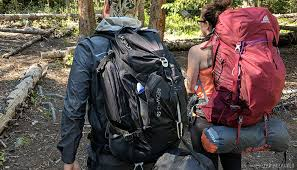
Recently, at a class I gave on building a Get Home Bag, a discussion came up about backpacking gear and packing versus preparedness. I thought this would be a good time to explain why the skill sets are complimentary, they are not the same thing.
Gather up your belongings to leave the land, you who live under siege.
Jeremiah 10:17

First, let’s talk about the differences in gear. Most packs made solely for backpacking are in bright colors. That’s because they’re designed to help you be found when you get lost. That’s not conducive to our purposes in preparedness because we might not want to be found. I know, there are a lot of guys who think that using a bright colored backpacking pack instead of a more “tactical” look is some kind of “gray man” trick, but let’s be honest…In a true Without Rule of Law (WROL) situation, anyone carrying a backpack means supplies, and bad folks will lock onto it. All you did was draw attention to it. Once the lights go out, there is no Gray Man. Gray Man is for intelligence gathering in the current world.
Backpacking gear is also made of lightweight material because it’s lighter and meant to carry a bunch of lightweight items. A lot of the items I need for preparedness have some heft and might rip out of a lightweight pack. It’s not meant for carrying a lot of heavy gear a long way. Cordura or similar is needed rather than ripstop nylon.
The discussion we had was because as I suggested items, this person kept asking me about weight and then explaining about a lighter weight option found at backpacking stores. Well, like everything in life, weight versus sturdiness is a trade off. I can indeed find lighter weight gear, but it’s meant for use on a 3-7 day trip, not one that might last a month or longer with daily use.

We saw this with tarps and ponchos for shelter during a few of our recent Fieldcraft classes. The gear list just says a tarp. Several guys found backapcking tarps because they’re lightweight and fold down really small. Once we set them up along side USMC Field Tarps and British Army Basha’s (the two best tarps you can find for use as shelter) they realized that the lighter weight ones wouldnt hold up as a concealed shelter for an extended period without ripping, and were actually smaller than needed to cover you and your gear. The same thing happened with guys who bought “military style” ponchos versus actual military issue ones. The issue ones are made of better materials and have the grommets and snaps in place to be used specifically as a shelter. Don’t settle for lightweight, get what will actually work. These guys didn’t save any money, becasue now they’re buying the right ones, once they saw how much better an issue one was.
Another difference is in the end goal. In backpacking, you are looking to hike and enjoy nature while camping, but the option always exists if the weather gets bad to go back to the car or to call for help, which will arrive quickly. In a Get Home Bag, those options don’t exist. Giving up means dying. If my gear isn’t of good enough quality, it’s not a bad trip, it’s my death or injury. We need to understand that and separate the two. It’s a completely different mindset and different goal, and we need to stop conflating the two.

Cost isn’t always the best indicator either. In the backpacking field, there are a lot of very expensive compasses that have a lot of cool features for backpacking or orienteering. Those features mean absolutely nothing for actual tactical land navigation. During the Fieldcraft classes, we had a lot of folks bring in high end orienteering/map comapsses, which are big in the backpacking world. They are excellent tools when you have all the time in the world to orient your compass, get the bezel rotated to the “red in the shed” (putting the north arrow inside the box) and then figuring out your azimuth. However, the good old USGI Lensatic Compass by Cammenga is much faster for moving along an azimuth or for trying to locate yourself on the map using resection because you can skip all that red in the shed stuff. Buy the gear that applies to what we are doing in preparedness.
I’m not pointing these things out to dunk on backpackers or backpacking, it’s a great way to go out and develop skills. I just want you all to be as prepared as you can be and not conflate leisure activity with preparedness. Some things cross over, but I can’t bet me life on the wrong gear.

Another area where we see this is in boots. There was a trend after the GWOT because everyone saw our special ops guys and contractors rolling around wearing their Merrell or Salomon low rise hiking shoes/boots or those “maritime” boots, whatever those are. If you intend to cross rough terrain, those aren’t what you need. Those guys all rode in vehicles to within a mile or two of the target, walked in, then walked out. That’s not moving over rough terrain for several days. Those types of low-rise boots are for day trips over moderate ground and they lack ankle support.
In contract, the US Marine RAT, or Rugged All Terrain, boot is an 8 inch boot with stiff ankle support and all full grain leather upper is a much better boot for our purposes. I would rather wear more boot than I need than regret having worn too light of a boot. THat’s exactly what happened to me in Oklahoma. I thought, the terrain can’t be too rough there, so I’ll wear this older pair. Man, did I regret it. The lack of ankle support led to several twists of the ankle in some very steep and rocky ravines. Pick and wear the right boots. On a preparedness note, buy extra, because what are you going to do when you need new boots?

To recap, buy gear for the intended purpose, and buy the best gear, not the lightest or most expensive. Read reviews and consider what you will really be using the gear for.
You can support me by becoming a paid subscriber at tacticalwisdom.locals.com or by making a donation below. Buying from any of the affilaite links above may put also put a few pennies in my pocket.
While you’re here, go buy a book, register for a class, or buy a t-shirt.

Donation – July 2024
Donation to support site
$5.00

 Tactical Wisdom
Great info, as always! Thank you for your thoughts and insight. One small editorial comment though: compliment vs complement. If something enhances something else it is complementing (think “completes). If something says something nice about something else it is complimentary.
LikeLiked by 1 person
The only thing I can think of that I still use from packing over mountains with the Boy Scouts (way back when) is my Optimus white gas stove and some of my canteens. The packs have ripped, the tents are shot and the MSS is a far better sleep system. (Still gotta try that USMC one…)
As mentioned, it’s the durability. I have some Kelty backpacking tarps that are good, (and I have camped with them) but I’m sure my basha will hold up to everything but a direct slashing of a knife.
LikeLiked by 1 person
Hey JD, great info as always! Though I would like to say, as someone who has done my fair share of hiking/backpacking, my Merrells have held up just fine over multiple trips, rough terrain and extended miles. To be fair, they’re ankle height and waterproof, so those are definitely factors for sure.
LikeLike
Not saying they’re not good. I’m saying after a 7 day patrol in Afghanistan you’d have wished you had more of a boot
.
LikeLiked by 1 person
Glad to see you putting this out. I’ve been espousing the same for years, but have been repeatedly told I don’t know what I’m talking about. Maybe folks will listen to you.
LikeLiked by 1 person