
We went and saw Homestead last weekend and that got me to thinking. How ready am I right now? Carried a bit further, if I had lived in North Carolina or Tennessee when the storm hit, how would I be faring right now, several months in, with the just what I had on hand?
In my first book, Baseline Training Manual, I point out that one of your first goals should be to have 14 days of portable supplies on hand. Let’s use that as our baseline (see what I did there?).
Given world events, a disaster or intentional attack that is a life altering event for all of us could happen with absolutely no notice whatsoever at any time. How ready are you to walk out the door and survive for 14 days? Or, in the event of conflict, how much notice would you need to be able to join a 14 day campaign of resistance in the field (you never know the drones could be an alien invasion)? What is your ability to sustain yourself or get more supplies into or out of the affected area?

then if anyone hears the trumpet but does not heed the warning and the sword comes and takes their life, their blood will be on their own head. Since they heard the sound of the trumpet but did not heed the warning, their blood will be on their own head. If they had heeded the warning, they would have saved themselves.
Ezekiel 33:4-5
Why? Because not every situation is a Mad Max level collapse. You might be forced to leave due to untenable conditions, but want to retain the ability to return at a time of YOUR choosing. I say this because many evacuees have tried to come back to their own property in the aftermath of the hurricane to be told that they cannot. Have you scouted out routes that get you back via back roads or footpaths?
The same goes for evacuations. Most who traveled on the “posted and public” evacuation routes encoutered traffic snarls and checkpoints. If you scouted out your own routes that avoided major arteries or went to a secure and hidden location nearby, you’d be in far better shape. Even if your overall plan is to “bug in”, you still need portable supplies and some pre-planned routes/sites away from your base.

Let’s start with food and water. You can never carry enough water, so you need containers and an ability to filter/purify water. My solution is canteens and tablets. I back this up with a Grayl filter bottle and a Sawyer Mini in-line filter. Multiple methods are the key. As far as food, stop thinking in terms of meals. Pack in terms of caloric intake on the move. Pack one meal a day and a bunch of high protein snacks like energy bars, jerky, SPAM singles, or other good stable snacks. Dehydrated foods are lighter than MRE’s or canned/pouched foods, but understand that if you don’t eat them regularly, you will suffer some intestinal issues. The newer military Long Range Patrol/ECW rations are great for packing as they condense down smaller (they’re really just Mountain House in better packaging).
Shelter gear is important. Always have a tarp and sleeping gear in your pack. I keep a poncho liner in my patrol pack as sleeping gear, which I can add to for more warmth. In my full ruck, which I would take in this scenario, I have a 3 season sleeping bag. With the poncho liner added, it becomes a 4 season bag. A waterproof bivy bag is a must and doesn’t really add any weight. My USMC sleeping bag comes with a dry bag – you should always carry sleeping gear in one because a wet sleeping bag sucks. For comfort, I include an inflatable pillow. I don’t carry a tent, because if I’m on the move, a tarp is all I need. Rain gear should be in every bag you have. Military Surplus ponchos are great, because they can be a ground sheet or a tarp as well, but I also carry GoreTex gear in both my patrol pack and my ruck. Lightweight ones in the patrol pack and more heavy Extreme Cold Weather versions in the full ruck. I can throw on the lightweight ones while moving, and change into the heavier duty ones when I stop. You don’t want to try and move in heavy GoreTex because it traps the heat in. The other shelter item I carry in my patrol pack is a set of collapsible aluminum tent poles. I can use them to put my tarp in a number of other configurations.

Closely allied to shelter is fire. I keep a Mountain Partisan “Partisan Fire Kit” in each of my bags. This has a lighter, fire starters tabs, fire steel, and a few other items in it. Have mutliple methods to quickly start fires or light a stove.
Clothing for 14 days is something most people overpack. In a true survival or conflict situation, you don’t need a new outfit every day. We aren’t holding cleanest gear or nicest ensemble contests. I carry one spare set of clothes and a few sets of undergarments and socks. I will carry some warming layers as well. I keep the clothing in my ruck permanently stored in a dry bag. I pull it out every season to confirm what’s in there and change out any seasonal items.
In the Marine Corps, we called the next area “Pioneering Tools”. You need a shovel or entrenching tool because field hygiene is a thing. You will also need a hatchet or small axe. Combat Tomahawks are NOT the same thing and are NOT interchangeable. Having a small folding saw is also a plus. I carry the e-tool on my patrol pack and the others on the ruck.

If you couldn’t tell by now, my patrol pack attaches to my ruck. I switch between the ILBE and FILBE systems depending on season and where I’m at. In the winter, I’ll need to carry more gear, so I go with the larger FILBE. In the summer, I switch to the ILBE which holds less, but has better camouflage. It’s also got a more vertical orientation which helps with mountain movement where I live and train.
The point isn’t necessarily to give you a list, but to remind you to put at least this stuff in some type of portable system to be ready to go at a moment’s notice. Remember that the Minute Man is our heritage.

Related to this is a communications plan. In the “Homestead” movie, the military security team was ready to go the minute the bomb went off because they had a preplanned communications network set up. I was happy to see the movie planners had the team using Baofeng AR-152 radios, which is what a lot of us plan on using. Set up a plan with your people and test it weekly. Vehicle-mounted repeaters are a thing, I have one, and they give you a 5-10 mile bubble around your vehicle for solid comminucations with handhelds. Having each vehicle with a trunk mounted repeater on a different frequency would give you a mobile mutli-channel radio network that travels with you.
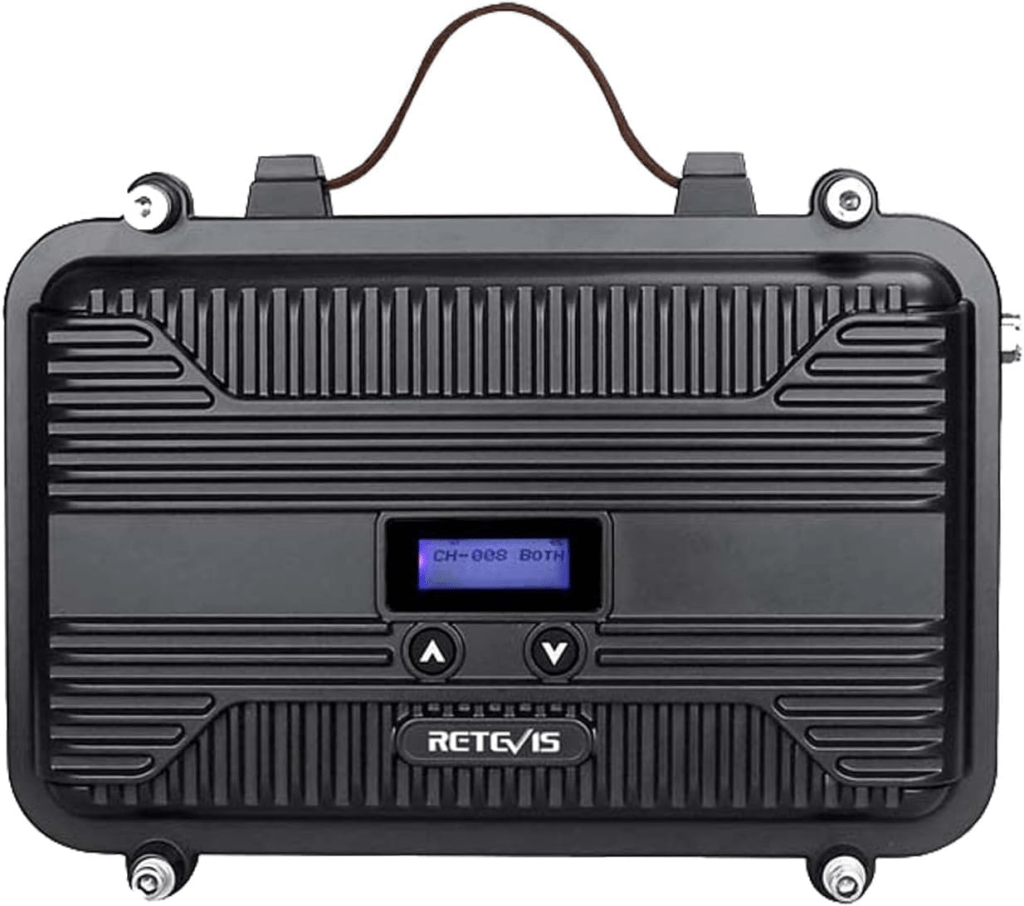
Consider also higher-powered vehicle mounted radios (like 50 watts). This would enable better communications while on the road. I always travel with some type of 50 watt radio up and running.
Analyze your preparedness gear with an eye towards immediate readiness. Make sure that if you had to go with under 10 minutes notice, you can at least survive 14 days.
Later in the weekend, we will discuss clandestine movement into and out of evacuation/curfew zones.
If you like this content, become a monthly supporter at tacticalwisdom.locals.com, where we have exclusive member-only articles and videos. You can also visit any of the affiliate links above or make a donation below.

Donation – December 2024
Donation to support website
$5.00
 Tactical Wisdom
“Homestead” was hype for a whole streaming series to come…same ‘ol, same ‘ol.
LikeLiked by 1 person