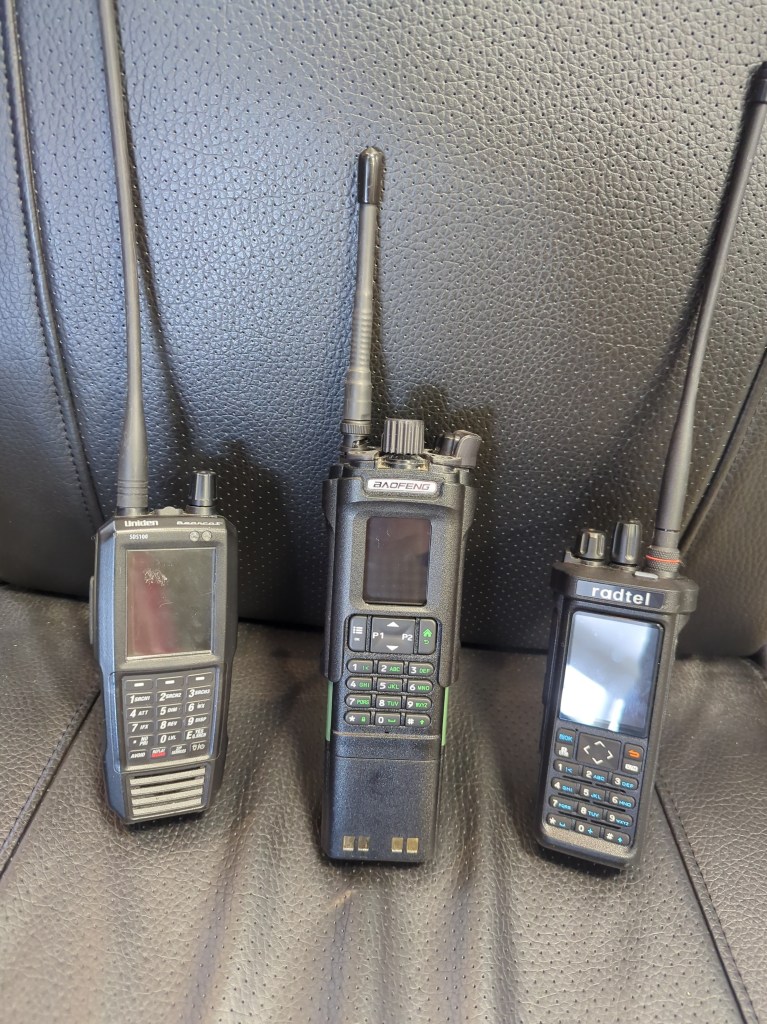
I talk alot of devloping and testing your comms plans, but today, I’ll share with you some of mine and how we put them into practice here at Camp Ponderosa and in my daily travels. I know, many of you think that radios are something for emergency times and “after the lights go out”, but here in the mountain west, cell coverage is a “sometimes” thing, so we use radio more than most. Carrying handhelds are not just for amateur radio folks and volunteer firefighters out here.
First, I’ll begin with a little Tactical Wisdom and my method of implementing it.
To answer before listening—
that is folly and shame.
Proverbs 18:13
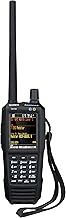
This tells us that listening is more important, and it should be in your comms plan too. You need some type of radio scanner. Using a Baofeng to do it limits your frequency range (136Mhz-512Mhz roughly) and the Baofeng is notoriously slow at scanning. What I use is the Uniden SDS100 (NC Scout does too). The photo above is an affiliate link (I make a few pennies on the links, but not enough to retire). The frequency range on it is from shortwave all the way through the 900Mhz spectrum. It’s a digital trunk-tracking scanner, meaning that it can follow modern public safety digital systems. Most older police scanners can’t. This is crucial if you intend to use it for situational awareness, and you should.
You should be monitoring you local public safety communications. Most are unecrypted, just digital. This scanner solves that. It’s a little pricey, but wait until I tell you the best part. You don’t have to learn to program it. It contains the entire Radio Reference database and all you have to do is punch in your zip code. Even easier, if you buy a GPS upgrade, it will reprogram itself as you drive around. I use it on cross-country drives and it’s SIMPLE.
Even if you don’t buy this one, you need SOME type of scanner. When shopping, make sure it has “Close Call” or something similar. This means that it will detect, alert on, and save any nearby radio transmission, so that you are aware of it. In the event of a true Without Rule of Law situation, anyone at all talking on the radio near you is a potential danger – this enables you to know about it. Even when on patrol, you can have one person monitoring this with an earpiece. These can also scan MURS/FRS/GMRS/CB very quickly.
This scanner rides in a radio pouch on the outside of my “bail out bag” – which is a small shoulder bag I keep on the passenger seat. When I’m home, it’s on top of the bookcase, plugged in and running.
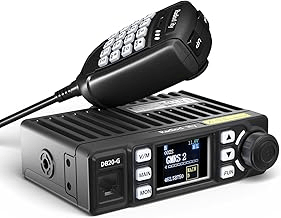
Thanks to the generosity of my followers, every camp vehicle, including the tractor and the side-by-side, is equipped with a GMRS radio. We use these on simplex channels for communications around the 80-acre compound. We also have a dedicated GMRS repeater channel that enables us to have a solid radio “bubble” for 5 miles in every direction. Since we are in prime Grizzly territory and were out tracking 3 mountain lions yesterday, the ability to alert others to dangerous wildlife quickly is needed.
During classes, we make sure all students have radios programmed to the simplex and repeater channels. Don’t worry, we have a few extras.
Another reason for the vehicle-mounted radios on the ATV’s and UTV (side-by-side) is that in the event the lighhts go out or the Russians invade or St Helens explodes, we’ll need to run patrols of the forest service roads all around here (especially since the Sheriff already told people he doesn’t patrol here and to call me) for our own local protection. I want a little more range for that.
Having your own repeater or a repeater for your group is a plus.
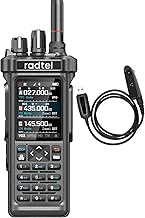
Another radio that travels with me, mostly for listening purposes, is the RadTel RT-950 Pro. Mine is from Brushbeater Store (link in the photo). This radio is very capapable as a SIGINT platform. It receives in all of the amateur bands and, unlike most modern handhelds, it comes with a very good stock antenna.
On a daily use basis, it can monitor 3 different frequencies at once in the VHF/UHF bands (on this unit 64-999Mhz). Note that Mesh Networks fall within the receiving range so you can identify and monitor those. Also, a lot of publics safety uses 800 Mhz simplex channels. New business radios are in the 915 Mhz band and are LICENSE FREE – so you could use this radio in that frequency range and “hide in the noise”.
The radio also receives CB and 18-64 Mhz, but you can’t do it at the same time as UHF/VHF, and you need to change to a better antenna. I might still want to montir 3 CB channels. Here in the mountain west, CB is heavily used, due to the lack of cell phone signals and CB performs well in our geography. Low band VHF falls in there (as in, NATO and CSTO military).
The only compalint I’ve heard is that this radio only does FM CB. My dear friends, that is a FEATURE, not a bug. When FM CB became legal in the US, NC Scout and I did a bunch of testing in Michigan and NC using CB, both AM and FM. If you are using FM CB, you can hear AM CB folks talking, but they CANNOT HEAR YOU on FM. Do with that what you will, since the VAST majority of CB units are AM only. This radio also does Single Side Band CB.
From a COMSEC perspective, not many people pay any attention at all to CB, delaring it “DEAD” -use that. For SIGINT, with a good antenna, you will pick a lot of Spanish language traffic. Drug and human traffickers like CB because they can use one radio unit from the tip of South America through Canada – the same 40 channels are legal the entire way.
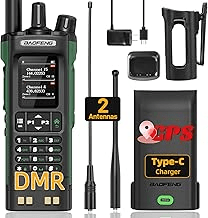
My true “go everywhere with me” radio, though, is the Baofeng DM-32UV digital handheld. I also sourced this from Brushbeater Store (link in photo). This radio is UHF/VHF (136-512Mhz) and it does various types of DMR or Digital Mobile Radio. A lot of people are intimidated by DMR, but usually because they ask an Amateur Radio person (no offense, guy, but you give nerdy explanations) about it. We use it differently than amateur radio people do. I’ll explain below.
While we use GMRS here on the property, we use MURS when out on the road or when commuting around. We use it for the same reason all local law enforcement uses VHF – VHF does better in rural terrain. Running these analog we get a good 10-15 miles. That’s important, because the is no cell phone signal for 12 miles to the north and 14 miles to the south. With the camp in the middle, we can relay needs for help or messages for the 26 miles with no coverage.
Also, around here, the Search and Rescue channels are monitored by volunteers all the time and known entities, like Camp Ponderosa, are able to reach out on those frequencies for emergency without anyone screeching about call signs or licenses. In fact, that’s why we host a Search & Rescue/LifeFlight helipad. Get involved locally, friends.
We also use MURS to communicate with certain trusted neighbors we’ve shared the comms plan with. In the current world, we chat about bear and lion sightings, road conditions, and the like. In the WROL situation, we’d run it like a preparedness/local security network.

Last year, during the RTO class, we hooked up a DM-32UV to a Jungle Antenna at only about 10 feet. We sent a mobile team with a DM-32UV with a stock antenna down the road using simplex digital (meaning no repeater). Because the digital signal is compressed, more power is available to push the smaller signal farther. We had them turn around at 21 miles. The signal was still clear. THAT is the value of running digital signals.
I told a local business, Swan Mountain Outfitters, abiout this and they immediately bought a bunch. Through this partnership, their 5 VHF channels are now DIGITAL, and I can hear and talk to their base camp 8 miles south of me and the owner’s house 5 miles north of me. He can also talk direct to the camp (13 miles) on haldhelds, with no repeater. It’s a simple manner of programming the channels as digital.
You can also send text messages via digital radios and they go even farther.
The issue we’ve run into in classes with these radios sending texts to other DMR units is that this radio is capable of sending messages in the DMR format, the Motorola MOTOTRBO format, and the Hytera format. You have to make sure that the other radios are all on the SAME format (I recommend just D-SMS or DMR SMS unless your team is all using Motorola or Hytera equipment).
The only real issue I’ve had with this radio is that the stock antenna, while very good, has a weak SMA connector. After breaking two antennas, I switched to a Smiley Antenna and a Brushbeater BNC adapter.
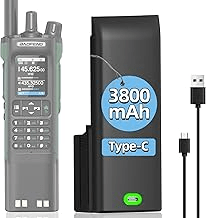
I bought the extended battery above on Amazon and it is great.
So, what’s comm plan look like? Around the camp, GMRS Simplex and GMRS Repeater. When driving around the local area, MURS. As a local group, we have a dedicated emergency MURS channel. I monitor the GMRS and Amateur repeaters in whatever town I’m in that day for local information, but all of my local contacts and I monitor the one GMRS repeater that covers all the way from the Camp to nearly Glacier National Park as a calling channel. At the camp office, we monitor CB, MURS, local public safety, and GMRS. We also have a Close Call scanner monitoring at all times. For awareness, the drone detector is also on most days, and all days when we have classes. Also, in keeping with the Wilderness Protocol, we monitor 146.520 24/7. For AMRRON, we monitor 146.420 as well.
We join the local weekely preparedness net that operates in Amateur frequencies, GMRS frequencies, MURS, and CB – testing weekly everyone’s ability to communicate. Yes sad hams, I said amateur frequencies….the local hams here are more worried about everyone being able to help each other than they are about showing everyone how compliant we can be.
I hope this gave you some ideas.
If you’d like to help us maintain our communications capabilities here at the camp, you can buy things from either of these Amazon Lists:
Camp Ponderosa: https://www.amazon.com/hz/wishlist/ls/1038N8GYHRWX8?ref_=wl_share
Tactical Wisdom: https://www.amazon.com/hz/wishlist/ls/225D7XIZ8R8LO?ref_=wl_share
 Tactical Wisdom
I live in Florida. Most agencies here have switched to encrypted communications, and the rest are moving that way as funding allows. If you want to research your own area, a good link for that is found here:
https://wiki.radioreference.com/index.php/Encrypted_Agencies
LikeLiked by 1 person
Unfortunately, the information there is sketchy at best. It would appear that there is no review of what is submitted. For example: Fort Worth is not a county in Texas. Another: many entries are contrary to the guidelines – they ask for only those entities that encrypt dispatch not tactical or special ops yet a generous portion of the entries are just that, tactical or special ops.
OTOH, it is a shame that many entities do encrypt dispatch.
LikeLike