There are two types of people involved in preparedness that most people fall into. The first is what I call the Tacti-Cool Prepper. This is the guy with 14 guns (how are you going to carry them all??) who imagines that a Without Rule of Law (WROL) situation will be a Mad Max movie. The other kind I call the Little House on the Prairie Cosplayer. This is the person who says they are going to bug in no matter what and if you suggest learning any type of small unit tactics or individual combat skills says “I don’t want to play soldier boy”.
A quick look at the real world of WROL situations like Haiti after the earthquakes, Avdiivka during the Ukrainian crisis, and the former Yugoslavia shows us that the truth is somewhere in the middle. Even looking at the US during the Summer of Love showed us that.
…if anyone hears the trumpet but does not heed the warning and the sword comes and takes their life, their blood will be on their own head. Since they heard the sound of the trumpet but did not heed the warning, their blood will be on their own head. If they had heeded the warning, they would have saved themselves.
Ezekiel 33:4-5
The truth is that most people will be struggling to survive and want to be left alone. But there will always be small groups of others, perhaps even from governments, who refuse to leave you alone and will want your supplies. If you don’t believe me about governments, read the description of the federal crime of “Hoarding” under the Defense Production Act. The US Government used this during COVID to steal a large supply of masks from a man who had bought them. They declared the gloves “essential” and declared that he “had more than immediate personal use” and sent armed men (the local FBI SWAT) to go and steal his property and arresting him in the process. Thugs and bandits will be doing the same thing.

Now, to combat this, you could certainly become the Tacti-Cool Prepper, but I think that’s a bit extreme. The more fights I engage in, the more the odds don’t work in my favor. The pinnacle of tactical skill is to know which fights to engage in and on what terms, as well as when to avoid contact. Yes, that’s a paraphrase of Sun Tzu.
The answer is to learn basic fieldcraft skills and basic small unit tactics.
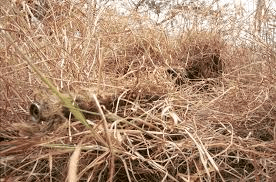
Fieldcraft is the ability to move and live without being detected and how to break contact if seen. It’s the art of not being seen or heard, whether in a rural environment or an urban one. It’s more than just learning to low crawl, it’s learning to pick routes that avoid others, learning to navigate that route, how to leave as small a footprint as possible and how to hide. These are what’s known collectively as light infantry skills. The ability to get into and out of areas using short range infiltration and exfiltration to avoid contact altogether.
Many are tempted to say, but I have night vision, so I’m good. Night vision is a piece of gear that can fail, run out of batteries, get lost, or not work on cloudy nights of a new moon. Cool-guy night vision, while a GREAT help, does you no good if you walk loudly and pick a terrible route. Also, to effectively use night vision, you have to project an IR beam, which tells everyone else with night vision exactly where you are. When everyone has the same advantage, no one has an advantage. SKILLS give you the edge over an equally or better equipped foe. Ask the Viet Cong, Taliban, or Mahdi Army about how that works.

I’ll be hosting Fieldcraft skills courses starting this spring and the first one is open for registration on the Training Courses page. It will be in northwestern Montana and is filling up fast. We’ll be hosting them in several other locations, but Montana will become a home base, because of some exciting partnerships coming up this summer.
The perfect pairing to the Fieldcraft class is NC Scout’s Scout and Recce Courses. The Scout course is very basic small unit and light infantry tactics, relying less on technology and vehicles and more on our own skill and wits. Recce builds on that and develops even more skills. Taking them both enables a group to operate effectively as a community defense team or quick reaction team. You might think you don’t need that, but what happens when the bad guys interrupt your Little House on the Prairie cosplay and show up to take your food? Just giving it to them will end in your death one way or the other. Having Fieldcraft skills will enable you to slip away, while small unit tactics skills might enable you to either ambush the bad guys before they get there or retake your supplies after they’ve gotten them.
I will be building a Community Security Operations course based on TW-03 Defensive Operations and in fact this weekend, a local group is being my guinea pigs for testing one section of that. Stay tuned.

For the record, I’m writing this in the Team Room at the Brushbeater Training Center in North Carolina as NC Scout is in the next room teaching a LARGE group of folks how to use radio as a force multiplier. If you truly want to know how to use HF/VHF/UHF radios for preparedness, his RTO/Advanced RTO courses are the way to go. To learn how to exploit radio and thus protect your own communications, take his SIGINT course.
So, to recap, get out and train. You need skills more than you need gear. Just as we train on food preservation, trapping, and agriculture, we need to develop some light infantry skills. Our heritage is that of the militant farmer and minuteman…a man who went about his life until evil came calling and needed to be resisted.
The beginning of wisdom is this: Get wisdom.
Though it cost all you have, get understanding.
Proverbs 4:7
Train to be dangerous. Dangerous people are respected, timid ones are not.
If you like our content, head over to tacticalwisdom.locals.com and become a monthly supporter or make a donation below.


True words here. I thought I was “okay” in the sneaky woods department, I mean I grew up in the woods. I knew how to stalk hunt, I went camping. Until I went on some training as mentioned above and had a wake-up call. Get out and practice or better yet get some training in the courses mentioned.
LikeLiked by 1 person
Yes sir.
LikeLike
staying alive is a good start !
so you can live to cqb😂😂
love your books btw boss. Thank you.The Gcamp, lucky man.
LikeLiked by 1 person