“What’s the one gun every prepper needs?”
“What’s better, rifle or shotgun”?
“Bro, Glock or Sig?”
These questions and more dominate the self-defense discussions I have. Everyone seems to think that preparedness for security issues begins and ends with guns. Let me explain why that’s not the case.
What if you were in a courthouse when an event occurs? An airport? Post Office?
A lot of employers forbid the carrying of firearms. A lot the places you go require that you limit the arms you carry (no guns).
This kind of thinking also only assumes the very worst case of a full-on societal collapse/breakdown. The odds are that you will need to defend yourself in a less than full without rule of law situation. Robberies and assaults occur every day. Not every situation means that a firearm will be at hand or will be the proper response.
Praise be to the LORD my Rock,
who trains my hands for war, my fingers for battle.
Psalms 144:1
To be fully prepared, you need some additional self-defense skills. We call these “combatives”. You should begin with unarmed skills, then develop skill with sticks, knives, and what we call cold firearm combatives.

But what style should you study to develop unarmed skills? I could list the various pros and cons of each and ignite firestorms of debate in comments among guys who probably don’t actually study any. The answer is literally any style is better than what you are likely doing now (nothing). Pick one that appeals to you and your coordination or body style. For example, for older folks, I wouldn’t start out with Tae Kwon Do and it’s jumping kicks. Whatever style you like and can do, DO. But get off the couch and actually do something.
Find a school that teaches real world self defense. Traditional schools are fine, as long as they understand that real fighting skill is what you want, not thousand year old forms with no practical use. Now, if you have a REAL traditional instructor, he’ll show you the real world application of those thousand year old forms. My point is, don’t go to a McDojo that makes you a black belt in a year as long as you pay the fee.

This brings us to the ability to use a stick. Why a stick? Because I can always find a stick. More importantly, in most states, you can legally carry an expandable baton like an ASP Baton (see affiliate link). Having the ability to defend yourself with a stick, baton, or other improvised stick-like tool is a GREAT skill to have. Find an instructor (like me) and start training.
In most states, pocket folding knives are legal. Check your state laws, because most permit carying fixed blade knives under certain cirucmstances or openly with lawful intent. In Montana, nearly every adult man has a fixed blade knife on his belt. In Michigan, they claim that you can only carry a fixed blade if it is a hunting knife and you are hunting (note: You can hunt coyotes year round without a license).
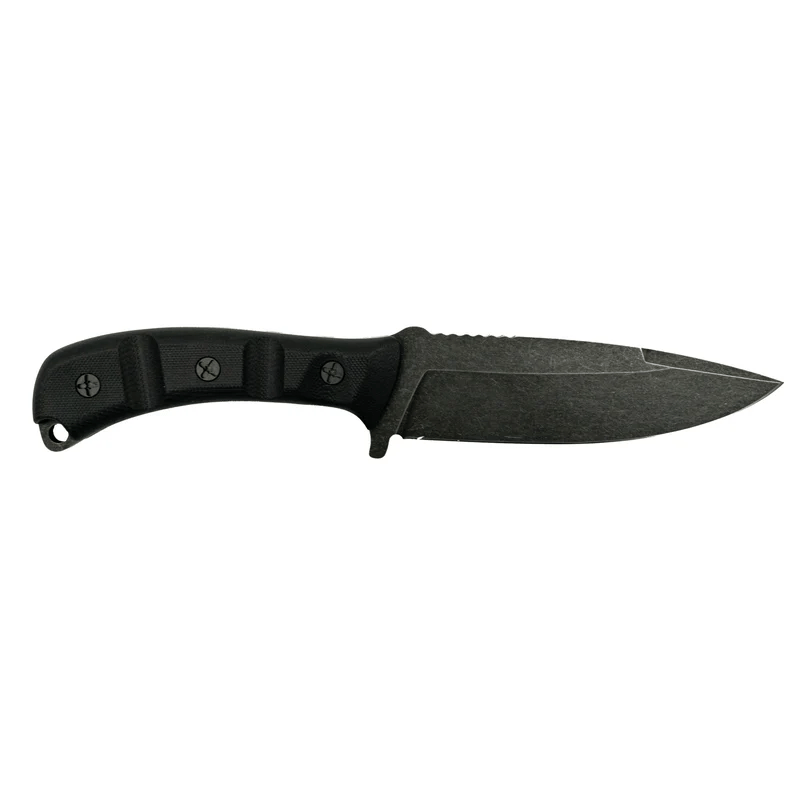
Find a qualified instructor and take a knife defense seminar. Not just a “defense against knives” course, which is usually filled with “feel good” techniques that will get you hurt in real life. You need to know how to effectively use a knife offensively and fight with the knife. Personally, I carry a fixed blade on my weak side, blade forward, as I describe in TW-01, Baseline Training Manual. This way, no matter which hand I draw it with, I can cut with it on the draw. Also, with it on my weak side, I can use it to stab or slash someone who is trying to take my defensive firearm from the other side.
As a side point, follow the “3 blade rule”. You should carry or have available a folding knife, a mutlitool, and a fied blade knife. With these three, you can handle almost anything that comes up.
Lastly, develop skill in “cold firearms combatives”. These are the skills to use an empty rifle or pistol to defend yourself. You may suffer a malfunction at close quarters or be caught in the middle of a reload. Perhaps you just don’t want to kill, but discourage the attacker. Knowing how to properly apply a buttstroke or smash with the rifle can be a great skill. Knowing how to deflect a knife with a rifle can be crucial. Yes, even teh use of a bayonet can be taught. With the pistol, a jammed or empty pistol becomes a heavy and solid object to strike with, if you know the proper techniques.

I teach all aspects of this in “Combatives” Course. Usually taught over a weekend, we begin with basic unarmed skills on the morning of day one, and move to ground fighting in the afternoon. Day two begins with sticks and progresses to knives in the afternoon. Day three focuses on cold firearms combatives and ends with practical exercises.
I’ll be teaching a one day version, focusing only on sticks and knives on January 17th, the day before Combat Studies Group runs their GroundRod Level 2 here at Camp Ponderosa.
The important part is that you take classes and then keep training. Every physical skill requires practice, so train a lot.
While you here, our friends at Forward Observer are running a Black Friday Special on their Early Warning service. The Annual Plan is a significant savings over the monthly. Click this link to learn more: https://www.earlywarningnetwork.com/bfcm?aff=4708660f30079ce9c935c3a39b013670f45f738fb990a6bdc0bfb20efc169231
Sign up as a supporter at tacticalwisdom.locals.com for more exclusive content.
Donation – November 2024
Donation to support site.
$5.00


A titanium screwdriver is legal most everywhere and non metallic.
Sent from my iPad
LikeLiked by 1 person
I like the way you think
LikeLike
TSA allows screwdrivers of less than 7” overall. I habitually fly with both my cane, made of high density polymer, and a 6.8” torx-bit driver, because “My girlfriend borrowed it to fix her chair, I’m flying home with it. I checked the website and it’s allowed.”
LikeLike