As we sit poised for another major storm, I thought it might be helpful to dispel some myths about radios and cover some LICENSE FREE options. Sad hams – please note, this article is ONLY about LICENSE FREE, so please don’t feel the need to drop a hundred comments on why everyone needs an Amateur Extra.
Don’t get me wrong, the VAST majority of ham radio folks are incredibly helpful and nice people. The problem is that like every other area of society, a few loud examples spoil it for everyone. Any who, let’s get down to the point of the article, which is one of my favorite pieces of Tactical Wisdom:
Rescue those being led away to death;
hold back those staggering toward slaughter.
Proverbs 24:11
In order for me to rescue those struggling, as this verse commands, I have to be able to talk to them.
In the aftermath of Helene, there have been many folks reaching out to me, NC Scout, and Randy (NotARubicon) about license free options. I want to explain what they are and how to find radios that do this.
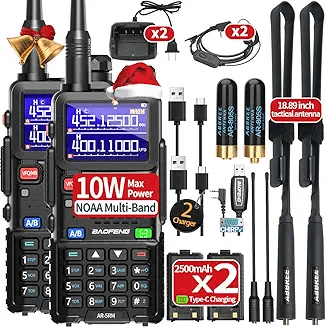
I know the sad hams will drop comments telling you why I’m wrong, but you really can’t go wrong with a Baofeng UV-5R or it’s equivalent since it’s only $20-25. I won’t mind losing one into the water at that price. For a little more, you can get an AR-152 radio which is the same basic unit, but with a little more power, a much sturdier case, and an AMAZING battery.
Yes, Sad hams, I know the Baofengs aren’t type-certified for FRS/GMRS, but I haven’t seen a single FCC agent pulling up in a canoe asking to see anyone’s radio (or license for that matter). In an emergency, you can use any radio on any service to protect life OR PROPERTY, according to the CFR:
§ 97.403 Safety of life and protection of property.
No provision of these rules prevents the use by an amateur station of any means of radiocommunication at its disposal to provide essential communication needs in connection with the immediate safety of human life and immediate protection of property when normal communication systems are not available.
So sayeth our radio overlords at the FCC. I swear to Xenu.
Let’s begin with the Family Radio Service. This is 22 channels in the UHF band (462-467 MHz). UHF is good in urban areas, because the higher frequency will penetrate barriers well. It is inherently short range. This is especially true of FRS because the FCC RULES (not laws), limit the power output on channels 1-7 and 15-22 to only 2 watts, and only 1/2 watt on 8-14. This service does NOT require any license whatsoever. You can find these radios in bubble packs at sporting goods stores, Wal-Mart, and Target.
Never believe the range claims on the packaging. They might say “up to 36 miles” or something. That is under ideal conditions, like from a mountain into a valley or across a body of water. These are generally 1/2 to 1 mile in range.
General Mobile Radio Service (GMRS) is the same set of frequencies, but at higher power and they require a license. The license is $35 for 10 years, and it covers your ENTIRE EXTENDED FAMILY. Aunts/uncles/etc. It’s very extensive, per the FCC:
The license can be used by the licensee and immediate family members which include the licensee’s spouse, children, grandchildren, stepchildren, parents, grandparents, stepparents, brothers, sisters, aunts, uncles, nieces, nephews, and in-laws.
GMRS radios may use 5 watts on 1-7 and up to 50 watts on 15-22. They can still only use half a watt on 8-14. These power levels allow for VASTLY improved range and can get you 3-5 miles on handhelds and 15-20 miles on 50 watt mobile radios. Higher antennas can get you even more.
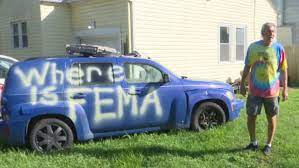
You might ask, then why would I ever use channels 8-14 on either service? Simple – for local team communications. I might be using a higher-power allowed channel to reach people farther away, but my guys running the donation site or the convoy are all within very short range of each other. They do have a use. By the way, there are MANY times when I might not want my signal to go very far. For example, COMPLETELY hypothetically, if my advance team looks over a hill and sees a FEMA/NG checkpoint, I might want to warn others behind me without my signal reaching that checkpoint. Hypothetically.
It is worth it to get the license. Many groups are out there running preparedness nets on GMRS repeaters, allowing you to practice. Also, repeaters are allowed on GMRS, but not FRS. A repeater is a high powered radio with an elevated antenna that boosts the signal of all radios with the proper settings. Yes, sad hams, that’s an over-simplification, but we’re talking to newbies, OK? On repeaters, I’ve spoken to folks about 100 miles away easily.
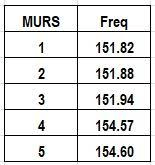
A license free service that is better in rural areas is Multi-Use Radio Service, or MURS. These are 5 channels in the VHF spectrum. Because of their longer wavelength, they travel farther, but they don’t penetrate buildings as well. While MURS is only limited to 2 watts (if you care about such things as power limits), you can install higher antennas to get longer range. MURS may get you 5-7 miles in flat terrain and up to 15 if you are speaking from elevation.
Note: The Baofeng radio can be programmed (and should be) with BOTH GMRS and MURS frequencies, so that you can use whatever works best in your particular situation.
In hilly and wooded terrain, our old forgotten friend CB is still an EXCEPTIONAL option. Ham radio people look down on it, so I love it. It doesn’t require a license and while the FCC RULES (not laws) limit it to 4 watts, there are guys who have been talking for decades at a thousand watts with no one caring.
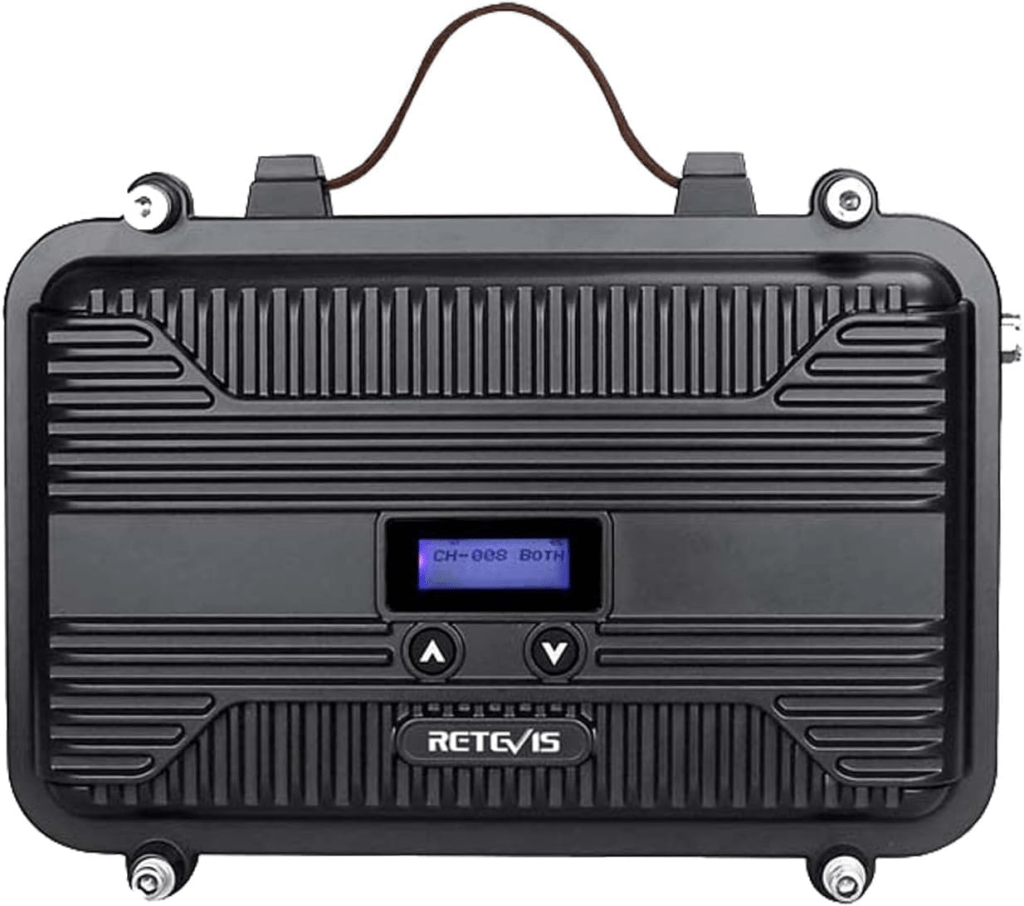
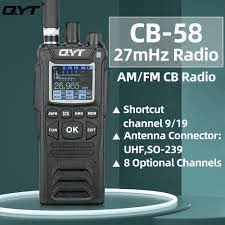
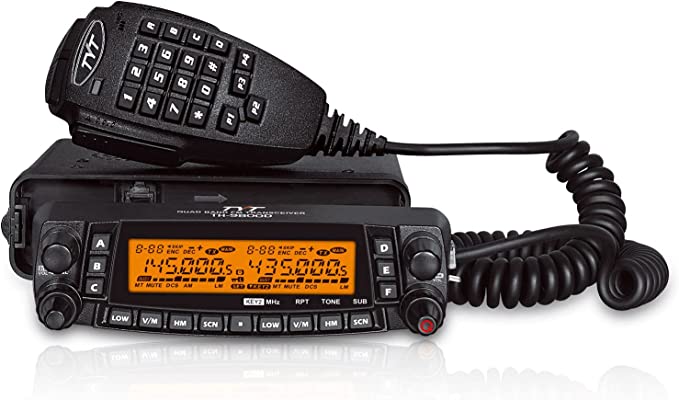
Even NC Scout had given up on CB until I showed him a couple of new radios I had been experimenting with, most notably the QYT CB-58, which uses all the same accessories as your Baofeng radio, including the data cable. For running convoys in rural areas, it can’t be beat.
With the addition now of FM to CB radios, you get better sound quality and the ability to filter out the radio trolls by using CTCSS tones.
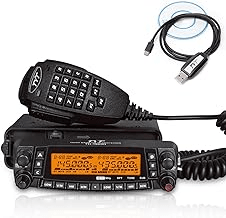
I have HEARD that the Anytone 5555 radio I recently bought, which is a 10 and 12 meter ham radio, NOT a CB, can be turned into a 60 watt CB with Single Side Band (a way to boost your signal) by cutting a single wire (which is white with extra length to allow a pair of cutters in) and moving one jumper. But, listen, don’t buy the radio and do that. It would give you a very powerful CB and the FCC doesn’t want you to do it.
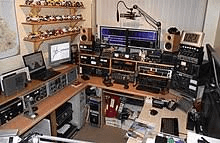
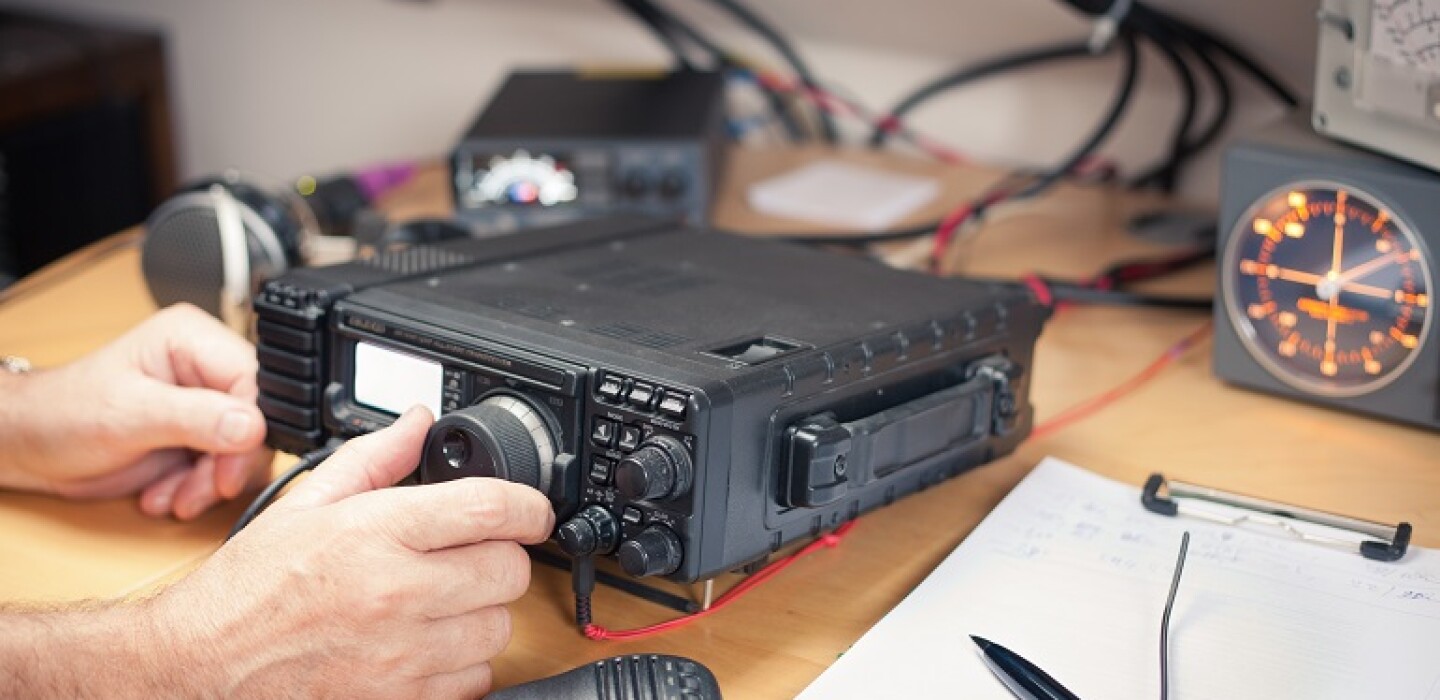
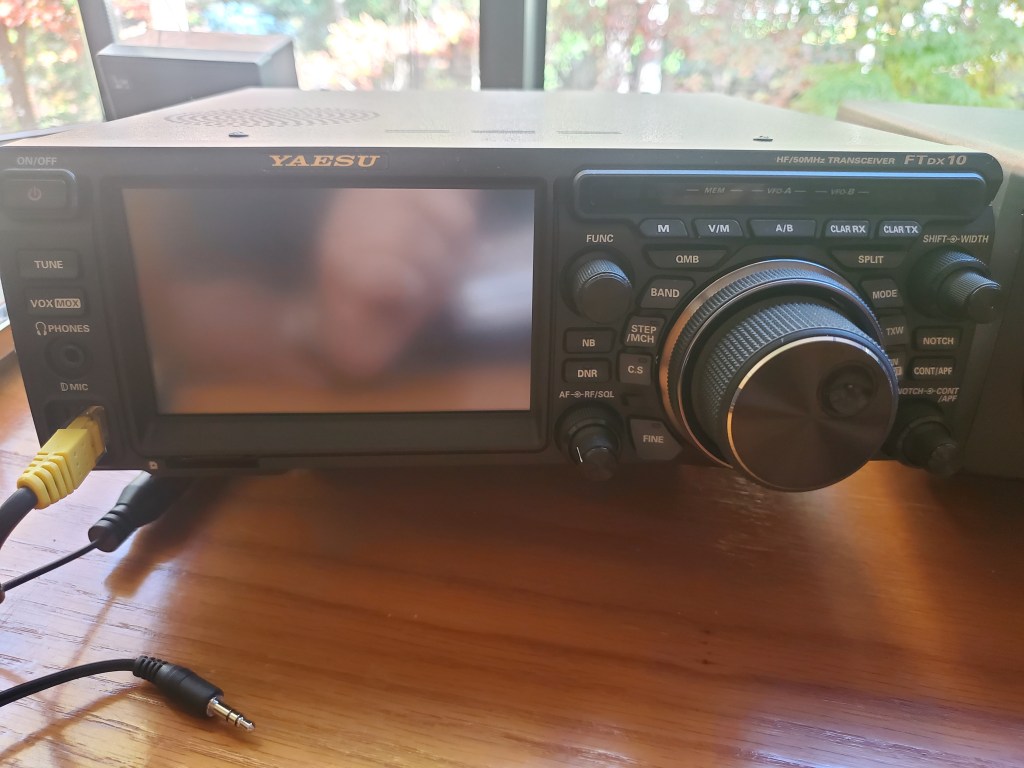
For longer range communications, we start getting into HF radio, which requires non-handheld radios and more expensive set ups. No license is required to listen and there are several receivers you can buy to hear these networks and updates. AMRRON and S2 Underground both run information networks over HF radio during these types of events that anyone can listen to.
Finally, I’d like to talk about the Channel 3 project started by our friends at AMMRON. This project says that every hour at the top of the hour during an emergency, all preparedness-minded folks should listen to MURS 3, FRS/GMRS 3, CB 3, and 146.420. This way, you can connect with help from like minded folks. I urge you all to WRITE THAT DOWN. It’s in my books and everything.
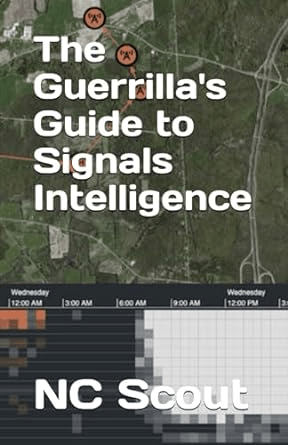
The time to get your radios programmed is now. I’m including the frequency charts for FRS/GMRS and MURS to enable you to do that. As always, you can click on Consulting Services and learn how to send radios to me for programming, but you can indeed do it yourself and you should learn how to. Buy NC Scout’s fantastic book on this.
If you like this content, either donate below or sign up as a monthly supporter at tacticalwisdom.locals.com.
We are hosting a course by Combat Studies Group here at Camp Ponderosa this weekend on privacy and security. It will his Groundrod 1 course.
Stay safe.
Donation to support website







































































 Tactical Wisdom