Featured

Seasonal Changeover

As we approach Mid-May, the weather is getting warmer. On Monday, I decided to do a seasonal changeover on all of my bags. As I was finishing, I thought it would be a good idea to share with you all my thinking and methodology.

By now, you should all have ordered a copy of the Base Line Training Manual, where I describe each of the bags, but in case you haven’t here’s a review. You should have a Vehicle Bag (always kept in the car), a Get Home Bag, an EDC/Patrol Bag, and a Full Ruck. You can order the book here, where I fully describe each bag’s contents:

For the Vehicle Bag, I removed a heavy fleece liner for my field jacket and replaced it with a lighter weight jacket, as the temperature won’t be as cold at night as it has been. I left the GoreTex outer layer in the bag. The GoreTex in this bag is plain black, so that it’s more Gray Man. I double checked the contents of the survival kits, to be sure that they were still fully stocked. I also checked all the expiration dates on food in the bag, and double checked the batteries in the lights.

I keep two full US 2 quart canteens in the back of my SUV in case of emergency and the seasonal change over is a great time to replace the water in them.

In the Get Home Bag, I swapped out a hoodie for a long sleeve t-shirt. This lets me retain the ability to change appearance quickly, yet not be too warm for movement. I also replaced a knit cap with a baseball cap for quick profile changes. I double-checked and re-stocked the first aid kit. I also checked all batteries in this bag.

I made similar changes in the EDC/Patrol bag. In this one, however, I left a watch-cap in it for night-time warmth. I took out heavy winter gloves and left lightweight liner gloves in their place. I double-checked the dates on the MRE’s and verified that the first aid kit was complete. I keep an extra Swedish M84 canteen on the side of this bag, so I rotated the water in the canteen.

Solid Tactical Wisdom

The Full Ruck had some more serious changes. I took out the full sleeping bag, since it’s now warm enough to just use a Ranger-Roll. I took out the heavy-weight snivel gear (long underwear for you non-Marines) and replaced it with silk-weight Under-Armor gear. I replaced the two sets of camouflage uniforms in the Ruck as well. Since I live in Michigan, the browns and tans of USMC Desert MARPAT and British Desert DPM worked perfectly for fall and winter. Now that the foliage has grown back, I put in two sets of USMC MARPAT Woodland and one set of All-Terrain Tiger (I had room after removing the sleeping bag for an extra set). I left the UMSC “Wooly-Pully” sweater in the Ruck just in case.

I doubled checked the dates on the MRE’s in the Full Ruck, and also inventoried the camp gear in it. I added a 10mm black yoga mat to the outside of my Ruck on the opposite side as my backpacking tent for use as a sleeping pad.

The final check of the Full Ruck was to attach the Patrol Bag and wear both to test the weight and make sure it was still balanced, not too heavy, and that it was still quiet.

You should conduct a changeover like this at least every six months, and preferably every season. An emergency is not the time to find out if you gear is still all set or seasonally appropriate. Preparing your bags is an ongoing exercise, not a one-time event.

If you’d to like help us continue to produce content, inlcuding Tactical Wisdom Volume 2, Fieldcraft, please donate below.

donate-8

Donation – May 2021

Donation to produce content.

$5.00

Is EDC truly EVERY DAY?

We all talk a good game on social media. We all talk about how prepared we are every minute of every day – but how accurate is that? Those “EDC Pocket Dump” photos are all so carefully laid out and posed. They remind me of the field gear displays we’d have to lay out on our bunks before leaving on an exercise….Once the platoon sergeant came through, we’d put half that crap back into our lockers and pack light.

How often do we really do that in our daily lives? We talk about our Get Home Bags or Bug Out Bags, EDC pistol and knife, truck/trunk guns, but do we really carry them? Sire, you’re going to put into the comments that you do every day, but this is the internet where we all pretend to be perfect. I skip stuff lots of days.

Be watchful, stand firm in the faith, act like men, be strong.

1 Corinthians 16:13

The first step in being watchful and standing firm is to always be ready.

I had a rude awakening to this last year when I came across a serious injury accident. While I had all the gear I needed, I had neglected organization and hadn’t counted on having to send someone else to my car to find my buried med kit while I maintained direct pressure on a bleed. I also live somewhere where humans aren’t the only threat of physical attack and you might find yourself in a gunfight with a hungry bear or mountain lion. These things have made me up my game.

The Norse also had a verse about this in the Havamal:

Let a man never stir on his road a step without his weapons of war; for unsure is the knowing when need shall arise of a spear on the way without.

Havamal Stanza 38

Bad things never happen when we expect them to. Nobody ever said, “I planned for someone to attack the mall while I was there today”. It’s easy for us to say, “I’m just running to the gas station, I don’t need all that stuff”, despite us knowing statistically that the gas station is probably the MOST LIKELY place we’ll need it.

I get it, some of us live in states, counties, or federal districts, or even countries that forbid the carrying of firearms or knives. I’m not a lawyer and this is not legal advice, but John Mosby of the Mountain Guerrilla blog put it best in his book “Guerrilla Gunfighter: Clandestine Carry Pistol”. He pointed out that sometimes, like the moment we are in, the risk to your life is worth the legal risk. If done right, the only time someone will know you carried is after you’ve saved a bunch of lives. Make good decisions: Would you rather be dead or alive? Which would your family prefer? You have a responsibility to defend your family. But guns and knives aren’t the only tools you should carry.

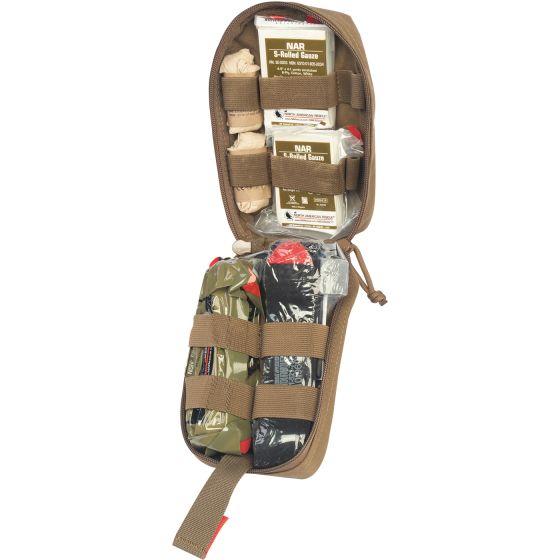
Carrying a first aid kit is perfectly legal in every state and country, so why don’t you carry one? I have small kits in every bag that I carry, a larger vehicle kit, and a small “bleed kit” that I carry in a pocket on my body. The bleed kit is just a tourniquet and a pressure bandage, but it may be enough to start treatment.

What’s in your first aid kit is just as important. I know, the current cool-guy trend is to only focus on major trauma like gunshot wounds and knife wounds, but you are FAR more likely to trip and fall, so carry SAM splints and ACE bandages to wrap sprains and strains. Boo-Boo kits can keep small cuts from becoming infected. Carrying glucose gel can literally save someone’s life – but know how and when to use.

Not carrying stuff you don’t know how to use is important as well. I know a bunch of guys carry around needles to reduce tension pneumothroax because they watched Three Kings once and then saw a Navy SEAL carrying one on TV, but they couldn’t tell you what the indications are for needing to reduce tension pneumothorax, let alone be able to find the proper spot to insert the needle. Please don’t carry tools or medications that you don’t know how to use or dispense. Get trained if you want to carry cool guy stuff. By the way, I don’t want you to stick me with that nasty needle you’ve been carrying on the outside of your plate carrier – put it inside the kit. Everyone will know you’re a guy without signaling with a needle beside your knife that you have mounted at an angle that is impossible to draw during a fight.

Do you carry a seatbelt cutter? Downrange every soldier, sailor, Marine, and airman (and contractor) carried one on their plate carrier when it could be reached with either hand. You don’t want to be stuck in a rolled over vehicle in Colorado or New Jersey any more than you would have in Iraq or Afghanistan. I carry one on my bag that it is always within arms reach of me.

Do you carry a pen and a notebook? You should. If an incident should happen, write down the details immediately. If your car is stuck in a blizzard and you have to start walking, write a note describing when you left and your planned route, so that rescuers know where to look and who to contact. It should be rite in the rain/waterproof, by the way. I also carry waterproof medical patient cards for recording complaints, physical condition when found, and vitals. When medics arrive, I can just hand over the card. Always try to get those back after ward, by the way, they can be great legal defense against false claims or to show that you attempted to aid the young scholar who got shot trying to rob you.

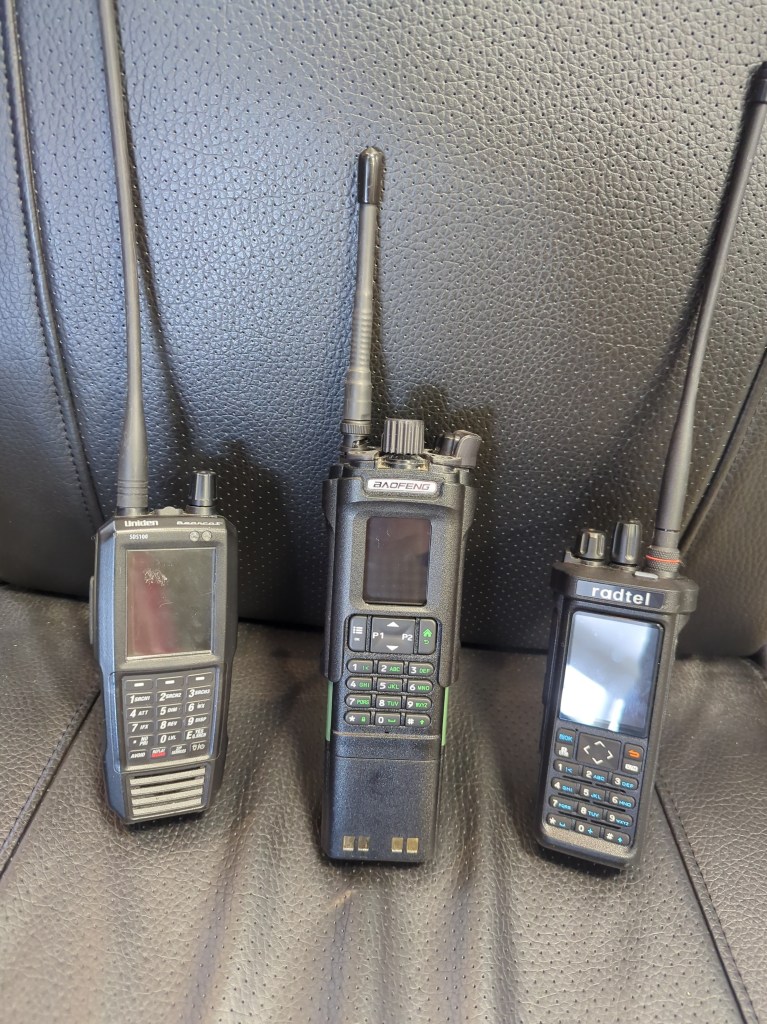
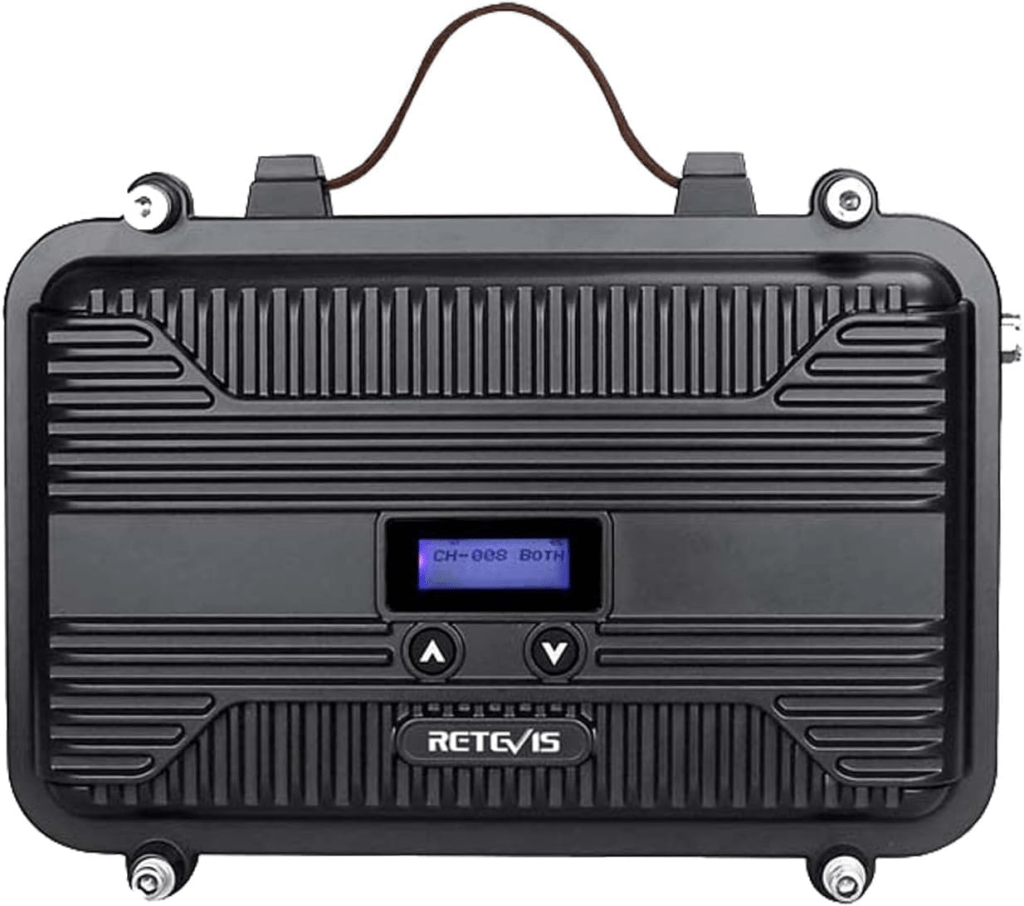
The other thing I always carry is a radio (yes, I’m aware you all collectively rolled your eyes). I carry my everyday radio that I use to stay in touch with the camp and my like-minded friends, but I also keep a second radio in the backpack inside a Faraday Dry Bag just in case of an EMP or atmospheric anamoly. These radios need to be programmed with your group’s emergency comms plan and EVERYONE in your group needs to be at least carrying one (it doesn’t even have to be on) at all times. As a reminder, DMR radios like the DM-32UV, allow you to send text messages radio to radio (yes, sad hams, it’s legal on GMRS) so that you can be in touch without using voice radio. Text messages go farther than an analog voice signal does.

I also carry a compass with me everywhere I go, along with paper maps of the area I will be in. NO, it’s not a burden. I literally just carry a sheet map of the local area in the front of my BattleBoard with a compass in the top of my backpack. If I have to walk home, it’s probably shorter to go cross-country, but I want to be able to see that first on my countour map. A map will also show me where I can find water. It may seem simple, but here in the mountain west, it’s important. That 40 mile commute you do to work in your car in less than an hour becomes a 2-3 day walk on foot (longer in the winter) and you’ll need to refill on water.

Food is the other EDC essential. Carry a couple of Clif bars, energy bars, bag of jerky, whatever, so that you aren’t starting with zero. Someone recently sent me a 12 pack of hot & spicy SPAM singles, so I’m good to go! Seriously, SPAM singles are a good survival food because its protein, fat, and salt all in one handheld meal. Whatever you choose, carry something. Remember that if you are carrying dehydrated foods, you will need a small stove and a vessel for heating water, as well as extra water. I carry 4 2-quart canteens in my car as a backup. Sure they’re heavy at first, but as you drink them, they get lighter.

Carry some preparedness basics every day, without fail. Lt Murphy likes to show when you are least prepared, but you can defeat by making your “least prepared” state pretty darned prepared anyway.

If you like this content, become a monthly supporter at tacticalwisdom.locals.com or make a donation below.

Making Smart Decisions

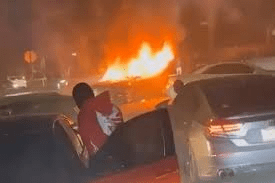
Over the weekend, a “street takeover” turned violent and an older couple in Queens were beaten by the crowd and had their car set on fire. There are a number of lessons we can learn about preparedness in this chain of unfortunate, yet predictable, events.

The way of fools seems right to them,
    but the wise listen to advice.

Proverbs 12:15

First don’t let the media lie to you and use the tame term “street takeover” or “drift racing” events. They are RIOTS. An ARMED group comes into an area, seals off the roads and drives their vehicles around in circles at a high rate of speed. Eventually the group that gathers turns to looting area business, damaging property, and sometimes shots are fired.

The Malba neighborhood consists of mostly older couples, the type who still believe in our system of laws and who have blind faith in law enforcement. That was mistake number one. These residents believed that the police will always come when called and that the police will always support the law-abiding resident, but that’s just not true anymore. When the residents began calling 911 about the dangerous crowd and activity, they were told that the police would not respond and that they should call a social worker assistance hotline to “de-escalate the situation”. That’s right, the largest police force in the US told citizens that they WOULD NOT respond to a lawless crowd engaging in dangerous activity. That, dear friends, is lesson one. Stop thinking the police are coming to your rescue.

Next comes the bad decision these folks made, based on their belief that the American system would still help them. They went out and asserted their property rights in the midst of a potentially violent crowd. Yes, they were 100% within their rights to do so, but was it a wise decision? The man ended up being beaten and is lucky to have survived the encounter. Sure – it was indeed their property and they had a right to assert their rights. However, at the time, all that had happened was casual trespass. NYC has never been known as a huge supporter of property rights and the new administration will be even worse.

These people also erred in thinking that the crowd would respect their property rights or be deterred in any way with the threat of legal action. This crowd knew the legal climate better than the residents (note – your area study should include an analysis of prosecution outcomes for trespass, burglary, and the like). Understand the legal and law enforcement situation in your area. This will teach that the right thing (asserting your rights) might not be the best decision. Now – I know several of you are going to put very edgy comments below about what you would do and how shooting people solves this, but the TRUTH is that in NYC, this would land you in prison. Let me know when you turn away a violent crowd at gunpoint and I’ll sing your praises.

Read the news about these types of street takeovers so that you understand what they really are. A quick read of stories over the last 12 months across the country would show you that the very few times law enforcement even responded, they retreated in the face of the crowd’s violent attacks on them. That’s right, most street takeovers involve NO police intervention other than sealing off the area and letting the crowd run wild.

The next bad decision was taking a bat outside with him. Sure, there was a crowd, but bringing a bat out increased the likelihood of a violent encounter. A firearm would have been a better choice, but this is NYC. His best bet would have been being unarmed. He’s lucky the bat wasn’t used on him. The bat also will cause you legal issues if this ever went to court. Coming out with a bat could be construed as a offer to mutual combat. In several states, that invalidates your ability to prosecute someone for assaulting you and in some places (LIKE NYC) it can transfer the criminal intent to you.

I’m not trying to beat these poor people up, I’m trying to help others to learn from their mistakes. I do have a few solutions to maybe help.

The first is, obviously, don’t live in places that refuse to honor your rights if you can avoid it. Don’t live in states that limit gun rights or self defense. Don’t live in cities that refuse to prosecute criminals. I get it, many people can’t just up and move. But, if you can, get out. I did.

Next, establish a clear and defensible perimeter. Defensible doesn’t just mean tactically, but also legally. A legally defensible perimeter generally means at least a sign, but maybe also a fence. Read what your state requires to support a trespass prosecution, even if you know they won’t prosecute. Why? Well, if you are ever sued for defending your property line, you can point to the fact that you did everything required by law to protect your property. For signs, avoid the gimmicky “cool-guy” ones about shooting trespassers, as they have a nasty habit of turning up as “exhibit one” at trial. The fence, to stand up in court, doesn’t have to be the 6 foot chain link one with 18 inches of barbed wire on top. It can be a simple one-foot high decorative chain along your property line to mark it.

Finally, as the legendary Kenny Rogers said, “you got to know when to hold em, know when to fold ’em, you got to know when to walk away, know when to run.” If there is a single person or a small group trespassing, go ahead and demand that they leave. If there is a loud crowd of over 100, already engaging in criminal activity, don’t. Pull your perimeter back to the house doors and windows, which are easier to defend anyway. Choosing the time and place to fight isn’t cowardice, it’s TACTICS.

As a side benefit, the law is going to be WAY more on your side if you kill someone for kicking in your front door than if you have to shoot someone for trespassing on your lawn. In fact, in Michigan, the “Self Defense Presumption” allows the use of deadly force WITHOUT WARNING if someone forcibly enters an occupied dwelling. I teach in my Community Security Ops course to know and train on your state’s self defense and citizens arrest laws (no, I don’t want you being a wanna-be cop – citizen arrest laws generally give you MORE authority to use force than self defense laws as well as allowing you to pursue suspects).

I want to end by telling you that after the man was beaten, his car was set on fire. Secure your vehicles if you can. Garages help, but parking them inside a fenced perimeter helps.

No is coming to help you. Train like it, and make good decisions on when to escalate, and when to hold what you have. Someone on my lawn isn’t a deadly threat or a threat of loss. Be smart.

If you like this content, sign up as a monthly supporter at tacticalwisdom.locals.com or make a donation below.

Winterize Your Gear

Yep, it’s that time again. As the weather cools off and the days get shorter, it’s time to update our basic loadout. Also, as we are seeing increased attacks on power substations and increased partisan rhetoric, we might as well up our game while we’re at it.

First, cold weather gear. The key to cold weather gear isn’t a massive coat and pant set, it’s layers. Layers that you can add or take off to maintain comfort. If you are sweating, you have too much on. Add warming layers to your Get Home Bag or vehicle kit in case you need them. As a reminder, GoreTex is for when you are stationary, never for while you are moving. As much as it keeps water out, it keeps heat in and you will sweat.

An overlooked item is LEG GAITERS. Now that I’m in Montana, I swear by them. The keep the snow or rain off your lower pant legs. Without them, capillary action has the wetness creeping up your pant legs, making you cold and miserable. Find some quality leg gaiters and keep them with your daily gear. Mine are Outdoor Research and they are tough.

Gloves are the same way – go with layers. Start with a liner glove then add warmer layers. In REALLY cold weather, mittens are king. Again, I go with Outdoor Reseach Firebrand Mittens, which are the US military’s current issue.

Shelter and fire-making are important in winter. As far as fire-making, I carry a lighter, plus storm-proof matches and a ferro rod – 3 ways. Sure, you can learn old-fashioned ways like a bow-and-drill or a fireboard, but those are for honoring tradition, not betting your life on. They burn precious calories that you need. Trust me, if Daniel Boone had known about the Bic lighter, he’d have carried several. Carry some type of tarp to rapidly set up a shelter. I use US military tarps.

Upgrade your vehicle gear. I pull out my regular collapible shovel and put an extendable snow shovel in my trunk. I add a Klymit Horizon blanket to my trunk, to pair with my wool blanket I keep in there. The Klymit Horizon is waterproof and very warm. The wool blanket is the new one from Arcturus, who make the thermal tarps I use. If you carry a sleep system, add in your winter bag.

Extra socks are important. Carry a heavier set as well as replacement standard socks. Change wet socks ASAP in cold or wet weather. Buffalo Wool Company Kenai Boot socks are my go-to socks. I also use their sleep socks when camping in cold weather.

If you keep emergency food in your car, put it in a cooler for the winter. This should keep it from freezing. It’s a good time to check the dates on all your emergency food and rotate your stock. Use up things that are getting close to expiration and make a shopping list to replace them.

Remember that cold will sap the energy out of batteries, so carry extra. Make sure all you radio gear is charged up. I take this chance to take the tactical radios that I keep in SLNT Faraday dry bags out and charge them up. CARRY A RADIO.

Double check your first aid kits and restock them all. Carry one every day.

Let’s talk tactical side too. It’s time to change your emergency camo. If you live in an area with snow, get a white or snow camo pull over (the surplus German ones are great). If you live somewhere that has dead leaves and grass but not a lot of snow, desert camos work great in the winter. MARPAT desert or Desert DPM (British) are my favorites. Because I live in the alpine forests of Montana, I wear desert pants and a woodland top. Works like a charm. While it is snowing or if I’m stationary, I put on my Pencott Alpine pullover (Helikon-Tex Swagman Roll).

Switch over to winter gear and be ready.

I have a Winter Survival course here at Camp Ponderosa December 13-14 so get signed up.

If you like this content, become a supporter at tacticalwisdom.locals.com or make a donation below.

Hunting is Training

Hunting is a great way to practice your Fieldcraft skills. You are attempting to outwit a living, thinking organism that doesn’t want to be killed, just like in an actual combative situation. It’s also a huge part of your heritage, regardless of your ethnic or national origin – all humans have hunted for food at some point.

But first, some Tactical Wisdom about hunting:

The lazy do not roast any game,
    but the diligent feed on the riches of the hunt.

Proverbs 12:27

Even Major Rogers and Rangers know the value of hunting as training, and they incorporated it into their Standing Orders:

When you’re on the march, act the way you would if you was sneaking up on a deer. See the enemy first.

Standing Orders, Rogers Rangers

When I speak of hunting, I don’t mean climbing into that heated shed you put up on a platform over a bait pile. I mean old fashion HUNTING. Getting out, tracking animals or just walking the woods looking for animals.

Hunting can be done year round. Hunting doesn’t actually require you to kill game, just to find it and be able to get close to it. I suggest tracking or stalking until you get a good 3 second sight picture. You don’t have to shoot anything. You’ve accomplished your training goal if you get within range and obtain a sight picture without spooking the target.

Before someone screeches, let me just say that you need to know the game laws in your area. Some times of the year it is unlawful to be in the field with a rifle and ammunition without a hunting license. Others have open seasons on things like racoons or coyotes year round, giving you a reason to be hunting. We should give fish and game regulations that exact same level of respect we give the FCC regulations and NEVER violate them.

Still Hunting is walking quietly through the woods, looking for game or signs of game, and then tracking and stalking it. This gives you a chance to develop and test out your fieldcraft skills and individual movement. Once you locate game, try to get as close as you can without being detected. Then, obtain a 3 second sight picture.

Just today, I came across a young buck and surprised him at less than 10 yards. Even then, he couldn’t see me and just stood there, trying to see where I was. I obtained the sight picture, then waited for him to walk off. Then, I tracked him and obtained another sight picture, and he never knew I was there. Great training value.

Stand hunting involves setting up a “blind”. I’m not talking about a pop-up camouflage tent-style blind you bought at Cabela’s, I’m talking about building a concealed ground blind using all natural materials. It’s an art form. I learned it from my Dad and my uncles over years of hunting together. Those same skills will enable you to set up an Observation Post or an ambush position. The art of picking where to put your ground blind is great practice for setting up ambushes, since you are literally trying to set an ambush for deer (or elk).

Stand hunting also gives you training in an overlooked topic – remaining still yet 100% observant in an ambush position. When we do the Scout and Recce classes, we end up laying prone in a hide site for hours waiting for the students to pass our ambush. It’s hard to do without practice.

Another benefit hunting gives you is the ability to practice using your optics in real world settings. I used my Vortext Recon R/T spotting scope and my Khyber Optics 3-18×50 MPVO extensively for scanning. Sure you can use your scope on the range, but that’s only for shooting. When was the last time you practiced using your weapon mounted optic to scan a sector or estimate range? Make out fine details? I was searching a 6 power, then when I saw a deer I ratcheted it up to 18 power to check the antler size (only a small 4 point, so I let him go to grow up).

I also some of my other gear in the field today, like my Helikon Tex Swagman Roll. It’s a wearable poncho liner/sleeping bag. You can get them in solid colors or reversible camouflage – mine is Pencott Wildwoods on one side and Pencott Arctic Zone on the other. Great piece of gear.

Tonight, I brought out a radio and a jungle antenna, and tossed it into a tree for training. Setting up comms at an ambush site or hide site near an OP is a good skill to get a free rep in on. Don’t just let your gear sit. Putting up comms like this is better than a classroom or backyard training environment because you are trying to not be detected, just like you will in a real world scenario. Taking it down quickly and silently is important training as well. The more you do it, the better you’ll get at it.

Don’t just stomp your way into your blind and stomp your way out, practice real life movement. I stalk my way in, set up a quick ground blind, and then hunt. Just before leaving, I take everything down, dismantle the blind and scatter the material, and then erase any trace that I was there. These are good habits to get into and will really prep you for the real world.

Saturday morning, I placed a couple of people into a position and my plan was to still-hunt in a cirle around them, hoping to drive deer or elk past their position. Good plan, but about 15 minutes in, I detected another hunter moving along the same ridgeline. It was clear to me that he had no idea I was behind him. Me being me, I decided that I’d stalk him (no, I never pointed an optic or weapon at him). In addition to him being loud and unobservant (he missed a trio of deer that watched him and slinked away), I watched him cut across our land (I’ll be dealing with that later) in a way that suggested that he did this often. Neat – intelligence gathered by me for future security planning.

Of note, during the First Civil War (see what I did there), a regiment was formed entirely of hunters from Michigan and Wisconsin, called the First Michigan Sharpshooters. They were recognized throughout the Union Army for their outstanding fieldcraft. K Company was made up entirely of Native American/First Nations people was noted for “skirmishing ability, infiltration ability, and marksmanship”. Hunting builds warriors. One thing K comapny did was whenever they moved into a new area, the coapny commander ordered the men to roll around on the ground and in the dirt to get the local coloration on their uniforms. This is something both NC Scout and I still teach – take your Cobra/Viper hood or ghillie blanket and rub it in the local dirt and debris to better camouflage yourself.

Use hunting as a waay to train and to stay in touch with our heritage. However, I urge you to shun the modern way of hunting (heated & elevated blinds/pre-made pop-up blinds) and focus on true hunting heritage, which is fieldcraft skills. Learning tracking is a plus as well.

If you like this content and would like to support my work, make a donation below or sign up as a monthly supporter at tacticalwisdom.locals.com. You can also make a purchase from any of our affiliates above.

Recap: 9 Days of Training

I’m finally home from our big annual East Coast Training Week. This one was longer than normal, because NC Scout and I started with a weekend at Mountain Readiness. While there, I taught a Land Navigation Basics course and Scout taught Driving Under Night Vision, using his truck that has IR headlights. Mountain Readiness is a great event bringing together homesteaders, bushcrafters, and preppers for a great weekend of community building and training. We are bringing the event to Camp Ponderosa July 24-26, 2026 in Bigfork, Montana.

Praise be to the Lord my Rock,
    who trains my hands for war,
    my fingers for battle.

Psalm 144:1

The actual training week kicked off with my Fieldcraft Course. While Brushbeater’s Scout course teaches you to conduct small unit tactics, Fieldcraft teaches you individual light infantry skills. Student learn to move quiet and undetected both indvidually and as a team. They learn how to select, occupy, and set up a secure campsite. They learn how to mitigate thermal detection and how to set up tarp shelters in seconds. Most importantly, they learn to navigate with a map and compass in the day and night. The skills learned in Fieldcraft will help you in the Scout and Recce Courses.

Scout and Recce followed, where students learn to execute patrols, move as a team, ambush and react to being ambushed, as well as how to conduct a squad attack. Students get trigger time with night optics, thermals, radios, and digital communications. The course is live-fire with blanks, using your own equipment. There is a lot to be said for training to fight against armed opponents using your own gear. The noise and confusion of battle help prepare you for a real world engagement.

More important than the course content, each day the students shared meals and spent time getting to know each other. We held movie nights and informal side trainings (including a very detailed tactical medical course with Doc Teddy). Relationships were built. I cannot stress enough – meet your online friends in real life. Share meals and talk.

The students in all the classes got to learn how thermal drones work and got to see how easy it is to defeat thermals both from the ground and from the air. It dispelled a lot of fear and “Eye of Sauron” propaganda.

One morning, before class, a student asked Matt (NC Scout) and I about Venezuela. We should have set up a video camera, because we then launched into an hour-long live Radio Contra-like discussion and intel update on the Carribean situation, including the order of battle on both sides. I even drew a fairly accurate color-coded map (better than a CFC map segment, I might add). Matt, suspiciously, drew an accurate and to-scale map of Havana Airport and the Cuban Intelligence School.

I always return from these refreshed and recharged to get after it and up my game. I cherish the people I’ve met at these events, several of which I consider true brothers (and sisters). This is why everyone needs to try and make it to events to spend time together.

I’ve added a few courses to my schedule for this winter, including winter survival classes and a winter variant of Fieldcraft, covering winter variations in movement, camouflage, concealment, and shelter.

Train like you life depends on it, because it does. There are people who would rather see you dead than compromise with you.

If you like this content, sign up as a monthly supporter at tacticalwisdom.locals.com or make a donation below.

A Map and A Compass

In our overly modern world, some of the lost arts are at risk of fading away. Navigating by map and compass is one of them. Everyone carries their nearly-manadatory spy device with them and it very conveniently has several map and navigation apps on it. Do you know why? So that they can sell advertisers and anyone else who is interested information on your every move. Neat.

They’ve made it so convenient that you are perfectly willing to let them spy on you in exchange for easy navigation and the ability to find over-priced and low-quality coffee.

But what will you do if you are far from home and the networks go down? How will you get home? To the market to obtain food or medicine? How will you be able to map a route to Aunt Jennie’s place over the hills and through the woods?

I will instruct you and teach you in the way you should go

Psalm 32:8

The answer is obviously to learn how to use paper maps and a compass to navigate. Navigation is more than just knowing how to use a map and how to use a compass. It’s knowing how use both of them TOGETHER to positively find your location, plan a route to follow, and then follow it using the compass.

In order to do that, you have to learn that your map, the earth, and your compass all speak a different language. The difference between true north (the earth), grid north (your map), and magnetic north (your compass) is subtle but absolutely vital. It’s like a Scottish guy talking to a Canadian, and the Canadian then telling the story to an Aussie. One of my favorite ways of describing this is telling the story of NC Scout with his NC Accent trying to talk to an Irish bartender, after both of them had been drinking. They both got to the same area, but not quite exact….you had to be there. Anyway, with my translating and a lot of pointing, Scout and I got the Orange Jameson we wanted, and Kathy said “Oh, fer fooks sake, why didn’t ya jooost say soo?”. We all laughed.

Understanding magnetic declination is exactly like that. If you plan out a route only using the map and never adjust your azimuths for declination, you will never find where you are going. The farther you go, the more important it is. Learn to use a map and compass together and then navigate. The same goes with shooting an azimuth with your compass and then trying to plot it on your map…you need to adjust it first.

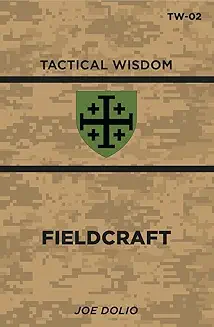
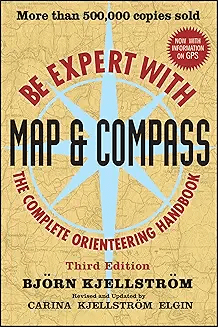
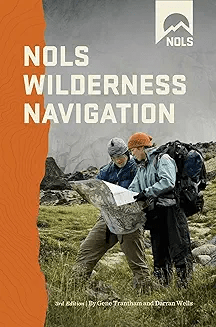
There are three great books for this, all linked below. The first, in my humble opinion, is the best: TW-02, Fieldcraft. A command sergeant major (USMC) called me to let me know it was the best explanation he’d heard. The second is Be an Expert with Map & Compass, which is where I pull my training drills from. The third is the NOLS Wilderness Navigation book. All three together make a great library.

For maps, I use http://www.mytopo.com, as they will let you build a custom topo map centered on whatever location you want. You can also buy topo maps from the USGS directly. Buy them now and have them on hand. Pick up free state maps everytime you pass a highway “Welcome Center”. Side note: Some states now require you to sign in and explain your trip to get one; it’s not illegal to lie to a rest room clerk. Another great kind of map is a DeLorme Atlas & Gazeteer. For good outdoor maps, National Geographic “adventure maps” are waterproof and tear resistant. You can find them for most of the US & Canada. GM Johnson is my favorite source for city street maps.

Topographical maps come with the declination printed on them, but for state highway maps and Atlases, you can go to magnetic-declination.com and get the declination for the center of the map and write it somewhere on the margin for future reference so that your map is always ready to use. I generally look up the declination for my destination before I go on a trip and write it in my handy notebook so that if the worst happens while I am away from home base, I have a good idea of the declination.

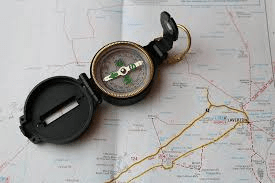
As far as compasses, I stick to the tried and true Cammenga Lensatic US military issue one. There are a lot of fancy compasses out there, but I haven’t found one faster in the field and on the move, ESPECIALLY AT NIGHT, than the Cammenga. The Brunton Lensatic is very close and lighter in weight, but it doesn’t have tritium. A caution for those with fancy compasses that let you adjust the declination: unless you reset it to zero after every trip, you’re going to get lost the second time you adjust it. If I adjusted it for 13 degrees west on my first trip, and my second trip is at 6 degrees east, unless I zeroed it in between, I’ll only adjust it to 7 degrees west, which is still 13 degrees from where I want to go. I just don’t adjust it – do the math instead.

Take a class and learn. This Friday, I’ll be at Mountain Readiness Fallout in Harmony, NC teaching Essentials of Land Navigation course. Next Tuesday-Thursday, land navigation is an entire day of the Fieldcraft class I’ll be teaching at the Brushbeater Training Center. As it is a physical skill, you have to get out and practice.

In addition to just navigation, learn resection and intersection. These enable you to find yourself (resection) or any point you can see (intersection) on the map.

Stop relying on technology. Start being self-reliant.

If you like this content, sign up as a monthly supporter at tacticalwisdom.locals.com or make a donation below.

72 Hours

If you’ve followed me for any length of time, you’ve heard me mention that you are never more than 72 hours from a complete collapse of society. That can be locally, regionally, nationally, or worldwide. A storm can happen, a grid collapse, or, as appears more and more likely, a civil war can happen.

It’s time to get your awareness level where it belongs. As I write this, A US Governor is openly calling for resistance, including armed resistance, to the federal government with the media cheering his supporters on. No matter which side of the issue you are on, you need to pay attention. Federal law enforcement agents are being followed and ambushed. Many public figures are openly calling for violence on both sides. Rewards have been offered for the killing of federal agents.

Meanwhile, we’ve had church attacks, bombings, bomb threats, and assasinations.

As someone involved in preparedness, you don’t get to just say “this isn’t my problem”. First, Chicago is in the center of the nation, any conflict or crackdown there will have national supply chain effects. You can say “I just want to be left alone” all you want, but the brewing conflict will impact us all.

As an example, I’m leaving on a cross-country trip in a few days. I have decided to re-route my trip to avoid Chicago entirely to reduce my personal risk but think that through. If everyone else does, what impact will it have on traffic on my alternate routes? That’s right, more traffic. You need to be paying attention and plan accordingly.

In February of 2014, people in southern Ukraine saw the anti-government protests in Kyiv and thought, “That doesn’t affect me, I just want to be left alone. The protests aren’t about an issue I care about.” Well, in 72 hours, 18-20 February, those protestors overthrew the government by seizing a relatively small area of downtown Kyiv. The nation was plunged into a civil war which remains unresolved today, all in 72 hours.

You might think, yeah, but that’s Ukraine. It’s just one example. War isn’t always the reason. Western NC and Eastern Tennessee devolved in under 72 hours and still aren’t fully recovered.

What I am trying to convey is that you need to be paying more attention and being on a more ready than not foot print. I know, everyone will say “I’m always ready for anything”, but I mean in real life, not just internet world. In internet world, we’re all perfect warriors poised for action, but the real world is different.

Check your Get Home Bag. Carry paper maps. Carry a means of backup communication (a radio or two). Occasionally run a surveillance detection route for hostile surveillance (I know an FFL who was recently being watched by bad actors). Carry escape & evasion and defensive tools.

For every trip you have planned over the next few weeks, have one or two alternate routes planned out – don’t rely on your GPS.

For the foreseeable future, I’m going to keep my full ruck in the vehicle with 14 days of sustainment. It costs me nothing but space and could very well mean the difference between life and death.

In recent days, there have been several incidents of right-leaning media figures or counter-protestors being assaulted or arrested at these protests. Don’t go there and instigate. You get arrested or hurt. Choose your fights carefully. If you feel compelled to observe, the OBSERVE. This is the time for the famous Gray Man. Blend in, don’t argue when grossly outnumbered, thinking that the police will do the right thing and help you. They are more likely to arrest YOU because it’s easier than arresting the other side.

I know I harp on it a lot but FILL YOUR CAR DAILY. There is no excuse not to.

While we’re at it, CARRY A FIRST AID KIT. Whatever your level of first aid training, get more. It may well be the only aid you get.

Have a realistic grid down plan, as there are multiple groups openly talking about grid attacks from Al Qaeda to ANTIFA, and the FBI is finding Chinese grid-attack weapons deployed all the time. You can’t just pretend it’s not happening or will only happen “in the cities”, as the electrical grid doesn’t work that way.

This environment of targeted attacks means it’s good time to maybe not carry your phone so much or carry it in a Faraday bag, like the outstanding new ones from SLNT, available at the link above. I’ve tested the new cross body sling pack, and it works the second you close the flap.

Have frank discussion with friends and family about the situation and what the reaction plans are for various events like severe weather, grid down, or open conflict. Waiting until they start means you are behind the ball. Run drills and tests.

Most importantly, stop denying that this is happening.

Situational Awareness

…then if anyone hears the trumpet but does not heed the warning and the sword comes and takes their life, their blood will be on their own head.  Since they heard the sound of the trumpet but did not heed the warning, their blood will be on their own head. If they had heeded the warning, they would have saved themselves.

Ezekiel 33:4-5

I know, I talk about this all the time, but the events of the last 8-9 days have me thinking it’s time to revisit this. Let me be frank:

WE MUST SEE THE WORLD AS IT IS, NOT AS WE WANT IT TO BE OR AS IT SHOULD BE.

In the days following the assassination (stop calling it MURDER, it was an assassination) of Charlie Kirk, everyone wanted to debate which small fringe group the shooter belonged to….was he trans, was he ANTIFA, was he a furry, as so on. The hard truth is the it DOES NOT MATTER ONE BIT. Charlie is still dead. I tried to explain that the point isn’t which small fringe did it, it was that there is a concerted effort by LARGER class of people (far left extremists of many stripe) to kill anyone to the right of Mao Tse-Tung. That is the REAL threat.

People WANT it to have been a member of some extremely small subset, because that absolves them of the need to maintain situational awareness. “If it’s just trans people, they won’t target me, because I don’t give speeches against them.” No response needed.

The truth is far darker and requires people to actually take responsibility for their own security. The truth is that you live in an insurgency and regardless of your political beliefs, you need to step up and pay attention.

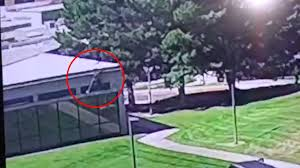
Since it’s the topic du jour, let’s talk about the lack of situational awareness on campus that day. Even after the shot was fired, no one paid any attention to their surroundings. Not one person saw a man danlging from the roof of the building the shot came from. Sure, someone caught him on video running, but no one called to report a man dangling from the roof, jumping down, and then running away. That’s crazy. When I hear gunfire, I immediately start looking for anomolies. Sure, that comes from a few decades of experience and being around gunfire, but still.

You need to start raising your awareness levels and accepting responsibility. Pay attention to planning demonstrations (they are usually posted to Facebook or Twitter) in your area by known agitators on the left and on the right. Plan your day to avoid them. Learn about your neighbors and who might be allies, as well as who might be threats. I track unusual vehicle activity by writing it down (I live very rural now so most vehicle activity is unusual). Pay attention to who is in your neighborhood. Read your police or sheriff’s department website and learn where their crime map is posted or where they put out press releases. Join Facebook neighborhood groups.

The Nextdoor app (which I call the Karen app), as annoying as it is, is a WEALTH of intelligence and situational awareness information. Instead of having to visit the neighborhood busybody for gossip, she can know broadcast it all to the world and you can just read it without having to talk to her. Use it.

Sign up for a service like Everbridge/Nixle. These are texting apps where local police and fire agencies put out alerts.

Whenever you are in public, stop every so often and look around. If you watched the video of Iryna’s murder, the lesson is to PUT YOUR PHONE AWAY. Trust me, you will live without seeing every like instantly. You won’t miss anything, that’s what notifications are for. Please stop being so engrossed in your phone, you miss a real threat to your life.

On that note, try to sit so that you can see all around you. I know, sitting against the wall is cliche, but it’s cliche for a REASON. Anytime you enter somewhere, note where the exits are. Many places also now have “stop the bleed” or “bleeding control” stations set up – learn where they are. In Walmart, they are generally in the front end, right at the restrooms.

Stop being so engrossed in your virtual, online life that you miss dangers or enjoying your real life.

Be situationally aware.

If you like this content, sign up for eclusive content at tacticalwisdom.locals.com. It’s only $5 a month and is well worth it. You can also make a donation below or make a purchase by clicking the affiliate links.

The Gray Man vs The Invisible Man

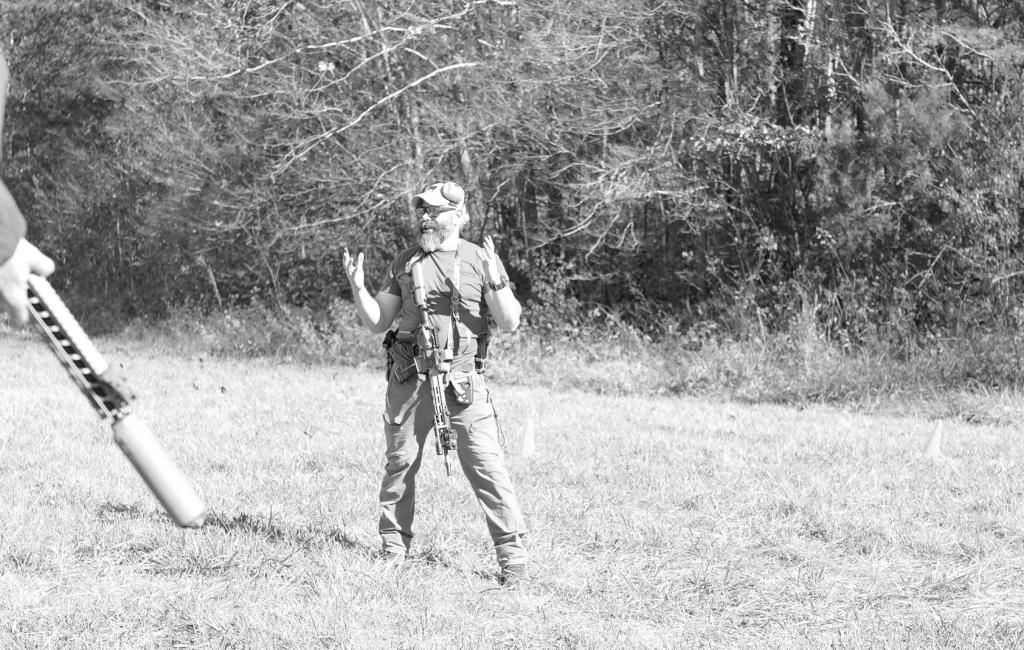
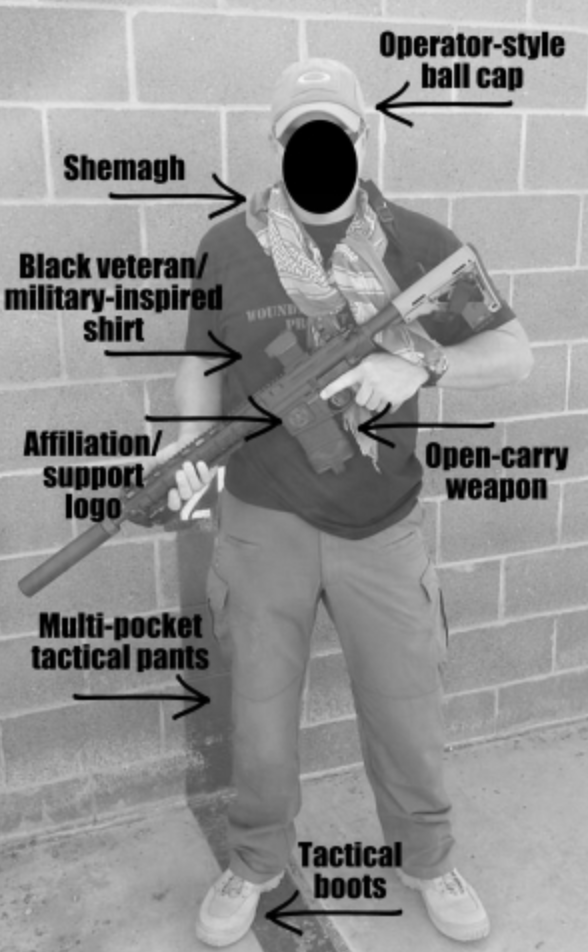
Let’s be honest. Most guys who say they “live a gray man lifestyle” look just like the guy in the photo. Heck, that’s honestly how I dress daily, but I’m not trying to be a Gray Man. They’re wearing a ball cap (to hide my hair color,bro), wrap around operator shades by Wiley X or Oakley, full beard, some type of t-shirt with a gun comapny or veteran logo on it (usually one size too small), some type of cargo pants, and the coolest cool-guy boots (Merrell, Solomon, whatever). Even if they’re not dressed like that, they still walk over to their pickup truck or large SUV and get in, and it has stickers (slaps) on it from all kinds of gun or knife culture. Invariably.

I’m not anti-gray man. I believe in it whole-heartedly, when it is done PROPERLY and in the proper context. In fact, it’s been a basic tool of my career in protection work and investigations. Gray man is nothing more than CAMOUFLAGE, taken to a different level.

For God gave us a spirit not of fear but of power…

2 Timothy 1:7a

First, let’s break this myth of the “Gray Man Lifestyle”. That’s not a thing and it’s silly to pretend that it is. You can mitigate the pattern-of-life information that you emit, but you cannot live truly gray. You lay your head somewhere at night, and it’s usually the same place every single night, thereby causing a pattern of life. You have to take your issued surveillance device everywhere you go, because how else can you post the IG selfies of how much of a gray man you are, right? All joking aside, Western society is addicted to their phones and we’ve allowed them to force us to need them for even the most mundane of tasks (checking in at a restaurant for example). It’s unrealistic at best to think you are in any way lowering your target profile if you carry a phone. You drive a vehicle that is usually registered to you or someone you know. It’s usually the same vehicle every day. You work somewhere, you pay bills, you have a bank account.

The idea of the “Gray Man” is a tactic to be used to accomplish a specific mission, and no more. It’s used to blend in to a local area and has to change if you change areas. For example, while jeans and a hoodie are “gray man” in most of western society, if you try wearing them to blend in near a business area, you’re going to stand out. In the same way, if I was wearing business casual and then I dropped into an all-Muslim neighborhood, I would stand out and need to change (I knew I kept that man-dress for a reason).

Once we realize this, we can then adopt all our thinking this way. If I am going to do something operational in a resistance capacity like gather intelligence or set up an ambush, I need to visit the area first and determine the baseline of what everyone looks like there. In investigations, this short surveillance of an area is called a preliminary site assessment, the military might call it close target recon. Then, I can more effectively plan. One note on this: Don’t take your phone, even to take photos or in airplane mode. Buy a digital camera, they are dirt cheap.

I had a friend once show me the “Gray Man” set up he & his guys were going to use once we got into a without rule of law society. They plan on wearing jeans and flannel, carrying standard backpacking packs, and regular hiking boots. As he said “then we’d just look like hikers”. After first asking him if he thought there’d be a lot of recreational hiking in the Boogaloo, I asked him if they intended to carry rifles. They are. Chest rigs? Yep. Sidearms? Yes. So, the plan is to walk around with a backpack on, wearing a chest rig, war belt, and carrying a rifle? Yes. Then you’re not being the gray man, you’re actually sacrificing more effective tools for the sake of a false sense of security.

So what are we to do? Well, it would be better in a full collapsed society (short or long term) to be INVISIBLE. What do I mean by that? Well, learn fieldcraft. Learn to camouflage yourself and your gear. Learn how to move undetected in the woods or operate exclusively at night. Have the tools to do that.

It’s better to not be seen than to not be seen as a threat. If I’m being the gray man, with only a concealed sidearm (because anything more isn’t really gray man), & a group of bad guys sees me as no threat, they’re going to decide to try and victimize me or my group. What if, instead, if they do ever see our 4 man patrol, they see 4 people in full war kit, moving as a trained element, obvioulsy ready for a fight? Do you think they’re going to target us? No, they’re looking for an easy hit, not combat.

That’s one of the biggest misconceptions in preparedness. Everyone thinks that criminals will somehow become braver. They be BOLDER and more willing to commit a crime, knowing no police are around, but their goal remains the same – to get away with your stuff unscathed. If a target looks too tough, they’ll pick someone else.

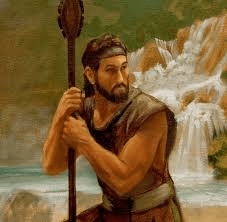
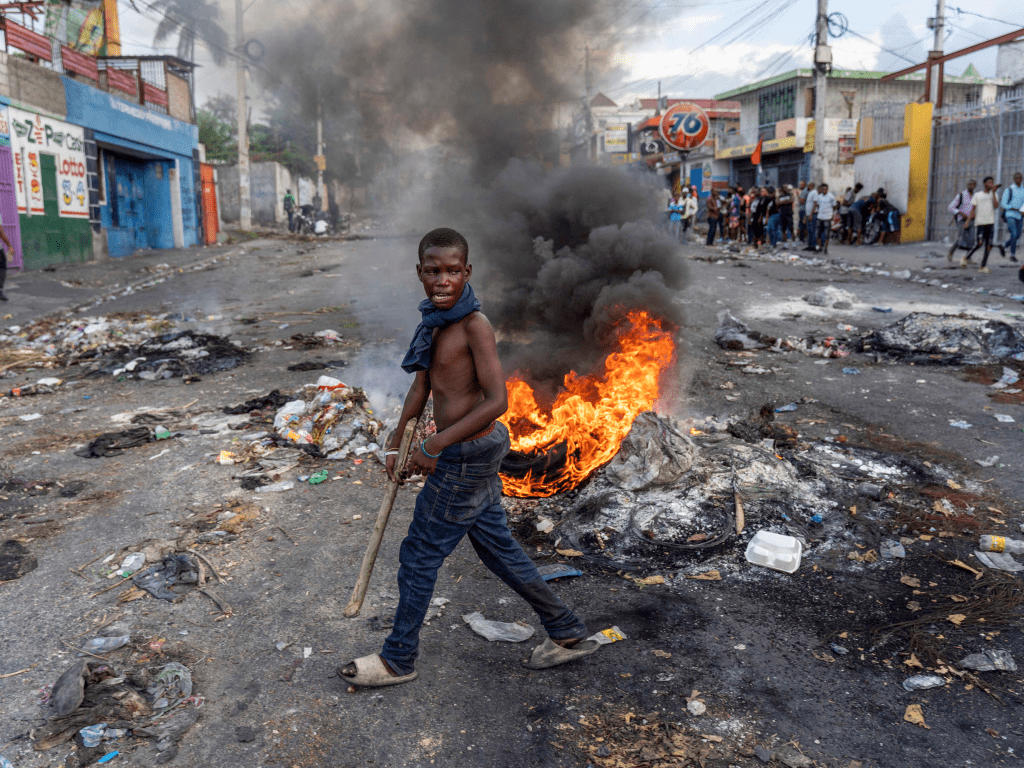
To validate this, the above photo is from the current trouble in Haiti. He’s carrying the stick like that because if the gangs see that he appears to be armed, they’ll attack someone else. He just wants to get home. Look like a wolf or you’ll get eaten by the sheep.

As Alejandro said to Kate in Sicario: This a land of wolves now, and you….you are not a wolf.

Understand what Gray Man is and when to use it, but also be prepared to be the Invisible Man or at least to give off the impression of a group no one wants to fight.

We are getting back to the Friday night exclusive videos at tacticalwisdom.locals.com. We’re going to start this friday at 9PM Eastern with “ATV Dragoons” – how to use ATV’s for battlefield mobility and fight as Dragoons did in older times (arrive by horse, dismount and fight). The topic after that will be the proper use of Range Cards. You will need to be a monthly supporter to join these videos.

You can also support me by buying books, t-shirts, clicking the affiliate links above, or by making a donation here.

Why Digital Radios?

Before I get started, let’s set some ground rules.

This is NOT a ham radio discussion. I will be saying things that ham radio “experts” will disagree with. If you are a ham radio purist, I highly recommend not reading. If you do, and I know you will, I give you this piece of Tactical Wisdom before you start banging away on the keyboard:

Do not let any unwholesome talk come out of your mouths, but only what is helpful for building others up according to their needs, that it may benefit those who listen.

Ephesians 4:29

OK, with that out of the way, let’s get started.

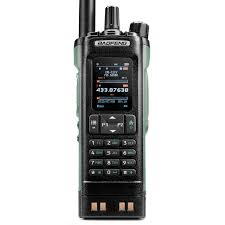
We all acknowledge that having UHF/VHF handheld radios like the ubiquitous Baofeng (pronounced Boo-Fwang) is a great idea. Living here in Montana has only affirmed that, as the 20 miles around me on all sides has no cell phone coverage whatsoever. We use radios to stay in touch. Analog radios, like most Baofengs, get the job done, for the most part.

So, then, why invest in and learn to use digital radios? Simple, digital radios give you the ability to send text messages, which can go farther than analog voice.

Before some “expert” decides to chime in with the inaccurate “BuT tHaT’s iLlEgAl”, let me explain a point about the FCC Rules (which aren’t laws). You can send data (text) via MURS (5 license-free channels in VHF) and licensed GMRS (yes, sad hams, even GMRS). The messages must be short and not interfere with anyone else. You cannot, according to overlords at the FCC, communicate via digital voice on either of those, for no other reason than because they said so.

We’ve found that the text messages travel much farther than analog voice, because they are a more efficient method of transmission. Far less bandwidth is used, enabling the signal to travel farther for the same energy expenditure.

A lot of you are thinking, “But isn’t DMR (digital mobile radio) complicated and hard to learn?”. Sure, if you want to do it like the hams, it is. But, if you just want to be able to send text messages, you don’t need to know all the different modes and programming. Just set up a digital channel, match color codes, and you’re in business. Text away via UHF/VHF radio. In all reality, you just need one guy in your group who can program the radios for you (you should already have a guy like this in your group). Heck, you can send your radios to me and for a small fee, I’ll set them up.

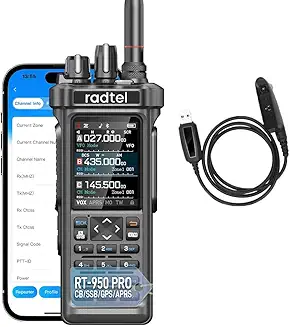
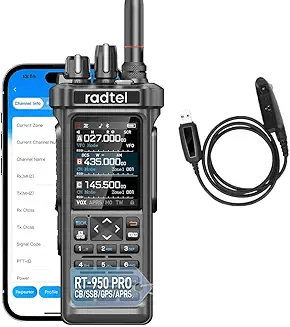
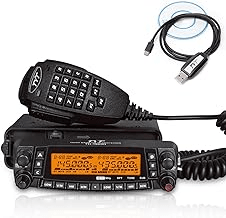
Since the Baofeng above (click the picture – it’s an affiliate link) allows you to monitor two channels at once, you can set the top to monitor your analog voice channel for regular communications and the bottom can be set on a digital channel to send and receive texts.

Brushbeater teaches the use of texting in his RTO and Advanced RTO courses, both of which I highly recommend.

Another thing you can do with the Baofeg DM-32UV, and many others, is send your location via APRS or Automatic Position Reporting. If I need to let someone know my location, I send it out as a digital message. I don’t recommend leaving this option on, but you can turn it on when needed.

A question we get comes from people confusing amatuer radio with preparedness. The question is, “But don’t I have to use a call sign as the radio ID?”. The answer is NO. Ham guys do, because their call sign is some sort of badge of honor, but the technology just requires an ID….it can be anything you want it to be. Just make sure that everyone in your group has a different ID in their radio. A side benefit to this is that you can address a message to a single radio, and none of the others will get it.

This is where a ham radio guy screeches that the DM-32UV isn’t type-certified by FCC for MURS or GMRS. That’s 100% correct, and it’s a violation of FCC rules to use them this way. Look, I said you were right. It’s just that I don’t really care and honestly, no one but you does. Not even the FCC. Seriously, go tell them you’d like to report someone using a radio that isn’t type-certified and see what happens.

This is where I also point out that the vast majority of businesses are out there using GMRS radios without a license at 4 or 5 watts every single day, as well as using non-type certified radios, and nothing every happens to them. As long as you aren’t interfering with others and acting like a decent human, you have nothing to worry about.

Use the best tools for the job – digital radio is a solid tool. You really don’t have to understand the science behind it to use it. It is helpful if you do, but it’s not required. Don’t be daunted by DMR.

If you like this content, become a monthly supporter at tacticalwisdom.locals.com, where we share book & gear reviews, intelligence reports, and exclusive video content. You can also make a donation below.

Unrealistic Expectations

Let’s discuss some of the unrealistic expectations that folks have in their training and preparations, shall we?

First, let’s talk about the costs of training. Negotiating a lower price seems to be something folks are trying more and more and let me tell you why that is a non-starter and completely unfair to the trainers. Training may be a hobby and a luxury purchase to YOU, but to US TRAINERS, it’s how we pay the bills and support our families. It is our full time job. We have countless hours invested in curriculum development and testing, course set up and then course tear down after. You wouldn’t try to negotiate prices with your doctor, would you? By the way, there is some Tactical Wisdom on this:

For Scripture says…. “The worker deserves his wages.”

1 Timothy 5:18

Some folks enter training with wildly unrealistic expectations. For example, I recently had a couple (who also pushed for a reduced a rate) ask to take Fieldcraft, but only wanted to do the land navigation part and only if I gave them a two for one price. About 5 hours in, they complained that it was running longer than they had planned. I explained it was ONE DAY of a THREE DAY course. While out in the field learning, it turns out that they were expecting to learn escape and evasion, field movement, shelter building, and land navigation, and all in 4 hours. I explained that those things all were parts of the full course and can’t be done in under 3 days. I also explained that one 4 hour course cannot transform you into Jason Bourne (see photo above).

There are a lot of people who think this is how it works. I’ve taken NC Scout’s Scout and Recce courses countless times (and lent a hand teaching) and still learn things every session. Same with his RTO and SIGINT courses. It’s the nature of being a professional.

Let’s address that too. Real trainers are stil professional soldiers. Just because they aren’t in the service of a nation-state doesn’t make them less of a professional soldier. We study our craft, we stay current, we train, we maintain our gear. We pass those skills on to you.

Enter training with the realistic expectation that even after a few days of learning new skills, you’re still going to be a novice. It takes practice, training, and more repetitions to master these skills. You aren’t going to be Jason Bourne or John Wick in a weekend. The flip side of this is that you will also need to set your ego aside when coming to training. We aren’t “playing army” or running an airsoft game (although my Lodge building is STILL full of airsoft pellets after K’s CQB course – Thanks, K) – we are training you to survive on a real battlefield. Take it seriously. It may be a hobby to you, but everyone else wants to learn.

Another piece to unrealistic expectations is people’s loadouts. Guys come to class on day one with a ton of gear on and by the end of the class they’ve dumped most of it. Twitter and Instagram are great places to build community, but they also breed silly ideas. You need to understand the true role of the guerilla fighter, partisan, or local defense force. You aren’t part of BIG ARMY or a nation-state force that is going to seize a stronghold. You are light fighters who will fighting entirely one-sided engagements and only under the best of conditions.

Why do I say this? Because more and more guys are posting photos of their “kit” including 10-15 magazines. Listen, as an armed civilian, and even as a resistance fighter, that is WAY too much. You will not be storming the Palace at Chapultepec, you’ll be launching an ambush, firing one or two mags, and then RUNNING. Even running an Entry Control Point (ECP) or other static defense won’t require that much ammo. If you expend 5-6 magazines, even in the defense, without artillery or air assets, you need to be MOVING. You can’t do that quickly bogged down with ammo. Be realistic.

Develop a realistic training plan with real (and measurable) goals. I can list off several guys I’ve seen develop from absolute zero in skill to being a fairly skilled light fighter, but it always takes YEARS, not a course or two. Take opportunities to serve as OPFOR at courses after you’ve done it. I guarantee you that the OPFOR is learning as well. It’s getting in more reps of the skills while helping the instructor and helping others learn. Several guys (myself included) have lost serious weight over a couple of years of training and realizing they needed to change something. Take it seriously, rather than doing it just for fun. Don’t get me wrong, training is indeed FUN and you can absolutely enjoy it, but remember to learn.

A great progression is something NC Scout and I hve started offering together and shoudl be your local group’s baseline training standard. We run 9 days of training that can be done in set. I run my Fieldcraft, which is very basic movement, camouflage, stalking, navigation, shelter building, and thermal mitigation skills, for the first 3 days. The next 3 are NC Scout’s Scout course, covering basic small unit tactics, light infantry skills, patrolling, and scouting. The final 3 are his Recce course, where you learn more advanced light infantry skills, conducting more advanced recon work, and assaulting an objective. Lots of night movement and training happens. These 9 days get you started right.

After getting those under you belt, I recommend some type of medical course, like a Stop The Bleed or TCCC course. Mech Medic, as well as Project 223 Preparedness run these types of courses. Next, RADIO. Everyone on your team should at least take NC Scout’s RTO Course or my Comms for Preparedness.

My Combatives Courses or some other type of hand-to-hand skills will be needed. In my weekend long course, you learn unarmed self defense, ground fighting, stick fighting, knife tactics, and cold firearm combatives (yes, including the bayonet). Get some type of skill in this area.

Most importantly, train with a purpose. Don’t go just to “hang out”. Go to become a serious student of light infantry skill and to become a more capable, and thus more dangerous, opponent in the days ahead. We need you, and we need you at your best.

If you like this content, sign up as a monthly supporter at tacticalwisdom.locals.com or make a donation below (please). You can also support me by buying from my affiliate links above.

Immediate Action Gear

Gather up your belongings to leave the land,
    you who live under siege.

Jeremiah 10:17

Like Fred Sanford, everyone is always talking about “THE BIG ONE”. Ask people what they are preparing for and you’ll get interesting answers. Pandemic, Russian or Chinese invasion, the Super-Quake, a polar shift, EMP strike, or an alien invasion. The truth is, everyday extreme events have the same effect on your life, even if they are hyper local. For example, it doesn’t matter one bit if an EMP strike took down the power grid nation wide, or if a local storm brought it down in your county – the effect is the same….you can’t get gas out of the underground tanks. It doesn’t matter if the flooding is due to a world-ending climate disaster or a local tropical storm, you can’t use the roads or cars.

Why do I bring this up? We are facing a tropical storm, tornadoes and floods have impacted our nation, and unrest is rising. It is time to discuss the immediate action gear you should have available on a daily basis right now. This is your “Get Home Bag” or “EDC bag”, whatever you call it. In the last few events, no one seemed prepared, despite continuous warnings. Americans (and Western Society in general) refuse to believe anything can happen to them and too self-absorbed to listen to warnings.

Let’s start there. Here, at the Camp Ponderosa front office, I keep a Marine Radio on all the time. Why, when I live nowhere the Great Lakes or the coasts? Because it has a built in weather alert which alerts me to severe weather inbound to my local area. Weather radio is free and the most basic of early warning devices. I’m always amazed when people tell me they don’t monitor weather radio. There is a station covering every area of most nations. At the very least, the US, Canada, and the UK have stations.

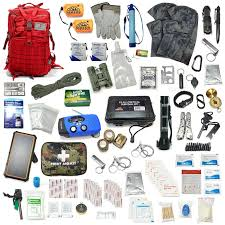
Assess the current state of your Get Home Bag. We all have some version, but we have a terrible habit of taking out pieces and using them, and not replacing them. For me, it’s the boo-boo kit. I’m always taking out knuckle or finger-tip band aids and not replacing them. Go through your first aid kits and fire-starter kits to make sure they are complete. Include lighters…I know that a lot of you fancy yourselves as some kind of bushcraft experts, but when your life is on the line, use the most effective tool. I assure you that is Davy Crocket or Daniel Boone had access to the Bic Lighter, they’d have used it.

Refresh your food and water. Tuna packets, chicken packets, or SPAM singles are good items to keep in here. Some amount of water and water filtration belongs in here and should be double checked. I keep a smaller water bladder and 10 refills worth of purification tablets as well as an inline filter.

Your hygiene kit is also part of your medical supplies. Staying clean keeps you infection free. Don’t neglect shaving tools and brushing your teeth. Any deodorant or wipes should be scent free, in order to prevent detection.

One of the biggest issues we’ve seen in the last few natural disasters is communications. Is your radio charged & programmed? Have you decided which band works best in your area (VHF for rural, UHF for urban)? Does your group or family have a planned radio protocol? Are you carrying your radio? Have you ran a test?

Update your plans based on seasonal issues. If there is a road that has heavy tourism related traffic, remove it from your plan during the tourist season. If there is any new construction, input that into your PACE plans.

Double check your navigation and observation gear. Do you have a compass and recent map? Put either small binoculars or a spotting scope/monocular in the bag. You may or may not carry night optics or thermals in this bag. I generally don’t, unless I was doing something work related that required them. Never mind what….

Batteries, batteries, batteries. Check the dates on the batteries you carry. Carry spare radio batteries. Have a charged battery bank. I carry a solar one, not because the solar panels are great, but because the trickle charge from the solar might keep a radio from dying long enough to get to a better charging solution.

Another item to include is a rain cover. They work great as a rain cover, sure, but mine serves a dual purpose. In my camouflage bags, I keep a black rain cover so that I can make it less tactical looking. The opposite is true my black or gray backpacks – I keep a camo cover in case I need to be more concealed. Think of it as a poncho for the backpack.

Things are getting worse, so make sure that your immediate action gear is ready.

If you like this content, please sign up as a supporter at tacticalwisdom.locals.com or make a donation below.

blacklogo

Donation – August 2025

Donation to support Tactical Wisdom

$5.00

Organizing

The other day, my friend Mike Shelby pointed out that people into preparedness aren’t organizing – they are preparing individually, but not organizing into larger community groups. He’s right. However, many folks criticized him for this. That’s because they don’t want to put in the work. Organizing is hard, buying and stockpiling stuff isn’t.

The Ultimate Tactical Wisdom guide agrees:

Two are better than one,
    because they have a good return for their labor:
If either of them falls down,
    one can help the other up.
But pity anyone who falls
    and has no one to help them up.
Also, if two lie down together, they will keep warm.
    But how can one keep warm alone?
Though one may be overpowered,
    two can defend themselves.
A cord of three strands is not quickly broken.

Ecclesiates 4:9-12

Mike suggested starting your own Search and Rescue team as a way to organize, and I think that’s smart. You could also set up a private Community Emergency Response Team (CERT), as there is no legal requirement for it to be sponsored or lead by a government agency. These give you “cover for action”, and establish that your group is a force for good, rather some rogue “militia” getting in the way.

I just wrapped up a Community Security Operations class with some good dudes this weekend and I pushed this point hard – Your team has to be seen as an agent of good, rather than as some fringe element. You have to be involved in serving the larger community. We do that here at Camp Ponderosa by holding community events and things like first aid training (thanks to Project 223 Preparedness).

The biggest hurdle we have to overcome is the fear of meeting together. You cannot build trust via online-only interaction. Gather together. Come to events like Shield Field Days in MT, Mountain Readiness in NC, or the Self Reliance Festival in TN. Come to class and meet each other.

Humans have built relationships around the campfire for millenia. Also, we build them over meals. That’s why at Camp Ponderosa, we either have our outstanding cook Jason (boilerman09 on Twitter) make meals for everyone or we go to a local restaurant together. Once in a while, we draft The Watcher on the Web to make Derby Pie (IYKYK). Share meals and fires together. At all of mine and NC Scout’s classes, we gather together in the evening for networking and fellowship.

When the folks challenge guys like Mike, NC Scout, or me to “then do something to organize”, I laugh. What exactly do you think us hosting classes and events is for? ORGANIZING and BUILDING NETWORKS. The guys who resist this will never come to class and will never get off the couch. Come and join us. Be bold. Organize in spite of the fear.

I have a whole training week coming up where you can attend Fieldcraft (Aug 22-24), Community Security Operations (Aug 25-27), and Combatives (Aug 29-31) all in one week (with both weekends). In the fall, you can join us at Mountain Readiness (Oct 17-19), then take Fieldcraft (Oct 21-23), NC Scout’s Scout (Oct 24-26), and NC Scout’s Recce (Oct 27-29). There ARE opportunities to organize, you just need to put in the effort.

“But aren’t you worried about feds??” No, I’m not, because we aren’t doing anything illegal. We are learning skills related to self-suffciency. If you are not coming to classes or events due to this irrational fear that everyone is a fed, congratulations, you are doing exactly what they want you to do, which is NOTHING. Join us and have fun.

The Price of Admission

The other day, Tucker Carlson asked us to envision an America full of men like Braxton McCoy. Know, I know Braxton personally. We spent a weekend together camping (yes, along with Sibley) in Viriginia. After that weekend, he asked me to run a Bible study for the men in his Bunkhouse group. We’ve communicated ever since.

What’s interesting is that the old Bunkhouse group was exactly, an attempt to bring men back to the traits of rugged individualism that led to American Greatness. I decided that we need to cover the Price of Admission to return to individualism.

The key is self-sufficiency. If you rely on anyone or anything else to provide for you and your family in any area (food, water, security), you can be forced to bend the knee. Step one is learning to be self-sufficient. Self-Sufficiency means that I don’t blame the government for failing to warn me of a flash flood risk – I do my area study and pay attention to the weather, ON MY OWN. I don’t rely on the government for security, me and my neighbors defend this neighborhood.

Medical: The price of admission in the medical area is getting certified in at least Wilderness First Aid as well as CPR/AED. Why Wilderness First Aid? Because it deals with care in an austere environment with little to no support, just like we envision a Without Rule of Law situation. Even in a short term emergency, you will be on your for for hours and possibly days. Having the basic skills would help. Consider becoming an EMT, EMT Advanced, or Paramedic to enhance your medical skills. I take every medical class that comes up. In fact, Project 223 Preparedness & I will be teaching one next week (July 25th).

Firearms: On the American frontier, every man carried a rifle, pistol, axe, and knife. That seems like a pretty good baseline. The rifle and pistol not only meant security from bandits or hostile forces, but it also meant food self-sufficiency. The knife and axe weren’t only weapons, they were tools for building shelter and starting fires. Every adult needs basic skill in these areas.

Water: You need to develop the skill not only to find water, but how to purify it.

Gardening/Food Preservation: In the classic text Guns, Germs, and Steel, Jared Diamond posited that the one factor that led to societies rising was the ability to produce and then store food. Not only do you need to be able to grow food, you need to know how to store and preserve it. Learn about growing food, canning food, and dehydrating food.

Swimming: Yes, you know I was going to go here. I know it’s way more fun to go the range and run all kinds of drills, but the odds of you falling into or having to cross water are way higher. As we saw very recently, floods can happen rapidly. The ability to swim can be the difference between life and death.

Fieldcraft: The ability to move quietly and navigate in the wild is a vital skill to develop. It takes practice, but you can indeed learn. I offer this class not just here, but I also teach wilderness navigation at one of the largest guide schools in the west.

Hunting/Fishing: As recently as the 50s, nearly every American man knew how to fish and hunt. Fishing and hunting are what allowed society to be built. We subsisted on it for thousands of years. Knowing the habits and habitats of the various types of game and fish in your area is absolutely required for long term survival. Remember that hunting began with spears and bows so don’t feel tied to spending precious ammunition. Also, understanding trapping is a good idea. The ability to process game on your own is vital as well. I’m always surprised at the number of hunters who can’t process their own game.

Self-Defense: You need to develop at least basic skill in unarmed self-defense, ground fighting, and using knives & sticks to defend yourself. You can learn all this in my Combatives Weekend Course.

These few skills are the price of admission. Once you’ve developed these to a intermediate understanding, then you can begin to work on other, more advanced skills. Right now, I’m working on learning how to use a sawmill and build things. The very nice new stage at Camp Ponderosa was built by Yogi and I.

If you like this content, sign up as a monthly supporter at tacticalwisdom.locals.com for more exclusive content. You can also make a donation below.

blacklogo

Donation – July 2025

Donation to support Tactical Wisdom

$5.00

At What Price?

I struggled all day on the 4th of July to decide on my message this year. Here it is the 5th, and I still am not sure. Make no mistake, I believe the United States of America to be a God-Inspired nation, and the best chunk of dirt on the planet. However, over the decades since the Civil War, it has been warped into something unrecognizable as it was conceived, and most of us are complicit. Allow me to explain.

The men who signed the Declaration choose to end it with this sentence, absolutely the best line in the God-Inspired document:

And for the support of this declaration, with a firm reliance on the protection of Divine Providence, we mutually pledge to each other our lives, our fortunes, and our sacred honor.

They put their lives on the line for what they believe in. At that time, I guarantee you that if men saw a woman being attacked on the street, they would have come to her defense. Not so today.

Today, we make excuses like “I can’t lose my job” or “What would my neighbors think” or “I’m afraid of being sued”. The fear of arrest is there as well. These men decided, hey look, we will DEFINTELY be targeted for arrest or death, BUT IT IS WORTH IT TO BE FREE MEN. They rolled the dice. Many of them lost – being killed or imprisoned. Most were impoverished. But they decided to do it anyway. That’s REAL courage.

There is some Tactical Wisdom on that:

It is for freedom that Christ has set us free. Stand firm, then, and do not let yourselves be burdened again by a yoke of slavery.

Galatians 5:1

Living in fear that the government might arrest you if you do the right thing and defend yourself or someone else is slavery. Being too afraid to speak out for fear of losing your job (or social status) is slavery. Being cowed into submission over fear of a lawsuit is slavery.

Courage, and hence standing firm, comes from understanding these risks and threats and acting anyway.

Is the price (self-imposed slavery in exchange for comfortable living) worth it?

Stand Firm.

Remember that your birthright is non-complaince and a mistrust of authority. Act like it.

I haven’t put any affiliate links or ads in this article because I want nothing to detract from the message.

Support Camp Ponderosa by buying them things from their wish list: https://www.amazon.com/hz/wishlist/ls/1038N8GYHRWX8?ref_=wl_share

blacklogo

Donation – July 2025

Donation to Tactical Wisdom

$5.00

Status Check Time

It’s time for a real-life status check. We just saw mass protests around the country that got fairly violent. The US has bombed Iran and just prior to the bombing, the Ayatollah sent a note to President Trump warning that if we attacked, he would activate terrorist sleeper cells within the US. This morning, a man attacked a Christian Church with a rifle and a handgun.

then if anyone hears the trumpet but does not heed the warning and the sword comes and takes their life, their blood will be on their own head.

Ezekiel 33:4

It is time to really assess our readiness.

Could you, with what you carry on your body and in your car, walk home over 2-3 days and survive? I don’t mean the kind of answer we always give on Twitter or Facebook, where we are all constantly ready and aware superheroes who can do anything, but for REAL. I’ll be honest, some days I don’t take a full load out. Even my current get-home bag is light on food. I’ll be fixing that.

The idea for this article came Saturday morning, as I was out rucking on a trail I had never been on before. I was checking it out for a class idea I have, and decided to just walk down it a bit. It’s a highly technical trail with serious elevation gain and a couple of rock-slides across the trail at high elevation. Once I got two miles out, I assessed my gear. I decided that I was carrying too little water and no food, which would not serve me well if something happened.

Then we attacked Iran. That will cause some assymetric attacks in the homeland (and may very well have this morning in Wayne, Michigan). That led me to assess what is in each car.

Have your fully stocked Get Home Bag in the vehicle at all times. If you’re jumping in the spouses car to run errands together, grab your bag and put it in their car, just remember to put it back. This bag should have everything listed in TW-01 (Baseline Training Manual), but make sure you include some food and water. It doesn’t have to be 72 hours worth of full meals, but have something in there to get you through.

Now, there are a lot guys who tell me “If it’s less than 72 hours, I’m not taking food, I’ll just tough it out”. That’s a terrible idea. Sure, you can do that during training, when your life isn’t really on the line. When moving, under stress, you’re going to need food. Lack of food leads to poor decision making. Sure, you can survive 3 weeks without food, but surviving doesn’t equal beng effective or moving over the ground carrying a load.

It’s easy to just say, “I don’t need it…we’re just running to the store…” but resist that tempation. The truth is that you don’t know when something is going to happen. I imagine a bunch of people thought that they were just going to church this morning. “Nothing ever happens” syndrome kills people.

At a bare minimum, in the current environment, if you are leaving the house, you should be carrying a sidearm and a first aid kit. Make sure that the kit is fully stocked. You should have some type of mass-casualty kit in your car as well. I double checked mine today.

When I reported to the Marine Corps Mountain Warfare school at the ripe age of 19, the senior instructor told me something that I have carried with me to this day: Every Marine is expected to be carrying a high-quaity fixed blade knife at all times. Check. Always do. Add a quality multitool as well. There aren’t too many problems that you can’t solve with a good fixed blade and a multitool.

Something I have in my Get Home bag is a bullet-proof laptop case from Premier Body Armor. It just lives in the laptop slot. I don’t even keep a laptop in it. It just provides me with back protection. No, not because I’ll be running away, but because if I’m treating a casualty, my back will be exposed. Also, if the attacker is in front of me, I’ll be engaging him. If he’s behind me, I’d like some protection. I can also take it off and hand it to someone else if they need to move.

Consider keeping soft body armor or plates in your vehicle. If you have a “truck gun” like most of the folks out here in the mountain west, you should keep a chest rig and additional ammunition in the vehicle. Out here, it can be a LONG time before law enforcement shows up. Something else I always keep in the vehicle is a wool blanket. I can use it myself or cover a casualty with it. My newest addition to the vehicle kit is my Tactical Wool Poncho from Free American Clothing. It’s warm & cozy and it has a patch panel for my tacti-cool patches.

For personal protection, in addition to regular gloves, I keep a 50 pack of nitrile gloves in the map pocket next to my seat. After the bloody car accident I rendered aid at a few months ago, I always have these where I can grab them on the way out. Since the No Kings protests, I’ve started carrying my PD-101 mask (see link above) in the car, just in case. That mask came in a BattlBox a few months ago – see link below to sign up. If I have to abandon the vehicle in the middle of a protest, I will want it. I know lots of us keep them at home, but the odds are that you will need it away from home before you need it at home.

Therein lies our biggest problem: We build big stockpiles of gear at home, but we are rarely home when we need our survival gear. It’s a catch 22 and we need to strike a balance, carrying a limited amount of stuff with us that we might need when away from home. Right now, in the current environment especially.

Make an honest assessment of your readiness right now, and make a conscious effort to upgrade it match the current risk assessment. It’s also a good time to update your area study as we move into a summer of protests.

A great way to get gear at a lower price is Battlbox. Every month you save about 30-40% off retail. I love the boxes. My link (https://myrefl.ink/v/D72003E) gives you 25% off your first box.

We will be hosting Shield Field Days here at Camp Ponderosa July 25-27. It will feature vendor displays of outdoors and preparedness gear, and classes/information sessions on a variety of skills.

If you like this content, make a donation below or sign up as a monthly supporter at tacticalwisdom.locals.com. Also, check out our training schedule and COME TO CLASS.

You can support me or Camp Ponderosa by buying us items off these wish lists:

Camp Ponderosa: https://www.amazon.com/hz/wishlist/ls/1038N8GYHRWX8?ref_=wl_share

Tactical Wisdom: https://www.amazon.com/hz/wishlist/ls/225D7XIZ8R8LO?ref_=wl_share

blacklogo

Donation – June 2025

Donation to support Tactical Wisdom

$5.00

Shield Field Days

I will be hosting Shield Field Days, in partnership with Shield Arms, at Camp Ponderosa for the second year. The event will be held at Camp Ponderosa, a veteran’s charity, July 25-27th in Bigfork, MT. The camp is located at 31904 Forest Camp Loop in Bigfork.

Last year, we had speakers and classes all weekend long on a variety of outdoor and tactical/preparedness topics, including a headline appearance by Pastor Joe Fox of Viking Preparedness.

This year, we are having Angry American as our headliner. Chris Weatherman (Angry American) is the author of the Going Home Series and has co-written several other series in the preparedness/collapse genre. Chris (and his fun wife Mel) are great and down-to-earth folks. As a caution though, when both Chris and I are in the same place, antics WILL ensue.

You can meet a variety of your favorite online personalities. As if meeting me & Chris wasn’t good enough, you can meet our resident Nephilim Watcher on the Web. Mexican Ironman, the famous Not-A-YouTuber. will be wandering around as well. From the X side of things, you can meet Ex Umbris Designs, Project 223 Preparedness, Father Abraham, and Vigilante Engineering, along with others.

There will be classes on skills, daily rucks, and presentations by brands and companies. We are really hoping to making this a growing outdoor and preparedness festival.

Project 223 Preparedness and I will be kicking things off with a First Aid Course all day on the 25th. It will involve hands on and scenario-based medical training based on the skills in TW-05.

I will be holding a couple of short self-defense courses as well as a longer course on using your Baofeng radio.

We will have several food trucks on site as well fun activities for kids. We have unlimited tent camp on site and we have a select number of RV sites available for the weekend.

If you are a vendor/provider and would like to reserve a booth (only $100), send me a message here on the Contact Page and we’ll get you set up.

Overcoming Apathy

Saturday, I was on the road home and stopped into Denver to visit an old friend from High School. I also decided to peek into the No Kings protest to see what it was all about. My biggest learning is that despite highly vocal people on both sides (left and right), the vast majority of Americans aren’t paying any attention to where we are and what is happening to our great nation. They don’t see the crumbling of the wall.

The protest was loud yet peaceful for most of the day. I was able to move around on the inside without any issues, despite obviously not fitting in with that crowd. A few people spoke to me and we had general conversations. I even had a very friendly and open exchange with a young lad in black bloc (ANTIFA) who was genuinely interested in why I was there. I told him that I was interested in hearing what they had to say and that I had my own issues with the administration as a more libertarian leaning person than most (small l, I’m no Lolbert).

What I learned was that no one at the protest had interest at all in changing anyone’s minds. That’s right, the sole purpose was to be loud and to drive up the frenzy on the part of people who already hated the Trump administration, but MORE IMPORTANTLY, to advocate for the destruction of the American system of government in favor of Marxism. I know, I’ve mentioned this before, but these people are committed Marxists who want to rip up the Constitution and replace it with a Marxist system. They truly hate America as an institution, despite it truly being America which allows them to feel that way. It’s such an odd dichotomy.

All day, despite the protestors blocking roads in the Capitol area with marches and loud speeches, the police were hands off, giving them room to vent. Something changed rapidly around 5 PM, though. The black bloc folks marched down Colfax to the freeway and attempted to block it. The Denver PD was having none of it and rapidly declared an unlawful assembly. In less than 10 minutes, the situation devolved from peaceful protest to full-on riot with tear gas, smoke, and pepper balls deployed on one side with rocks, bricks, and fire deployed on the other. The fight raged for hours.

In the middle of it, my High School friend texted me and asked me to meet him for a drink just down the road. I drove about a mile and a half past the riot into a neighborhood retail area and went into the rooftop bar on high alert. I saw a large number of normies……just having a good time. They had no idea that a violent street clash was going on less than mile away. The nonstop sirens and helicopters circling didn’t raise any concerns whatsoever. It was surreal. Afterwards, I drove back over, and the battle was still raging.

This got me thinking. How on earth do these people not realize what is happening? How do we wake them up? What will happen to them when it rapidly falls apart? Zephaniah had a warning for these people in our Tactical Wisdom today:

Their goods shall be plundered,
    and their houses laid waste.
Though they build houses,
    they shall not inhabit them;
though they plant vineyards,
    they shall not drink wine from them.

Zephaniah 1:13

I bet Zephaniah didn’t get invited to a lot of parties.

The biggest example I can point to is, and I hate to say it, UKRAINE. In February 2014, the normies of Ukraine said, “oh, it’s just those kids protesting at the capital again….nothing will ever happen.” Three days later, their government had been overthrown and “those kids” had only taken over a few buildings in a few block radius with relatively little fighting. Three more days saw their nation devolve into civil war, followed almost immediately by invasion from an outside power (Russia) as “peacekeepers”.

I know that’s an extreme example, but it’s the color revolution playbook, and THAT, my friends, is where we are. Whether the normies choose to admit it or not, it is where we are.

The truth is that until something major happens to upset the apple cart, nothing at all will bring the normies into the fold. Until Netflix stops showing mind-numbing movies and Amazon stops delivering everything they need to sit on the couch safely, nothing will convince them.

The bigger problem is the folks who used to train and prepare who are now sitting back on the couch because their candidate won. Violence is actually on the rise, yet they can’t be convinced to come to class, buy books, or maintain their preparations because “nothing ever happens”. Friends, the war between Israel & Iran is indeed happpening and it affects us all.

The best thing we can do is try to educate our friends without seeming like a doomer. We need to remind them of the global situation and the domestic one. We are in the beginning stages of an insurgency and it’s not going to go away without some serious effort. We can preach the need to carry a get home bag, carry first aid supplies, and more importantly to train. Sharing our stories of fun and good times at class will bring more people to class than screaming that the sky is falling.

Don’t try to black pill them. Talk to them about being prepared for severe weather or power outages. Those are easy sells and the lack of power is a second order effect in nearly every potential issue we might face. After that, start talking abiout security, once they’ve bought in on beig ready to operate without power. Ask them what they think the local criminals will do once the power goes out. From there, start them on making security plans.

Ask them how they plan on staying in touch with their families and friends, and then start them on radio. Before you know it, you’ll have them in the preparedness game.

For a little higher-pressure awakening, show them videos from the protests, but not the headline-grabbing violence. Show them the SPEECHES. Hearing these people admit that this isn’t a Republican or Democrat thing, but truly a Marxism versus Freedom thing will do more to wake them up. Let them hear people calling for the elimination of free speech and the freedom to keep the money you earn. Let them hear of allowing people to commit theft without punishment while demanding years in prison for wrong thinking. They need to know that these protests aren’t really about illegal immigration or Palestine, but about forcibly tearing down our system and replacing it with Marxism. Let them hear and see these people calling for the exectuion of anyone who isn’t a Marxist.

We are at a pivotal moment. We need to get others involved without sounding like the cast of Doomsday Preppers. Sure, the situation is dire, but we need to give them hope that it can be stopped. It may end up being too late, but we need to make the fight and we need everyone we can get involved.

If you like this content, sign up as a monthly supporter at tacticalwisdom.locals.com or make a donation below.

You can support our mission at Camp Ponderosa by making a donation at https://veteranscampponderosa.org/get-involved/become-a-donor/.

olive

Donation – June 2025

Donation to Tactical Wisdom

$5.00

This Moment

This is important, so we’re going to open with the Tactical Wisdom first:

If anyone, then, knows the good they ought to do and doesn’t do it, it is sin for them.

James 4:17

In the hours after Soliman fired up his homemade flamethrower and started setting people on fire, I commented on X about the number of able bodied men who just stood around watching or filming, as Soliman launched on a tirade and continued to spray gasoline. When I commented that men are called to act (see above), I had a number of people (as usual) list off all the reasons (excuses) that they couldn’t possibly get involved.

In this article, we’re going to address those, because friends, THIS MOMENT is the TIME TO ACT. Federal, state, and local authorities are under NO OBLIGATION to protect you and in fact, the Boulder Police are STILL refusing to call this terrorism. How can you let people be harmed in your presence? Get a grip….tough love inbound.

“The police will arrest me” – I assure you that if you stop a man from literally setting others on fire, no one is going to arrest you. What if you hurt him? Well, he was using deadly force to maim and try to kill people in the most horrific way. I assure you, you wouldn’t be arrested. And if by some chance you are, I’ll remind you that Daniel Penny and Kyle Rittenhouse were both acquitted. Sure, the process sucks, but some fights are worth making. Don’t spend your life in fear of the government. By the way, someone attacking random people in public is ATTACKING YOU.

“I have to take care of my family” – You sure do. Assisting keeping your community safe is a great way to do that. You’re setting a poor example by running away. My family plan for random violence has always been that Mrs TW takes the kids and returns to the vehice with her lawfully carried firearm to defend them while I provide whatever assistance I can.

Remember, providing assistance might not always mean engaging the attacker. I get it, not everyone is a combat veteran with black belts in more than one martial art. You can provide assistance to the injured, even if that is just holding their hand. You can guide others to safety. Literally anything but stand there and watch, for God’s sake.

By the way, there’s Tactical Wisdom on that too:

Rescue those being led away to death;
    hold back those staggering toward slaughter.

Proverbs 24:11

This requires ACTIVE involvement. This mean that you need to prevent harm to innocents whenever it is within your power.

In the American West, despite what you see in the movies, the vast majority of law breakers were actually arrested and brought to the sheriff by other citizens. It’s why every state has a citizen’s arrest law. If a man saw someone stealing his cattle, he didn’t send a runner to go get the sheriff. He apprehended the man and dragged him before the sheriff or magistrate. In present day South Africa, all meaningful law enforcement is done by private security companies and local “community safety” (militia) groups.

Know your state’s citizen’s arrest laws, not becuse you want to play cop and arrest anyone, but because they give you wide latitude as a citizen to use force to effect the arrest of someone committing a felony (like using a flamethrower on people) in your presence and it protects you from liability in doing so. In most states, if you are found to acted within the law for using force, you are shielded from liability.

“I don’t want to get sued” – I get this, but once again, while the process sucks, you will eventually win, if you have acted within the law and refuse to settle. The problem with American jurisprudence right now is that people rarely demand their day in court. They let the lawyers talk them into settlements or plea bargains. Fight it out. Buy self defense insurance like Right to Bear above.

Friends, I’m not looking to create an army of vigilantes. I just want us collectively to start standing up and saying NO MORE to the lawlessness. If we all keep on keeping our heads down and saying it’s the job of the people WHO REFUSE TO DO THE JOB, we will lose this fantastic place. It is up to us to say NO MORE.

Start with getting trained in first aid. There are CPR, AED, Stop the Bleed, and first aid classes in every community in America. Go to one and start there. While I’m talknig about it, Project 223 Preparedness and I will be running a First Aid class on July 25th at Camp Ponderosa as the kickoff for Shield Field Days.

Next, take a self-defense or martial arts class. Again, they are offered all over the country (including my intensive Combatives Weekend Courses). Learn how to defend yourself, your family, and others.

We all need to take an active role in our communities. Voting was never meant to be a way to outsource your involvement at the hyper-local level. Sure, on a national or state level, but not in your own locale. Get involved.

If you like this content, donate below or sign up as a monthly supporter at tacticalwisdom.locals.com, where I post intelligence analysis and additional content.

Support our friends at BattlBox. They are great way to stock up on preparedness gear at about 40% off retail. Each month they send you a box of gear. There are several levels. Code JOE-D-25 gives you 25% off your first box at https://myrefl.ink/v/D72003E

blacklogo

Donation – June 2025

Donation to Tactical Wisdom

$5.00

Why We Need Community

We just wrapped up 10 days of training here at Veteran’s Camp Ponderosa. We had 3 instructors covering 5 courses, and about 60 people came through the various courses. Some stayed the entire time and some came and went.

 For none of us lives for ourselves alone, and none of us dies for ourselves alone.

Romans 14:7

We began with NC Scout’s flagship course, RTO. It’s a beginning radio communications course, teaching you to establish a communications plan and set up your gear for communications. Students learn UHF/VHF short range communications, CB medium range, and HF long range communications, including sending digital traffic over a common Baofeng radio. Field expedient antennas are built and tested. We got over 21 miles with a jungle antenna that the students built with a DM 32 UV digital radio. The capstone exercise included establishing field expedient communications and sending salute reports via digital and analog radio.

The second course was NC Scout’s SIGINT course. This course discusses how to intercept communications and map the RF situation in your area. You learn how to find, fix, and finish your opposition using information gathered via communications intercepts. Radio direction finding using field expedient directional antennas and spectrum analyzers are covered. A new addition to the course is drone detection and direction finding the drone operator using your tools. The capstone exercise involved developing information via radio intercepts, developing a line of bearing on the operators, and then taking active measures to interfere with their communications.

Next up, NC Scout ran his outstanding Night Operations course. This course covers all aspects of fighting at night. We began with zeroing visible and IR lasers and then firing under NODs. Team react to contact drills were ran using NODs. Thermal demonstrations and mitigation were covered along with practical exercises. A bear was found during the thermal period of instruction. If you intend to fight using NODs and IR lasers, you need this course.

K from Combat Studies Group ran his excellent CQB 2 course. The course began with a day of marksmanship instruction, covering the essentials of marksmanship at close range, like you encounter inside a building. K then ran students through our Lodge Building, where you could find every possible room configuration as well as having a stairwell to negotiate. The course included hostage scenarios and multiple targets. The course culminated in force-on-force combat inside the building.

I rounded out the schedule with Community Security Operations. In my course, students learned to conduct static and mobile security operations in a contested environment. We learned about Entry Control Points, Checkpoints, Roadblocks, Interior Guard, Area Studies, Defensive Intelligence Gathering, Tactical Questioning, Caches, Safe Houses, and Secure Vehicle Operations. The class is focused on getting out and running scenarios with very realistic interactions. Each skill builds on the next. It’s really a must for any group planning to secure & defend a retreat, neighborhood, or compound.

More importantly than the course content, each night we gathered for meals, fellowship, and movies. Most nights ended with a campfire. People arrived as strangers and left as friends. This is the most vital part of what we do here at Camp Ponderosa and at the G Camp in North Carolina or our outpost in Missouri (IYKYK).

For millennia, humans have built fellowship around a fire and a meal. Relationships are built, friendships forged, and bonds solidified. You cannot build trust through online-only interactions. You absolutely MUST meet people face to face.

You cannot even secure your own home by yourself. You need to sleep sometime. You need a tribe; you need a crew. You need to get out and build relationships and create partnerships. You can’t do that in online forums or Twitter. The only way you can do that is via face to face events.

Trying to “go it alone” or by being a “lone wolf” will only get you killed. You need to develop a local defense group. In addition to that, you need to know and develop partnerships with other local defense groups for information sharing. Only by knowing each other can you detect the new people or anomalies in your area. Develop community.

I attend a lot of homesteading, self-reliance, and prepper events for this very purpose. We are hosting Shield Field Days here at Camp Ponderosa for that purpose. Plan on joining us July 25-27 in Bigfork, MT. Folks from all over the country will be here. We have unlimited camping on site.

I urge you to get and meet each other. There are classes and events all over – go to them and find your people. Spend time around the table or around the fire pit, building community. Without a community, you can’t survive.

If you like this content, support me by joining the TW Community at tacticalwisdom.locals.com as a monthly supporter for only $5 a month. There is a lot more exclusive content there. Youc

blacklogo

Donation – May 2025

Donation to Tactical Wisdom

$5.00

Let’s Get Back to Training

I have finally updated the training page with the summer classes. Head over to the Training Courses tab and check it out.

Now, let’s address something. A lot of folks have taken their foot off the gas in regards to training because their side won or whatever, but the risks have not gone away. We are still highly dependent on the free flow of electricity and the Spain power outage should have shown you how fragile things are. World tension are very high.

Let me give you some Tactical Wisdom here:

if anyone hears the trumpet but does not heed the warning and the sword comes and takes their life, their blood will be on their own head.  Since they heard the sound of the trumpet but did not heed the warning, their blood will be on their own head. If they had heeded the warning, they would have saved themselves.

Ezekiel 33:4-5

New Product: Magpul EDC15 Messenger Bag Now Shipping! Limited run bags at $59.95! Click For Details!

There is open talk of coups and revolutions (from both sides), there are rising world tensions, including open war between two nuclear armed nations not known for stability, and the divides between left & right, the races & classes, and every other dividing factor are getting bigger and more heated. YOU have to take responsibility for YOUR security and well-being. Come to class, and it doesn’t have to be with me. I recommend at least taking a Stop The Bleed or First Aid class ASAP.

I want to point out a few things about my schedule.

First, there is a one day First Aid class. That is in conjunction with my friend Brent at Project 223 Preparedness. We are doing this course as the opening event at Shield Field Days 2025 hosted here at Camp Ponderosa. Come on out and spend the weekend. Check out SFD here: http://www.shieldfielddays.com.

Second, there is an FTX listed. That’s a field training exercise that requires a certain amount of training beforehand. If you aren’t sure if you qualify, send me an email and ask.

Third, I’m offering Fieldcraft and Community Security Operations together in late August so that you can hit my two biggest courses in one week. Come on out.

Don’t let your foot off the gas, bad things can still happen.

blacklogo

Donation – May 2025

Donation to support Tactical Wisdom

$5.00

When the Lights Go Out

When the lights went out over all of Spain and Portugal, it exposed exactly how fragile our system is. We live 100% dependent on the free flow of electrons. A guy in Spain wrote a thread on how it immediately caused runs on food and fuel. I’d thought we’d go over some issues we saw and develop plans.

Let’s begin with his claim that cash was worthless. That’s not entirely true. He admitted that he only had 50 and 100 Euro notes and that stores were perfectly willing to take them, they just couldn’t give him change. That’s not worthless. Modern cash registers don’t open unless there is electricity. They do have key locks for opening them in emergencies, but thieves have been hitting stores with keys and stealing the cash, so most stores in western nations have removed the keyway. No power, no change. Our solution to this is carry $20 bills (or euros). They infinitely more spendable for small purchases and I’m not as upset about not getting change from them. With inflation, they’re the new fives anyway.

This same principle applies to gold and silver. A one ounce gold piece is worth $3300 today…not exactly something I would hand over for bread, milk, or gas. AN ounce of silver is around $33…that’s a lot more spendable than gold. Buy half ounce coins and smaller “leaf” gold if you are into buying precious metals like me. Also, check out Goldbacks, which are becoming more and more accepted in the US (particularly in the West). I accept silver and Goldbacks as payment for books, consulting, and classes.

There was an immediate run on stores, because in Western Society, food is so readily accessible at stores that the average urban dweller doesn’t have more than 24-48 hours worth of food. It’s just easier to run to the store, and modern western societies believe “it can’t happen here”. Well, it can. Now, I’m just addressing food, if you can’t keep a supply of toilet paper to keep yourself clean for more than 2 days, nothing I am going to say can help you. As far as food recommendations, I stand by my comments in my first book – have at least a 14 day supply of food on hand that doesn’t require refrigeration. Canned meats might not be your favorite, but it can get you through. Beyond that, store some portable food.

Reminder: You can never store enough water. As soon as the power goes, so do the backflow preventer systems in municipal water systems. In other words, even if you have water coming from the tap, you need to purify it first. Boiling remains the best method. Have multiple methods.

Transist is the next area. You won’t be able to get gas, trains & buses will stop. As I have said several times, the best preparedness thing you can do is learn to move long distances by foot, carrying a load. I know, it seems simple, but you’d be surprised how many “preppers” can’t walk to the back of our camp during class. I did 4 miles today. Get out and practice moving.

Cell phones will go down or be overwhelmed almost immediately. Once again, I’ll say it. Get a radio, get it programmed, and develop a radio communications plan for you and your people. Have a policy that after any power outage, everyone is to check at say 30 minutes (or whatever you choose) after the hour. Get in the habit of carrying at least a handheld radio. I have a 50 watt vehicle radio in every vehicle we own and I’m installing them in all the camp vehicles. Everyone here is to carry a radio on a certain channel for safety reasons (we have lots of dangerous wildlife). Get trained and start carrying things with you.

Have a get home bag stocked and in your car (see Baseline Training Manual). If you wear “business” clothes, have a change of clothes and shoes in the car. Have extra water and food in the car.

We live in a society that can be completely crippled by a power outage and world tension keep going up. It would do you well to start thinking about this now.

If you like this content, sign up as a monthly supporter at tacticalwisdom.locals.com. You can also make a donation below.

olive

Donation – May 2025

Donation to support Tactical Wisdom

$5.00

What Radio Do I Need?

I post a lot of radios. I mean, a LOT. That’s because I own a lot of radios. I own everything from high-end Yaesu’s and Motorola’s to the most basic Baofengs. Earlier, someone asked me about why so many different radios, so I thought we’d run through this again.

Set a guard over my mouth, Lord;
    keep watch over the door of my lips.

Psalm 141:3

How reliant are you on your cell phone on a daily basis? My guess is that you rely on it pretty heavily to stay in touch. What if that was taken away from you? How would you remain in touch? Radio is the answer.

In the NC Scout RTO Course, and in his excellent book (see above – also a link), he points out that there are three kinds of communications. The first is tactical. These are short range radios for staying in touch with your immediate team. These are inherently short range, a couple of miles with UHF or VHF handhelds, typically. You might have a vehicle radio as well to extend your range. The next is sustainment. Sustainment communications are day-to-day communications, like staying in touch with other groups in your area, arranging logistics and trade, and information gathering regionally/nationally. This could be either CB or other HF radio, or a UHF/VHF repeater network (as long as someone can power a repeater). The third type is clandestine. These are secure or secret communications that are generally encoded (such as with a one-time pad) or encrypted.

Each of these levels generally requires a different radio or style of radio.

For example, my tactical radios are Baofeng AR-152 handhelds. These are not programmed, and we would manually enter in frequencies by hand before leaving on a patrol or other mission in a tactical environment. That way, if a radio gets lost or captured (by the Chinese or a zombie biker gang, of course), no usable long-term intelligence can be gained from it (like frequencies we use).

My day-to-day standard sustainment radios are Baofeng AR-5RM’s. These are programmed with the GMRS and MURS frequencies and all my local repeaters for regional communications. I also use an Anytone 5555 II radio for 10-12 meters (it’s certainly not used on 11 meters because cutting the white wire is bad) to gather local information. I participate in several communications networks on these radios. For intelligence gathering on a national level, I use HF radios (receive only – I’m a gatherer of information, not a provider).

For clandestine communications, we generally use digital radios like either Motorola XPR 6550s, the Abbree DM-F8, or the new Baofeng DM-32. These can run encryption (only on business band with a license, of course). The side feature to these is that you can send text messages between them. Before some sad ham has a stroke, short text messages are allowed on GMRS and MURS. I had also been using some Kenwood units with FleetSync which allow the sending of up to 99 different preset text messages.

Why might a preparedness group need clandestine communications? Well, when conducting information gathering operations like a surveillance on a known opposition group or camp, when sending short messages related to on-going operations (“leaving camp now”, etc), or in a resistance to an occupation (the Chinese again). There are lots of reasons.

One guy pointed out today that using encrypted/digital radios goes against some of the things that both NC Scout and I teach. Yes, technically, but let me explain. We would never use encrypted radios from our own fixed location because this can be tracked. If we were out in the community conducting some clandestine operation, it’s perfectly safe to use the encrypted radios because we would be mobile and not at a location we would normally be able to be found at. Why is this important? Because encrypted radio traffic, even if the encryption is never broken, tells anyone who is listening that whatever you are talking about is interesting enough to be secured, so they might take an interest in finding out who you are. Never emit encrypted comms from where you sleep.

We teach these things and more in several of our classes. From NC Scout, there are the RTO (RadioTelephone Operator), Advanced RTO, and SIGINT (Signals Intelligence) courses available at the Brushbeater Store. I teach Baofeng Basics and Communications for Preparedness which you can find here on this site. Come to a class and learn. You can also click that link above to buy NC Scout’s book.

For the record, NC Scout is coming here to Camp Ponderosa and teaching RTO followed by SIGINT May 16-21. He’ll also be teaching Night Operations May 21-22. I’ll be running Community Security Operations, which includes radio stuff, May 23-25. That’s a lot of training in a one-week period.

Watch for a review of the DM-32 Radio at tacticalwisdom.locals.com, where I put out a lot more content for monthly supporters.

blacklogo

Donation – April 2025

Donation to Tactical Wisdom

$5.00

Our Duty

Ok, kids, strap in, this is going to get tough.

We have had another mass shooting, and once again, I’m appalled at the behavior of humans. Most notably, the young person, sipping on their latte, recording a young woman as she lay on the ground bleeding. The casual indifference is horrible. You might be tempted to say it was too late for her, but a deputy later rendered aid and escorted that young lady off.

What is our duty in this situation? How can we better prepare?

First, let’s address some Tactical Wisdom that applies to the coffee sipper:

If anyone, then, knows the good they ought to do and doesn’t do it, it is sin for them.

James 4:17

Pretty clear cut, isn’t it? If we see someone wounded or injured, we should help. The story of the Good Samaritan also applies. No one expects you to be a trauma expert, but literally anyone can apply direct pressure or, at the very least, take someones hand and comfort them in what could be their last moments here. “But I don’t want to be sued”…every state in the US has a Good Samaritan law to protect you. Besides, who sues because you tried to save their kid’s life? It’s a cop-out. By the way, James 4:17 doesn’t end with “unless you are afraid”.

What about intervening in general? If I was at the scene of an active shooter or any type of assault, I could not just let it happen. However, many folks point out that I’m not exactly a normal guy (I view myself as a Righteous Protector of those who can’t do it themselves – just how I’m built). What does the Bible say about that?

If you falter in a time of trouble,
    how small is your strength!
Rescue those being led away to death;
    hold back those staggering toward slaughter.

Proverbs 24:10-11

Seems pretty clear. We are to help our fellow man. Notice it doesn’t say anything about “only if you agree with their viewpoint”. We need to return to morality and quickly. Don’t give me the “but if I intervene, they might arrest me” stuff either. Some things are worth making a stand over. Daniel Penny and Kyle Rittenhouse went through ordeals, but they WON.

As far as your fears over the laws of man, God does NOT care. As King Baldwin said in The Kingdom of Heaven, “You soul is your keeping alone.” In fact, the Ultimate Tactical Handbook mentions this too. After Jesus was killed, the authorities ordered the Disciples to stop telling people about Jesus (much like in the present day). Peter famously answered with this gem:

“We must obey God rather than human authority”

Acts 5:29

Now, how can we be more prepared? First, ALWAYS carry at least a bleed kit. This is a pressure bandage, some gauze (preferably hemostatic), and a tourniquet. This is a bare minimum. This is FOR YOU, not helping others. I carry mine in my left cargo pocket. As much as possible, have everyone in your family or group carry it in the same place so that you can find their kit if they are incapacitated.

In my EDC backpack, which is also my Get Home Bag, I carry a larger first aid kit in the bottom front pocket (again standardize this location among your people) with multiple pressure dressings to help others. I also keep a much larger medic bag in my car. After the car accident I came across a couple months ago, I ALWAYS carry extra medical.

Keep in mind that the immediate aftermath of these incidents is overwhelming for first responders. They will be happy to let you assist by putting pressure dressings on casualties and maintaining them until they can triage everyone. This happened to me at a major accident scene years ago. The first police officer ran up, saw that I was holding a major bleed closed and he asked me if I could just maintain that until the medics arrived. I said yes and the first paramedic ran up, and he asked me to hold it until he could check everyone and confirm that my guy was the worst.

Another thing I carry is a radio and very specifically a Baofeng. Why a Baofeng? Well because in a crisis, cell phones might go down or be tied up. With a Baofeng, not only can I reach help on amateur frequencies (yes, sad hams, an active shooter qualifies as “protection of life or property”), but I can also turn on the FM Radio and receive live news to keep me informed. If all my people are carrying their radios, I can reach them and coordinate any linkups that may be needed or relay intelligence to the authorities through them. A “surviellance kit” style earpiece allows me to do this clandestinely if needed.

In this moment, we have people openly calling for more attacks like this, we have terror threats, and we have the threat of real war with multi-national drug cartels who can strike us in our neighborhoods. We must take it upon ourselves to be our own first responders. God also commands us to take charge. Sure, others might not, but Christians are SUPPOSED to be different. Be the Light.

I source a lot of my medical gear from our friends at BattlBox. If you click the above photo, the link will give your 20% off your first order. I get the Pro Plus, and I’ve never been disappointed. This month’s box was all about water: Water storage, water testing, water rescue, and water purification.

I beg you to make a commitment to be prepared and to get invovled when evil happens around you. We can’t complain if we aren’t willing to put ourselves at risk. Take a class with me, Mech Medic, or Brushbeater.

If you like this content, become a monthly supporter at tacticalwisdom.locals.com or make a donation below. You can also help by buying items off the Tactical Wisdom or Camp Ponderosa Wish Lists below.

Tactical Wisdom List: https://www.amazon.com/hz/wishlist/ls/225D7XIZ8R8LO?ref_=wl_share
Camp Ponderosa List: https://www.amazon.com/hz/wishlist/ls/1038N8GYHRWX8?ref_=wl_share

blacklogo

Donation – April 2025

Donation to Tactical WIsdom

$5.00

New Training Classes

Over the winter, I saw a number of stories about lost snowshoers, skiers, and snowmobilers, many of whom didn’t have any survival skills. Well, you all know that Tactical Wisdom is all about helping you survive. We’re going to be offering some new courses in that realm.

 “You will drink from the stream, and I will command the ravens to provide for you there.”

1 Kings 17:4

Mountain Wilderness Survival – 2 Days/$400

This course is based on the USMC Mountain Warfare Training School’s Summer Survival course, which I have attended. We will go over mountain-specific survival issues as well as general wilderness survival. There are unique challenges in a mountain environment. We’ll discuss gear selection, mountain movement, shelter building, firecraft, and various other survival topics during the two-day course. The course is going to involve movement outdoors, no matter the weather, so be ready for it.

As with all of our courses, there will be some tactical aspects, like avoiding contact and escape & evasion skills.

Winter Mountain Survival – 2 Days/$400

This variant will happen in the late fall, prepping students to survive in a mountain environment in the cold weather. Additional gear considerations, shelter training and cold weather specific movement skills over snow and ice will be covered. This course will also be mostly outdoors, but with some classroom time. This is also a two-day course.

Getting Home – 1 Day/$200

This one-day course will guide us through the first hours of a crisis. We will discuss Get Home Bags and what goes in them, communications planning and practice, map studies for getting home, and some practical exercises using tools to Get Home like a sillcock key and a poncho for shelter. We’ll talk about ways to set up your pack for efficiency. We’ll cover when to contact others for help and when to avoid all contact.

Baofeng Basics – Half Day/$100

This half-day course will go over the most basic information for using the Baofeng ( or similar) dual band UHF/VHF radios on license-free channels (relax, sad hams) for preparedness. We’ll go over the menus and settings, what they can and can’t do, how to develop a family communications plan, and discuss optimizing the radio. This course is a good precursor to take NC Scout’s outstanding “RTO Basic” course. We will not be covering SIGINT or more advanced comms, this is for the most basic users.

Communications for Preparedness – 2 Days/$400

This two-day course is designed as a supplement to the NC Scout RTO course. In this course, we’ll talk about setting up a dedicated preparedness radio plan for a group or small community, using the Camp Ponderosa infrastructure (including repeaters/CB/HF stations) to practice setting up communications for a small retreat, farm, or neighborhood. While the RTO course works on raw skills and improvised antennas, in this course we’ll be talking about operating from a fixed based and using those skills to run day to day operations. We will discuss multi-channel day-to-day comms, rather than short term, single mission tactical comms. We will cover plan set up, testing, gear, and security. It is HIGHLY recommended that you take the NC Scout RTO Course first (and possibly his SIGINT course). This course is ideal for less mobile folks who want to contribute as we will be discussing running a communcation section.

All of these courses will be listed on the schedule in the next couple of days, so stay tuned.

On a related note, if you are looking for a great way to get good quality gear at reduced prices, check out BattlBox by clicking my link below. Over the years, I’ve gotten a ton of great stuff from them and this month’s box was all about water, carrying it, purifying it, testing it, and surviving in it. My link gives you 25% off your first box.

If you like this content and would like to support me, sign up at tacticalwisdom.locals.com as a monthly supporter and get a lot of additional content. You can also make a donation below.

blacklogo

Donation – April 2025

Donation to support Tactical Wisdom

$5.00

Getting Serious About Training

Recently, I had a good sized group for Fieldcraft in NC, and NC Scout had a very large group for Scout and Recce. Those have been exception this year, because everyone seems to think that everything has magically gotten better. That’s just not true, as lawlessness is on the rise, and protest season is upon us again. We’re just as reliant on the free flow of electrons as we were and now, our enemies are even more angry.

I had a good group of guys this weekend for Combatives training. We did 2 four segments on Saturday and 2 on Sunday. Saturday, we started with unarmed self-defense and then progressed to ground fighting. We all used muscle groups that protested afterwards (LOL). On Sunday, we began with stick defense and ended with knife defense. A well-rounded program.

On a side note, we used ASP Baton exclusively during the class. They make some fantastic concealable batons with push-button closures….check the below link for 20% off..

The key to developing skill in combatives is repetitions. That’s why I wanted to write this article and make an announcement. I want you to get serious about training, so I’m getting serious about helping you. If you take any of the 4-hour combative segments once as a paid session, you can return to the same session anytime, for free, for refresher training. If you take the full Combatives weekend (and there is one coming up in May) you can take all the other sessions free anytime.

Now, I want to address an issue that keeps coming up. NC Scout, Mech Medic, K, all the other trainers, and I pour our entire being into the classes we run. Every day though, we hear people say, “But I can’t travel the 10 hours to class….you should travel to me”. There are very few of us, and a lot of you. We try to schedule classes all over, but maybe you should meet us halfway. Famously, last year, NC Scout traveled 36 hours to Montana, and I traveled 28. We honestly had people say, “Yeah, but it’s 6 hours from MY HOUSE, so I won’t go”. Invest in yourself and come to a class.

It’s not all about spending time with US at class, the biggest value is meeting like-minded folks and breaking bread with them, sitting around a fire together, and building relationships.

The other thing we here is “Since we’re too lazy to come to class, why don’t you guys just record your classes and put them on YouTube?” Seriously? Then why would anyone come to class? We do this for a living. You wouldn’t ask you mechanic to fix your car for free.

There is actually a Bible verse about this (you knew I’d have one, didn’t you?)

Nevertheless, the one who receives instruction in the Word should share all good things with their instructor.

Galatians 6:6

I know, it says instruction in The Word. If you ever been to one of our classes, you’ll know you will get The Word during class.

It’s easy to look at the world and get discouraged. Instead, come and train and increase your readiness. I know, the economy sucks, but coming to class is an investment, not just money spent. Take a class with any of us and be better prepared for the tough times ahead. You’ll also get a chance to get out in the field with your gear.

One of the reasons a lot of guys don’t come out is because they’re worried they’re not in shape enough. I wasn’t. The first step is doing it anyway. When the lights go out, you won’t get another 3 months to train up. Get started now.

I’ve got Fieldcraft here at Ponderosa April 25-27 and Combatives Weekend May 2-4. After that, we have our annual Spring Training Week. NC Scout will be out in Montana with RTO, SIGINT, and Night Fighting, all May 16-23. I’ll be running Community Security Operations May 23-35. In between, Texas Border Rescue will do a one-day session on their use of Community Security Operations during the border crisis (May 22).

I have more content for monthly supporters at tacticalwisdom.locals.com. You can donate below as well. You can also support me and/or Camp Ponderosa via Amazon Wish Lists

TW Wish List: https://www.amazon.com/hz/wishlist/ls/225D7XIZ8R8LO?ref_=wl_share

Camp Ponderosa List: https://www.amazon.com/hz/wishlist/ls/1038N8GYHRWX8?ref_=wl_share
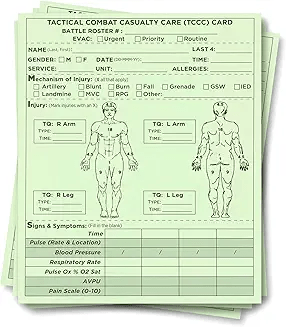
blacklogo

Donation – April 2025

Donation to support TW

$5.00

Am I Not Sending You?

Americans are a funny people. This great land was founded by men of action…men who knew that if meaningful change was to happen, they had to put in the work themselves. Our nation expanded by the same kind of stock, hacking a life out of this wild continent with no expectation of help or assistance if things went wrong. What happened?

Now, when we talk about being self-sufficient or prepared for emergencies, our friends and neighbors chuckle a little and look at us like we’re odd. You hear stories all the time of “where was the government?” or “I thought someone would come”. There is no one coming to rescue you.

Tonight, while we were discussing new shirt designs, I mentioned the famous talk Gideon had with God and realized it applies to preparedness. Even if you aren’t a believer, this story has relevance to preparedness. This is the quote, then I will give the context:

The Lord turned to him and said, “Go in the strength you have and save Israel out of Midian’s hand. Am I not sending you?”

Judges 6:14

Gideon’s homeland had been ravaged by waves of invaders from Midian, stealing the crops and fruits of the labor of the people for several years. Sound familiar? The theft and oppression was so severe that the people began to be what we call preppers today:

Because the power of Midian was so oppressive, the Israelites prepared shelters for themselves in mountain clefts, caves and strongholds.

Judges 6:2

The people began hiding their crops and livestock, so that they were prepared to survive. In fact, at the very moment that an Angel of the Lord appeared to Gideon, Gideon was hiding wheat in a winepress to hide if from soldiers of Midian who might search the farm. When the Angel, and later the Lord Himself, told Gideon that he was to raise an army to free Israel, Gideon did what the average American citizen does today….he asked why someone else hadn’t helped. He asked God why He hadn’t sent rescuers or performed a miracle.

God’s response was “Am I not sending you?”.

The lesson for us all is that it is up to us to prepare. That means we have to stock up on food, learn to purify water, learn to grow food (hunt/fish/trap), and learn to protect or hide what we have. We cannot just wait for anyone else. We are meant to be self-sufficient because self-sufficency is the only true freedom. If I rely on anyone else for anything (food/medical/security needs), I can be forced to bend the knee. If me and my tribe or group is self-suffcient, we don’t need anything and therefore can’t be forced to bend the knee easily.

The moral of the story is for you to keep on stacking food to the rafters and keep on learning to be self-sufficient. Be free.

On that note, the Training Courses page is full of classes. Take classes from other folks. Meet each other. Build networks. Become your heritage – the militant farmer who can rely on himself and his people, not anyone else.

Check out my friends at BattlBox for preparedness supplies sent right to your door every month. This link will net you 25% off your first box: https://myrefl.ink/v/D72003E.

Buy and train with communication gear. Your best source for both is my brother NC Scout and you can find him here: https://brushbeater.store?sca_ref=4405804.z7Z4UMPocd

If you like this content, sign up as a monthly supporter at tacticalwisdom.locals.com or make a donation below.

If you’d like to help us at Camp Ponderosa, here is the Ponderosa Amazon Wish List: https://www.amazon.com/hz/wishlist/ls/1038N8GYHRWX8?ref_=wl_share

blacklogo

Donation – March 2025

Donation to Tactical WIsdom

$5.00

Camp Ponderosa

I’d like to talk about our partners at Veteran’s Camp Ponderosa and what this place can be for all of you. When my friend Stan first suggested that NC Scout and I look at the site for classes, I didn’t know what I was getting into. I truly believe God led me here to make this something for all of us, while helping others.

And let us consider how we may spur one another on toward love and good deeds, not giving up meeting together, as some are in the habit of doing, but encouraging one another—and all the more as you see the Day approaching.

Hebrews 10:24-25

Allen & Linda Erickson have been running the NW Montana Veteran’s Food Pantry since 2002, but have been serving veterans since 2000. The camp is ran by the food pantry. Allen is a Vietnam Veteran, having served in US Navy (we’ll let that slide). When I met Allen & Linda, I felt an instant connection and a need to help.

NC Scout and I ran classes there last May and the were very successful. Shield Arms asked if the Council on Future Conflict would like to hold our annual meet-up in partnership with them at the site. We held Shield Field Days last August, which gave me a chance to talk more with the Ericksons. I proposed to help them run the site and turn it into something bigger.

A lot of folks think Camp Ponderosa is just where we hold training classes, but it’s more than that. We are buidling a destination for like-minded folks for ANY PURPOSE. You want to come spend a weekend or a vacation in NW Montana? Come visit us. I’d like to create a retreat and vacation spot for like-minded folks in touch with our natural surroundings. Stan and I would like to put a chapel here and a few other touches to make this place even better. We’re building a mutli-band radio station for off-grid comms (your cell phone will only work on the WiFi here).

We currently have 8 RV camp sites and unlimited tent camping space. We also have a limited number of rooms for rent with more being planned. We have a large amount of wooded space on site, but we are in the middle of millions of acres of National Forest. We are directly adjacent to the Bob Marshall Wilderness and are just down the road from Glacier National Park. Come and see the natural beauty of God’s creation.

We have horseshoes and cornhole courts. There is only one rule – due to an incident in the Shenandoah Valley, Braxton McCoy is not allowed to ever play cornhole here. We are right on the Swan River and can arrange river trips there or lake trips on Flathead Lake, the purest water in North America.

July 12-13, we are holding a benefit concert featuring Ben Klien, Elvis impersonator. All funds raised will go to helping us manage the Camp and pay for renovations to the Lodge Building, which features a common area with a 2-story fieldstone fireplace, that we want to open.

July 25-27, we will be hosting the Second Annual Shield Field Days. This will be a family-friendly weekend-long event featuring outdoors and preparedness related talks and vendors. Check it out at ShieldFieldDays.com.

I have not included any ads in this and I’ll not be seeking any donations for myself. If you feel compelled, make a donation here: https://veteransfoodpantry.org/donations/. After making a donation, use the Contact Us link on that site to let them know that the donation is for Camp Ponderosa.

I am also including the Camp Ponderosa Amazon Wish List, which we will be updating. If you’d like to send something, just buy it off the list. You can find the list right here:

Wish List: https://www.amazon.com/hz/wishlist/ls/1038N8GYHRWX8?ref_=wl_share

I look forward to seeing you at the Camp.

What Is Fieldcraft?

I had someone ask me recently what is fieldcraft and why do I need it? It was an interesting enough question that I thought I’d answer it here. Accoridng to the Canadian Army “Fieldcraft” Mannual:

Fieldcraft is made up of the individual skills and techniques used by soldiers in the field, which include movement, use of ground and camouflage in conditions of reduced visibility. These skills and techniques enable soldiers to maintain their own security while gaining advantage over the enemy.

Notice, fieldcraft has nothing at all to do with fighting or tactics. It is simply the skills, as I put it, to move undetected in a variety of environments and to observe our surroundings more effectively.

I am making a way in the wilderness
    and streams in the wasteland.

Isaiah 43:19b

I know, a lot of folks say “I don’t plan on being a soldier” or “I just want to be left alone.” Well, sadly, when there is no law enforcement coming, either in a temporary emergency like NC or the California wildfires, or a PERMANENT one like a grid collapse, the bad guys will be out there. Having some basic movement, camouflage, and observation skills can keep you safe. It is far better to have the skills to AVOID a confrontation by not being seen.

What if you are traveling when the lights go out or are at work and you need to travel 40 miles through dangerous territory just to get home? Having skills to move quietly and set up a secure campsite for the night can keep you safe.

If your phone GPS isn’t working, you need map & compass skills to navigate. Sure, you might know the way home in perfect conditions, but what if you need to detour around damage or riots? A map & compass can help you get where you need to go.

In my Fieldcraft course, we cover the topics in TW-02 Fieldcraft. We talk about and practice individual movement techniques. Yep, we crawl around on the ground. You can’t just read this stuff in a book, you have to get in reps and develop muscle memory. We practice stalking each other – not because I want you stalking bad guy sentries in a bad situation (that’s movie stuff), but because at some point, you might need to sneak past someone who is watching for other humans.

We talk about camouflage and observation and actually practice the skills. We cover the vital topic of field sanitation to keep ourselves healthy.

We spend an entire day on map and compass. We begin with reading maps and learning about all the features of a GOOD compass for land navigation. That’s an important distinction because many very good map compasses for planning hiking routes aren’t very good for fast movement over ground using only your compass (hint: the lensatic compass is best for this). We practice land navigation both during the day and at night. You also learn how to find your exact location on the globe using your compass down to about 10 meters of accuracy on the map.

We cover building 4 different shelter types using just a tarp and some paracord, all of which can be built in under 5 minutes and taken down in under a minute.

You need fieldcraft skills because the world is a dangerous place and getting more dangerous. Another reason to learn elementary fieldcraft is obtaining protein by hunting. The same skills will enable you to get very close to game for hunting. You also will need to observe what is happening around you, and these skills will help with that.

We will be holding a Fieldcraft Class here at Camp Ponderosa (The Mountain Partisan Camp – check out Mountain Partisan gear) April 25-27. You can sign up on the “Training Courses” page above. I’ll be developing a Winter Fieldcraft class later in the year.

Two new courses are being written now, both related to Mountain Survival. We will be offering the standard Mountain Survival this summer and fall, and Winter Mountain Survival next winter. My experiences in the US Marine Corps beginning with USMC Mountain Warfare Training Center and expanding from there will be the core of the courses.

Get out and train. Learn new skills and get some reps in practicing those skills. When the lights go out is not the time to learn.

There is more exclusive content over at tacticalwisdom.locals.com for monthly supporters. You can support me by purchasing from my affiliate links (click the pictures and underlined links) and I may a few cents off those purchases at no cost to you.

I can’t recommend enough a BattlBox subscription. This month, I got a faraday bag, rechargeable hand warmer/power bank, a roll-up tool bag (I’m using it as a vehicle kit), a rechargeable light, and an excellent My Medic first aid kit. Sign up with the link below.

You can also support me by making a donation below. T-Shirts and books are available for sale here on this site and you can also find my books on Amazon.

blacklogo

Donation – March 2025

Donation to Tactical WIsdom

$5.00

Course AARs

Recently, I held a Fieldcraft class at the Brushbeater Training Center in North Carolina, followed immediately by NC Scout’s Scout & Recce Courses. We planned it this way, because NC Scout and I felt that the skills learned in my Fieldcraft class would directly benefit people taking the Scout course, which then builds into the Recce course. We were right, according dozens of folks who have now taken both. In this article, we’re going to give an after action review of what worked, what didn’t, and what changes have been made to the curriculum in response to world events.

First, if you thought that me holding the class in NC meant no snow, boy were you wrong. It snowed for the whole Fieldcraft class, pretty hard at times. This added realism to the course and enabled guys to learn some different skills that only apply when there is snow on the ground. Also, we only had one guy drop due to the weather (not his fault – he had to re-assure his wife). You have to train even when the weather is bad for a few reasons. One, you won’t get to put off local community security operations or a resistance campaign because the weather isn’t perfect. Two, bad weather means reduced visibility, both to the human eye and to thermal/IR imaging. Learn to love bad weather.

Let me address an issue I hear ALL THE TIME. People talk about how “it’s not fighting season”. This is a dumb idea people got from the GWOT. Sure, in AFGHANISTAN there is a fighting season because fighters couldn’t get through the mountain passes in winter. The Taliban and other groups were largely FOOT MOBILE or traveled in older, beat-up vehicles. That is NOT the case for the vast majority of the western world. There is no fighting season. Fighting season is every day, especially if we are the “resistance”. We want to take advantage of those invading Chinese troops being distracted by the crappy weather as we infiltrate their bases. Also, Sun Tzu taught that we should attack when it appears that we are unable to.

Back to the AAR, the students did a great job in Fieldcraft. They didn’t complain about the afternoon spent crawling on their stomachs and backs. They even enjoyed stalking each other in the woods and camouflaging their equipment. On the second day, I loved seeing guys “get it” when I taught them resection, or finding yourself on a map by shooting an azimuth to terrain features you can see. Once someone learns that with a good map and good compass, they can find themselves within 10 meters anywhere in the world, it’s empowering.

On the day land nav course, there were a couple of folks who learned the hard way that you can’t have any metal near your compass. Being off by a couple of degrees, even with only 200 meters traveled can mean that you don’t find the point you are looking for. No one got lost though and everyone had a great time walking NC Scout’s ridiculously hilly terrain, in an absolute blizzard. That was another good point to the weather – these guys had to pick out landmarks that were in and out of view based on the amount of snow coming down. If you can do it in a blizzard, you can do it on a sunny day.

Night land nav was a little more challenging and at least one team learned that even if your thermals have an electronic compass in them, verify the reading with a magnetic compass. They found a variance that got larger as the batteries drained. Again, over-reliance on tech is a bad thing. Sure, use enablers, but also learn to do it without them. Enablers are a SUPPLEMENT, not a replacement. Despite me forcing them to cross a stream twice in the dark, no one got wet.

On the final day we practiced linear danger area crossings and built tarp shelters. Everyone really enjoyed these skills and picked them up quite quickly. As usual, the tarp shelter exercise teaches people the difference between genuine military gear and “military-style” gear. It’s worth the extra money to get actual military gear, because those “military-style” ponchos are significantly smaller, thinner, and don’t have reinforced grommets (or as many grommets). The tarp exercise also teaches how easy it is to defeat thermals, as we always bring thermals along on that exercise.

The Fieldcraft course is not just for folks without military experience. I teach techniques that I’ve picked up from our British, Canadian, and Norwegian partners that I learned on exercises with them and things I picked up after my service time through the executive protection/private military contractor world. I also teach skills from other services around the world that aren’t taught to US troops.

We rolled right into the Scout course the next day, where NC Scout went even more in-depth on camouflage and concealment. During his camouflage period of instruction, he breaks out thermals and shows that with good light infantry skill, you can defeat thermals or at least significantly reduce your signature to that of the natural background.

One of the biggest and most current-world relevant changes NC Scout has made to the Scout Course is the incorporation of drone detectors into the course. He requires each squad to appoint one person as the air guard and issues them one of his fantastic drone detectors. Throughout the course, someone had to constantly be alert for drones. The battlespace is evolving, and we need to as well. Having a drone detector or spectrum analyzer up and running is a new fact of life on the modern battlefield.

The students learned to set ambushes and learned how to react to an ambush. The biggest learning here is that reacting to an ambush is a losing proposition. It is far better to do onto others than to be done onto. Sure, learn how to react, but it is FAR better to detect the enemy first and avoid contact. As NC Scout teaches, as partisans or guerrilla fighters, our job is to choose where and when the fight happens, not let our enemy dictate that to us.

Night operations were covered, and everyone learned the value of night observation devices and/or thermals. I personally carry both in my kit. I use the NODs for movement and pull out the thermal when I take a knee to scan. My brain doesn’t work well enough to use a bridge mount and both.

The Scout course culminated with the students scouting out and advancing on two objectives at the same time and an epic battle ensued. While I got the first rounds in on our part of the epic final battle, I did end up dead halfway down a ravine, holding off the students so that my OPFOR teammates could get away to reinforce our other position.

The courses are a great way to learn. Fieldcraft will teach you individual and team movement while the Scout Course covers basic small unit tactics. Recce goes into some more advanced applications of small unit tactics. The trio of courses will get you well on the path of becoming a skilled light fighter. But, you can’t just take the courses and be done. You have to get reps in. Keep training and practicing the skills learned.

You can find my training schedule right on this site under “Training Courses”. NC Scout’s can be found at the Brushbeater store (just click the underlined part).

We look forward to seeing you in class. FYI, NC Scout will be in Montana May 16-26 doing his RTO, SIGINT, and Night Fighting Courses and I will be doing Community Security Operations. There is a rumor that K from Combat Studies Group may make an appearance and toss in a class as well.

If you like this content & want to support this site, make a donation below or sign up as a monthly supporter at tacticalwisdom.locals.com for even more exclusive content.

blacklogo

Donation – March 2025

Donation to support Tactical Wisdom

$5.00

Acta, Non Verba

When it comes to preparedness, the phrase “acta non verba” is pretty relevant. Lots of folks talk a good game online, but when the rubber hits the road, they’re not as prepared as they claim. Me, included, sometimes.

Against that backdrop, we’re going to start with a little Tactical Wisdom, talk about it, and then add on some more. Here we go:

Do not withhold good from those to whom it is due, when it is in your power to act.

Proverbs 3:27

That lays out our duty to each other. It means that if I am capable, trained, and equipped to be able to help someone, I should. Not only should I, I am COMMANDED to help. In our present society, no one wants to help. Instead, they whip out their phones and try to be the next person to go viral. Every time I bring it up, people give me a litany of reasons why they won’t intervene….which usually boils down to not wanting to inconvenience themselves.

They say that they don’t want to be sued or arrested. Those are valid points, but every state has Good Samaritan laws to protect you. As far as being arrested, while what happened to both Daniel Penny and Kyle Rittenhouse were horrible, I will point out that in the end, they were VINDICATED. Doing the right thing may suck, but it is the right thing. As Acts 5:29 teaches us, “But Peter and the apostles replied, “We must obey God rather than any human authority.”

Some draw the line at physically intervening in a struggle. Well, the Ultimate Tactical Handbook has something to say about that, too:

Rescue those being led away to death;
    hold back those staggering toward slaughter.

Proverbs 24:11

Doesn’t seem very ambiguous, does it? Not a lot of wiggle room. Ok, maybe you’re not trained or physically capable of stopping an attack, but you CAN get on the phone and call for help, yell at the attacker, or do literally anything else. Watch the videos of these attacks, most people just look away or film.

Which brings me to the title of this article: Deeds, not words. These two verses require ACTION, not tweets or Facebook posts about what you WOULD do, but actual action in the real world, even that action is calling someone who can help.

If you haven’t already, it’s time go out and get a CPR/AED certification. Classes are held all over the nation at low cost, so there is no reason not to. Take a Stop the Bleed or First Aid class. Check with your local Red Cross, Fire Department, or community education office.

Take a self-defense class. Invest $50 and a few hours in learning how to protect yourself and others from physical violence. This reliance on third parties like the police is a relatively new thing in human history. Having the ability to defend yourself builds confidence and a warrior spirit. Everyone in preparedness should know how to defend themselves and their supplies.

I challenge that if society is going to be fixed it will only be fixed when we start doing it ourselves. Waiting for “someone” to fix it isn’t working and never has. It’s not in the interest of government to fix the ills of society, because it would eliminate the need for their services. Managing the problem is better for them.

Let’s all commit to helping each other and trying to better our society. Letting outside actors divide us into different camps based on politics, race, or any other source of division only benefits those who would control us. Let’s come together. I’ll end with some Tactical Wisdom on division:

Do not quarrel with someone without cause when that person has done you no harm.

Proverbs 3:30

If you like this content, become a monthly supporter at tacticalwisdom.locals.com or make a donation below.

blacklogo

Donation – February 2025

Donation to support site.

$5.00

Active Response Kit

We live in chaotic and tense times. They aren’t getting any better. We are seeing an increase in terror attacks, active shooters, and mass casualty events. It’s one thing to prepare for things at home, but what about when you are caught at the scene of a major event?

Common sense would tell most of us in preparedness to jump in our vehicles and drive away. The honest truth is that I am not built that way. I CANNOT leave others at the mercy of evil if I have the skills and ability to help. In fact, the Ultimate Tactical Handbook (the Bible) commands us not to:

Rescue those being led away to death;
    hold back those staggering toward slaughter.

Proverbs 24:11

I’m not saying you have to wade in like John Wayne, but if you are an armed & prepared citizen outside a mall being attacked by an active shooter, you very well can create and hold a safe zone for people fleeing. You can hold and defend a door to let others escape. You can set up and defend an aid station for the injured.

You can do these in less extreme situations, too. In a major accident, you can assist with the less injured, freeing up the medics to deal with more serious injuries. Once, Alison and I stopped at an accident with a lot of injured folks. I was applying pressure to a femoral bleed and the first officer on the scene ran over, looked at what I was doing and said “can you hold that down until the second ambulance gets here?”. Yep, that’s why I stopped.

We’ve discussed a general vehicle kit and general first aid kit before, but in here we’re going to discuss some of the additional gear for an Active Response Kit. I’m going to do something I don’t normally do, we’re going to talk some firearm stuff, because it’s relevant to the discussion. I know, some guys say “I don’t want to play soldier”. I get it, I don’t either, but if evil decides to play soldier with you, you had better be abe to respond in that arena. The other option is just die without opposing their violence. That’s silly.

At this point, people say “that’s what the police and fire department are for”. Not really, you are responsible for your safety. Also, where I live, the first police officer will arrive between one and two hours after the call. Not everyone lives in a big city. Besides, in an active shooter, the first officers are told to ignore everything except the shooter (even the wounded), so you will be on your own.

Burt let’s start with general emergency gear, first. I always keep a fire extinguisher in my car, and it should be part of your vehicle kit as well. The California widlfires have made me start carrying a fire blanket as well. You can use one to escape a fire or you can toss it on a small fire (like a just started vehicle fire or grass fire) and put it out. They’re relatively inexpensive. I also keep in my car a throwable fire extinguisher. It’s a grenade shaped thing you throw at a fire, it bursts open and allegedly extinguishes the fire.

After the car accident a few days ago, I’ve built and started carrying a multi-casualty first aid kit. It fits in a larger bag with a shoulder strap so that I can carry it to the injured. It’s stocked with several trauma dressings in 3 and 4 inch sizes (thanks BattlBox for the resupply), a good number of abominal pads (make great dressings), 3 pairs of chest seals, several packages of Z-fold gauze, several packages of hemostatic agent, and lots of triangular bandages and rolled gauze. It also holds 3 different sizes of SAM Splints – too many people neglect splints. Something else I recently added (bought at BattlBox) is a large wound dressing. It’s meant for IED victims, but can be used on any major trauma. It folds up very compact, but could be a life saver. Burn dressings are another neglected item. Larger bottles of hydrogen peroxide are in the bag as well, with spray caps. There are no band-aids or other boo-boo kit items in here because in a mass casualty event I wouldn’t be treating those small injuries at all, they can wait.

Personal protection gear is next. Obviously, first is gloves. No matter the situation, gloves are your friend. There will be bodily fluids, chemicals, and broken glass in any trauma or active violence situation, so glove up. If there are train tracks anywhere you might be, having some type of filter mask is a good idea – thanks again to my BattlBox membership, I have the PD-101 mask. Read the specs before buying one. In my backpack, I keep the Premier Body Armor bulletproof laptop case, even when there is no laptop in it, because it provides ballistic protection when I put on my backpack. You can also buy packpack inserts now that are bulletproof. You may also choose to carry a plate carrier or soft armor with you to put on in the event of an active violence event. Keep in mind though that lots of normies are scared of people with body armor, so don’t advertise.

Before we cover firearms, let me share a statistic. When the police stop the active shooter, there are an average of 14 deaths. When an armed citizen stops the active shooter the average is 2 deaths. Think about that. The reason is that the armed citizen was already on scene. If you could save 12 people, isn’t it worth trying?
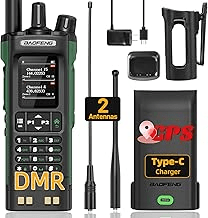
Defensive firearms are a personal choice and some folks choose to just carry a pistol, others keep a “truck gun”. Know your local laws here. If you only carry a pistol, keep a number of extra magazines somewhere in your vehicle. Most people underestimate ammunition expenditure in actual combat. It’s one thing to hit a stationary paper target, it’s quite another when the target is moving and shooting back. If you carry a “truck gun”, carry either a chest rig with a few mags or a bandoleer with a few mags (or, for the ultimate in preparedness, both). Make sure these are hidden from view on a daily basis. Consider using something other than a traditional gun case. Storage totes are a very stealthy storage option, but again check your laws first. Store guns in the case with the sling facing up. That way, you can just grab the sling and put it over your head, and you’re ready to go. I know, it doesn’t look as cool on Instagram, but we’re about readiness here.

If you are going to ever be armed in an active violence situation, understand that there have been several tragedies of armed citizens and even plainclothes officers getting shot by responding law enforcement. Many will say that’s why you shouldn’t get involved or that civilian responders are the problem, but the actual problem is law enforcement officers not getting positive ID on their targets, just shooting the first armed person they see. Contrary to the opinions of the “experts” on Twitter, police aren’t trained to just shoot every armed person at the scene, because detectives might respond, federal agents might respond, or off duty officers might. Your best defense here is “GOOD GUY” identifiers. One GOOD GUY indentifier is that you are in an obvious DEFENSIVE posture, protecting a few people in one location and not pointing a weapon at anyone in particular. A bright reflective safety vest is a good idea. I have a jacket that I was issued once somewhere that says in giant reflective letters “EXECUTIVE PROTECTION AGENT”. More importantly, look around and LISTEN. If an officer challenges you, immediately drop the weapon and comply. You can explain later.

Aside from all this, I carry a large amount of water everywhere. I have at a minimum 4 2-quart canteens of water in the back of my SUV at all times. When someone is injured or stressed, a simple drink of water can go a long way to stabilizing their mind. Energy bars are a good idea as well. I also keep a little chocolate stashed. It can stop kids from crying (which may be a tactical need) or, more often, stop a diabetic reaction in its tracks.

To recap, give some thought as to what you can put together to help not just you survive an active violence situation, but how you can be an asset to help others survive. We’re not asking you to go and fight the bad guy (although that’s NOT as bad an idea as some claim), we are asking you to help defend others when you are prepared to and they might not be.

I hope this gave you some ideas. In this same vein, I’ll be doing a livestream on 2/7/2025 over at tacticalwisdom.locals.com for supporters on what a modern “Bleeding Kansas” might look like and how you can prepare.

If you like this content, sign up as a monthly supporter at tacticalwisdom.locals.com or make a donation below.

blacklogo

Donation – January 2025

Donation to support site.

$5.00

Making Choices

Every morning, I ask God to put me where He needs me. While He may very well do that, He has given us free will and it’s up to us whether to heed His call or not. Let me tell you a story and why, as people involved in preparedness, we should ALWAYS stop.

I ran to the post office today, which in Montana is generally a big operation. It’s a long ways away along a stretch of empty highway with almost no cell signal. As I was driving back to the camp, I came across several vehicles stopped in the road, and noticed a white van head-on into a tree. There were several men around the vehicle.

He went to him and bandaged his wounds, pouring on oil and wine. Then he put the man on his own donkey, brought him to an inn and took care of him.

Luke 10:34

This was my first decision point. I could have just assumed that the men on scene had it under control and drove on. I could have just called 911 and left it at that.

I slowed down and rolled down the window, asking if everyone was alright. One of the men shouted that they hadn’t gotten the doors open yet, so they don’t know. Decision point two: I could have just assumed that they’d handle it.

Not in my nature. I pulled over, threw on the hazards and started walking down in the knee deep snow. Before I got there, they got the doors open and announced that everyone said they were OK. Decision point 3 – I could have just turned around.

I wavered, but I know that I train and that I carry supplies. I decided, let’s just go look and confirm – you’re already knee deep in the snow. As I got closer, this odd phenomenon that my wife comments on all the time happened, everyone just automatically looks to me in a crisis. This first man turns to me and says “she has a small cut on her wrist, but there’s a lot of blood on the floor”. I pushed through and said let me take a look….sure enough, lots of blood.

The man said he’d go call 911 as he has a signal and I begin an assessment despite her assertion to me that she’s fine. I find that her leg has hit the emergency brake and given her advanced age, she’s bleeding excessively. I directed two men where to find my first aid kit and immediately apply direct pressure, telling her it’s going to hurt. It took them a bit to find it, but they got me my kit and I quickly applied a pressure dressing (from my friends at BattlBox – see above) which slowed the bleeding enough to make it manageable.

I have a few lessons from this:

  1. Always stop, every single time. While there might be several people WILLING to help, none of them had a first aid kit or the skills necessary to do a thorough patient assessment or control bleeding.
  2. Never ever take a patient’s word that they are fine at a trauma scene. They are likely in shock and don’t know if they are hurt. We teach people after a shooting incident to look at themselves for bleeding from injuries they didn’t feel.
  3. Make sure that the first aid kit is easily accessible and ON TOP of whatever is in the trunk or rear of your vehicle. The guys had a hard time finding it.
  4. Never EVER go anywhere without a first aid kit.
  5. Keep gloves in the map pocket of the door. I keep some in my first aid kit, but the event developed so fast that I was already applying direct pressure before I had a kit with me.

For those who afraid to help medically due to liability, every state in the US has a Good Samaritan Law, which protects you from lawsuits if you try to help in good faith. God requires us to help if we can. I’ll leave you with a piece of Tactical Wisdom on whether or not you should render aid:

 If anyone, then, knows the good they ought to do and doesn’t do it, it is sin for them.

James 4:17

Help when you can. I don’t share this for accolades, I share it to motivate you to help each other. My biggest pet peeve is all these videos of accidents or attacks and everyone is filming instead of helping.

Donation – January 2025

Donation to support website

$5.00

Taking Responsibility

We see it every time….a disaster or calamity occurs and people then demand to know why the state or federal government or whoever isn’t helping the people. After the damage, they are looking for someone to restore power, establish communications, and provide security from looters.
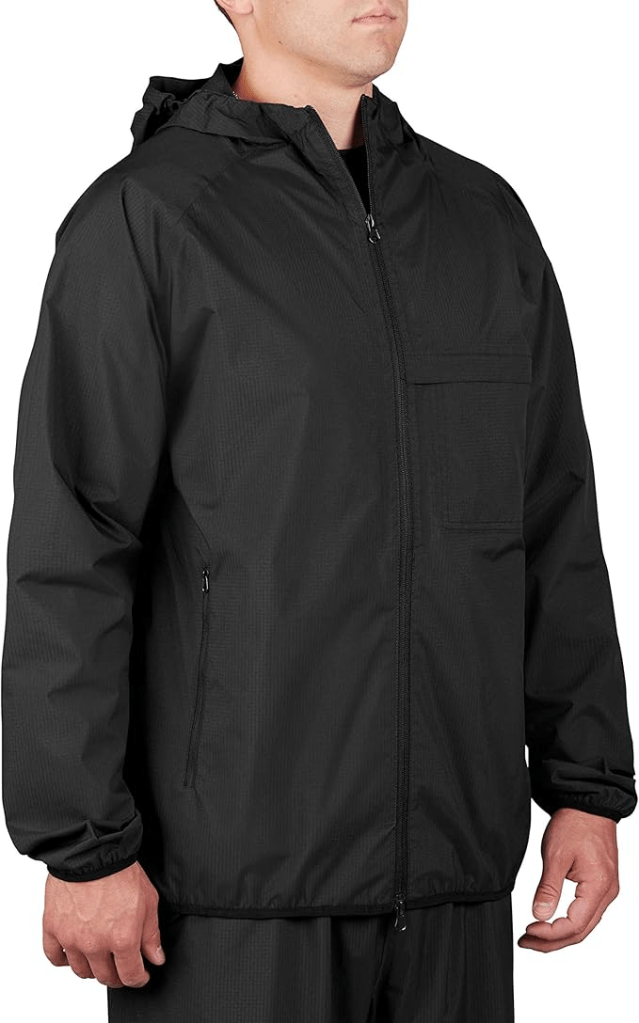
What if I told you every one of those things could be handled for you BY YOU? That’s our responsibility. There is even some Tactical Wisdom about that:

if anyone hears the trumpet but does not heed the warning and the sword comes and takes their life, their blood will be on their own head.  Since they heard the sound of the trumpet but did not heed the warning, their blood will be on their own head. If they had heeded the warning, they would have saved themselves.

Ezekiel 33:4-5

You see, God is pointing out that it is YOU who is responsible for heeding the trumpet call. Whether it is a weather warning, paying attention to the path of wildfires, or whatever, it is up to YOU to prepare to handle it.

But how can we prepare for every possible calamity? Easy, by focusing on what the second and third order effects are. I can’t stop a hurricane or nuclear war, but I can prepare for the effects of it. First, I can have a supply of food and water. I can have building supplies for repair. I can have available solar panels and battery backups to restore my own electricity. I can have a radio communications plan with my neighbors or family. I can develop a security plan for my home or neighborhood.

I can even, dare I say it, develop plans to deal with an over-protective government after an event. For example, I can develop plans to bypass the checkpoints and roadblocks to get into and out of my own property. Sure, the government and I have an interest in keeping the looters out, but they generally do this by keeping EVERYONE out. Have a plan to circumvent that. There is nothing illegal about occupying your own property, in case you were wondering. The word “EMERGENCY” doesn’t ever invalidate the Constitution or your rights, but I digress.

First, ensure that you have enough shelf-stable food to get you through a disaster. Some think is a two week supply, some think 10 years. Based upon the situation on the ground in western North Carolina today, I’d suggest 3-6 months at a minimum. Among that, you need a PORTABLE 14-day supply. This ensures that if you have evacuate (‘bug out”), you can take the food needed with you and not be reliant on handouts or anyone else. That’s the first thing, before even security. Yes, really. If you can’t maintain the strength to defend yourself, it won’t matter how much you spent on your cool-guy rifle and the hottest chest rig on Instagram.

Next, you need power generation. Generators are a great tool, but they are LOUD which will draw attention to the fact that you have power and everyone else doesn’t. They also require fuel, which will be hard to get out of the ground. A solar generator is silent and can be hidden. I recommend a good sized battery with at least a 200 watt panel. Smaller panels charge the battery too slowly. Find out how much power is needed to run the essentials in your house or planned location. Just the essentials; your TV is not essential, despite what we saw during the LA fire evacuations.

Develop a workable and realistic communications plan. By realistic I mean that while keeping in touch with family 600 miles away is nice, it’s not as essential as tracking down and staying in touch with group and family members in the immediate danger area. You can do this with inexpensive UHF/VHF radios. UHF is better for short-range urban use and VHF is better for longer-range rural use, but neither is really going to get you more than 5 or 6 miles at a maximum with handhelds. You can increase this with higher-powered base station or mobile radios and higher/taller entennas, but they are still local communications only. Develop a plan and carry radios NOW.

Once you have these things in place, it’s time to set up a protection plan to help you defend it. Every neighborhood or location is different, but you need a plan to control entry and patrol the area. TW-03 Defensive Operations will help.

The key is to make a plan and start putting it into action. Commit right now to being more prepared than the people you keep seeing on TV. Put in the effort and make sure that you are heeding the warning.

If you like this content, sign up as a monthly supporter at tacticalwisdom.locals.com or make a donation below. You can also support me by clicking the affiliate links. I may make a very small commission from them at no cost to you.

blacklogo

Donation – January 2025

Donation to support website

$5.00

Winter Weather Prep

As this arctic air mass descends upon the whole of North America next week, I thought it would be a good time to put out a reminder of the gear to keep with you in the winter. I know, it’s so easy in our comfortable lives to say, “Well, I’m going to leave my house and walk 25 feet to my heated car, and drive to work where I’ll walk 25 feet to the heated building, so I don’t need to worry”, but you do. You could get into an accident, slide off the road, face a power outage, get stuck behind a 93 car pile up, or just get stuck in the snow.

He spreads the snow like wool
    and scatters the frost like ashes.
He hurls down his hail like pebbles.
    Who can withstand his icy blast?

Psalm 147:16-18

In addition to all the stuff in Get Home Bag and my Vehicle Kit (see TW-01 Baseline Training Manual), I have one extra bag in my car during winter, my Extreme Cold Weather Kit. It’s filled with important emergency gear specialized for the winter. Let’s go through that first.

In the outermost pocket, I keep a pair of USMC Extreme Cold Weather gloves, a hardface fleece watchcap, and a grid fleece balaclava. The gloves are made by Outdoor Research and are waterproof. The hardface cap is a standard US Issue item just like the gloves and the balaclave because I know that good research went into picking out US cold weather gear. These are on the outside because these are the most important things. You lose the most heat via the head and if my fingers get cold, I’ll lose the dexterity to dig myself out or build a shelter/fire.

On the inside, I start with 2 different levels of waffle tops. You need to keep your core warm, because it’s the furnace that keeps the rest of you warm. I also have a woobie shirt from Mission Essential Gear in there – great warming later item. I have a wool sweater, because it will insulate even when wet (yes, it’s a USMC Wooly-Pully). Lastly, I have a French CCE camo (Camouflage Central Europe) GoreTex set (parka and pants). These serve to keep me dry, and will trap heat in.

The one thing I’ve added to the bag this year, since I’ve moved to Montana, is snow gaiters. These are vital for keep your pant legs and feet dry. Mine are GoreTex and there are a tom of great options out there.

Next, let’s talk food. You need to add to whatever emergency food you have in your car during cold weather. There is a reason why the US military has specific Cold Weather rations and Cold Weather supplement packs. Your body will burn more calories trying to keep warm in the cold, so you need more food to fuel your furnace. Throw some quick calorie hits in there.

Speaking of fuel, in light of the coming cold weather, fuel up every chance you get. At the very least, top off your car each night. No, don’t wait until morning because even if you are at home and your power goes out, you can use the vehicle to get warm or to charge battery banks/devices. Just make sure you are well-ventilated, please don’t run cars in the garage.

On a related note, if you get stuck and decide to run the engine for warmth, get out and make sure that your exhaust is clear of snow. You do not want to die from carbon monoxide poisoning.

Carry chains or rope (I carry rope) for recovery in case you slide off the road. Lots of folks will stop to help, but might not have ropes or chain, so make sure you do. If your state allows it, don’t forget tire chains. I was recently on a slippery mountain road in a truck during a winter storm and the former Green Beret I was with taught me all about tire chains and I was convinced. The heavy 4 wheel drive truck just spun on the ice without the chains, but bulled through with them. If you can’t have tire chains, carry traction boards.

You need some type of communications and signal gear. My car has a 50 watt UHF/VHF radio (click the link above) that gets me 25-40 miles of range, but I also keep a handheld unit in my Get Home Bag. During the winter, I also carry a handheld CB. You can usually find a trucker on CB channel 19 and it’s a great channel to listen to for road conditions, especially out west. Midland handheld CB Units have an attachment that allows them to use vehicle power and a roof mounted antenna. I also carry a VS-17 panel, orange on one side and pink on the other to allow rescuers to see my position from the air.

Some type of shovel and some type of saw can be quite useful to help you get unstuck. In the above winter road incident, my friend got out the trusty chain saw and made short work of some small trees that were blocking our path. I recommend also one of the small electric chain saws for small tasks. I never go anywhere without at least one axe. In fact, one stays strapped to my Get Home Bag.

You should already have this in your Get Home Bag, but you need a way to start fires, preferably more than one way. The saw and axe will help you generate fuel, but you need a lighter, matches, AND a fire steel. Some kindling or firestarter tabs are a good idea as well.

I know I mention it alot, but if wear dress shoes or casual shoes for work, carry a pair of sturdy boots and extra socks in your car, just in case. Switch to them immediately. I know that the current under 50 crowd will augh at this and mock it, but when I was a kid my dad, and all the other dads, put on boots at home and then changed into office shoes at the office, changing back before coming home. It may seem old fashioned, but it’s SMART.

Winter is a wonderful time of year, but it can be dangerous. With just a little preparation, you can be more ready to address the risk.

If you like this content and want even more of it, sign as a monthly supporter over at tacticalwisdom.locals.com. You can also make a donation below. You can also support me by buying from any of the affiliate links above.

blacklogo

Donation – Januaary 2025

Donation to support site.

$5.00

Readiness Right Now

We went and saw Homestead last weekend and that got me to thinking. How ready am I right now? Carried a bit further, if I had lived in North Carolina or Tennessee when the storm hit, how would I be faring right now, several months in, with the just what I had on hand?

In my first book, Baseline Training Manual, I point out that one of your first goals should be to have 14 days of portable supplies on hand. Let’s use that as our baseline (see what I did there?).

Given world events, a disaster or intentional attack that is a life altering event for all of us could happen with absolutely no notice whatsoever at any time. How ready are you to walk out the door and survive for 14 days? Or, in the event of conflict, how much notice would you need to be able to join a 14 day campaign of resistance in the field (you never know the drones could be an alien invasion)? What is your ability to sustain yourself or get more supplies into or out of the affected area?

then if anyone hears the trumpet but does not heed the warning and the sword comes and takes their life, their blood will be on their own head.  Since they heard the sound of the trumpet but did not heed the warning, their blood will be on their own head. If they had heeded the warning, they would have saved themselves.

Ezekiel 33:4-5

Why? Because not every situation is a Mad Max level collapse. You might be forced to leave due to untenable conditions, but want to retain the ability to return at a time of YOUR choosing. I say this because many evacuees have tried to come back to their own property in the aftermath of the hurricane to be told that they cannot. Have you scouted out routes that get you back via back roads or footpaths?

The same goes for evacuations. Most who traveled on the “posted and public” evacuation routes encoutered traffic snarls and checkpoints. If you scouted out your own routes that avoided major arteries or went to a secure and hidden location nearby, you’d be in far better shape. Even if your overall plan is to “bug in”, you still need portable supplies and some pre-planned routes/sites away from your base.

Let’s start with food and water. You can never carry enough water, so you need containers and an ability to filter/purify water. My solution is canteens and tablets. I back this up with a Grayl filter bottle and a Sawyer Mini in-line filter. Multiple methods are the key. As far as food, stop thinking in terms of meals. Pack in terms of caloric intake on the move. Pack one meal a day and a bunch of high protein snacks like energy bars, jerky, SPAM singles, or other good stable snacks. Dehydrated foods are lighter than MRE’s or canned/pouched foods, but understand that if you don’t eat them regularly, you will suffer some intestinal issues. The newer military Long Range Patrol/ECW rations are great for packing as they condense down smaller (they’re really just Mountain House in better packaging).

Shelter gear is important. Always have a tarp and sleeping gear in your pack. I keep a poncho liner in my patrol pack as sleeping gear, which I can add to for more warmth. In my full ruck, which I would take in this scenario, I have a 3 season sleeping bag. With the poncho liner added, it becomes a 4 season bag. A waterproof bivy bag is a must and doesn’t really add any weight. My USMC sleeping bag comes with a dry bag – you should always carry sleeping gear in one because a wet sleeping bag sucks. For comfort, I include an inflatable pillow. I don’t carry a tent, because if I’m on the move, a tarp is all I need. Rain gear should be in every bag you have. Military Surplus ponchos are great, because they can be a ground sheet or a tarp as well, but I also carry GoreTex gear in both my patrol pack and my ruck. Lightweight ones in the patrol pack and more heavy Extreme Cold Weather versions in the full ruck. I can throw on the lightweight ones while moving, and change into the heavier duty ones when I stop. You don’t want to try and move in heavy GoreTex because it traps the heat in. The other shelter item I carry in my patrol pack is a set of collapsible aluminum tent poles. I can use them to put my tarp in a number of other configurations.

Closely allied to shelter is fire. I keep a Mountain Partisan “Partisan Fire Kit” in each of my bags. This has a lighter, fire starters tabs, fire steel, and a few other items in it. Have mutliple methods to quickly start fires or light a stove.

Clothing for 14 days is something most people overpack. In a true survival or conflict situation, you don’t need a new outfit every day. We aren’t holding cleanest gear or nicest ensemble contests. I carry one spare set of clothes and a few sets of undergarments and socks. I will carry some warming layers as well. I keep the clothing in my ruck permanently stored in a dry bag. I pull it out every season to confirm what’s in there and change out any seasonal items.

In the Marine Corps, we called the next area “Pioneering Tools”. You need a shovel or entrenching tool because field hygiene is a thing. You will also need a hatchet or small axe. Combat Tomahawks are NOT the same thing and are NOT interchangeable. Having a small folding saw is also a plus. I carry the e-tool on my patrol pack and the others on the ruck.

If you couldn’t tell by now, my patrol pack attaches to my ruck. I switch between the ILBE and FILBE systems depending on season and where I’m at. In the winter, I’ll need to carry more gear, so I go with the larger FILBE. In the summer, I switch to the ILBE which holds less, but has better camouflage. It’s also got a more vertical orientation which helps with mountain movement where I live and train.

The point isn’t necessarily to give you a list, but to remind you to put at least this stuff in some type of portable system to be ready to go at a moment’s notice. Remember that the Minute Man is our heritage.

Related to this is a communications plan. In the “Homestead” movie, the military security team was ready to go the minute the bomb went off because they had a preplanned communications network set up. I was happy to see the movie planners had the team using Baofeng AR-152 radios, which is what a lot of us plan on using. Set up a plan with your people and test it weekly. Vehicle-mounted repeaters are a thing, I have one, and they give you a 5-10 mile bubble around your vehicle for solid comminucations with handhelds. Having each vehicle with a trunk mounted repeater on a different frequency would give you a mobile mutli-channel radio network that travels with you.

Consider also higher-powered vehicle mounted radios (like 50 watts). This would enable better communications while on the road. I always travel with some type of 50 watt radio up and running.

Analyze your preparedness gear with an eye towards immediate readiness. Make sure that if you had to go with under 10 minutes notice, you can at least survive 14 days.

Later in the weekend, we will discuss clandestine movement into and out of evacuation/curfew zones.

If you like this content, become a monthly supporter at tacticalwisdom.locals.com, where we have exclusive member-only articles and videos. You can also visit any of the affiliate links above or make a donation below.

blacklogo

Donation – December 2024

Donation to support website

$5.00

Prepping with the Boy Scouts

This weekend, the local Boy Scout Troop is camping here at Camp Ponderosa and it got me thinking about their motto, Be Prepared. Out here in Rural America, the Boy Scouts are as they once were, an organization that takes boys out to learn outdoor skills and serve their community. They’ll be learning some winter skills and doing a couple of service projects for us.

The prudent sees danger and takes refuge, the fool keeps going and pays the penalty.

Proverbs 22:3

The Boy Scouts have a list of ten “Scout Essentials” that everyone must have before launching into the woods for any outdoor activity, and I thought I’d go over them with you all because they do apply to us in preparedness. Listen – this isn’t a political statement – Some troops are still like the old ways.

  1. Pocket Knife – We all should be carrying at least a solid folding knife, if not a good fixed blade (both is better). Don’t overlook something like an old school Swiss Army Knife. A multitool can be a good supplement, but it is not a replacement for a knife.
  2. First Aid Kit – The first aid kit is the one piece of preparedness gear that you might need to use at any given moment. We can never predict when an accident or injury, or, God forbid, a mass casualty event will happen in front of us. I’ve been able to assist in a lot of injury cases just by having a kit handy. At the very least, carry a small bleeding control kit of a pressure dressing and a tourniquet.
  3. Extra Clothing – Having a warming layer you can toss on if it gets cold can be a life saver. In a civil distrubance context, having ability to change your appearance quickly can be an asset. In addition to an extra packable jacket, I keep an extra hat and a shemagh in my pack.
  4. Rain Gear – This is in addition to the extra clothing. I keep both a rain shirt (Arktis) and a poncho in my pack. The rain shirt can also double as a windbreaker so it serves two purposes. Staying dry keeps you comfortable and healthy. A caution about GoreTex though – never wear it while moving. As good as GoreTex is at keeping water out, it also holds heat and vapor in, causing you to sweat. Then, you unzip the coat and defeat the purpose, ending up not just wet, but also cold.
  5. Water & Water Storage – At least a quart of water in come type of refillable container (Nalgene or canteen – I use both). For longer trip, carry more water, but understand that you can never carry enough water. Water is heavy. If you are carrying water, carry a way to purify water as well.
  6. Flashlight/Headlamp – You will always need the ability to throw light. I may need to see what I’m doing for some task, look for a trail, or just generally be able to see. Having a good flashlight, headlamp, or both can help. Remember, if you are looking for stealth, blue lenses are even better than red.
  7. Trail Food – Some type of portable food is essential. It can be snack bars, dehydrated food, MRE’s, or (my favorite) SPAM sinlges – just have something. You mighht think you don’t need food for a 3 hour hike, but you might get lost, encounter weather, or some other calamitt that keeps you out longer than planned. Hiking also burns more calories so you might get HANGRY.
  8. Matches and Firestarters – Since the dawn of mankind, fire has comforted man. It heats us, lets us cook food, and there is something magical and calming about sitting by a fire. If you are lost, you can use fire as a signal and to stay alive. Carry multiple methods. I know, all of us in prepping are all about primitive fire methods like ferro rods and such, but if Daniel Boone had known about the Bic lighter, he’d have carried one. Sure, it’s good to know the more primitive methods, but sometimes you need to start a fire RIGHT NOW, and lighters help. Any matches you carry into the field should be stormproof types.
  9. Sun Protection – The Sun can burn you or make you a heat casualty. Carry a hat or a boonie to keep the Sun off you. Sunburn lotion is a also a plus. Eyes are very susceptible to damage from bright sunlight anda reflcetions off the snow, so carry sunglasses as well.
  10. Map and Compass – You need a good orienteering or military (lensatic) compass for use while moving, paired with an accurate map. More important than just carrying these tools are the skills to use them. Take a land navigation course (like my Fieldcraft Course) and then practice the skills. A GPS is a supplement, not a replacement. Your phone GPS is a novelty, never bet your life on it.

As you can see, if you just start with the very basic 10 Scout Essentials, you will be well on your way to building a quality EDC bag or Get Home Bag.

If you like this content, sign up as a monthly supporter at tacticalwisdom.locals.com or make a donation below.

Check out our nex course schedule and the custom t-shirts while you are here.

blacklogo

Donation – December 2024

Donation to support site.

$5.00

Comfort

As Americans, or members of Western Society as whole, we’ve gotten way too used to comfort.  We like to come home, sit on the couch and watch TV, eat copious amounts of over-processed but readily available food, and be comfortable.  We live in climate-controlled homes, drive in our climate-controlled cars to our climate-controlled offices/workplaces, then after work we drive to climate-controlled stores and restaurants, then go back to do it all over again.

In the course of the average week, we don’t experience a temperature deviation of more than 10 degrees for more than however long it takes us to walk to our cars, and let’s be honest, we park as close as we can so that we don’t have to be exposed to the elements at all.  This destroys the ability of the human body to tolerate variations, and it’s not a good thing.

“…There we sat around pots of meat and ate all the food we wanted, but you have brought us out into this desert to starve this entire assembly to death.”

Exodus 16:3

On those rare enough occasions when we plan on doing something outside, if it rains or snows, we cancel immediately, because who wants to be uncomfortable?

Let’s be honest, a lot of us who claim to be involved in preparedness aren’t willing to get uncomfortable.  We’re also not in the best physical shape.  I can’t tell you how many times we’ve had guys show up in class with thousands of dollars of gear but couldn’t climb a single hill or sleep more than one night on the ground in a tent.  In one famous incident here, one student complained to NC Scout that after walking less than a half mile he had to take pain pills to get through the next day.  This wasn’t even a patrolling class, it was mostly classroom.

I’m not excluding myself from this either.  Just about 2 years ago, I attended a weeklong training event at the Brushbeater Training Center in North Carolina.  On day three, I was struggling.  My cardio was terrible, and I hadn’t spent that many days living outdoors and wearing all my gear all the time.  It was an eye opener, and I spent the next year and a half losing 35 pounds and building up my cardio. 

We need to get comfortable with being uncomfortable.

Most people, when they go to the range, go to indoor ranges.  This protects you from the weather and prevents you from learning to adjust for wind.  It also prevents you from training in realistic firing positions, like kneeling and prone.  You are limited to standing up and squaring off with the target like it’s an old-west shootout at high noon.  That has no place in realistic training.

In my Fieldcraft class, I spend a lot of time having people get used to being prone, moving while prone, and general movement on the knees.  Everyone has fun but complains (good-naturedly) about unused muscle groups.  Well, when the time comes to use these skills in real life, you don’t get extra break time to recover.  We have to develop these skills and stretch these muscles now.

If you don’t believe me on this, go outside right and low-crawl (real low-crawl) for 50 meters.  Wait 30 minutes, then tell me how you feel.  If you don’t keep doing it, it will never get better.  We need to get in reps of moving those unused muscle groups.

Another thing about this: You need to get comfortable with getting dirty.  I don’t mean being unhygienic but getting your clothes and gear dirty.  You chuckle while reading this, but EVERY class we teach, there is someone who isn’t happy that they had to lay in the dirt and mud in their $250 Crye pants and their $575 cool guy chest rig.  God forbid you tell them that the $3,700 rifle they built needs to lay in the dirt with them, and that $785 ruck they bought needs to be tossed under a tree and left for three hours IN THE DIRT.

You need to get comfortable with letting all that gear actually get used and get dirty.  Life in the field is hard, but it can be enjoyable.  We’ve gotten too used to comfort.  We need to live a more primal life, where we’re used to living outdoors, walking long distances, and letting our stuff get dirty. 

In my last Fieldcraft class, the students began the land nav course by climbing a 400-foot hill that was incredibly steep.  Even the fittest guy in class struggled, but they ALL felt a sense of accomplishment after having done it, and so will you.  Get outdoors and get moving.

Take the first step by spending a few hours outdoors in all kinds of weather.  Hike a few miles out, make lunch, then hike back.  Start extending the time and distance.  Then, spend a night camping out, but not in a tent.  Throw a tarp over your sleeping bag.  Extend this to a weekend, then three nights.  Start getting back in touch with living in nature.  Humans are perfectly capable of it in a wide variety of weather conditions.

Start moving more.  With that small change, you’d be surprised how quickly the weight falls off.  Then, by changing what you eat to more natural foods, more will drop off.

Getting out and rucking will improve your cardio and overall health.  You all have heard me say it before but getting out and moving while carrying a load is the number one skill you’ll need in any type of crisis or emergency, so start training for it.  Don’t go for speed, go for steady and quiet movement while carrying a load over rough terrain.  Don’t just stick to trails and roads, because in a real situation, you won’t be using roads and trails.  Get in the rough country and move.

It’s time to get off the couch and get serious. Come to a class.

If you like this content, sign up as a monthly supporter at tacticalwisdom.locals.com. You can also click any of the affiliate links above (I make a small commission) to support me or make a donation below.

blacklogo

Donation – December 2024

Donation to support Tactical Wisdom.

$5.00

Combative Skills

“What’s the one gun every prepper needs?”

“What’s better, rifle or shotgun”?

“Bro, Glock or Sig?”

These questions and more dominate the self-defense discussions I have. Everyone seems to think that preparedness for security issues begins and ends with guns. Let me explain why that’s not the case.

What if you were in a courthouse when an event occurs? An airport? Post Office?

A lot of employers forbid the carrying of firearms. A lot the places you go require that you limit the arms you carry (no guns).

This kind of thinking also only assumes the very worst case of a full-on societal collapse/breakdown. The odds are that you will need to defend yourself in a less than full without rule of law situation. Robberies and assaults occur every day. Not every situation means that a firearm will be at hand or will be the proper response.

Praise be to the LORD my Rock,

who trains my hands for war, my fingers for battle.

Psalms 144:1

To be fully prepared, you need some additional self-defense skills. We call these “combatives”. You should begin with unarmed skills, then develop skill with sticks, knives, and what we call cold firearm combatives.

But what style should you study to develop unarmed skills? I could list the various pros and cons of each and ignite firestorms of debate in comments among guys who probably don’t actually study any. The answer is literally any style is better than what you are likely doing now (nothing). Pick one that appeals to you and your coordination or body style. For example, for older folks, I wouldn’t start out with Tae Kwon Do and it’s jumping kicks. Whatever style you like and can do, DO. But get off the couch and actually do something.

Find a school that teaches real world self defense. Traditional schools are fine, as long as they understand that real fighting skill is what you want, not thousand year old forms with no practical use. Now, if you have a REAL traditional instructor, he’ll show you the real world application of those thousand year old forms. My point is, don’t go to a McDojo that makes you a black belt in a year as long as you pay the fee.

This brings us to the ability to use a stick. Why a stick? Because I can always find a stick. More importantly, in most states, you can legally carry an expandable baton like an ASP Baton (see affiliate link). Having the ability to defend yourself with a stick, baton, or other improvised stick-like tool is a GREAT skill to have. Find an instructor (like me) and start training.

In most states, pocket folding knives are legal. Check your state laws, because most permit carying fixed blade knives under certain cirucmstances or openly with lawful intent. In Montana, nearly every adult man has a fixed blade knife on his belt. In Michigan, they claim that you can only carry a fixed blade if it is a hunting knife and you are hunting (note: You can hunt coyotes year round without a license).

Click to buy the Partisan Field Knife

Find a qualified instructor and take a knife defense seminar. Not just a “defense against knives” course, which is usually filled with “feel good” techniques that will get you hurt in real life. You need to know how to effectively use a knife offensively and fight with the knife. Personally, I carry a fixed blade on my weak side, blade forward, as I describe in TW-01, Baseline Training Manual. This way, no matter which hand I draw it with, I can cut with it on the draw. Also, with it on my weak side, I can use it to stab or slash someone who is trying to take my defensive firearm from the other side.

As a side point, follow the “3 blade rule”. You should carry or have available a folding knife, a mutlitool, and a fied blade knife. With these three, you can handle almost anything that comes up.

Lastly, develop skill in “cold firearms combatives”. These are the skills to use an empty rifle or pistol to defend yourself. You may suffer a malfunction at close quarters or be caught in the middle of a reload. Perhaps you just don’t want to kill, but discourage the attacker. Knowing how to properly apply a buttstroke or smash with the rifle can be a great skill. Knowing how to deflect a knife with a rifle can be crucial. Yes, even teh use of a bayonet can be taught. With the pistol, a jammed or empty pistol becomes a heavy and solid object to strike with, if you know the proper techniques.

I teach all aspects of this in “Combatives” Course. Usually taught over a weekend, we begin with basic unarmed skills on the morning of day one, and move to ground fighting in the afternoon. Day two begins with sticks and progresses to knives in the afternoon. Day three focuses on cold firearms combatives and ends with practical exercises.

I’ll be teaching a one day version, focusing only on sticks and knives on January 17th, the day before Combat Studies Group runs their GroundRod Level 2 here at Camp Ponderosa.

The important part is that you take classes and then keep training. Every physical skill requires practice, so train a lot.

While you here, our friends at Forward Observer are running a Black Friday Special on their Early Warning service. The Annual Plan is a significant savings over the monthly. Click this link to learn more: https://www.earlywarningnetwork.com/bfcm?aff=4708660f30079ce9c935c3a39b013670f45f738fb990a6bdc0bfb20efc169231

Sign up as a supporter at tacticalwisdom.locals.com for more exclusive content.

blacklogo

Donation – November 2024

Donation to support site.

$5.00

Winter Is Coming

It’s November. It’s that time. Winter is coming, so it’s time to swap out and update our gear load out.

Let’s start with the car kit and supplies. It’s winter, so if you live where snow is possible, it’s time to make sure you have a shovel of some type in your car as well as a snow brush to clear your windows. You need some type of blanket – I keep the Klymit Horizon in my car.

Some type of traction board or other item to place under your tires if stuck is a good idea. Mrs. TW once famously used her floor mats, but I suggest buying something purpose made. Other recovery gear might include rope or a tow strap.

It’s also a good time to rotate out any water that you carry in you car (I carry 4 2QT US canteens). Replace it quarterly with fresh water. Check the date on your fire extinguisher and resupply your first aid kit.

You should have a pair of boots in your car, especially if you wear dress shoes to work. Gaiters keep the snow off your pant legs and keep you dry, so toss a pair of them into the trunk as well. A pair of wool socks is also a good idea.

I keep a Gortex rain suit in the car year round, but for the winter season, I put the zip-in fleece liner in the jacket. You can always take it out if you don’t need it.

Update what’s in your Get Home Bag as well. You need heavier gloves and a warming layer. I add a fleece watch cap and a grid fleece one as well. That way, I can wear either or both, depending on how cold it gets. Pull out the shemagh and replace it with an actual scarf.

I change out my pack cover for the season as well. Instead of the woodland camouflage one I carry in the spring and summer, I put a snow camo one in the pack. I also toss a set of lightweight snow camo in the pack to pull over my pants and coat if needed. I pull out a lightweight jacket to make room for it.

If your ready gear contains a set of camouflage clothes or a camo jacket, it’s time to change the pattern. In most of North America, desert camo patterns work well in late fall and winter. I personally use MARPAT desert or British Desert DPM. For the northern tier, snow camo over-whites are a good idea to have available as well.

This is a good time to go through your food stocks and rotate, just like the grocery store. Pull out any long term storage food that is set to expire and rotate it into your normal use stocks. Remember to make a list and replace that with new stock on your next trip to the store.

Check all your fire extinguishers to make sure that they have a good charge, both in your house and car. Ensure that all your first aid kits are stocked and buy any replacements needed.

Its also a good time to test all your radio gear and make sure that it is all charged up, so that you can put it into use immediately. Update the programming on any radios programmed to use local repeaters or frequencies.

It’s just a good time to put your hands on all your gear and make sure that it is current and ready. Get in the habit of doing it quarterly.

If you like this content, you can sign up as a monthly supporter at tacticalwisdom.locals.com or make a donation below.

Donation – November 2024

Donation to support site

$5.00

Getting Ready for Protest Season

This weekend, anti-Trump protests have sprung up all over the country. I felt like it was time to throw out a few reminders.

The prudent see danger and take refuge,
    but the simple keep going and pay the penalty.

Proverbs 27:12

First, it’s absolutely foolish to underestimate the resolve or training of these protestors. As Mike Shelby over at Forward Observer has documented, they have been training with firearms, counter-police tactics, and medical skills. They are so dedicted to their cause that a few have tried to light themselves on fire – that’s not insanity, it’s resolve. Respect it.

Second, gather as much local intelligence on any protests (both left or right) that are planned in your area. If you don’t know about them, you can be caught by surprise. Learn who the organizers are and watch their social media. Adjust your daily plan to avoid their planned activity. The best way to avoid trouble is to not go where it is.

Travel with a Get Home Bag. You might have to leave your car somewhere and walk out on foot to avoid more trouble. The contents are up to you, but generally 24-36 hours worth of gear. Include a change of clothes in the bag. Mine always contains a black hoodie to blend it. Maybe throw a Palestinian Kafiyyeh in to blend with pro-Hamas protestors.

Keep your car full of gas. It would be bad to find yourself in the midst of a protest and needing to fill up. First, gas stations are often targets and gathering areas. Second, local authorities will order gas stations closed in an affected to area to prevent fuel purchases.

Develop a communications plan with your tribe and family. Phones will be jammed, but radio works as long as you have battery power. Check out license free options like FRS/MURS/CB as well as licensed radio. Have a plan to make positive contact now, so that all you have to do is implement it. Have the ability to monitor license free channels as that is what the protestors use (no records).

This goes without saying in our community, but STOCK UP. If there is unrest in your town, you don’t want to have to run out for a 12 pack of TP and some ground beef. Buy extra now and have it on hand.

My friends at Sheild Arms have a motto: “Before all else, be armed”. That’s pretty solid advice. Now through the inauguration, be as armed as you legally can be. That’s very situationally dependent, so make good decisions.

If you have one available, gas masks are a good item to keep in your car. I have a PD-100 mask from Parcil Safety. It’s right around $100 and will protect you from crowd control munitions, or, as I have experienced twice, a random spraying of people by ANTIFA or other protestors. I have it in a bag that I can clip to my Get Home Bag.

Carry a first aid kit. At a bare minimum, carry a “bleeder kit”, which is a tourniquet, a pressure bandage, and some hemostatic agent or gauze. This is the one piece of preparedness gear your could use on any given day to safe a life, but it does you no good back home in your “gear stash.”

Carry paper maps. Street maps if you live and work in the city and topo maps if you live rural. Having the ability to re-route without reliance on a cellphone network or government supplied GPS signal can be vital. Remember, during the Virginia 2nd Amendment rally, they shut down GPS in the area as “drill”.

Lastly, please don’t just write off the risk. There are agitators on both sides and the election of Trump actually raises the risk of civil unrest.

If you like this content, become a monthly supporter at tacticalwisdom.locals.com.

blacklogo

Donation – November 2024

Donation to support site

$5.00

Knife Reviews

Let me just say that the best thing about this crazy ride I’ve been on is that a lot of people ask me to field test their knives. I, being a huge knife guy, am perfectly willing to accept knives for testing. Hey, knife manufacturers, did you catch that?

Today, I’m going to go over knives by two makers. First, we’ll discuss knives by our friends at Shield Knife and Tool, a unit of Shield Arms, alongside Mountain Partisan. Second, we’ll cover some handmade knives by one of the Twitter blade masters, Salty Medic (@MedicNamedHope).

But first, let me remind you of some Tactical Wisdom from the King of Kings:

He said to them, “But now if you have a purse, take it, and also a bag; and if you don’t have a sword, sell your cloak and buy one.

Luke 22:36

Yes, go and buy a knife.

The Bob – Shield Knife and Tool

The Bob is named after the Bob Marshall Wilderness, which is located here in Montana, just down the road from Shield. Camp Ponderosa, my base, is adjacent to it.

The knife has a very good guard, so that when you’re hard at work on some camp task, you won’t slip down onto the blade. It was a 6 inch blade with a drop point. This knife is very good for general camp tasks and is a good all-purpose knife.

I’ve given it a good stress test, and it has held a solid edge. I keep it now permanently attached to my Get Home Bag as my GHB Fixed Blade knife. It’s alway in the car.

The only complaint I have about it is an easy fix. The belt attachment on the sheath is just a web loop, and it holds the knife too far away from my body for my comfort. I like the knife right against my hip so that I know it’s there. The sheath itself is fantastic. It took me all of 5 minutes to switch the belt attachment to something more secure.

Click the picture of the knife to learn more.

The Partisan Field Knife – Shield Knife and Tool

Brandon, the CEO of Shield, let NC Scout and I see the prototype of this knife late last year. From the moment I saw it, I wanted it. It’s incredibly ergonomic and the grip feels like it’s custom made to fit your hand. The slight curve and the countouring makes for a great grip.

The profile on this knife makes it a great field knife. While it can function as a general purpose field knife with camp tasks, skinning, or preparing food, it’s also a great knife for self defense. It’s weight and balance, along with the great grip, make the Partisan Field Knife a very good fighting knife, should you need it to be. If you were going into the field as a partisan on a 5 day patrol, this is the knife you’d want to take.

Again, I had the same issue with the belt attachment, but I swapped that out in under 5 minutes. The sheath itself is great, I just don’t like web loops for belt attachment as they are too unstable. In fact, I’m wearing the PFK today and have been all week (since I bought it on Monday).

The CPM-3V steel holds an edge well and won’t break when you’re doing something you’re not supposed to with your knife (we’ve all done it, come on), like using it as a pry bar. I got mine with the acid wash finish because for a field knife I don’t want a bright, shiny finish.

Click the picture to learn more.

I toured the Sheild facility where they finish and put an adge on these knives and it’s impressive. Solid kit.

For the record, I carry my fixed blades knives on the weak hand side, blade facing forward, as I mention in TW-01, Baseline Training Manual. This way, I can draw it with either hand in a defensive situation, and cut immediately as the blade comes out of the sheath. That extra half-second can save your life.

Salty Medic Knives

I’m not including pictures, because they don’t do the knives justice. Salty Medic made mine in a hurry because I was going to be out in the field for a few weeks and he wanted them in my hands as quick as possible for testing. They don’t have a perfect “from the factory” finish, but I really don’t care about that.

The first knife is the middle-sized blade he sent me, sort of an all-around fixed blade knife. It’s a great EDC fixed blade as it’s not too long. It’s very strong with a good edge and very good grip. I think of this one as a field knife. It’s a good size for everyday tasks, including self defense. The back edge profile is nice and wide, making it great for use with a ferro rod. I carried this knife daily for a couple of months, until I got the Partisan Field Knife (sorry, brother, the PFK is SWEET).

The second knife is a longer bladed knife that to me seems like an infantry knife or Bowie-style. It’s a got a nice long balde and a sturdy handle, with an absolutely amazing sheath that can be attached multiple ways. This one also has a fairly thick profile. The wood handles on this are not only highly functional, but they’re gorgeous to look at.

It has a very nice section of metal exposed at the end of the full tang, which is good for what we call a “punyo” strike in knife fighting. Hitting somebody with a wood or bone handle is one thing, but pounding on them with a thick chunk of metal is another. Well done.

This knife is a little big for EDC, so this one is attached to the outside of my assault pack, with the handle facing down, so that I can reach back and draw it by pulling sharply down on the knife.

The third knife he sent was a kitchen knife. This one truly excels. It’s become the favorite in our kitchen. Now, this one doesn’t have sheath because that would just be silly (or WOULD it…), but it is well crafted with good balance for a kitchen knife. I was going to test the balance by throwing it, but Mrs TW won’t allow me to throw this one. It’s a large and heavy duty kitchen knife that is still great for delicate tasks.

The TLDR is that Salty Medic knows how to make knives. Once he gets a website squared away, I’ll guide you to it. For now, just harass him in his DM’s for a knife and offer him good money.

A side note on knife cost. I’ve had a lot of guys compalin that all the knives I recommend are expensive. Yes, good things cost money. Most of the knives I own are handmade. All my knives by Tepfer Armory are knives Kyle spent the time himself to design and build (I have 5 Tepfer knives). Knives that are mass produced are cheap, and they function like cheap knives. Knives made craftsmen are a little pricier, but they hold up better. For the record, Kyle made me a st of Asian style fighting knives that I absolutely love, and so he made one with a slimmer profile for concealed carry in a suit. This is the value of a good knife-maker; you can tell him your unique need and he builds you the knife around it, instead of you trying to make an imperfect knife fit your need. It’s worth a few extra rubles for that.

You spend a lot of money on pistols and rifles. You can take a knife more places than a gun (post office for example) and you may very well be trusting your life to that knife. Don’t skimp on quality baldes.

If you like this content, there is even more over at tacticalwisdom.locals.com for paid subscribers (it’s only $5 – you spent that on a mediocre coffee this morning). You can also make a donation below or buy from our advertisers to support me.

blacklogo

Donation – October 2024

Donation to support TW

$5.00

License Free Radio Options

As we sit poised for another major storm, I thought it might be helpful to dispel some myths about radios and cover some LICENSE FREE options. Sad hams – please note, this article is ONLY about LICENSE FREE, so please don’t feel the need to drop a hundred comments on why everyone needs an Amateur Extra.

Don’t get me wrong, the VAST majority of ham radio folks are incredibly helpful and nice people. The problem is that like every other area of society, a few loud examples spoil it for everyone. Any who, let’s get down to the point of the article, which is one of my favorite pieces of Tactical Wisdom:

Rescue those being led away to death;

hold back those staggering toward slaughter.

Proverbs 24:11

In order for me to rescue those struggling, as this verse commands, I have to be able to talk to them.

In the aftermath of Helene, there have been many folks reaching out to me, NC Scout, and Randy (NotARubicon) about license free options. I want to explain what they are and how to find radios that do this.

I know the sad hams will drop comments telling you why I’m wrong, but you really can’t go wrong with a Baofeng UV-5R or it’s equivalent since it’s only $20-25. I won’t mind losing one into the water at that price. For a little more, you can get an AR-152 radio which is the same basic unit, but with a little more power, a much sturdier case, and an AMAZING battery.

Yes, Sad hams, I know the Baofengs aren’t type-certified for FRS/GMRS, but I haven’t seen a single FCC agent pulling up in a canoe asking to see anyone’s radio (or license for that matter). In an emergency, you can use any radio on any service to protect life OR PROPERTY, according to the CFR:

§ 97.403 Safety of life and protection of property.

No provision of these rules prevents the use by an amateur station of any means of radiocommunication at its disposal to provide essential communication needs in connection with the immediate safety of human life and immediate protection of property when normal communication systems are not available.

So sayeth our radio overlords at the FCC. I swear to Xenu.

Let’s begin with the Family Radio Service. This is 22 channels in the UHF band (462-467 MHz). UHF is good in urban areas, because the higher frequency will penetrate barriers well. It is inherently short range. This is especially true of FRS because the FCC RULES (not laws), limit the power output on channels 1-7 and 15-22 to only 2 watts, and only 1/2 watt on 8-14. This service does NOT require any license whatsoever. You can find these radios in bubble packs at sporting goods stores, Wal-Mart, and Target.

Never believe the range claims on the packaging. They might say “up to 36 miles” or something. That is under ideal conditions, like from a mountain into a valley or across a body of water. These are generally 1/2 to 1 mile in range.

General Mobile Radio Service (GMRS) is the same set of frequencies, but at higher power and they require a license. The license is $35 for 10 years, and it covers your ENTIRE EXTENDED FAMILY. Aunts/uncles/etc. It’s very extensive, per the FCC:

The license can be used by the licensee and immediate family members which include the licensee’s spouse, children, grandchildren, stepchildren, parents, grandparents, stepparents, brothers, sisters, aunts, uncles, nieces, nephews, and in-laws.

GMRS radios may use 5 watts on 1-7 and up to 50 watts on 15-22. They can still only use half a watt on 8-14. These power levels allow for VASTLY improved range and can get you 3-5 miles on handhelds and 15-20 miles on 50 watt mobile radios. Higher antennas can get you even more.

You might ask, then why would I ever use channels 8-14 on either service? Simple – for local team communications. I might be using a higher-power allowed channel to reach people farther away, but my guys running the donation site or the convoy are all within very short range of each other. They do have a use. By the way, there are MANY times when I might not want my signal to go very far. For example, COMPLETELY hypothetically, if my advance team looks over a hill and sees a FEMA/NG checkpoint, I might want to warn others behind me without my signal reaching that checkpoint. Hypothetically.

It is worth it to get the license. Many groups are out there running preparedness nets on GMRS repeaters, allowing you to practice. Also, repeaters are allowed on GMRS, but not FRS. A repeater is a high powered radio with an elevated antenna that boosts the signal of all radios with the proper settings. Yes, sad hams, that’s an over-simplification, but we’re talking to newbies, OK? On repeaters, I’ve spoken to folks about 100 miles away easily.

A license free service that is better in rural areas is Multi-Use Radio Service, or MURS. These are 5 channels in the VHF spectrum. Because of their longer wavelength, they travel farther, but they don’t penetrate buildings as well. While MURS is only limited to 2 watts (if you care about such things as power limits), you can install higher antennas to get longer range. MURS may get you 5-7 miles in flat terrain and up to 15 if you are speaking from elevation.

Note: The Baofeng radio can be programmed (and should be) with BOTH GMRS and MURS frequencies, so that you can use whatever works best in your particular situation.

In hilly and wooded terrain, our old forgotten friend CB is still an EXCEPTIONAL option. Ham radio people look down on it, so I love it. It doesn’t require a license and while the FCC RULES (not laws) limit it to 4 watts, there are guys who have been talking for decades at a thousand watts with no one caring.

Even NC Scout had given up on CB until I showed him a couple of new radios I had been experimenting with, most notably the QYT CB-58, which uses all the same accessories as your Baofeng radio, including the data cable. For running convoys in rural areas, it can’t be beat.

With the addition now of FM to CB radios, you get better sound quality and the ability to filter out the radio trolls by using CTCSS tones.

I have HEARD that the Anytone 5555 radio I recently bought, which is a 10 and 12 meter ham radio, NOT a CB, can be turned into a 60 watt CB with Single Side Band (a way to boost your signal) by cutting a single wire (which is white with extra length to allow a pair of cutters in) and moving one jumper. But, listen, don’t buy the radio and do that. It would give you a very powerful CB and the FCC doesn’t want you to do it.

For longer range communications, we start getting into HF radio, which requires non-handheld radios and more expensive set ups. No license is required to listen and there are several receivers you can buy to hear these networks and updates. AMRRON and S2 Underground both run information networks over HF radio during these types of events that anyone can listen to.

Finally, I’d like to talk about the Channel 3 project started by our friends at AMMRON. This project says that every hour at the top of the hour during an emergency, all preparedness-minded folks should listen to MURS 3, FRS/GMRS 3, CB 3, and 146.420. This way, you can connect with help from like minded folks. I urge you all to WRITE THAT DOWN. It’s in my books and everything.

The time to get your radios programmed is now. I’m including the frequency charts for FRS/GMRS and MURS to enable you to do that. As always, you can click on Consulting Services and learn how to send radios to me for programming, but you can indeed do it yourself and you should learn how to. Buy NC Scout’s fantastic book on this.

If you like this content, either donate below or sign up as a monthly supporter at tacticalwisdom.locals.com.

We are hosting a course by Combat Studies Group here at Camp Ponderosa this weekend on privacy and security. It will his Groundrod 1 course.

Stay safe.

blacklogo

Donation – October 2024

Donation to support website

$5.00

Where are My People?

Despite having written on this topic dozens of times, the number one question I still get is, “yeah, but where can I find like minded people?”. While I’m going to answer the question (yet again), we need a little tough love first. Ready? Here goes…let’s start with some Tactical Wisdom:

You should mind your own business and work with your hands, just as we told you, so that your daily life may win the respect of outsiders and so that you will not be dependent on anybody.

1 Thessalonians 4:11b-12

What this means is that asking anyone else where you should find a tribe means that you are NOT self-reliant. Let’s remember our goal, which is to be self-sufficient. You can’t be self-sufficient if you can’t even put in the work yourself to find a tribe. I’m sorry, but you need to understand that this “someone show me where” attitude will bleed over into every aspect of your preparedness.

This is for our development: Just get out and do it and don’t hope that someone else will present you with a ready-made preparedness group you can join. That isn’t how this works. Like everything in life of any value, you must put in the work and get out there.

The only way to find like minded people in your area is to get out there, meet people, and ask the hard questions. Ask people you know or meet about:

  1. How do you feel about the current polarisation of our society? Where is it leading?
  2. Have you ever thought about what you would do after a tornado?
  3. How did you guys do during the last power outage? What did you do to prepare?
  4. Have you ever taken a first aid/CPR/Stop The Bleed class? You want to?
  5. Do you think it’d be easier to survive a disaster alone or with a group?

The answers to these questions will get you on track to finding out if someone is interested in preparedness. Avoid straight political questions, because there are fanatics and crazy people on both sides. Those things will come, but begin by building a relationship. You can only do that by doing things face to face with people.

My friend Brent over at Project 223 Preparedness points out that he gets a ton of inquiries from people wanting to join a group, but when he suggests meeting and having lunch or dinner, they say “No, we just want to join online, just in case”. It doesn’t work that way. You cannot build enough trust to entrust your life with someone over the internet.

In another case, our group of folks had a guy say that he wanted to bring 25-30 people to our planned retreat if things went bad, but flat out refused to come and meet with us. We offer classes and I suggested that they come and train with us first and build a relationship. “Nope, we do our own training, we just don’t have a place to go”. My brother in Christ, do not plan on trying to show up at something we built with an armed group that refused to even meet with us, that will not go the way you think it will. If you do, leave all your gear in a clearly marked cache so that we can retrieve it later, please. You cannot expect folks to take you in if you aren’t willing to invest face-to-face time. I’m not mad at the guy at all, he’s trying to do what’s best for his people, but again, by asking us to let him take over our facility (that was the real question), he’s RELYING ON SOMEONE ELSE. That’s not self-sufficiency.

Go to events like the Self-Reliance Festival in Tennessee, Mountain Readiness in NC, or any of the hundreds of local preparedness events and fairs held all over the country every weekend. They are out there, you just have to look for them. Facebook, Twitter, and other social media are full of event notices. Go to one and meet people; build relationships.

“But, JOOOOOOEE, that’s where the Feds are.” I promise you, they really aren’t. Let’s face facts, we aren’t that important or interesting. Also, if you don’t agree to any crazy schemes to kidnap governors or storm federal buildings, you’ll be fine. Don’t talk about crazy things with folks you just met. The “FEDS” fear is just a cope to avoid having to put in work meeting new people. Yes, I said it. Stop worrying about it.

Church is another good place to find allies. Start conversation with same questions above.

The one I can’t stress enough is coming to training events. As the crew that just trained with me in Oklahoma will attest, the biggest value is in building relationships with your fellow students during breaks, meals, and after hours hangouts around the campfire.

Stop hoping that someone will present you with a ready-made group. Go and find them, and start planning and training together.

Last point: If you haven’t already done this and are only just now asking this question, you are WAY behind world events. Get on it.

If you like this content, sign up as a monthly supporter for more exclusive content at tacticalwisdom.locals.com. You can also support my advertisers or make a donation below.

blacklogo

Donation – September 2024

Donation to website

$5.00

Realistic Radio Ranges

Instruct the wise and they will be wiser still;
    teach the righteous and they will add to their learning.

Proverbs 9:9

Instructing the wise is the entire premise behind Tactical Wisdom, so let’s get right to it.

The number one question NC Scout and I (along with our friend Randy at NotARubicon) get is, “yeah, but how far can I talk on this?”. Invariably, we give an honest answer, but the person then emails or mssages a week later and says “I bought this on your recommendation and I can’t talk to my family 100 miles away on it.” That’s right, physics is a thing.

In this article, I’m going to give some realistic range numbers based not on ridiculous claims by radio manufacturers or Sad Ham math where CB is always bad and similar license free bands always perform worse than directly adjacent amateur license bands because a license makes the radio go farther, but based on our experiences in teaching classes.

Now, on the rare occasions when I do teach a radio class, it’s not nearly as in-depth as an NC Scout class, but I’ve been in enough of his either training or lending a hand that I can talk intelligently about it. My classes focus entirely on tactical comms, while NC Scout’s covers tactical, strategic, and sustainment level comms. Come to class.

Listen, if you’re an amateur radio guy, you’re probably going to hate this article, so I invite you to bow out here. No need for the comments, we’ve heard them all.

First, let’s talk about handheld dual band (VHF/UHF) radios like the Baofeng UV 5R or the AR 152. The cold hard truth is that these aren’t actually bad radios. No, they don’t do all the things that a very expensive radio does, but they actually allow you to receive on a much broader spectrum than most high-end radios and you want to do more listening than talking. The features that make high end radios better for amateur radio (and they are) have absolutely no utility for tactical communications for prepared citizens. We’ve had guys bring their Yaesu and Icom units to class and get frustrated because their radios don’t have all the capabilities that the “cheap Chinese junk” Baofeng does.

Listen, hams, before you drop that comment, note that I said TACTICAL communications. Sure, as Randy frequently points out, the high end radios are great if you want to use something other than GRINDR to “make contact” with random men you don’t know, but that’s not what we’re doing. We are simply trying to reach each other at less than a mile or two of range.

From ANY handheld VHF/UHF radio, regardless of brand or power level, you are honestly only going to get 2-3 miles on UHF and 3-5 miles on VHF CONSISTENTLY. I know a guy who gets 8-9 miles on an AR-152, but he lives in a very flat area with no trees or buidlings. There are some things we teach in class to improve this, but that’s from ANTENNAS and LOCATION, not anything at all to do with the actual radio.

I’ll be honest, I have a lot of radios. As a contractor in the executive protection/private military industry, I have a good number of VERY high end Motorolas with all the bells and whistles and high efficiency antennas. Joel from Smoke River Ranch and Don the Pleb witnessed me testing the Motorolas against the Baofeng UV 5R that Joel was using that day on the ranch and the UV 5R OUT-PERFORMED the very nice Motorola. Yes, really. Sure the Motorola scans better, can do digital, and has AES 256 encryption, but in the areas that REALLY MATTER to us in a WROL situation, the Baofeng was the better tool for the job of communicating a couple of miles across rough and wooded terrain.

Let’s talk encryption, because all the tacti-cool bros say you need it. No, using hardware level encryption is LAZY and leads to compromise. We encrypt the MESSAGE, not the TRAFFIC. We teach you how to manually encode messages using One Time Pads and additional methods when you come to class. You don’t need encrypted radios to send encrypted messages. You need discipline and the skill set.

Back to the range question, you need a different radio set entirely to make long range contact, period. There is no way with VHF/UHF. You need an HF radio, and it doesn’t need to be high powered. In class, we regularly get 500-800 miles on a 5-10 watt radio using field expedient antennas. Again, the ANTENNA is more important than the radio. We teach you the HOW in class. Get into a Brushbeater (NC Scout) RTO Course.

Even with HF, while the units are more expensive, you don’t need to buy the most expensive and high-end radio, because the ANTENNA is what matters most.

Contrary to what the sad hams will tell you, CB is NOT dead. As I travel the country to go and teach classes, I keep a CB Radio in my SUV. I get radio traffic all day and all night. During class, we set up CB Jungle Antennas and pull in radio signals from 50-100 miles away. NC Scout and I once talked to a driver at least 40 miles from us using a handheld CB on a jungle antenna. CB has a lot of unique characteristics that make it an interesting band to use. There are also higher-powered units that you can buy.

Sad Hams: Yes, I know that 4 watts is the legal maximum and I would never exceed that. HOWEVER, switch on over to channel 6 and you’ll hear this one guy anywhere in the US blasting out a couple thousand watts and talking nonsense. He’s been doing it for decades and no one has kicked in his door. Relax.

Realistically, a CB radio with an external antenna will get you 3-20 miles at the allowable 4 watts (12 on Single Side Band). With the new allowing of FM CB’s, it’s become a good patrol-to-base radio unit for teams to carry into the field. You can find handheld CB units at the Brushbeater Store.

One last thing on the range question. Instead of always wanting a radio that will blast your signal as far as possible, ask yourself “how far do I really need to trasmit?”. You won’t be using the radio to have day-to-day conversations as radio isn’t really a replacement for cell phones. Realistically, you only want to reach across your compound or secure location, or reach other members of your foot formation within 500 meters of you. So, you don’t want the highest power and the most efficient antenna, you want the LOWEST power and the LEAST efficient antenna. Think security, not cell-phone replacement.

As you can see, like everything else in life, you need different tools for different jobs. Expensive also doesn’t always mean better. I hope this helps clarify some of your radio range questions.

blacklogo

Donation – September 2024

Donation to site

$5.00

The “No Comms” Plan

Emergency Communications Driving Increase in Amateur Radio Operators

The power went out, so you initiated your plan. This involved turning on your radio, and you haven’t heard anything at all. That’s OK, though, because yuor group’s standing comms plan doesn’t call for a comms network check until the second evening. The time rolls around for you local network and you try to check in but….dead air. You get out a second radio and confirm that you are indeed transmitting. No contact.

There is Tactical Wisdom from the Bible that tells we need to reach our friends:

Two are better than one,
    because they have a good return for their labor

Ecclesiates 4:9

No worries, though, because you’re sure it’s just because of normalcy bias. Everyone must have forgot. You wait until next night’s net check-in and…..nothing. Not a word. You know the radio is working, because earlier in the day, while scanning, you talked to a guy a few blocks over via radio.

The tenedencty is to just believe it’s an oversight for days and days, but you may be delaying critical actions, like LEAVING, because of a comms failure. This is where a “No Comms” plan comes into play.

A “No Comms” plan is an automatic response when comms contact has been made in a 72 to 96 hour (3-4 day) period. For example, it might be that if no contact is made, you should initiate movement to a meeting or rally point to make face-to-face contact. It may be to initiate movement to a bug out location.

Remember, if you leave too early and you didn’t need to bug out you can always come back. The opposite is NOT true. If you wait too long to leave you might never get out. Always have a bias towards movement to avoid conflict or danger. Moving is better than sitting still in a crisis.

You can prevent the need to use this plan by training and practicing with your equipment. Running weekly or bi-weekly preparedness nets is a good way to make sure that everyone’s equipment works and can reach at least one other group member. After running these nets, they only have value if there is reporting and follow up to fix issues. If Bob can never be heard, make sure he gets a new antenna or picks a better location to make contact from.

While we’re on the topic, everyone in your group should be working from the same radio programming file. It’s a lot more secure to tell someone over the air to “switch to 8-7 on your radio” than to say “switch to 462.575”.

The plan doesn’t always have to be grand, either. It can be as simple as “check the parking lot of the local Kroger at 4:30 PM each day”. Have some way to re-establish contact and communications with a bias towards face-to-face communications.

If, instead of dead air, you repeatedly met with active jamming or heavy static (active jamming by nation-states), MOVEMENT should be the automatic response. Active Jamming across HF/VHF/UHF almost always precedes hostile action. We saw this just before the Russians crossed over into Ukraine, and active jamming/GPS spoofing is always reported just before Israel makes contact with Hamas or Hezbollah. Always understand this.

The Taliban understood it and when they detected either static or encrypted comms (which sound like static), they immediately packed up and left wherever they were within 1 minute. Learn from other conflicts.

Develop and train on some type of “No Comms” plan, the sooner the better.

There are still a couple seats left in next weekend’s Community Security Operations course in NC, and the NC Fieldcraft class next month. Check out the training page.

blacklogo

Donation – August 2024

Donation to site.

$5.00

AAR – Community Security Course

A couple of weeks ago, we held a Community Security Operations course at Camp Ponderosa in Bigfork, Montana. It’s the second course I’ve taught there, and NC Scout ran a pair of classes there also. It’s a gorgeous site in some true wilderness (the Bob Marshall Wilderness), perfect for training and relaxing. Expect more classes and more instructors at Camp Ponderosa.

I thought that we would do an After-Action Review to help folks understand what the course entails. Make no mistake, as the US selection, whoops – ELECTION, nears, knowing these skills will be vital and now is the time to train.

Praise the Lord, who is my rock. He trains my hands for war and gives my fingers skill for battle.

Psalm 144:1

This course focuses on the skills taught in TW-03, Defensive Operations. My South African friends will confirm that civilian community safety groups using these skills are what ended the 2021 KwaZulu Natal riots, not government action. In fact, a community safety checkpoint caught at least one South African Police Service member with looted property in his vehicle.

The skills used come from US and British military police “area security” and “movement control” doctrine, as well as from the experience of private military companies serving the US and British government in the tactical security role. These skills form the basis of actions taken to protect a local area.

We began class with a solid discussion of common law and history that justifies legally the actions of a small group to protect either private property or a small community. Partnerships with GOOD and LIKE MINDED law enforcement are stressed. Having a solid knowledge of your State or Provincial Constitution and self-defense/citizen’s arrest laws is also stressed. This isn’t because we want you making arrests like the police, but they give the legal basis for detention/security operations in a crisis. Knowing the law can help you survive legally after order is restored. I’m not a lawyer, talk to a local one in your area.

The course uses a combination of lecture, whiteboard sketching, and then field practice. Students got in a bunch of reps setting up Entry Control Points, Checkpoints, and Roadblocks. Once the students had their control measures in place, role players approached the point or block and interacted with the students, using real world examples of encounters that have happened in disaster areas, collapsed societies, and conflict zones. The ability to think on your feet and interact with people in crisis is vital. Your cool-guy AR build can’t be the answer to every situation.

De-escalation and conflict resolution are the focus of the interactions, rather than larping combat. You should be spending more time talking to people and gathering intelligence than engaging in more kinetic activities, and if you aren’t training for it, you won’t be ready to do it.

We also discussed and practiced local security presence patrols. These are to “show the flag” and let potential bad guys know that there is an armed security group about. Open carry is generally legal (know your local laws), and a group of folks out for a walk open-carrying their weapons as a deterrent is what a local security presence patrol is. We’re not talking about recon patrols, those are taught in NC Scout’s Scout and Recce courses. I had the patrol respond to a reported camp along a power line and investigate a man camping there. Rather than attacking the guy, the group had to use their words and engage in a VOLUNTARY conversation and try to determine why he was there and what he knew. This is far more realistic than always training to shoot it out.

Another skill we did was setting up a “road watch” observation post. The OP set up by the students was overwatching a critical bridge into the area on a state highway adjacent to the property. It needed to be watched as it was the only road into the area of the camp, and it was over a water source, which will draw people. The students patrolled to a mission support site (MSS) one terrain feature away from the planned OP, then sent a detachment to set up the OP and it’s close-in security. The students then practiced watching the road, documenting what they saw, and rotating through the positions.

The final skill we worked on was secure vehicle movement. This will be a complete 3-day course as well as it’s own volume of Tactical Wisdom eventually. We practiced setting up vehicles, mounting and dismounting, and radio calls to make the job easier. We rotated everyone through all the roles in vehicle operations.

The course is heavy on repetitions of physical skills. The entire point is do it all over and over again so that under stress, you can indeed replicate those skills.

I’d like to thank our hosts, the NW Montana Veterans Food Pantry. Our classes at Camp Ponderosa couldn’t happen without them and their outstanding facility, which will be expanded and improved in the coming months as I move my entire base onto their site. Al and Linda Erickson having been serving the veteran community in greater Kalispell for over three decades. Check out their work and support them by clicking this link. All of the proceeds from folks who rented rooms or a tent/RV site at the class went directly to the Food Pantry.

Now is the time to train, come to class.

If you’d like to support my work, become a supporter at tacticalwisdom.locals.com or make a donation (to my moving fund) below. The pictures above are affiliate links and I may make a small commission if you make a purchase.

blacklogo

Donation – August 2024

Donation to website.

$5.00

Get Home Bag vs Backpacking

Recently, at a class I gave on building a Get Home Bag, a discussion came up about backpacking gear and packing versus preparedness. I thought this would be a good time to explain why the skill sets are complimentary, they are not the same thing.

Gather up your belongings to leave the land, you who live under siege.

Jeremiah 10:17

First, let’s talk about the differences in gear. Most packs made solely for backpacking are in bright colors. That’s because they’re designed to help you be found when you get lost. That’s not conducive to our purposes in preparedness because we might not want to be found. I know, there are a lot of guys who think that using a bright colored backpacking pack instead of a more “tactical” look is some kind of “gray man” trick, but let’s be honest…In a true Without Rule of Law (WROL) situation, anyone carrying a backpack means supplies, and bad folks will lock onto it. All you did was draw attention to it. Once the lights go out, there is no Gray Man. Gray Man is for intelligence gathering in the current world.

Backpacking gear is also made of lightweight material because it’s lighter and meant to carry a bunch of lightweight items. A lot of the items I need for preparedness have some heft and might rip out of a lightweight pack. It’s not meant for carrying a lot of heavy gear a long way. Cordura or similar is needed rather than ripstop nylon.

The discussion we had was because as I suggested items, this person kept asking me about weight and then explaining about a lighter weight option found at backpacking stores. Well, like everything in life, weight versus sturdiness is a trade off. I can indeed find lighter weight gear, but it’s meant for use on a 3-7 day trip, not one that might last a month or longer with daily use.

We saw this with tarps and ponchos for shelter during a few of our recent Fieldcraft classes. The gear list just says a tarp. Several guys found backapcking tarps because they’re lightweight and fold down really small. Once we set them up along side USMC Field Tarps and British Army Basha’s (the two best tarps you can find for use as shelter) they realized that the lighter weight ones wouldnt hold up as a concealed shelter for an extended period without ripping, and were actually smaller than needed to cover you and your gear. The same thing happened with guys who bought “military style” ponchos versus actual military issue ones. The issue ones are made of better materials and have the grommets and snaps in place to be used specifically as a shelter. Don’t settle for lightweight, get what will actually work. These guys didn’t save any money, becasue now they’re buying the right ones, once they saw how much better an issue one was.

Another difference is in the end goal. In backpacking, you are looking to hike and enjoy nature while camping, but the option always exists if the weather gets bad to go back to the car or to call for help, which will arrive quickly. In a Get Home Bag, those options don’t exist. Giving up means dying. If my gear isn’t of good enough quality, it’s not a bad trip, it’s my death or injury. We need to understand that and separate the two. It’s a completely different mindset and different goal, and we need to stop conflating the two.

Cost isn’t always the best indicator either. In the backpacking field, there are a lot of very expensive compasses that have a lot of cool features for backpacking or orienteering. Those features mean absolutely nothing for actual tactical land navigation. During the Fieldcraft classes, we had a lot of folks bring in high end orienteering/map comapsses, which are big in the backpacking world. They are excellent tools when you have all the time in the world to orient your compass, get the bezel rotated to the “red in the shed” (putting the north arrow inside the box) and then figuring out your azimuth. However, the good old USGI Lensatic Compass by Cammenga is much faster for moving along an azimuth or for trying to locate yourself on the map using resection because you can skip all that red in the shed stuff. Buy the gear that applies to what we are doing in preparedness.

I’m not pointing these things out to dunk on backpackers or backpacking, it’s a great way to go out and develop skills. I just want you all to be as prepared as you can be and not conflate leisure activity with preparedness. Some things cross over, but I can’t bet me life on the wrong gear.

Another area where we see this is in boots. There was a trend after the GWOT because everyone saw our special ops guys and contractors rolling around wearing their Merrell or Salomon low rise hiking shoes/boots or those “maritime” boots, whatever those are. If you intend to cross rough terrain, those aren’t what you need. Those guys all rode in vehicles to within a mile or two of the target, walked in, then walked out. That’s not moving over rough terrain for several days. Those types of low-rise boots are for day trips over moderate ground and they lack ankle support.

In contract, the US Marine RAT, or Rugged All Terrain, boot is an 8 inch boot with stiff ankle support and all full grain leather upper is a much better boot for our purposes. I would rather wear more boot than I need than regret having worn too light of a boot. THat’s exactly what happened to me in Oklahoma. I thought, the terrain can’t be too rough there, so I’ll wear this older pair. Man, did I regret it. The lack of ankle support led to several twists of the ankle in some very steep and rocky ravines. Pick and wear the right boots. On a preparedness note, buy extra, because what are you going to do when you need new boots?

To recap, buy gear for the intended purpose, and buy the best gear, not the lightest or most expensive. Read reviews and consider what you will really be using the gear for.

You can support me by becoming a paid subscriber at tacticalwisdom.locals.com or by making a donation below. Buying from any of the affilaite links above may put also put a few pennies in my pocket.

While you’re here, go buy a book, register for a class, or buy a t-shirt.

blacklogo

Donation – July 2024

Donation to support site

$5.00

Independence

It’s Independence Day evening, and I’m sitting here drinking a Yeungling and watching the dazzling lights of the fire truck on the next block over (is it really a fireworks show if the FD doesn’t show up) while reflecting on independence. It’s a really a big idea that goes nicely with preparedness. It’s even in the Ultimate Tactical Handbook:

It is for freedom that Christ has set us free. Stand firm, then, and do not let yourselves be burdened again by a yoke of slavery.

Galatians 5:1

When those men affixed their signature to the Declaration, they were leaving behind a government that had promised them safety, security, and a stable system in exchange for limits on their freedom. They did so because these men believed it was their own responsibility to protect and provide for their people and not some distant, nameless body’s. Independence begins with the individual.

Being independent means not depending on anyone else. It doesn’t mean shunning all contact, it means taking responsibility for yourself, your family, and your people or tribe. It means not expecting a government to feed you at community expense. It means being responsible for your own safety and security. Aren’t these the same ideals we espouse in preparedness? No one is coming to save you.

Independence begins with the ability to obtain food and water without relying on any other entity. If you live in a city, they require you to get if from them, but are you able to source it without them? That’s independence. Having knowledge of where fresh water can be found is a good start. So is growing your own food. They regulate it, and try to limit it (try raising chickens where zoning laws exist).

I have a friend who runs a homestead. In fact, we’re going there for one of our regular dinners this weekend. When he moved there, it was rural and folks didn’t try to limit each other’s lifestyles. Over the years, more and more suburbanites have moved out there and are driving around, filing complaints with the township because one place has too many cows, another too many chickens, another a building between the house and the road. Now, democracy is these people being able to force their will on the original residents because so many have moved out there, but INDEPENDENCE is fighting back, and saying that our Founding Fathers would be against zoning laws and demanding that folks not be allowed to limit what one man may do with his own property. Mind your own business, so to speak.

Mike moved out there to enable him to provide for his family. He raises chickens for eggs and meat, goats and pigs. He grows vegetables. What is he doing as suburbanites are standing up zoning laws and boards trying to impose their will on him and his neighbors? He’s running for the township board on a Constitutional platform, with several others. Their intent: If it’s not in the Constitution, it’s not law or ordinance in our township. In other words, he’s protecting his rights and the rights of everyone in the township. They’re not ABOLISHING government, they are returning it to the limited influence that our Founding Fathers envisioned.

What does this have to do with preparedness? EVERYTHING.

All across America, townships and municipalities have enacted laws that go directly against independence and preparedness. Laws limiting the raising of livestock or the numbers thereof, banning or limiting the collection of rainwater, regulations restricting aquifer access or demanding curtailment of use of water on your own property (we’re looking at you Idaho), and on the ability to plant and store food. As people into preparedness, we need to get involved. Go to board meetings. Be vocal.

To be truly independent, we need to remember our heritage as the militant farmer. Men and women able to protect, secure, and feed our own families, without relying on handouts or (more importantly) allowing others to dictate what we are allowed to do with our own property. On the frontier, families helped and defended each other, knowing that the government wouldn’t be able to do it as well; they’re not as invested in the outcome as the local families were.

Friends, we need to return a simpler time. That return may be forced on us by our own over-reliance on electricity and a failing electrical grid (helped by Chinese Cyber attacks). Rather than demanding more laws, we need less laws restricting our everyday activity. The overturn of Chevron was a start, but just today I saw a video of Michigan Agriculture officials ordering raw milk products destroyed “for your protection”, because modified and adulterated substances are “better for you”.

I’m not advocating for anything here, just thinking out loud. We’ve allowed too much of our independence to be stolen, and we need to claw it back wherever we can. My friend Mike, running for his township board, has the right idea. We can’t wait for someone else to fix it, we have to do it ourselves and that starts with local offices.

My thoughts are summed up in the closing statement of the Declaration:

And for the support of this Declaration, with a firm reliance on the protection of divine Providence, we mutually pledge to each other our Lives, our Fortunes and our sacred Honor.

Declaration of Independence

Anyway, start building independence in your life again. Put the phone down more. Get out and meet face to face instead of in the group chat. Find local farmers to buy direct from. Get involved locally. Develop the ability to live independently. Be free.

Sign up as a monthly supporter at tacticalwisdom.locals.com for exclusive intelligence analysis and training videos. Come to a training class, or seek consulting on my consulting services page.

Be free, friends.

You can help support our move to Montana by buying books, shirts, a training class, or by making a donation below.

blacklogo

Donation – July 2024

Donation to support Tactical Wisdom.

$5.00