The US military is rapidly working to develop new doctrine for “Operating in a GPS Denied Environment”. In other words, just as I have warned, they are worried that the Chinese have the capability to either strike the ONE ground station that controls the entire system, or to negate the satellites.
With America’s over-reliance on high-tech precision-guided munitions and aircraft, denying the use of the GPS system would put us at a significant disadvantage over an old-school artillery-heavy formation like the PLA.
If the US Military is planning to be operating in an environment without GPS, shouldn’t you?
Obtaining a QUALITY compass should be one of your current priorities if you haven’t already gotten one. I’m not talking about a $15-$20 button compass or a novelty one, we mean a serious orienteering and land navigation compass, like the Cammenga H3 US Issue one (that’s the one I have). It may be more expensive, but that’s because it’s meant to last forever and be virtually indestructible. It meets military standards, which are actually quite rigorous.
When shopping for these, understand that the “3H” model has tritium, which will be luminous no matter what. The model 27, which I also have as a backup, is phosphorescent, meaning it requires you to shine a light on it for a few seconds to make it glow. Spend the few extra dollars on the 3H, for light discipline.
I consider the Cammenga to be a “navigation” compass because it’s meant to be used in your hand and aimed at landmarks to help you move across land (or water) by following a bearing. While it can be used with a map, it is NOT an ideal map compass, so you’ll need one of those, too.
Wait…I need more than one compass? Yes, just like your road GPS in the car isn’t ideal for backwoods use, neither is a navigational compass ideal for use for planning your route on a map. A compass with a map baseplate is great for using with a map but can’t easily be used to aim for navigation over ground. Land Navigation is not as simple as “get a compass and you’re good to go”. I’ve been on patrols where we used five different compasses, each pre-set on a specific leg of a route (you’ll have to wait for Tactical Wisdom Volume 4 to learn that skill).
I have shown the Suunto M3 baseplate map compass because it has the features you need in a baseplate compass. Suunto is an outstanding compass company. It has various map scale measuring lines built into the transparent base, so that you can put it on a map and measure distances along a specific bearing for route planning. it also has a magnifying glass built in, so that you can better read detail on the map.
It also can be adjusted for magnetic declination, which is something you need to understand to navigate. The magnetic north pole is not exactly on the very top of the world, and the closer you get to it, the larger the angle between true north and magnetic north. Here in Michigan, the angle is about 7 degrees to the west. This means that if I leave my house and follow my compass heading for what it thinks is north, I will eventually walk into Wisconsin (Lake Michigan, actually), rather than into Lake Superior.
This is an over-simplification, but if I plan my route using a map, yet walk using a compass without adjusting my bearings by adding or subtracting the angle from the heading, I won’t reach my destination. I could be off by a few hundred meters, which in a survival situation can mean life or death. If the angle is negative, you must add it to your bearings, and if it’s positive, you must subtract it.
In TW-02, Fieldcraft, there is an entire chapter on Land Navigation. I’ve been told by many veterans and active-duty military that my breakdown of Basic Land Navigation in it was superb and made it easy to understand.
The other piece of gear you need to work with a map is a map romer (also called, ironically, a compass), which is a military tool, shown below, designed to help plot points and plan routes on a map. There are dozens of brands and type, most of which work the same. What I look for are various scales romers, both degree and mil scales around the outside, and some type of measurement scale.
I will instruct you and teach you in the way you should go…
Psalms 32:8
Just as Lady Wisdom from the Psalms will guide you, knowing how to use a map and a compass can truly save your life and quite literally show you the way to go. If the US Military is planning for the imminent loss of GPS technology, so should you.
If you like our content and want to help support us, please consider making a donation below.
This afternoon, Sir David Amess of the British Parliament was holding a ‘constituent surgery’, which is what we in America would call a Town Hall meeting, inside a Methodist Church in London. During this meeting, a man stabbed Amess several times. Despite the heroic efforts of the Emergency Services, Sir David died at the scene.
Police have reported that the suspect is in custody and that they are not seeking any additional suspects. Sir David was a Conservative Member of Parliament.
I wanted to discuss this because it is the natural next step to harassing lawmakers in public. Our current environment of encouraging people to aggressively confront lawmakers no matter where they are, is going to lead to more of this. It’s the only outcome one can expect.
Last week, we saw protestors trap Kyrstin Sinema in a bathroom stall. There is only a ridiculously small step from that to violence. A few days later, the same woman, who happens to be an illegal immigrant, approached Sinema on an aircraft in flight. She should have been arrested for using a cell phone while in flight and harassing other passengers. These acts are DANGEROUS and only a small step from actual violence.
But what does this mean for us? How does it tie to the larger picture? As they tell you these are isolated incidents and that you need to get a vaccine for everyone else’s “peace & safety”, I’d like you to consider this:
While people are saying, “Peace and safety,” destruction will come on them suddenly, as labor pains on a pregnant woman, and they will not escape.
1 Thessalonians 5:3
Understand that even at secure venues, terrible things can still happen, and as a Warrior, you must always be ready to defend not only yourself, but also those unable to protect themselves.
Another example came a few days ago, out of Norway. In the aftermath of the Anders Breivik shooting, Norway banned firearms in almost all circumstances. That didn’t stop Espen Andersen Brathen, a recent convert to Islam. Brathen killed 5 and wounded many others with a bow & arrow. He made his way through the small town, forcing his way into homes and shooting arrows into people.
In a not-so-surprising turn of events, the Norwegian security services report that they were warned that Brathen was a radical Islamist OVER A YEAR AGO. Maybe if someone had to told them he was a right-wing extremist instead, none of this would have happened because he would have been arrested that very day, but I digress.
The point is that in the environment of “peace & safety”, people allowed themselves to be disarmed so that when the day came that evil kicked in their door, they couldn’t defend themselves at all.
If only there was some Tactical Wisdom that applied here…
Therefore, put on the full armor of God, so that when the day of evil comes, you may be able to stand your ground, and after you have done everything, to stand.
Ephesians 6:13
God expects you to stand your ground, and he expects you to still be standing when it’s over.
Let’s discuss some practical aspects of how you can be ready. Now, the links below are indeed affiliate links, and we make a few pennies on them, but understand that I will never recommend anything I don’t use myself.
First, be AWARE. Always pay attention to your surroundings and what the people around you are doing. Watch hands. Know where all the emergency exits are. The Marine Corps Combat Hunter program teaches you to be aware for anomalies or sudden changes in the environment. The book “Left of Bang” is written by the author of the Combat Hunter program, and it is helpful in learning situational awareness.
Learn your local laws and be as armed as you lawfully can be. Understand knife laws & gun laws and use them to your advantage. In Michigan, I know that in areas I can’t carry a gun, I can carry a knife of ANY length, as long as it isn’t concealed, but I also know that I can carry a knife with a blade of under three inches concealed. Knowing this, I have a large fixed blade on the side of my backpack, and I found a 3-inch fixed blade knife that I can conceal on my waistband. Fixed blades are better than folders for self-defense, because they don’t require manipulation to bring the blade into play. My newest one is a Warpath Kitchi in green (link below).
Tactical pens are another good option. You can carry them anywhere, as long as you don’t get one that looks overly militant. I have several, but I recently found a low-key one. It’s small, but solid, and doesn’t look like a weapon at all. For more restrictive areas, the Zebra F-701 is an all-stainless-steel pen. While it doesn’t have a strike end, I guarantee you that the point will still do considerable damage.
Carry a high-quality flashlight everywhere you go. Spend some money, and get a Streamlight or Surefire, something that will last and that is meant to be used with firearms. It will last longer and be resistant to drops. They make good impact weapons. I’ve had both of my Streamlights for over 10 years and they still work. I also recently bought the ASP Scribe. While it’s slightly larger, it bridges the gap between a light and a baton. It still fits in a pocket and is solid.
I recommend also continuing to track known far-left (and far-right) agitators on your local social media pages to remain aware of potential issues. Subscribing to Forwardobserver.com is a valuable tool as well.
As always, have a communications plan that might even include planned check-ins. When a law enforcement officer is on a call, if he doesn’t clear the scene in a specific time, the dispatcher makes contact just to make sure he’s OK. Implement daily check ins or if you are going somewhere specific, arrange a check in a reasonable time after with trusted parties.
Stay aware and understand that “Peace and Safety” is a fallacy.
If you like our content and would like to support us, please donate below.
As the situation degrades more every day, I want to give you some advice and some direction on having a scanner and how best to employ it.
A radio scanner is a receive-only device designed to let you listen to a large number of frequencies with a single unit. You can program either manually or with available software.
People most often use them to listen in on Public Safety agencies like local police and fire departments. This has become more difficult with the advent of digital radios for public safety. This made the process harder, but not impossible.
However, a scanner can be used for a lot more. Signals Intelligence is the process of monitoring local radio transmissions, listening for information that you can use. Sure, a lot of that information will indeed come from scanning Public Safety agencies, but there are a lot of other uses as well.
I recommend getting a handheld digital trunking unit, so that you can take it into the field with you. Since we’re only talking about receiving, you don’t need a more powerful base station. As an example, I use a scanner at rallies and protests, as I describe below, carried in my backpack, listening for ANTIFA/BLM radio usage.
Begin by using a service like http://www.radioreference.com to program in your state and local Public Safety systems. Don’t bother trying to input federal frequencies, they generally use an encoding system that scanners can’t read.
Next, using the same reference, input analog frequencies from local security companies. They may be reporting incidents of local interest that never end up on Public Safety channels. At the very least, it will give you an idea of the security threats that local businesses face. In the same vein, input the security frequencies from area shopping malls as well.
Now we get the part that Mike Shelby of http://www.forwardobserver.com calls “The Bubba Finder”. Input the frequencies from the FRS, GMRS, and MURS bands. These are the bubble pack radios that can be found at stores. In a WROL situation, being able to detect people using these radios near you can help alert you to potential trouble and potential allies.
Working Radio Intercept
Programming in local amateur radio repeaters can also let you gather information on local conditions from more sources. In a crisis, amateur radio operators will be a great asset.
When buying a scanner, seek one with a search or sweep function. These functions search your local area for ANY radio traffic, even on frequencies you haven’t specifically programmed. This could be VITAL in a WROL situation. Even now, you’ll be surprised at how much radio traffic there is out there. Begin building a database of frequencies your find in use.
Once you have the scanner up and running, start documenting information gathered via Signals Intelligence. Include any new frequencies found in your area. Keep a running logbook and then begin going back through it for analysis. During a WROL situation, someone should always be tasked with maintaining a radio listening watch.
While no license is needed to listen, research your local laws on using one in a car. In Michigan, for example, the law used to prohibit it. Now, it is allowed, but it’s a crime to use a scanner while committing a criminal act.
Earpieces and external speakers are good accessories to have for a scanner. They are sold as CB speakers.
When our tempers flare, we get very tempted to say some not very nice things. When you combine that with edicts that affect our kids, it gets ten times worse.
As I pointed out the other day with my post, Give Me Liberty or Give Me Netflix, we are at a momentous point in American history. Freedoms that have been taken for granted because they are enshrined in the Constitution are under threat and are being taken away. That’s not an opinion; it’s a fact.
Take the Memo from Attorney General Garland, shown above. He’s saying that speaking out at school boards may be considered domestic terrorism if it rises to the level of a threat. He does state, though, that there are Constitutional rights in play. Let’s begin with explaining that exact right:
Congress shall make no law…prohibiting…the right of the people to petition the Government for the redress of grievances.
The specific wording here makes disagreement with mandates and edicts 100% inherently lawful. It makes arguing with government officials over curriculum and school rules inherently lawful. That’s important.
Where we get into trouble is when we let our emotions carry over and say things that could be construed as a threat, allowing the FBI & local police to challenge your statements. Make no mistake, under the Free Speech and Petition clauses, you would probably win in court, but why risk it?
There’s a piece of Tactical Wisdom from the Ultimate Tactical Handbook that applies (shocking, right?):
Fools give full vent to their rage, but the wise bring calm in the end.
Proverbs 29:11
Let’s be wise in how we convey our displeasure. When we shout, “We’re going to get rid of you!” at the school board member, we know in our hearts that we mean by voting them out, but it could be construed as a threat of violence. Especially if they WANT to construe it as a threat.
I implore you all to exercise caution and WRITE OUT your comments before stepping up to the podium and stick to what you wrote. Winging it leads to us speaking in anger, rather than speaking from calm reason.
Here’s why I ask this: hundreds of people are sitting in jail on trespassing charges still. A long-time federal tactic when they have a case that they think they might lose is to delay it and delay it, hoping that you will get sick of waiting and just plead guilty to be rid of the case.
We are seeing this play out in Michigan with the NASA Brain Trust candidates who let the FBI talk them into stupid plots. Two have already pled guilty, but the rest demand their day in court, because they know they didn’t do anything wrong. What did the federal government do? Delayed the court date for SIX MONTHS, and scheduled two conferences, where defendants will be offered plea deals. Because they are trying to wait out the defendants.
Don’t give them ability to do this to you. By writing out your comments ahead of time and then sticking to them, you avoid letting them bait you into a conversation that can be construed as a threat. Stick to the policy and curriculum issues, not personalities of the board members. Never mention a board member’s children.
Also, stick ONLY to matters under the purview of the board/council you are speaking to. Your local city council can’t change a Presidential Election. By mentioning these issues out of place, you allow people to call us “unhinged” and allow them to dismiss us because they can’t address the issue. Force them to deal with things under their control.
During the most secure election in American history, when the board of canvassers for Wayne County met to vote to certify the election, a man with ties to ANTIFA and BLM groups made several comments to one of the Republican canvassers, mentioning specifically the school her children were attending and asking her what she thought life for the children would be like if she don’t vote to certify. She changed her vote to yes.
The same man then mentioned to the male Republican specifics about where his business was located and asked him how hard he thought business would get for him if he didn’t vote to certify. He called them both Nazis. The man also changed his vote from no to yes.
These were clearly threats, veiled as free speech during public comment. Make no mistake, if this man had been a conservative speaking to liberals, he would be facing federal charges. Instead, myself and some associates volunteered to provide security to these families for a few days.
WE CANNOT LET OURSLEVES FALL INTO THIS TRAP. Just because they do it, doesn’t mean we should.
The entire intent of this campaign against “domestic violent extremism” is to end all dissent against the sitting government and COVID measures. Understand that they will make an example of you if you let them.
If you think they aren’t really going to do this, check out a story by the NY Times a few days ago about Alex Jones and the Sandy Hook families. The story called Alex Jones a “Conspiracy Extremist”, rather than a “Conspiracy Theorist”. That subtle change in language is to justify violence and oppression.
Our cause is just, so I want to give you another piece of Tactical Wisdom that is so important that men who go through the Every Man A Warrior bible study program must memorize it:
The anger of man does not work the righteousness of God.
James 1:20
In other words, speaking out in anger seldom accomplishes our goals. If we instead speak from calm reason (while we may be angry), we are less tempted to say things that could land us trouble.
Remember: We have entered a “Different Rule of Law” situation in the US, and you can’t rely on Constitutional protection, just like you can no longer rely on self-defense laws. Use your head and be reasonable in speaking to these boards. Don’t let them win by making it easy to call you an extremist.
Thanks for listening. If you’d like to help support our site, please consider donating below.
It’s a shame, really. When the Continental Pipeline attack happened, many of us warned people to up their preparedness for a serious cyber-attack. Sure, the people directly affected by the gas shortages took heed, but the average American did not.
But, LORD, let Facebook and InstaGram go down for a day and watch chaos ensue throughout a society. Seriously, the way some people reacted; you’d have thought that the entire internet went down. I am afraid of what a long-term outage would do to our youth.
That brings us to today’s topic: What are you doing to prepare for a total loss of communications? Understand that a loss of the internet will take down our entire economic system in short order.
With the ease of the internet, we took what was meant to be a convenient source of information and made our entire system of living 100% reliant on the free flow of electrons. Consider what will happen if the internet is down for a significant period of time:
You will not be able to access your money stored in banks, even at a branch, because their entire record keeping system is online.
You will not be able to pay your bills since most financial businesses only take payments online. ACH clearing is done via the internet, so you couldn’t even pay by check.
Stores will not be able to order goods and the goods won’t get to the store.
You won’t have the records at hand to rebuild your accounts, because it’s more convenient to store them “in the cloud”.
And so on….
Before I give you some specific advice, let me remind you of a piece of Tactical Wisdom that is relevant:
First, and do this NOW, is establish alternate means of communication with your key partners/family/friends. Throughout the day, I heard an increase in amateur radio traffic as people shared news of the outage. Various parts of the world, based on my own contacts, had varying degrees of communications failures, including cell phones. For part of the day, I had difficulty in sending texts. You need another method.
Set up other ways that are less reliant on high technology. For example, one security professional out of Germany reported today that analog land lines were the only consistently effective method of communications today.
Radios are another good option, even if it’s just license-free FRS or MURS or CB radio. Whatever it is, have a plan that everyone knows, and everyone should keep that option available. In our current volatile environment, communications could go down at any time. Radio will always work if it’s charged.
Next, back up all your data that is stored in the cloud to some type of thumb drive. You can buy EMP-Hardened drives, or you can store them in a Faraday cage. I keep mine in an old cake tin (tequila cake, delicious) lined with cardboard to protect against EMP. In this way, if the internet goes down, you will still have your documents.
We all have hundreds of photos on old computers and phones that we’d hate to lose. Copy those to USB’s and store them securely like we mentioned above.
Lastly, understand that without the internet, as we learned with the Continental hack, gasoline will not be coming out of the pumps. Yes, you might be able to pay cash once, but gas stations will quickly run out. In the UK right now, a rumor of a gas shortage caused a run on gas stations, which then led to a REAL gas shortage. Plan for how you will deal with this. I keep ten extra gallons stored at all times (treated and rotated). Make sure you fill your car as often as possible and encourage your tribe/loved ones to do the same. Filling daily costs the same as filling once a week.
Most importantly, understand that a major cyber-attack against the entire network is not an “if” proposition, it’s a “when” question. By taking a few extra steps to be prepared, you can avert a lot of the impact on you.
If you haven’t yet, head on over to Amazon and pick up both of my books to help you prepare.
If you would like to help us produce content here and a third Tactical Wisdom Volume, please donate below.
As the situation here continues to deteriorate, one important thing to consider is how you will recognize members of your group or family during a chaotic event. It’s important in the initial chaos, but later, in a full collapse of society, it will become vital.
For example, imagine that you are on post at your community observation post. You know you have a patrol out there, but you also know that there are potential hostiles in the area. You’ve been on post for hours and through the spotting scope, you see four people moving slowly and carefully towards your perimeter. They’re wearing Multi-Cam uniforms, just like everyone in your group. Sadly, so is everyone else these days, including the bad guys.
You try to go by equipment, and through the scope you see everyone has either an AR or AK platform, and everyone is using a Baofeng radio…. again, just like everyone else still alive at this point. You try to see faces or hair color, but everyone is wearing a hat and either a face mask or camo paint, as they should be. Do you raise the alarm, or do you call out to them, giving away your position? How do you decide at a distance?
In the Ultimate Tactical Handbook, David warns about being surrounded by enemies:
All day long they surround me like a flood; they have completely engulfed me.
Psalm 88:17
Available here…
This problem isn’t new. In the Middle Ages, each “order” of knights adopted a crest, just like the Jerusalem Cross above that I use as a logo. On a side note, the Knight Orders were really nothing more than Private Military Contractors. Each force would carry their flag, and everyone wore a garment with the large crest on it or on their shield, so that they fought the right people in the heat of battle.
Prior to that, Viking bands did the same thing, painting their shields with different patterns to identify which boat crew they were with.
Easy to ID the Enemy
In the 1600s-late 1800s, armies in the field wore brightly colored jackets for much the same reason. “Shoot the guys in the red coats, but don’t shoot the guys in the blue coats”. A common method of defection in those days was to turn your coat inside out, displaying the white lining and thus no allegiance. It’s what gave rise to the term “turncoat”.
Modern military forces spend a lot of training time learning how to identify hostile camouflage patterns and vehicles to be able to ID the opposition at range. It’s also the reason the US Marine Corps wears a distinct pattern from any other US Force, easy recognition. As I watched videos of captured US military vehicles and uniforms flow out of Afghanistan and into Iran, I began to worry about this topic.
How can we, as people interested mostly in just defending our homes or safe havens from attack, quickly and confidently identify our own people, especially when under pressure and possibly even in the heat of combat? It certainly should not be like those geniuses in the opening photo, with the fluorescent green tape. That defeats the entire purpose of camouflage uniforms.
This first step, obviously, is uniforms. The problem is that the vast majority of people watch a few YouTube videos and settle on Multi-Cam, because all the ultra-tacti-cool guys on YouTube and Twitter wear it. If you haven’t considered it from an effectiveness standpoint, it may actually make matters worse. For the record, I consider myself an ultra-tacti-cool guy and I don’t own a single set of Mutli-Cam. I do own a couple sets of British MTP (multi-terrain pattern), which vary slightly from the Multi-Cam everyone else is wearing and is more effective.
See the Difference?
Your entire group should standardize uniform patterns, whichever you choose. Brent0331 on YouTube has a great series of videos on the camouflage effectiveness of various patterns. The ultimate is for your group to decide on a few patterns and establish a “uniform of the day” for security. One day you could wear MTP, and the next British DPM. Weather could render your choice of camouflage ineffective, BTW.
Once you’ve decided on a common uniform, you need to establish one more method for long range identification. A lot of groups talk about passwords and running passwords, but I’m talking about long range and silent. If I don’t recognize someone, I’m not going to expose my position by challenging them for a password.
That method is by some type of patch. Have your group all buy the same 4-5 Velcro patches, each completely different. With these, you can establish a “patch of the day” long range recognition flash that is a bit more subdued than bright green tape. Don’t buy brightly colored ones, but ones in greens, browns, and blacks (subdued).
The exact same combination of unique camo pattern and patch of the day would be virtually impossible for someone to stumble onto by accident and would be a very secure way to identify friendlies from a distance. These are supplements to passwords and radio authentication, not replacements. You could be fairly certain that someone is a friendly before initiating communications with this method.
In a larger context, several separate groups in your same area could all have one of the same patches for joint operations.
A caution though, about selecting your patches and uniforms. While we are training for WROL operations, we cannot completely disregard law, especially in the current gray-zone conflict phase. Check your local laws FIRST.
Here in Michigan, Attorney General Nessel has vowed to charge any militia group with a felony for wearing “any part of a US Army or US Naval uniform” under an old and never-used law. Patches that identify specific US Military Units or say “US Army/US Navy” should be avoided. Check for these laws in your area.
As a side note, in a classic case of “Do as I say, not as I do”, I will INDEED wear the US Marine Corps “Eagle, Globe, & Anchor” that I earned, as it does NOT just identify the US Marines, but a brotherhood of people who were tested in the same Crucible and she can try and do whatever she wants.
I hope this article helps in making some decisions for your group, family, or tribe. Make them and put them in place NOW, so that you aren’t scrambling when the balloon goes up.
If you’d like to support our site, consider donating below.
The Minuteman is someone we all learned about back in school, but how much do you really know about them and what can we apply to today? Here, we will look at the Minuteman concept and discuss how we can apply those lessons today.
The basis for the Minuteman was devised in the Massachusetts Bay Colony in 1645. The Colony required all men aged 16-60 to serve in the militia. This militia got together 2-3 times a year for training. However, the most fit and well-trained trained 3-4 times a week, to “be ready at a moment’s notice”, hence the nickname, “Minutemen”.
These men would be sent ahead to an impending battle to scout and begin sniping and ambushes to slow down an advancing enemy force. In those times, this was a completely unheard-of form of combat, and is the basis for Roger’s Rangers, later to become the 75th Ranger Regiment. It was also a highly effective way for a smaller force to demoralize and defeat a much larger and more technologically advanced opponent.
Therein lies our first pair of lessons to be learned here.
You should train as often as possible, 2-3 times a week if you can. Training doesn’t always mean shooting. Training in patrolling, scouting, first aid, and observations skills are needed more than shooting and room-clearing.
Train to use the tactics of attritional warfare. If a large group of looters, for example, is heading towards your area, begin sporadic ambushes and sniping attacks as early as possible, to make them reconsider the route they are taking and to demoralize them. Additionally, maintain contact with at least a scout element until they leave the area.
In 1643, the “New England Confederation” was formed. This was an agreement by four different colonies to lend mutual aid to each other and field one large force of militia when needed. This was an important first step.
At short time later, they modified this agreement (August of 1645) to establish that 30% of the joint militia forces in each area were to be designated as “short-notice” units, AKA “Minutemen”.
Once you’ve established your own Mutual Aid Group (we don’t use that other M word that draws feds), reach out to surrounding groups and establish parameters for joint operations and mutual defense. If you defend separately, a larger force will pick you each off one at a time. A larger, joint group could defend a larger area more effectively.
Each MAG should have its own “minuteman” type group. In the Civil Defense Manual, Jack Lawson calls these the neighborhood “Rapid Response Guardians”. Whatever you call them, your most-trained, best-equipped group should be your “problem-solving” group. They should be kept from manning fixed posts and remain free to respond to problems on your perimeter during an attack. They could also be sent out for patrols or to lend aid to a neighboring group quickly.
So far, we’ve only talked about how to apply this to your group, but the concept can also be applied to your own personal preparations.
If you’ve read my books or read this blog for very long, you’ll know that I advocate having several levels of readiness. As an example, I have my Patrol/EDC bag always stocked, always ready as my “Walk Out the Door NOW” bag, and that’s essentially my “minuteman” gear, but we can apply this to the Belt Kit as well.
In the Base Line Training Manual, I described my full-on war belt. That belt holds a sidearm and spare magazines for it, a spare rifle magazine, a radio, two canteens and cups, a bayonet/fighting knife, and a butt pack with food and shelter items/first aid kit (www.kilo5.com). It’s a big belt and there are suspenders for it. This belt would be used for patrolling, a specific mission, or defending the perimeter.
However, I also have my “Minuteman” style belt that would be my EDC belt around the bug out location, when I wasn’t outside the perimeter or on a specific mission/tasking that required the larger belt. This belt is an Exumbris Desings (www.exumbrisdesigns.com) belt and inner Velcro belt. On this outstanding and well-designed belt, I have a holster for a sidearm (www.redballoonind.com), spare sidearm magazines, a radio, handcuff/flashlight pouch, a Solatac BOK (www.solatac.com) first aid kit, and an expandable baton pouch. If I were carrying a rifle, I would add on a rifle magazine emergency reload pouch.
This smaller belt would be worn inside the perimeter in a WROL situation and for vehicle operations. The holster can be quickly switched between belts, as can the ammunition. Why is this important? Because a full war-belt is uncomfortable for vehicle ops, and this belt could be worn while riding to an objective area, then a quick belt change can happen for dismounted operations. The same can happen if wearing the ExUmbris belt inside the perimeter and an alert happens. I could grab the war-belt, run to my position, and quickly swap belts.
For current world operations, the ExUmbris belt is the one I keep fully ready and accessible in case a crisis develops quickly, or a “Minuteman” belt. It would be easier to move around in while preparing the vehicles of our group to leave the city and head to the bug out location. In the event of say a large protest, I could throw it on while the threat exists and still function.
Take the Minuteman lesson and ensure that you have at the very least, a Patrol/EDC emergency bag and some type of fast-to-throw-on belt ready at all times, in this current environment. Have your entire group keep their radios charged and set on an agreed-on frequency.
Another Minuteman lesson comes to us from the Standing Orders of Roger’s Rangers from the French & Indian War. The order states that each night Rangers will be told where to meet if surrounded by a superior force. We can apply that by having an automatic “lost communications” drill already established with our groups or families. This means that if the phones and internet go down for a specified period, the group all either monitors the same radio frequency or all meet at pre-determined location at a certain time. One person on Twitter said that his group has a plan to meet at the local library, which is a great idea.
As always, let’s check this advice against the Ultimate Tactical Handbook to make sure we’re on track. Nehemiah has the answer for us:
Neither I nor my brothers nor my men nor the guards with me took off our clothes;
each had his weapon, even when he went for water.
Nehemiah 4:23
Seems like solid advice: Always have your gear ready at a moment’s notice.
If you like our content and want to help support the site, please consider a donation.
On March 23rd, 1775, Patrick Henry gave a speech at St John’s Church in Richmond Virginia. He concluded that speech with a phrase that has echoed throughout history as a battle cry and a guiding principle, “Give me Liberty, or give me Death!”.
He wasn’t just saying empty words, either. He would go on to lead a militia force in the Gunpowder Incident the next month. The British Royal Marines seized a large cache of gunpowder and attempted to move it to a ship. Henry quickly took command of a local Militia and marched on the British Headquarters in Williamsburg. While a negotiated settlement was reached, it was acknowledged that Henry could have taken Williamsburg if he had wanted to.
I bring this up, because I want to discuss a few more parts of that speech that are lesser known, but equally applicable to the situation we find ourselves in today.
I ask you consider this in the context of the two pieces of Tactical Wisdom from the Ultimate Tactical Handbook that I’m going to share today. The first is among my favorites:
It is for freedom that Christ has set us free.
Stand firm, then, and do not let yourselves be burdened again by a yoke of slavery.
Galatians 5:1
Before I move back into Patrick Henry, let’s be clear: Forced medical procedures are SLAVERY. Forced home detention for not accepting said forced medical procedures is SLAVERY. Not protesting because the authorities have frightened you out of it is SLAVERY. Clear? Clear.
Back to Patrick Henry:
…It is natural to man to indulge in the illusions of hope. We are apt to shut our eyes against the painful truth, and listen to the song of that siren till she transforms us into beasts.
This concept is repeated in the Declaration of Independence. We are apt to pretend that somehow things will just get better if we don’t make waves. That if we just “go along to get along” somehow they won’t really force us to do what we don’t want to do.
In our present situation, too many are guilty of this wishful thinking. This also encompasses those who think that some magic “they” is going to ride in on a golden stallion and save the day so that they won’t have to.
…we have done everything that could be done to avert the storm which is now coming on. We have petitioned; we have remonstrated; we have supplicated….
Our petitions have been slighted; our remonstrances have produced additional violence and insult; our supplications have been disregarded; and we have been spurned, with contempt, from the foot of the throne.
Man, does any of this sound familiar? President Biden’s speech about national mandates, where he said his patience was wearing thin, was us all being spurned, with contempt, from the foot of the throne.
Our petitions & remonstrances, namely attempting to exercise our right to petition the government for the redress of grievances by gathering to protest, has indeed produced additional violence and insult in that over 600 people have now been arrested and transported, in some cases, thousands of miles to face trial. For the record, that same behavior is listed in the Declaration.
Abercrombie & Snitch
It’s gotten to the point where the right cannot even attend a protest without hundreds of federal agents descending on the event, intimidating people back onto the couch to watch Netflix.
They tell us, sir, that we are weak; unable to cope with so formidable an adversary.
Stop me if you’ve hear this one….the left says it all day every day.
But when shall we be stronger? Will it be next week, or the next year? Will it be when we are totally disarmed, and when a British guard shall be stationed in every house?
And here comes the part I really wanted to share:
Shall we gather strength by irresolution and inaction? Shall we acquire the means of effectual resistance, by laying supinely on our backs, and hugging the delusive phantom of hope, until our enemies shall have bound us hand and foot?
Here it is….our own shame. Our lives have grown so soft and so comfortable, that the truth is that all the keyboard warriors who say “Well, when they come to my street, I’ll resist”, are really never going to. They’re going to choose Netflix over Liberty.
It’s what gives rise to the Hopium that Donald Trump, or Gen Flynn, or some audit, or the Tooth Fairy is going to magically push the auto-win button and fix everything, so that we don’t have stop binge-watching the next dystopian series on Netflix and take action ourselves.
Patrick Henry told us all those years ago where choosing to remain comfortable leads…to being bound hand and foot and not being able to resist once you finally decide to. In the Warsaw Ghetto, the Jews finally rose up when they realized that they were going to die anyway. While they put up a valiant fight, they lost in the end because they waited until they were totally disarmed and completely surrounded to fight. We need to stop teaching this as a good story of resistance and start teaching it as a cautionary tale about waiting too long.
Is life so dear, or peace so sweet, as to be purchased at the price of chains and slavery?
As winter approaches, most will tempted to not resist or protest at all, because it’s too cold. I even had one guy tell me “fighting season is over”, as if we are foot-mobile only Afghan goat herders with no way through the mountain passes. No, we’re just too comfy and lazy. I’d like that guy to learn about the Battle of the Bulge and the Battle of Stalingrad.
Why are we so comfortable? Because Netflix (Barack Obama sits on their board, BTW) has turned every show into soft porn to keep you on the couch. We’d rather sit in our living rooms and indulge in a little guilty pleasure than get out and do what is right. That leads us to our second piece of Tactical Wisdom:
For you were called to freedom, brothers. Only do not use your freedom as an opportunity for the flesh…
Galatians 5:13a
Bad things are on the horizon. Pretending they aren’t or hoping they’ll just go away are not viable strategies.
Very soon, you will have to decide: Give me Liberty, or Give me Netflix.
I’ll take my lead from Patrick Henry:
I know not what course others may take; but as for me, give me liberty or give me death!
If you like this article and would like to support us, please consider making a donation.
Whatever your reason is for preparing, a second or third order effect is going to lead to the unavailability of gasoline. If you’re preparing for an EMP, then vehicles are already off the table. I know, everyone likes to say “But I’ve got a 1984 Chevy”. Cool story. How will you get gasoline without electricity?
I know, I’ve mentioned gas siphon pumps and the like, but the cold hard truth is that in any prolonged crisis or collapse, even the SOUND of a motor vehicle will draw unwanted attention, making the use of the 1984 truck and siphon pump risky at best. For the record, that goes for all of you “I’ll just bug in and use my generator to run my freezer” types. In the quiet world, a running generator will draw hungry people like roaches, but I digress.
The biggest skill and ability area we all need for post-WROL living is the one most of us neglect…the ability to move a great distance on foot, carrying a load, and potentially under hostile observation. The skills in TW-02, Fieldcraft will help in this area, but I want to talk about something you can do today.
Urban Scouting is something I do a couple of times a week, to develop my awareness, build on my Area Study, and improve my ability to walk distances, while also gathering important data. Yes, it’s rucking, but it’s rucking with a secondary purpose. It’s just like doing burpees (or as Marines used to call them bend and thrusts)…burpees improve cardio and body strength, while also improving your ability to get down and to get up from the ground quickly.
Before we get into how, let’s discuss the why. The Ultimate Tactical Handbook tells us why we need to scout out the city before disaster strikes:
Destructive forces are at work in the city; threats and lies never leave its streets.
Psalms 55:11
With this advice, it’s solid Tactical Wisdom to scout out these areas as soon as possible. This also ties in well with my tactical guidance in Fieldcraft and down below here, telling you to stay off the street whenever possible.
The first step is always proper preparation. Get a quality backpack, preferably the one you use as your Get Home Bag. The best urban color is black, because it’s very common and it blends into the urban environment. The bag should be stocked as shown in the Base Line Training Manual, but for this exercise we definitely want it to have some type of rain gear, water, some type of food, and some type of note-taking equipment. Personally, I use my BattleBoard Scout and Rite-In-The-Rain notebook.
Go to a location that you frequent. Lately, I’ve been going to retail shopping areas that I frequent, as I’ve done places along the route home from various client locations already. When I get there, I gear up and then begin walking a few miles, wearing the backpack, but it’s not just walking.
I take the back alley behind the businesses. I do this to scout out what could be useful. There are many things to learn in the back alleys, from a preparedness standpoint.
You’ll find hidden trails from residential areas into the commercial shopping area. Funny thing about trails is that they work both ways. Once I’ve found a trial, learned where it goes, and recorded it into my area study, I now have another escape route. In the future, if I find myself shopping at that location & a disorder happens, and I can’t get to my car, I now know that there is a foot path out of the area around the back and I’m on my way to safety.
On my last trip a few days ago, I found not only trails to three different neighborhoods, but I found wild grapes, blackberries, and black raspberries. I also found an abundance of rabbits that most people won’t know about about. Finding hidden sources of food is a matter of life and death.
Other knowledge you can chart for later emergency use is which businesses store old pallets outside (source of firewood), who has a generator behind the building (source of fuel), and where there is roof access from the rear alley (potential use as an Observation Post). Also, note the location of sillcock faucets you find, for later water access.
Look at trails also from an approach perspective. Learn where you could hide along those trails to observe the alley, before stepping into it, or to where you could observe looting, from a community safety perspective. It would be good to know when looters are leaving a commercial area and if they are then heading towards your neighborhood.
The important secondary skill we are developing here is the habit and ability to navigate in an urban area without walking along the streets.
Above, I used a screen grab from The Book of Eli, and there’s a reason. The mistake Eli made when he went to leave the village that fateful day was that he walked right down the street after leaving the shop where he got his battery charged. I know, it’s a movie, but he could have avoided the entire gun battle (and saved his scarce ammo), by going out the back door of the shop and navigating out via the alley behind the business. But then, the movie would have been boring.
I know, I’m saying that tongue-in-cheek, but it’s a serious point that I made in Fieldcraft; in a WROL situation, walking down the street is how you become a loot drop for someone else. Forget these fantasies about an honorable showdown between you and the evil leader of the biker gang; reality is that you will never even hear the sniper’s shot before you fall, and they rush out to divide up your stuff.
A word about weather: If it starts raining or snowing, or is too hot or too cold, DO IT ANYWAY. We are training for the real world and when the time comes, you won’t get to pick the weather.
I hope this helps you in your readiness and training.
As always, if you’d like to help us continue developing content and books, please consider a donation.
that they are endowed by their Creator with certain, unalienable rights….
I view these words with almost religious faith. I fervently believe in them with every fiber of my soul. The men who wrote them did as well. In fact, they finished it with what I consider the most moving Oath ever written by men:
And for the support of this Declaration, with a firm reliance on the protection of divine Providence, we mutually pledge to each other our Lives, our Fortunes and our sacred Honor.
Despite what revisionists will tell you, there is no asterisk in the “all men are created equal” statement. It didn’t say *except certain people or *expect people who don’t think like I do.
Before I get a rabid person in comments saying “but slavery existed”; it sure did and it was an abomination. At that time, slavery existed and HAD EXISTED everywhere on Earth for thousands of years. European, Native American, Asian, and African cultures all practiced slavery going back into all of recorded history and beyond. The United States has the distinction of eliminating slavery faster than any other culture.
But let’s get to the point. I’m writing this while I’m attending the BasedCon Science Fiction & Fantasy Con. What’s significant about that? Let me tell you why…
The BasedCon came about because tradition ComicCon & other science fiction/fantasy conferences became intolerant of any views that are to the right of Mao Tse Tung. They began banning authors and topics that didn’t put forth the “progressive” platform. Big publishing houses did as well.
Some relevant Tactical Wisdom
If you are truly about equality, why not allow dissenting views?
They became so intolerant that when the BasedCon was conceived, the left went to work finding out where it was going to be held. Last night, around a campfire, I met the owner of the facility where we are holding it. He told me that he received what he thought was an inquiry about the event. The woman who was emailing him then proceeded to tell him how the BasedCon was going to a Nazi gathering that put marginalized communities at risk, and demanded that he cancel the reservation. Yes, really.
Fortunately, the man laughed her off and BasedCon is in full swing. Now, I’ve attended every session, and I’ve yet to encounter a Nazi, and, in fact, this gathering is far more diverse that any ANTIFA event I’ve ever been at. What it is is a cross section of American society, far more committed to equal rights than the supposed “progressives” are, and that’s sad.
The worse part of all of this is that the event had to be planned in secrecy and held in a remote location, lest the forces of intolerance show up and attack the venue, in the name of equality. That’s a real threat, and it’s why I volunteered to assist.
Equal means equal, not MORE EQUAL.
Why have we relegated ourselves as a society to the point where one side of the political aisle has to organize in secret and cannot openly meet in public, without threat of violence or arrest? What have we done with the Last, Best Hope on Earth?
America was once the Shining City on the Hill, an example where people of every race, religion, or ideology could come and thrive without fear or threat. One side has changed and made that not true, and it isn’t the side of alleged equality. The most horrific atrocities are usually committed in the name of egalitarian causes.
We have made freedom of speech, freedom of association, the right to assemble, and the right to petition the government for redress of grievances impossible for anyone who doesn’t embrace Marxist beliefs. Don’t tell me that’s an exaggeration: Today is 9/18 and there is a fence around the Capitol and a massive military and police response to a planned conservative event, which would never be considered for a progressive event of similar magnitude. In fact, if you had the same response to a BLM protest as they have set up for the J6 protest, the government would be called fascist (despite a history of violence).
Worse than that, the conservatives, by being more “tolerant” and concerned about others’ feelings, have allowed themselves to relegated to this status to “get along”.
So, as we continue to plan events in secret in remote locations, does it feel like freedom?
Let me leave you with my foundational quote from the Ultimate Tactical Handbook to close out this topic:
It is freedom’s sake that you have been set free;
Never again allow yourselves to be burdened with the yoke of Slavery.
Galatians 5:1
To better yourself for the days ahead, head over to Amazon and buy my books.
I can’t imagine my life without my dogs, one of which is Miss Lucy above. In that photo, I think she was waiting not-very-patiently for me to put the laptop down.
Also, I have a cat, and he’s the ultimate “Chad Cat” of all Chad-Cats. He stages items along the very edge of the kitchen island, so that he can ambush the dogs from above with his dead-fall traps. He’s definitely a tactical war-kitty, for sure. He dominates the high ground (maintaining an OP from the cupboard above the fridge) and spends his days patrolling the house stealthily, setting ambushes for everyone, human or dog, he doesn’t care and he gives no quarter.
So, naturally, when it comes to preparedness, they are 100 percent included in my preparedness plans. Pets are family. I’m angered and saddened when I hear stories of people who evacuated without their pets and are now looking for them. This was preventable.
Before we begin, as we alway do, let’s check the Ultimate Tactical Handbook for guidance on preparedness for pets. What? You don’t think it’s in there? Oh, ye of little faith…Have I not taught you? Everything you need to know is.
The righteous care for the needs of their animals, but the kindest acts of the wicked are cruel.
Proverbs 12:10
There it is. You care for animals, and the “kindest act of the wicked” of letting the pet fend for itself is cruel.
This very point is our first preparedness tip for pets. You do NOT just let them out of the house and hope for the best. Would you do that for your toddler? Teenager? They will be stressed out and don’t understand the danger or why you left. You accepted responsibility for them, act like it.
You hear all the time about “just let the cats out; they’ll fend for themselves”. That’s FALSE. It’s based on the belief that cats don’t really need people. Whoever said that has never met Lynx, my cat. If he can’t see his people (and his dogs, even though he denies it), he is stressed out and can’t deal. While cats CAN fend for themselves, they’ll be stressed and don’t exactly watch the news to be aware of danger.
Another negative side effect of letting pets out is that dogs will then form packs and become feral, which is dangerous to everyone’s long-term survival. Dogs that become feral do not then go back to being tame.
Dogs and cats have been man’s companions for millenia, and they didn’t have modern conveniences like prepared dog and cat food, until relatively recently. You can do this in an austere environment, without modern conveniences.
Whenever you make evacuation plans, include the animals. For cats, a carrier is needed. For dogs, some type of harness and leash with a long lead is needed. All animals, in an emergency, need some type of tag with your name and contact information on it. I know, in a full WROL (Without Rule of Law) situation, they won’t be able to reach you, but it will establish ownership.
Another item you need in your important papers is a photo of you with each pet you have. This will help establish ownership, in case you get separated and there is ever any dispute as to ownership. A PRINTED photo, not on your phone. Also include any pet immunization records and registration documents, if you bent the knee to the state and registered them.
While animals will drink from ground water, get a collapsible bowl and you can share the water that you gather and purify with them. The collapsible bowls above have a carabiner so that you can attach it to your pack, or the dogs harness, to dry.
Pack and store about a weeks worth of pet food, plus a few cans if they eat wet food, in a waterproof and airtight package, and remember to rotate it. My program is to put enough food for one day in a ziplock bag, and those bags got into a larger bag, just for the pets, along with the collapsible water bowls. Side Note: Dogs and cats don’t care if the food is on the ground, on the floor, or in a bowl. Use the bowls only for water to keep them clean. Also, in a true emergency, cans or pouches of tuna/salmon make good substitutes for pet food.
Another vital item you need is a pet first aid kit, built for and dedicated to pets. They are widely available and relatively low cost. They contain supplies for treating pet-specific injuries. Consider taking a pet-specific first aid and CPR class. Yes, pet CPR classes exist, I’ve taken one. The Red Cross and several other agencies offer them, including online courses.
For weather and other short-term emergencies, you should scout now for hotels outside your area that would allow you to bring your pets. Some sites recommend boarding your pets while you evacuate, but if conditions require an evacuation, your pets should evacuate with you. If you just can’t find any hotels or friends that will take in you and your pets, camping is always an option.
In a full-WROL situation, dogs are a SOLID security asset. Humans and dogs paired together thousands of years ago in a mutually beneficial agreement: the dogs will help hunt, herd, and provide security in exchange for humans sharing their food. Keep dogs for security. It’s important though, while tempted not to, keep the dogs on a leash. You don’t want them running off when startled.
Cats should be kept in a carrier until you get to either a temporary or permanent location. They don’t work well with leashes and run when startled.
You also have to consider pet sanitation as well. Just as I always talk about not allowing any humans to eliminate bodily waste inside or near your campsite, don’t let pets do it either. Walk them away from the campsite. While it’s equally important for health reasons, with dogs, it’s even more important from a security standpoint, because the smell of dog urine is very strong TO DOGS and it ALWAYS attracts MORE DOGS. You don’t need that. For cats, some type of portable litter arrangement is needed.
A good way to do this is that after you’ve set up the camp, take a quick patrol about 50 meters out from your campsite with the dog or dogs, and make a quick circle at that distance.
I hope these few ideas help. I know, I didn’t discuss parakeets, or lizards, or whatever, because I really don’t know how you’d pull that off. If that’s what you have, most of these guidelines will still work, to some extent.
Work continues on Volume 3, Defensive Operations. If you’d like to help support our page and content/book development, consider making a donation below.
We’ve all got a tent, and a sleeping bag, and the supplies we think we need to live in the field, should we need to. Some people plan on living a permanent mobile existence in a WROL situation, which isn’t actually realistic, and some are planning on bugging in.
No matter what you envision, are you really prepared for WROL living? This what the Ultimate Tactical Handbook says will happen:
Then the kings of the earth, the princes, the generals, the rich, the mighty, and everyone else, both slave and free, hid in caves and among the rocks of the mountains.
Revelation 6:15
Sure, from a theoretical standpoint, we’ll all say we are. But, are you really? When was the last time you lived in the field for 3 weeks straight? When was the last time, even for deployed veterans who did live in the field, that you went 3 weeks without any electricity at all? How about running water?
Even when military forces are in the field, eventually a field shower truck and a field laundry unit arrives. What if they aren’t coming? Are you prepared for that? When was the last time you TRAINED that way. Be honest, the last time you trained, you checked your phone several times in the middle of it, didn’t you?
These ideas and skills are all found in the Tactical Wisdom Series Volume 2 – Fieldcraft.
First, how will you handle personal hygiene? In a WROL situation, hygiene will be a killer. Being clean also keeps you safe, because let’s be honest, dirty bodies STINK. To help with this, baby wipes or wet wipes of some variety are your friend in the short term. Using bio-degradable products, like flushable wipes, to clean the parts of the body that sweat gathers (I’ll let you figure that out) can stave off illness and odor. Hand sanitizer and wipes before meals are vital.
For a longer-term solution, a camp shower is a good idea, as long as you can find a source of water. Essentially, you fill it with water and hang it in the sun while you do other tasks. This heats the water. When you turn it on, warm water comes out and you can take a quick shower.
For a more permanent solution, you can build a “gravity shower”, as long as you have a way to get water into the system (buckets). Basically, the water is carried up and poured into a black container of some type (plastic or metal). Once the water warms up from the sun, turn on the shower head and take a shower. You could build an outdoor enclosure around it.
All field soldiers know about freshening clothes in the field. Crush them up, then shake them out a few times, and let them sit in the sun for a couple of hours. This could be done by attaching them to your pack while moving, or hanging them up in camp.
That gets you through a short field operation, but eventually you’ll need to actually wash your clothes. Having a washing board is a good idea, and has worked for hundreds of years. Another option is Fels-Naptha. This is a solid bar of laundry soap. You can treat stains by wetting the cloth and rubbing the bar on it. You could also put your dirty clothes in a mesh laundry bag with shaved off pieces of Fels-Naptha inside and vigorously agitate the bag in water (that’s the same way your washing machine works). As a side note, Fels-Naptha can also treat poison ivy/poison oak.
The next issue to consider is water. Forget the idea of storing enough water. You need to develop the ability to procure & purify water. The good news is that humans have been doing that for all of history. If you are at some type of permanent site, having an outdoor fire pit with a grate/grill and a large pot will enable you to be boiling water almost continuously. Despite our advanced technologies, boiling water at rolling boil for at least one minute remains the very best way to treat water and make it safe to drink in a primitive setting.
Filters and chemical treatment options should be considered as tools for temporary use or for use while on the move. There are plenty of options here, so pick what works best for you. My personal option is a Sawyer Mini, because it can placed directly on my Camelback tube, so that if I am in a hurry, I can filter as I drink, rather than stopping and taking a long time to filter as I fill the Camelback. I also carry chemical tabs, which can be tossed into either canteens or a Camelback (the exact dosage is in Fieldcraft). You need the ability to be able to fill up all of you water containers and be treating or filtering on the move, because movement is life and staying near a water source means other people will eventually show up.
Honestly evaluate your comfort level with life in the field. When was the last time you camped for more than 2 nights? Start getting comfortable with this now by training for it.
These problems aren’t only for people bugging out. If you are bugging in, when was the last time you went a week without using the water, electricity, or gas? How acclimated are you to the heat and cold? We live most of our lives in an artificially maintained climate. Can you tolerate the heat in the summer and the cold in the winter? Do you have a plan to heat your house that doesn’t rely on the outside world?
If you are planning on bugging in, try to train by spending a week without using any of the outside services. Doing this will give you some ideas on what you need to work on to improve your preparations and your post-event quality of life.
Remember that in all of your training, you need make security a priority. In a true WROL, your security is going to be AT RISK. As I’m writing this, video is emerging of “Rooftop Arabs” defending their stores from looters in New Orleans. You’ll need that level of security. Here’s a tip from the Son of Man himself:
When a strong man, fully armed, guards his own house, his possessions are safe.
Luke 11:21
As you prepare, don’t just be a collector. Get out and train and see what your life will actually be like. Just collecting gear is NOT preparedness.
I hope this helps spur your thinking leads to you taking some training action.
If you’d like to support our efforts in getting out Volume 3 – Defensive Operations, please consider making a donation below.
Whether it’s Max Rockatansky, former police officer of the Main Force Patrol, or Eli, former K-Mart staffer, the movies always feature a man traveling the wasteland alone, righting wrongs and accomplishing amazing feats all by himself in a world gone mad.
That’s called FICTION for a reason. The truth of the matter is that alone, you can’t even sleep safely, let alone travel the wasteland, searching for damsels in distress to be rescued. If I was the bad guy in these scenarios, I’d just follow the hero until he laid down to sleep and then dispatch him with my trusty bayonet. Instant loot drop.
The other fallacy the movies present are these “honorable” situations in which the bad guy prefers a one-on-one epic battle or just takes our hero prisoner. The fact is that in a WROL situation, you’re far more likely to just be dropped from 700 meters by a sniper or, in the case of the famous Eli capture, if the bad guy really wanted to see what was in his backpack, he would have just killed Eli as soon as he surrendered.
Why do I bring this up? Because you need a tribe. Call it whatever you want (except the evil M word), you need a group of people who agree to assist each other and cooperate in the areas of security, defense, food production, and water/supply procurement.
As the Ultimate Tactical Handbook says:
Though one may be overpowered, two can defend themselves. A cord of three strands is not quickly broken.
Ecclesiastes 4:12
With at least one other person, one can sleep while the other keeps watch. With three, everyone can get more sleep. Sleep is just an example. This applies to any task.
As I keep pointing out, too many in preparedness think they will live some type of idyllic Little House on the Prairie existence, farming quietly and communing with nature. At some point, bad folks (or just plain desperate & hungry ones), will arrive and attempt to take what you have. Even a single family alone will not be able to defend against a horde.
You need to find groups of like minded people to band together and TRAIN with. But, before you rush of and create a new Facebook group, you need to take a look at this warning that is showing in CANNING groups….
Imagine…”becoming too prepared..” Is that even a thing? You can either be prepared or not. You cannot be “TOO PREPARED”.
The point is that the DHS has officially linked preparedness to violent domestic extremism. It’s wrong, it’s untrue, and is unfair, but we have to deal with the world as it is, not how we want it to be.
If you haven’t already found a group, it may indeed be too late. Our freedom to assemble and associate with other now comes with an asterisk, “As long as it is for approved purposes.” I don’t say this to be defeatist, I say it to urge you to action.
Generally, we already associate with like minded people. Start having conversations and building a preparedness community, just don’t use Facebook for any part of it. Remember that Facebook began as a Defense Department project and no amount of them saying “but we dropped it” can change that basic fact.
As you begin building a group, vet potential new members carefully. Review their online persona carefully. See what they are posting and how long the account has been there. Anyone who starts advocating immediately for drastic actions or suggests modifying weapons/building explosives should be immediately & permanently removed. They are either insane or a federal agent (but then I repeat myself) and the response is the same. Never have any contact with them again.
As a side note, if you attend an event with any preparedness group, be immediately suspicious of any acquittances “randomly” reaching out to you right after. I recently attended an even with someone else’s group, and suddenly 3 people who I’ve recently met, none of which were present, reached out to “chat”. Those are likely informants assigned to do research. Be careful.
Look for the skills to complement what your group needs. Begin with a rough outline of what you think is needed. An example is a medical person, an engineer of some variety, a gardening person, people who hunt, and a communications person. With these, you can build a solid preparedness group.
I know, some of you (probably the feds) are going to point out that I didn’t mention security or “shooters”. That’s because security is EVERYONE’S job, and if you are purposefully seeking only shooters, I would ask WHY? Because you’re not really interested in preparedness, you’re interested in LARPing about Red Dawn or The Patriot.
Don’t get me wrong, shooters will be needed and are welcome, but they MUST bring other skill sets to the table. Just being a shooter is an extra mouth to feed that brings no production capability. Are your shooters hunters or vice-versa? Good.
Remember our ultimate goal: SURVIVAL. Build your group around THAT, and it will be capable of anything else (like fighting the Chinese or resisting a tyrant). Never begin with a goal of building a resistance team with a secondary goal of survival, that always ends badly, because it attracts the LARPers. Begin with the goal of long term survival, and the other things will naturally follow.
Require standardization in your group. Everyone should the same type of radio, programmed the same. Everyone should carry the same first aid kit in the same place. Everyone should have a tourniquet in the same spot on their gear. An overlooked point is ammunition standardization. If everyone else has a 5.56mm, and have 300 BLK, they can’t toss you a mag. Standardization also makes resupply and scavenging easier.
Once you have your team set up, meet and train together regularly. Use the training exercising in my Baseline Training Manual and Fieldcraft to build your skills and to develop the ability to work together.
The time to do this is NOW, not post-event. Tensions in this country are at an all time high and it only takes one event to spark very bad things.
The third book in the Tactical Wisdom Series, Defensive Operations, will focus on the skills and techniques that a team can use to defend a location or area. It pre-supposes that you have a team.
Imagine this: Someone approaches your gate. You must respond to the gate to deal with them. If you are alone, you have no security over-watching you, but more importantly, you won’t have anyone watching the rest of your perimeter. Someone approaching the gate may be a distraction. You need a team.
We are 100% fan supported with no sponsors, so if you’d like to support our third book project, please consider a donation below.
My preparedness philosophy revolves around the idea that at any given point in time, you are no more than 72 hours from a complete and total collapse. This may seem extreme, but let me give a historical context.
The most recent example is Afghanistan. We spent years training their new military and they fell within 72 hours. I know what you’re thinking, “But they were at war”. Yes, the tribal areas were, but in Kabul, life was pretty much normal. 72 hours later, it was overrun and widespread violence is on-going.
For a better example, let’s examine life in Gori, Georgia on August 8th, 2008. Life was normal, the power was on, water was flowing, and everyone was working. Sure, there was an autonomous zone to their north, but those issues never interrupted the daily routine in Gori, a modern western city with a lively nightlife. 72 hours later, there was no power or water, the police were retreating from Russian armor and infantry, and ethnic Russian militias were operating in the city. The city was receiving constant shelling and severe air attacks, despite the city not being defended by the Georgian Army. 72 hours.
In the Ukraine in 2014, protestors gathered daily in the capitol to protest the President and his alleged ties to Russia (boy, doesn’t that sound familiar?). For the rest of the country, though, it was business as usual. In fact, in Kyiv, outside of a 12 block area, life went on as normal. On the 19th, more protestors arrived including the Right Sektor, whose flag bears a striking resemblance to ANTIFA’s (because they have the same funding).
Right Sektor
Between the 19th and 22nd, 130 people were killed, including 18 police officers. Again, this 72 hour period affected only a few blocks of the capitol city, but in the end, the government had been overthrown. 72 hours.
Now, the first 72 hour period was bad enough, and life in the capitol had seen a complete collapse from a modern western city to a complete war zone in just 72 hours, but it wasn’t over. In the countryside, people woke up on the 22nd realizing that the government had been overthrown by force. These groups quickly formed their own militias and declared their independence. Immediately, fighting broke out and Russian forces invaded.
In another 72 hours, the rest of the Ukraine devolved from a modern western society into a war zone without consistent power or water, and it’s residents having to flee from fighting and dodge enemy checkpoints. It remains in conflict to this day. An entire province was annexed directly into Russia proper.
These are extreme examples, but we see the same thing here during social unrest or natural disasters. Within 72 hours of the George Floyd incident, Minneapolis and several other cities were in complete “Without Rule of Law” situations. After Hurricane Katrina, in less than 72 hours, New Orleans became a total WROL zone complete with gang Warlords and federal gun confiscations, as well as forced relocations.
The Colonial Pipeline Cyberattack was another great example. Residents of the affected area found that within 72 hours, there was no gasoline to get to work or the grocery store, or anywhere. This led to food shortages and unrest. Had it gone on any longer, full on civil disorder would have resulted.
As people interested in preparedness, we need to understand this dynamic and be prepared to go from normal operations to full WROL operations in less than 72 hours at any given moment. There may not be time to prepare later. We tend to put things off, but we need to be ready.
The first two things to go in a crisis will be communications and fuel, and if the power is out, they’ll both go at the same time. Have a radio communications plan (license free is great for local comms) and a plan to get gas or refuel from stored supplies. Two important items are a good handheld radio and a siphon pump.
Ensure that all your bags are packed and ready, with seasonably appropriate items. Keep a 14 day supply of PORTABLE food, as you may need to leave. Always keep a method to procure and purify water with you, as water is too bulky to store and too heavy to carry.
Remember always that the most important rule learned from 20th century conflict is that “movement is life”. If you tie yourself to one location, it may become your grave. While bugging in is a good plan for some, never be so tied to that idea that you sacrifice yourself. Bug in until you have to bug out, then bug out.
In fact, it’s so important that the Ultimate Tactical Handbook advises it:
Gather up your belongings to leave the land, you who live under siege.
Jeremiah 10:17
The number one fitness thing anyone in preparedness can do is WALK. Start walking, TODAY. After getting used to walking, start carrying a load. I don’t mean put weights in a backpack, I mean start rucking carrying the gear you will need. This, more than any other fitness activity, will get your body prepared.
I hope this discussion has opened your eyes to the 72 Hour principle and the need to always be ready for a crisis with no warning. It can happen fast, and we tend to deny that it is happening. Be ready.
Give portions to seven or even to eight,
for you don’t know what disaster may happen on earth.
Ecclesiastes 11:2
We are hard at work on Volume 3 of Tactical Wisdom, Defensive Operations. This Volume will be a bit thicker with more graphics and concepts, as we work from the basics to more advanced concepts.
If you’d to help us complete this project, consider a donation below.
By Jack Lawson, Author of the Civil Defense Manual
Rare does a book catch my attention like Tactical Wisdom. It could have been authored by my alter ego. But the Author, Joe Dolio, has created what I consider a companion and must-read book to my book the Civil Defense Manual. His book “Tactical Wisdom TW-01 Baseline Training Manual” has almost every procedure in it that my book has… presented in a concise and superb manner. He also has a great writing style.
The man clearly must be a genius, if by his definition of the word, we think alike. For those unaware of what I’m talking about, you’d have to read Joe’s opening line in his review of my book. But Joe and I, regardless of our level of intelligence and I’m definitely not a genius, agree on the way to Preparedness, Survival and organizing with others for Strength Through Numbers for protection.
This review is not a ‘trade off’ knee jerk evaluation of the Tactical Wisdom Series from me because Joe wrote a generous review for me… because anyone who knows me well, knows that I won’t praise a poor presentation, incompetence and or misinformation for any reason. The fact is that this Marine Corps Veteran has written a classic in writing the “Tactical Wisdom Base Line Training Manual.”
I know that Joe is more intelligent than me by one item… as he quotes The Ultimate Base Line Book… the Bible… in his book. That incredible Guide Book that I’ve seemed to wandered away from… despite being brought up by it. Some people that know me would say… “Lawson, you reading the Bible!?”
Well, I am drifting back to the Bible and Christianity… probably from the insanity of what illogic is bringing our society. I am not reading it because “I’m looking for a loophole” for my transgressions, like W.C. Fields said when one of his friends questioned him astounded that he was reading the Bible on his death bed. I have a pretty good idea where I’m going… and it won’t be pretty… but I still hold out hope for Valhalla.
That being said, I believe our exclusion of God, his Son and the Holy Spirit by many ‘enlightened’ and ‘elite’ people is the basis of the on-going destruction of the fabric of society, decency, the family, Free Enterprise (instead of Fascist Corporations), Individual Rights and Constitutional America.
When the huge egos and twisted values of those who become legends in their own minds represents the aggregate essence of a world of peoples… in lieu of the righteousness and principles of an Immortal and Benevolent Higher Power… mankind is well on the way to catastrophe… if not extinction.
I have read just about every survival book out there. Good ones… and bad ones. Fiction and non-fiction… handbooks, manuals and riveting fiction plots… some with excellent common-sense survival information and storylines… and then there are those with the ‘expert’s fantasy’ on how to survive.
What started me off was the late British Author John Christopher’s 1957 science fiction novel “No Blade of Grass,” first published as “The Death of Grass,” and made into a movie in 1970. A post-apocalypse story where food crops fail, and the world descends into chaos.
But novels cannot convey to you all the necessary methods and explain all the critical information on Preparedness and Survival no matter how good a story they are. However, novels will get you thinking in the right direction and sometimes point out stark issues that imaginations cannot conceive of in normal civility.
A case in point… William Forstchen’s “One Second After.” I said bull shytte when his story had 90% of Americans dying within one year after a High-altitude Electro Magnetic Pulse event (HEMP or EMP) happened. I retracted my words after reading the story and understanding why he would be correct in his assessment.
All the books you will read on apocalyptic events, Preparedness and Survival will give you basic, and in some cases extensive, information necessary to survive disaster and Catastrophic Events… however some will also give you and yours an early meeting with your Maker for inaccurate and erroneous information. Deadly.
But both fiction and non-fiction books on Preparedness and Survival create in you something critical… a valuable thought process that gives you a different perspective and understanding of the frailty of we humans on this planet.
And regardless… almost every book you read leaves you knowing something you didn’t know before you picked it up, if you check the accuracy of the information. Life is a process of learning… up to the second you pass from this world into the next.
What you’ll get in Tactical Wisdom Series is the solid information and procedures on what you must do to prepare for calamity and how to survive it. We both tell people what and how to do it, but Joe brilliantly puts a synopsis and summary at the end of each of his chapters called Base Line Standards.
I look at his Base Line Standards summary at the end of each chapter as the “get up and go… do it if you’re for real…” or don’t… if you’re an arm chair commando and couch potato. When I write a new edition of the Civil Defense Manual… I’ll do the same… put a summary of what people must do in ‘one-line sentences’ at the end of each chapter. A true motivator. A “Shytte… or get off the pot!” motivator.
I was astounded page by page in the similarity of Tactical Wisdom Base Line Standard ‘TW-01’ to the Civil Defense Manual. I haven’t finished Tactical Wisdom Fieldcraft TW-02 yet, but I will and will review that also.
This Marine Corps Veteran has also seen the boogeyman. That ‘qualification’ of combat experience alone does not convey a super mythical power that enables an author to write Preparedness and Survival books… but it does make you hypervigilant towards obvious and hidden threats… and creates a “what if mindset” from all the butt puckering of war like going through a hamburger grinder. Some people get this mental state without combat… but most people never do.
Like Robert Preston said in “The Music Man…” “There’s trouble in River City!” Only this trouble coming is real and is not a con job. You will live in exciting times in the next decades… make sure you have water to drink, food to eat and neighbors and friends to help protect you and your family… as well as you, them. Your “Tribe.”
Buy Tactical Wisdom and learn. I am excited that Joe plans to put out more in his series, as he indicates he will… books that will compartmentalize what each facet of Preparedness and Survival skills should teach you. I bought them and am learning from them… you should too. Sign up for his blog at https://tactical-wisdom.com… exceptional and timely information.
Joe’s definitely a ‘get up and go’ type of guy with a visionary approach to Preparedness and Survival…
…so, my Base Line Standard advice to you is to ‘get up and go…’
First… get Joe’s books… read his “Tactical Wisdom Base Line Training Manual TW-01” …and start putting together your plan… but with his books’ guidance.
I have long said that the government views people into preparedness (“preppers”) as a threat. Many people point at the FEMA website http://www.ready.gov and say “See, you’re wrong. They want you prepared.” Have you really looked at their guidance?
Don’t get me wrong, there is a lot of great information on that site. However, that site is geared at preparing you to wait for government assistance. They make no mention of long term storage, survival, or growing foods. They give a good 7-14 day supply list, intended for you to wait until they come to the rescue, and register you for their handouts. That’s not self-sufficiency.
They frequently say on their site “evacuation plan”….by that they mean evacuation to a FEMA shelter. They mention “listen to local authorities”, meaning “do what you’re told”.
This is the same FEMA who forcibly moved people into the stadium in New Orleans where there were rapes, robberies, and murders. Where dead bodies piled up until they were a health risk. The same FEMA who sent troops door to door to seize lawfully owned guns, while gangsters shot up neighborhoods. People had to fight to get their guns back.
No, I don’t think I’ll rely on FEMA.
People call me paranoid, but I frequently point out that federal agencies look at preparedness as a sign of potential extremism. It’s not extreme at all, but they view it that way. They do NOT want people who are interested in taking care of themselves.
This evening, as Kabul falls completely, myself and every other veteran in America received an email from the Veteran’s Administration, expressing concern about our mental state after the fall of Kabul. I want to share with you an excerpt that CONFIRMS that the government thinks preparedness is sign of extremism. Among the harmful coping behaviors it mentioned was this gem:
Uh….you mean they may become preppers?
Mind you, they are straight up saying that feeling a need to be prepared for what may happen in the future is a BAD THING. They would rather that you not be prepared. Being unprepared leads to dependency.
Later on in the email, it says that if you feel this way, you should call the VA Hotline and report yourself. Yes, really.
Brothers and sisters, I don’t care which side of the political spectrum you line up on, but I BEG YOU, tighten up your Operational Security around your preparedness plans. People are taking note of your posts and comments. Remember my warnings about the Defense Production Act.
So then, let us not be like others, who are asleep,
but let us be awake and sober.
1 Thessalonians 5:6
This piece of Tactical Wisdom just that, don’t let yourselves be lulled into reliance on anyone but yourself. Let us also be awake & sober in knowing that some people don’t like the idea of us being self-reliant.
Some practical tips:
Stop sharing your preparedness plans on Facebook, even in private groups. FB hates you, and keeps track of these.
Understand that anything you put on the internet you no longer have a privacy interest in. Your posts and messages belong to the website, service, or provider.
Don’t trust too heavily on “secure messaging services”…the FBI currently has hundreds of cases using allegedly secure messages as evidence. I know…we’re not doing anything wrong, but they don’t care.
Have a communications plan that doesn’t rely on the internet or any service provided by someone else (not cell phones). Radio is really a lifesaver and if you get licensed, you can literally talk across the world, without any middleman.
Never allow anyone, not even Nest or Ring, access or permission to access your home camera system.
Be mindful on Zoom/Web Conferencing of what is visible around you. Again, you may be talking to your friends, but the PROVIDER can record you.
Be especially mindful of where your children have online classes. Many activist teachers are reporting all kinds of silly things, because you let them see it. I recommend a corner with a blank wall.
Talk to your children about what their teachers are asking them about their home lives. It’s a REAL problem.
Never talk about preparedness at work or with people you just met. Especially with people a friend introduces you too.
Realize that neighbors who are your friends today, may be tempted to turn in your stash of food after they haven’t eaten for a few days and they are offered extra food rations to report who has extra food. This has happened in other countries. European ones, not third world.
Be aware that there are people who are distrustful of the preparedness community and will play Nancy Drew, feigning interest, just to find out what you have and report it.
Lastly, understand that denying that a problem exists, doesn’t mean that the problem doesn’t exist. I showed you real-time evidence above. They really think that people into preparedness should be monitored.
In closing, please be careful in disclosing your preparedness, we live in dangerous times.
On a side note, production has begun on Volume 3 of Tactical Wisdom, Defensive Operations. This book will be geared to building a defense for your home, neighborhood, bug out locations, or anywhere really, and on building an information network.
If you would like to help us in our efforts, please consider a donation below, or you can PayPal us directly at joedolio12@gmail.com.
As we drift further down this path, I felt that we could use a couple of tips on some legal items. Not because we think we’re going to win any great legal battles, but because we need to be able to establish an “affirmative defense”.
The man in the photo above, first asked the police to clear traffic, and when the officer refused, he confronted the BLM protestors. One of them shoved him, and an another brandished a pepper spray pistol. When the man pushed back, he was arrested and faced assault charges. Now, we know that in the end, he will most likely win because of the sheer amount of video available, but he as still arrested and charged.
First recommendation – the same one I’ve always made. Always keep a body camera with you. Something you can clip on when needed and document your actions and the actions of others.
We all already know that we should be aware of our state’s self defense laws, so rather than recap those ideas, I want you to focus on learning a couple of other areas of law that can help protect you as the situation worsens. I know, none of these things stop a DA or Prosecutor from charging you, but they can help you present your case to the court or jury.
These areas also will apply during a Without Rule of Law situation, because at some point, order will be restored, and someone may need you to clarify your actions during certain encounters. Even if society collapses, WE won’t lose our morality, and there may even be sheriff’s trying to maintain at least some semblance of order.
These points will help you have a legal foundation to explain your position. Just because the Federal and most state governments have stopped following the Constitution and law, doesn’t mean we have to. Being able also to legally justify the actions that you took helps with public impressions, when for example, the government charges you with trespassing and sedition for walking into a building open to the public.
We all know the Second Amendment, but do you know your state’s Constitution and it’s stance on firearms? It’s a vital legal protection for you, because it limits what State Government can do. Here is Michigan’s stance:
Every person has a right to keep and bear arms for the defense of himself and the State.
Michigan Constitution, Article 1, Section 6
This means that not only can you possess “arms”, you may also “bear” them. Bearing arms means carrying them. Arms can mean much more than guns, by the way. It also establishes firmly that you may possess arms for self-defense, not hunting. It also says “for the defense of the State”. That is de-facto authorization to resist things that threaten the state, like anarchy, widespread rioting, and a foreign invasion.
As an interesting side point to “the defense of the state”, is a an event that is little known outside of the LDS Church. That event is known as the Utah War and it occurred just before the Civil War. Governor Brigham Young of Utah Territory mobilized the state militia to resist an incursion by the federal government. They even fought briefly, leading to a negotiated settlement. Every person who fought on the side resisting the federal government was given amnesty for sedition and treason charges. Some times, a stand must be made.
Clauses like this are vital, because if the federal government passes an assault weapon ban, they can only impact guns sold “in interstate commerce”. Your rights default to the State’s definition for guns you already own. You wouldn’t be able to get a new one, but your state’s assertion that you can “keep and bear arms” protects what you already have.
Clauses like this also expose the illegal nature of bans on private guns sales. If I am guaranteed the right to keep and bear them, why do I not retain normal property rights in them? Including the right to sell to whomever I chose.
The next area of law will seem controversial, but bear with me as I explain.
You need to know and fully understand your state’s citizen arrest laws. Not because I think we should be arresting anyone at all, but because you can use them to defend your actions. Let me explain.
In most states, any citizen can make an arrest when someone commits a felony in your presence, or when you have knowledge that a person has committed a felony.
One fine fall day, I was in Lansing, Michigan. ANTIFA showed up at a rally and pepper sprayed the crowd, without provocation. That action was a felony. Not only does that fact allow you to use lawful self defense, you could also detain the attacker. I’m not advocating doing that at all, but let’s say you were standing next him, and you tackled him to stop his attack, and held him on the ground briefly to get the pepper spray from him, then let him up.
He could run over to the police and report that you falsely imprisoned him. The fact that you COULD HAVE legally made a citizens arrest if you had chosen to is an affirmative defense for your actions. You were legally able to act as you did, covered by both self defense and citizens arrest statutes.
These statutes will become more important in a WROL situation, not less. Knowing what you can do legally will help keep good people from sliding into anarchy with the rest. And, at some point, as I mentioned before, order will be restored, and you may have to answer for things.
Read all sections of the self-defense and citizens arrest laws, because they are rooted in common law, and that’s the entire basis for your mutual aid group’s existence, self defense and community preparedness.
As an example, Michigan Law allows a private person the right to forcibly enter a building if you know that someone who has committed a felony is inside. It also authorizes you to use force and to break out of said building if you encounter resistance (they used the words “are detained in the process”).
Let me say this again: I’m not advocating arresting anybody, but understanding when you CAN, will help you in defense of your use of self-defense. As an executive protection agent, I have no more arrest authority or authority to use force than any other citizen. However, by knowing the arrest and self defense laws, I can defend a client, and if urgently needed, arrest or pursue the attacker into a building. The same applies to any citizen.
When would I ever use this? If I knew that an attacker had the ability to harm others and was still on the loose, such as an active shooter I would. In the extreme case, picture a WROL situation and someone is just sniping people and there are no police to come. Using the laws mentioned above, you would be able to defend your actions if you and your team took action against that sniper, to include deadly force after a forced entry.
Her Excellency Gov Gretchen Whitmer, PBUH
Another area of law for you to know is your state’s emergency powers laws. These laws are the ones that will be used to try and enforce unusual measures. Knowing what they can and can’t do SHOULD help, while it might not, as certain states (cough-Michigan-cough) found out. Knowing what they can legally do will at least allow you to prepare for those effects. I’ll leave it at that, sorry Feds.
Knowing your rights under the 4th, 5th, and 6th amendments (and related state provisions) is crucial, and I assume everyone knows them already, but I wanted to give a few tips here. The first is that no good ever comes from agreeing to speak to federal agents without a lawyer present. If they knock on your door, you are under no obligation to ever answer the door, or to answer their questions. That goes for every level of law enforcement.
This applies EVEN MORE in a WROL situation. Remember a couple weeks ago when I mentioned the Defense Production Act? Imagine week 3 of no power and no food in stores. The DHS hears about your preparedness and decides to do a “knock and talk”. You let them in, and they see your 5 year supply of food. BOOM, you are arrested for 50 USC 4512, Hoarding of Designated Scarce Materials. Your food is seized.
The 4th is a bit trickier in our modern society. The number one way in which searches are conducted in America currently is consent. An officer rolls up and says “I’m just going to check your pockets for my safety, is that Ok?”. No, it is NOT OK. “Would you mind if I took a look in your trunk?” Yes, I mind. Your best response when an officer asks you to consent to a search is an unequivocal “No, I do not give consent to any search whatsoever”. We’re not being uncooperative; if we’ve done nothing wrong, we shouldn’t have to PROVE IT by letting our rights be trampled.
But, the bigger problem now is technology. Police departments ask neighborhood watch groups to authorize them to view the video from their Nest or Google Home cameras, “to help protect the neighborhood”, and they have you sign an “agreement”, which is really an unrestricted consent to search your video cameras. ALL OF THEM, not just the outside ones.
Also, if you have an Alexa or Google Home device, it is always listening. The terms and conditions require you to agree to that. Now, they say that they don’t keep recordings, but log on to the website and check your “security options”. One says something like “Delete Daily Recordings”. You wouldn’t be able to delete them if they weren’t making them. When your friends say you are just being paranoid when you bring this up, ask them how the device knows when they are talking to it. When they answer, say “The device wouldn’t know you said ‘Alexa’ at any given time unless it was ALWAYS LISTENING”.
As you can see, there is a lot more to preparedness than just food, water, and ammo. Knowing some of these legal concepts can prepare you for the semi-WROL situation we find ourselves in today. In these times, remember that self-defense is within GOD’S LAW, and this piece of Tactical Wisdom should guide you:
But Peter and the apostles answered, “We must obey God rather than men.“
Acts 5:29
Do not let the State scare you into submission to evil.
If you’d like to support our work, please consider making a donation below.
Last weekend, there was a shooting that took the life of Chicago Police Officer Ella French. In a heart-breaking and ironic twist of fate, Officer French had recently been in the news for saving the life of a 1 year old baby who had been shot in the head. That’s how the struggle between Good & Evil works sometimes. Here is a photo of Shield Maiden French, Defender of Chicago:
Officer Ella French
Yesterday, the Chicago PD released the audio of the radio traffic. The poise and control of the dispatcher as he organized the response efforts was nothing short of amazing. I’ve heard dispatchers break down crying during these situations, but this man, whose name hasn’t been released, was the kind of communications person you need on your team.
Here, we’re going to analyze his actions and how they helped preserve life, get the suspects in custody, maintain a clear tactical picture, and kept chaos from over-running the airwaves.
If you’ve only ever trained for emergency communications and never been involved in an actual emergency situation (or combat operation) using radios, you can’t comprehend what happens. Everyone feels a need to say something or ask questions to get a better feel for what is happening. Standard protocols tend to go out the window.
When I say emergency, I’m not talking about your SKYWARN nets or a hurricane. I’m talking about life and death injuries, hostile parties, and the unknown. Weather moves in, then leaves. Gun battles can rage for hours or days. Fires can do the same.
This is the reason why the military compartmentalizes their comms. For example, you have each squad member on a squad tactical net, but only the squad leader on the platoon tactical net. That’s to ensure that the platoon leader is only hearing from 3 or 4 people, instead of 40. At the company level, same thing. Only the platoon leaders, weapons platoon leader, and any artillery forward observers/combat air controllers have access. This cuts down on the confusion. Use this model in your planning.
In Chicago, there was routine traffic going on, but in the background, the dispatcher heard one officer break in and it sounded like he was running, while others were calling out random things. The dispatcher immediately told everyone else to stop talking and asked over the air “Who is running right now?”. Yes, that probably violated procedures, but it got the ball rolling. When one of the officers responded and gave a brief description of who he was chasing, the dispatcher repeated it immediately and got help started.
A few seconds later, the officer comes on the air, but you can’t make out what he’s saying. The dispatcher, through experience, knew what had happened. He immediately called out that he had an officer down and gave the officer’s last known location. Almost immediately after that, we hear the last words from Officer French as she reports that she is also shot. The first officer comes back on, saying that he thinks he wounded the suspect and gave a last known direction.
That, my friends, is tactical fortitude. He knows he’s shot and in serious condition. He got out a workable description and last known direction of the two assailants, and gave the location of his more seriously wounded partner.
I saw this once before, here in Detroit on the night when two officers were killed in a traffic stop. Officers Fettig and Bowens were both shot by the suspect, but when Officer Bowens called out on the radio, he called for assistance, saying “My partner has been shot, get her some help”. When responding units arrived , they found that Bowens had also been shot 9 times, and Fettig twice. It was determined that the suspect had come back, and Bowens died while shielding Fettig’s body in the street from the suspect. Heroism is out there.
As always happens in these situations, in Chicago, officers began calling out on the radio that they were on the way or asking for the description. Rather than tie up the radio answering these, the dispatcher handled this the best way possible. He used his more powerful base station radio output to talk over everyone else. The first thing he said was “STAY OFF THE CHANNEL”. That powerful statement set the stage for a successful operation.
He immediately said “You don’t need to tell me where you’re going, just go. I have wounded officers and this is what I need”. He then proceeded to describe, from his map display, where he wanted a two block perimeter set up and then repeated the description, as well as his warning to stay off the air. He advised that the medics were enroute, and then checked in with the injured officer to reassure him. When the officer gave an updated direction of travel, the dispatcher immediately went to work. He said “Guys, move the perimeter to 3 blocks. I need a 3 block perimeter with a focus on the railroad”, and then described the direction of the railroad tracks.
A short time later, one of the supervisors called out that the suspects were in custody and one was shot. Did the dispatcher then relax? No, he seamlessly moved to the next phase, just like we would in a combat situation, Medevac.
He again repeated his command to stay off his channel and said the nearest hospital was a trauma center and gave it’s address, then ordered that officers shift their perimeter to close all traffic along that route. A supervisor made the decision to toss the wounded officers into police cars for the short ride to hospital.
While they were enroute, one of the officers called on the radio that he was taking his wounded officer to a different hospital. Here’s where again the dispatcher saved the day: He told the officer that he going to the wrong hospital. He pointed out that the ER that they were heading to was not a TRAUMA CENTER and that they needed to turn around and head for the trauma center that he originally sent them to. He also stated that the trauma center was already expecting a shot officer, and the hospital wasn’t.
The lesson here is that in your preparedness group, you need a comms person who isn’t afraid to tell people that they are wrong and that they need to just do as they are told. Don’t get me wrong, initiative is good thing, as is independent thought. However, in the midst of combat, which this was, you don’t have the whole picture. Your communicators and command team does.
The other lesson is that the communications team needs to maintain an awareness of the bigger picture, just like we saw here. He had a map display, which led to a quick perimeter and easy capture of the armed suspects. He also had information that the officers didn’t about which hospital was a trauma center.
In executive protection, when conducting our planning, part of it is where is the nearest Level 1 trauma center. That’s vital because a Level 1 center can PROVIDE trauma care, and Level 2 can INITIATE it. That’s the difference between life and death, my friends. In your emergency and contingency planning, you should know where the nearest Level 1 trauma center is for everywhere you frequent.
Another lesson learned here is that the communications team doesn’t need to know if you are doing job. They need to know what’s wrong, not what’s happening that should be happening automatically. To put that in a WROL context, if there is a reported security breach, you don’t need everyone calling in on the radio “I’m on my way to my post”. Just go and leave the channel clear for those who need to rely what is NOT going right.
There is a piece of Tactical Wisdom that applies here:
He who answers before listening,
That is his folly & his shame.
Proverbs 18:13
You don’t need to tie up the radio asking questions. If there is information for everyone to share, the communications team will share it. On the other side of that coin, your comms team needs to be effective at quickly paraphrasing information and getting it back out to the larger group. If the team is kept informed, they won’t keep asking questions, or more importantly, leave their post to go and find out what is happening. In a WROL situation, a disturbance at your main Entry Control Point could be to draw security away from other posts.
As you are developing your team, you need to seek at least one, and preferably 2 solid communications staff who can take charge and still communicate effectively, and your team needs to know that the comms team speaks with the authority of your command team. That’s only way Emergency Tactical Communications can work.
This also brings us to equipment. While every member of your team needs their own VHF/UHF radio for tactical communications, your communications team needs mobile or base station radios that can “overpower” the handhelds. Yes, someone who is still talking into their radio won’t hear them, but everyone else will hear the base station rather than Cletus’ screeching about “where are them bogies in the wire at”.
A base station with a good antenna will also be able to maintain contact with patrols or observation posts at a farther distance. Make sure your team planning covers this need.
I hope this article helps you in planning for future operations. We should always apply lessons learned form real-world events.
If you’d like to help us continue to provide great content, please consider donating below.
If you follow my writings here and on Twitter, you know how I feel about the show, The Last Kingdom. It’s a great historical drama. One of my favorite scenes features Father Beocca screaming at Lord Uthred, regarding a serious dispute with the King. Beocca screams, “MAKE YOUR CHOICE, BOY” at Uthred and storms out.
This scene came to mind as I watched events unfold over the weekend. Several groups of people have some decisions to make quickly. Before I get to that, we need to cover one piece of Tactical Wisdom that applies directly:
It is for freedom that Christ has set us free.
Stand firm, then, and do not let yourselves be burdened again by a yoke of slavery.
Galatians 5:1
We are the first group who needs to make a decision. We get involved in preparedness because we believe in self-sufficiency. We believe in self-determination. We believe in making our choices in our lives.
As we continue down this road, there are parties that want to remove our ability to be self-sufficient. They want to end your ability to obtain firearms and ammunition. They want you to rely on government mandates (like unproven medicines) for “safety”. Your safety is YOUR responsibility, and it’s YOUR choice to decide how best to do that, such as whether or not you take such medicines. You need to decide if you want to allow the government to make that decision for you, but that’s SLAVERY, and Paul warned us about it above.
They also want to order you back into house arrest for an illness that you don’t have. There is literally no legal Constitutional basis for this, but they want to do it. And, they want you to accept their payments, so that you rely on them for income. That’s SLAVERY.
The next group who needs to make a decision are American Law Enforcement officers. Before I say why, let me give you another piece of Tactical Wisdom:
…but honors those who fear the Lord; who keeps an oath even when it hurts, and does not change their mind;
Psalm 15:4
In Portland this Saturday, a prayer group held an event at a park and were immediately attacked by ANTIFA. ANTIFA pepper sprayed people without provocation, they stole several speakers and damaged them, and stole speaker stands. This actually constitutes armed robbery. The police did nothing.
The group left the park and were pursued throughout the downtown area by ANTIFA. There is video of one group walking down the street, and ANTIFA runs up & pepper sprays them without provocation, RIGHT NEXT TO A POLICE CAR. The prayer group fought back, then ran over to the police car to report the crime. The police never got out of their car.
When I posted about this, someone said “You don’t know what the city told them”. Correction: I don’t CARE what the city told them. That’s right. Because they swore an Oath to uphold and defend the Constitution of the United States. That Constitution guarantees EVERYONE equal protection under the law. It also guarantees the Freedom to Exercise Religion. Inaction is not fulfilling that Oath.
There is a WAR against Christianity in the United States. Start defending your faith. Reminder: Jesus was NOT a pacifist. He specifically told His followers that they would be attacked that and they should possess the means to defend themselves. See my post on The Morality of Self Defense.
Officers: Fulfill your Oath of Office or find another job. Make your choice. Neutrality isn’t a choice in this issue.
American consumers need to make a choice. This week, Apple announced that they will be inspecting EVERY PHOTO on EVERY APPLE DEVICE, claiming that they are looking for “child pornography”. That was a brilliant move, because if you protest the violation of your privacy, they’ll say “You must support child pornography”.
All rights taken away are taken away in the name of noble causes. Those rights never come back.
Answer me this: Do you really think they’re only looking for pornography? What are the odds that if they see a Militia flag, they report you to the FBI? Guns? You in DC the week of the 6th?
Make a decision: Either replace your Apple phone and never buy another, or stop complaining about your right to privacy and your right to be free from unreasonable search and seizure. I know, the 4th Amendment only blocks government action, but the government has been using businesses to circumvent the 4th for a long time.
For example, research license plate readers. Courts have ruled that police can’t keep records of your daily travels by license plate without a warrant. However, if a PRIVATE COMPANY maintains the records, police can query those files, getting around it.
Another way they do this is via Ring. Police agencies are attending neighborhood watch meetings, asking you to authorize them to access your Ring doorbell camera to assist them in protecting your neighborhood. Once you sign up, they can access ALL of your recordings, WITHOUT your knowledge. You waived your 4th Amendment rights. They encouraged you too.
In the United States, we are NOT supposed to be placed under surveillance IN CASE you ever commit a crime. We only do it AFTER you’ve been accused of one.
Make the decision to reclaim and never relinquish ANY of your rights in the name of safety or security. Retain your privacy and protections, as well the ability to choose.
What can we do, as people interested in preparedness?
Do not give consent to view your recordings. This also means don’t install listening devices like Alexa or Google Home.
Stop buying products from companies that want to spy on you for the government, as much as possible.
Buy and use a Faraday bag for your phones.
Stop relying on the police for your protection.
Learn the laws in your state about self defense.
Learn the laws in your state about carrying weapons/knives.
Learn the laws in your state about citizens arrest (to allow you to remove people from where you are who are violent).
Learn the laws in your state about trespassing & owner’s rights.
Learn the laws in your state about burglary.
Start wearing/carrying your own body camera (at least have it available).
Have a tribe of people you can call for assistance and protection, outside of the police.
But the most important thing you can do is MAKE YOUR CHOICE, BOY!!.
Thanks for listening to my rant.
If you like our content and want to support our efforts here, please donate below.
In these days of government over-reach and open militia groups on both the left and the right, it’s time to discuss a sensitive topic. Counter-Surveillance is a key tool in preparedness.
Every time I start talking about stuff like this, people say, “If you aren’t doing anything wrong, why worry?”. Don’t fall into that trap; it’s nonsensical and irrelevant. The fact is, I shouldn’t be subjected to law enforcement or private surveillance if I’m not doing anything wrong. See the difference? It’s subtle but vital.
I base my philosophy on this, and nearly every other topic, on the Ultimate Tactical Handbook. While several verses apply, this one applies to directly to the “Why Worry” naysayers:
It is for freedom that Christ has set us free.
Stand firm, then, and do not let yourselves be burdened again by a yoke of slavery.
Galatians 5:1
Allowing yourself willingly to be subjected to surveillance when you aren’t doing anything wrong is slavery. Freedom involves freedom of not just movement, but UNOBSERVED & UNDOCUMENTED movement.
On the other hand, it’s naive to assume that you can live a life in our modern society without being subjected to near constant surveillance. What we seek to do is to strike a balance.
We do that by focusing on what we will term “hostile surveillance”. Hostile surveillance is surveillance by anyone, whether they be corporate agents, government agents, or private citizen groups (militias), that intend on using their surveillance findings against your interests in any way.
A note: Law Enforcement surveillance is NEVER benevolent towards the subject of the surveillance. The same is not true in the executive protection world. Sometimes, we are placed on a protective services mission, and the protected party doesn’t know (someone sends people to watch over someone else on a trip, at a meeting, etc).
But, why should I, as a person interested in preparedness, think about counter-surveillance? For good or bad, the federal government views people who are interested in self-sufficiency, preparedness, and Constitutional rights as a danger. They even list these traits in their training materials on domestic violent extremism. I don’t agree with that view and neither do you, but we must accept reality as it IS, not as we want it to be.
The other reason is that left-wing militias (ANTIFA is a left wing militia) have strong surveillance and intelligence gathering arms. Right wing militias also have intelligence & surveillance teams, but they aren’t anywhere near as active, except when targeting left wing militias. Make no mistake, there is a serious cold war running between right and left wing militias and we need to be aware of it to keep from being caught in the middle.
The first step is looking at your home (and your workplace) from the perspective of hostile surveillance. In other words, walk around and view your home/workplace from the perspective of someone wanting to observe you or who comes & goes. Sketch your house and neighborhood and mark the best locations to watch from.
Begin with those locations as your focal points. Begin maintaining an awareness of what goes on in those locations and be aware of what vehicles are there. For that matter, become familiar with the vehicles that are normally in the area, so that you can spot an out-of-place vehicle.
A great resource for this process is Jonathan Gilliam’s “Sheep No More” book and workbooks. I use the workbook pages professionally for every protection detail and every surveillance detail. There is an Amazon Affiliate link here (I may make a few pennies on this, fair notice):
The next step is remaining aware at the critical times. In Executive Protection, we teach that there are two places every person can be found every day, and that’s where attacks or surveillance can happen. Their workplace and their home. This applies equally to temporary workplaces (work travel) and temporary homes (hotels). Every day, the average person generally goes to both of those places. Increase your awareness when entering and leaving these two areas and most hostile surveillance can be spotted. We call these “Arrivals & Departures” and in EP, they are the most dangerous times.
Incorporate “Surveillance Detection Routes” (SDR) into your day. The time to check for surveillance isn’t when you think you’re being followed, it’s beforehand, because to be honest, if a federal level surveillance team is following you, an SDR is the only way you’ll ever know. An SDR is pattern of movement that seems completely random to an outside observer, but if another person or vehicle followed the exact same route, it could not be written off as chance.
For example, what are the odds that the car behind me also makes 4 right turns to end up right where we started? What are the odds that the car behind me also passed behind the row of shops in a strip mall, and then right through the same apartment complex parking lot, back onto the main road?
If you analyze your routes, you’ll find plenty of opportunities. Is there a park? Pull into a park, park you car and open the door, just to close it and immediately drive back out the same entrance. Anyone following you would either have to be obvious or stop following you. Is there a corner gas station? Pull in & stop at a pump, get out and lift the handle from the pump. Put it right back, get into your car, and drive out. Again, anyone who does the same will be obvious.
Yes, a truly exceptional team will not fall for these tricks, but counter surveillance is an odds game. You aren’t exactly Carlos the Jackal running terror operations on 3 continents, so you won’t be up against the varsity. We are talking about casual surveillance by amateur militia-type teams. If you need to worry about a top-tier FBI counterintelligence surveillance team, I don’t want to help you.
When talking counter-surveillance, it’s important to mention phones. Your phone is a surveillance device that pretends to be a convenience for you. Google and Apple make BILLIONS tracking your every move and selling that information to whoever wants to pay for it. Yes, that’s scary, but as I always say, see things as they are, not as you want them to be.
Walk with the wise and become wise, for a companion of fools suffers harm.
Proverbs 13:20
Buy a Faraday bag to store your phone in if you don’t want to be tracked. You can also build Faraday cages from old cookie tins by lining them with foam or cardboard and they work great. When using a Faraday bag, you have to remember that a phone will track it’s last known position and the first position when you took it out of the bag. What this means is that you need to secure it a LONG way from where you don’t want to be tracked to. Do this logically as well, because phones don’t just lose signal driving down the road in an urban area for 2 hours at a time. A more believable scenario would be to pull into an office building lot, put the phone in the Faraday bag, then go to your meeting or whatever, returning to the exact same lot before taking the phone out. Now, it looks like you were inside a building that blocked your signal that whole time.
Another point to consider is radio interception. Surveillance teams use radio to communicate, because it’s better for group communication and will work without a cell network. Having a scanner or a Baofeng radio set to scan certain frequencies can help. I recently was working with a reporter at an event and I used a Baofeng to quickly locate ANTIFA running counter-surveillance and intelligence groups via radio. A practical exercise would be to have a radio scan the FRS/GMRS/MURS frequencies around your location. Since radios work on line-of-sight, any radio traffic you can hear can generally see where you are standing. It’s a good indicator of potential hostile surveillance.
I used this principle once working inside a BLM/ANTIFA protest. I heard them describing ME over the radio (no worries, full mask/hat/sunglasses, not my first rodeo). Since I knew I was under surveillance I was able to listen to their teams try to find me as I did a break contact drill (Not in this article – maybe in a book). After I broke contact, rather than going directly to the vehicle, I continued listening while conducting a foot SDR (exactly the same as in a car, but you can use alleys and front & back doors of businesses), before heading to the car.
Other key aspects of counter-surveillance are having different hats and shirts/jackets to swap out, completing a “profile change” when you know you aren’t being observed.
A key point, though, is that once you detect surveillance, do nothing OVERT to break contact. You don’t want a surveillance team knowing that you know. Sometimes, letting them see you do a bunch of boring and routine things ends the surveillance. If you decide to break contact (which is ANTI-surveillance rather than counter-surveillance), do so in a way that leaves doubt in their mind as to whether you broke contact on purpose.
Again, I don’t present this because you or I are doing anything wrong. I present it because criminal groups and both left & right wing militias use surveillance.
You have a right to go about your life without being surveilled, ESPECIALLY if you aren’t doing anything wrong.
If you thought this was helpful, support our site by making a donation below or check out the Book Series page & buy a book.
A little while ago, I met with a guy for the first time. Before meeting him, I arrived early and conducted a counter-surveillance sweep, as I often do, to make sure that ANTIFA isn’t setting me up. While I watched the area, I saw another vehicle make the same sweep I did, and I can only assume it was with the folks I was going to meet. After the meeting, I ran a surveillance detection route before heading home.
What was being discussed that both parties took such steps? Well, we talked about our families, my books, the current political environment, our Constitutional rights, and how best to defend our own properties against looters. Then why take such steps, you ask? Because in the current environment, such a conversation labels us as potentially violent extremists, despite not talking about anything illegal.
Contrast that with some other meetings. Some groups are holding open recruitment events where they discuss the violent overthrow of the government, burning down federal buildings, and killing those who disagree with them. Does that get them labeled as potentially violent extremists? No, they are peaceful protestors defending against fascism.
We spend a lot time talking about a Without Rule of Situation and how we will conduct ourselves, but we currently find ourselves in a “Different Rule of Law” situation. That refers to a time when society is mostly functioning, by the enforcement of laws and treatment of groups is vastly disproportional.
For example, in Portland, groups spent nearly 200 days trying to burn down an *OCCUPIED* federal building. Very few arrests were made, and those that were arrested were released immediately with no charges filed. In Washington DC, for contrast, the Capitol Police opened doors and people walked in. Every person who simply walked into that building has been or will be arrested. They are being denied bond and held in solitary confinement. There are allegations of mistreatment by the guards. And just 2 days ago, US Representatives were denied access to view the conditions they are being held under.
Different Rule of Law.
Across the country, we are seeing situations in which protestors and rioters assault and harass people, yet when anyone resists, THEY are arrested. We saw this at the Wi Spa just a couple of weeks ago.
Whenever I point this out, people say “But they didn’t charge the guy, they just arrested him”. Yes, that’s EXACTLY the problem. You are still getting arrested for LAWFUL self-defense. And the other side is not getting arrested for UNLAWFUL assaults. Different Rule of Law.
But what does that mean for us? A lot.
We are learning that doing nothing illegal is no longer a bar to arrest or to be being branded as a violent extremist. The word “Patriot” has officially been labeled as extreme.
Woe to those who call evil good and good evil, who put darkness for light and light for darkness, who put bitter for sweet and sweet for bitter.
Isaiah 5:20
The first thing we can do is to acknowledge the situation as it is, rather than as we want it to be. We want to believe that lawful self-defense will be honored by the courts and prosecutors, but that’s just not true. We want to believe that Justice always wins, but that’s just not true anymore. That’s step one.
Step two is that once we’ve acknowledged that, we have to make a decision as to whether we will still defend ourselves and how. Make that decision today, understanding the new consequences. The law is no longer on your side.
Apply the new rules whenever you are out. Yes, I still protect journalists out among the protestors, but I have changed my entire defensive approach. I made that change the day that an ANTIFA person committed a felony assault on me directly in front of a Michigan State Police Trooper and the Trooper refused to take action. You need to adjust your approach.
It might seem like wisdom to just lay low and stop being vocal. You can’t be labeled an extremist if you stop standing up for your rights, right? That’s what they are counting on you doing. By labeling patriots as extremists, they are hoping you shut up about the things they are trying to do, so that they can carry on with their plans. It’s the oldest play in the book. They want to silence you. Let me give you a piece of Tactical Wisdom about that:
Do not be overcome by evil, but overcome evil with good.
Romans 12:21
In other words, don’t be afraid of the label. Don’t say outlandish things, but speak out in defense of the Constitution and your rights. If you don’t, they’ll take them away.
The last thing we can do ties directly back to the first…Once we accept the situation for what it is, rather than hoping for some magic “back to normal” button, we should PREPARE. If the powers that be continue on this path, it will only get worse and conflict will result.
By the way, by staying under the radar and staying complaint, you aren’t keeping the inevitable violence from happening; you’re actually speeding up the process. Compliant people will get sent to the camps first.
Be smart, be aware, be vocal, but most of all, be READY.
If you liked this article and would to support our content, please donate below.
It’s been said that the measure of a man’s intelligence is often how much he agrees with you. I felt that way as I read Volume 1 of Jack Lawson’s Civil Defense Manual. I’ll put link down below. Since he agrees almost completely with me, the man is clearly a GENIUS.
You’d think as an author writing books about preparedness and community defense, I’d be some sort of all-knowing expert, but the truth is, I realize that I’m not. I frequently seek other sources like Clay Martin’s outstanding books, Max Velocity’s material, and even some fiction with great tips in them, like Mark Sibley’s Mongol Moon (links to all these on the Recommendations page). The reason I do this comes from the Ultimate Tactical Handbook:
Where there is no guidance the people fall, But in abundance of counselors there is victory.
Proverbs 11:14
The Civil Defense Manual is a hefty 2-volume set, and while it’s written by Jack Lawson, several experts contributed to the work, including some of my friends and advisors. People like Matt Bracken (EnemiesForeignAndDomestic.com), Mike Shelby of ForwardObserver.com, and NC Scout for radio knowledge, among several others.
Today, I’ll be talking about Volume 1, and in a week or so, I’ll review Volume 2.
The “TL;DR” on this is: BUY THIS SET. The set is well worth the price.
Volume 1 deals with how to establish you own “Neighborhood Protection Plan”, to involve your neighbors in defending your area from events beginning at a Crisis Event through a Prolonged Crisis Event, and up to a Total Collapse of Society. The book walks you through the process from an initial meeting through operating your security group during a full collapse/WROL situation.
This is not an “overview” and “general concepts” book. This is a nuts-and-bolts complete operations manual. It discusses the roles and duties of every position you’ll need, the gear you’ll need, the people you’ll need, and how to organize your defense, right down to running an Entry Control Point, which I’ve discussed here and will be running in my next book.
We don’t agree 100% on every tactical step, but we do agree on the concepts and need for each of these things. For example, my Entry Control Point plan, based on my Marine Corps experience is slightly different than Jack’s experience in Africa, but the concept and layout is generally the same.
I’ll admit it, the medical gear lists in the Civil Defense Manual are more comprehensive than mine in the Baseline Training Manual, and I made a bunch of changes. The book also discusses learning and using homeopathic treatments. That’s vital, because while modern medicine looks down their nose at them, they are what kept us alive for millennia before modern medicine.
The book lists recommendations for steps to be taken in what the author terms “Crisis” events, like tornadoes, hurricanes, and earthquakes, which are more likely than a complete societal breakdown. It also offers guidance for activating your security plan when the issues caused by the Crisis, like a power outage and food shortage, cause a “Prolonged Crisis”. That sure sounds my operating theory on preparing for second and third order effects, doesn’t it?
There is an entire food section in this manual that agrees entirely with my philosophy on food production, rather than food storage, and it discusses several real-world methods for storing and preserving food, while listing many additional resources. The key teaching, however, is the same as mine; work on developing the ability to PRODUCE food.
Where the manual excels is in discussing the day-to-day security operations that will consume nearly all of your time in a Prolonged Crisis or Total Collapse (sound familiar?). As I pointed out in both of my books, local security is the number one thing you’ll be doing in a WROL situation. Just like I do, Lawson recommends sending out patrols and establishing OP’s.
With the events in KwaZulu Natal, South Africa still fresh in our minds, this book set becomes even more vital. As I said, events in South Africa and the general world climate forced me to switch my next planned book to community defense operations, and this book is right on the same page.
There is a great chapter on weapon standardization, which I wholly endorse. If your group has 6 guys, each with rifles of different and unique calibers, you can’t resupply each other, let alone find additional ammunition in your 243 Nighthawk Super-Magnum. Your team should all use a standard caliber, and it should be something common like 5.56mm, 7.62X39, or 7.62×51. Those rifle calibers will be (pardon my pun) just laying around on the the ground, while that 300 Blackout might not be.
The same goes for pistol calibers. 9mm and 40 caliber will be widely available, but that 50 AE for your Desert Eagle might be a bit rare. I’ll even begrudging admit that Fudd-Special, A/K/A 45 ACP, will also be easy to find, usually still in the 7 round magazines on the broken hips of old guys who fell down while trying to draw their “PIECE”. (I’m looking at you, Mark Sibley).
The communications chapter also touched on something I overlooked regarding buying FRS/GMRS radio and standardizing the brand of those across your team. You need to buy the book to find out why. The book also discusses how to keep comms running without a grid and how to extend your network’s range.
All in all, this is a great book and I highly recommend adding it to your library. I would also recommend getting it ring-bound for ease of use. It’s in a large format and large print, because when you need it, electricity won’t be there for you to read by and large print is easier to see in the dark.
Remember the 70s? Ok, me neither. But, I do remember that my Dad used to have a CB radio. So did all of my uncles and all of their friends. Back then, everyone had to have a license. CB was so wildly popular that movies were made about it and an entire Pop Culture rose up around it, complete with it’s own lexicon and lifestyle.
Then, cellular phones arrived. Radio enthusiasts drifted away from CB and into the Amateur bands as more interesting parts of the radio frequency spectrum were opened to civilian use. The popularity of CB waned and it nearly died. Nearly.
Today, CB is still very popular in the transportation sector, with truck drivers still using the traditional Channel 19 for the majority of their conversations. The intelligence you can gather just from Channel 19 is a good enough reason to have a CB included in your preparedness supplies. The fact that it no longer requires a license is another plus.
Listening to truck drivers, you will hear about road conditions, accidents, police activity, and weather. Maintaining a listening watch on Channel 19 is good start to a Signals Intelligence program and you’ll be surprised at all the information you will gather.
That brings us to today’s Tactical Wisdom, from Matthew:
Whoever has ears, let them hear.
Matthew 11:15
Yes, I know Matthew was talking about listening to God, but it applies. You have ears to hear, and listening to communications is a great way to gather information.
CB is a great medium for preparedness, as long as it is part of a larger communications plan. For example, CB is HF, which means that it is very susceptible to interference and doesn’t penetrate structures very well, so it would not be a good medium in an urban area. However, range will increase when traveling outside an urban area.
As far as range, CB is limited to 4 watts, whether vehicle mounted, base station, or handheld. In open terrain, range is typically 4-5 miles, with about 1 mile being common in urban areas.
SSB or “Single Side Band” is an operating mode that pushes all the energy to either the upper or lower end of the frequency, allowing you to get better range. SSB can typically get up to 3 times the normal range. Any vehicle CB radio you get should have SSB capability. I use the Bearcat 980, linked below.
The features you want in a vehicle or base station CB are SSB operation and a scan function. In a WROL situation, having a CB scanning all frequencies will result in you developing great information, and that’s without even broadcasting.
Consider this: If the internet and cell phones go down, thousands and thousands of people will dust off old CB units stored in garages and start trying to find others and share information. Tap into that.
Another consideration is that the AMRRON Channel 3 Project covers CB. Monitor CB channel 3 at the top of every hour to listen for calls from other preparedness-minded people. You can also reach others for information and assistance that way. Anyone who is aware of the Channel 3 Project is someone who would be willing to render aid or assistance to another preparedness group.
Channel 3 Project
My recommendation is to use CB radio for your group when moving in a vehicle convoy. CB is uniquely positioned for exactly this use. Your team members will each have their own VHF/UHF radio, while each vehicle will have an SSB-capable CB for convoy operations. I recommend always using SSB, for security purposes. No, it’s not secure, but it will prevent anyone who doesn’t have an SSB-capable radio from receiving you. It’s a numbers game.
Each vehicle should also have a CB handheld unit. The reason is that if you approach something like a bridge, or other chokepoint, you can send out a small foot team to recon the chokepoint. They will use their VHF/UHF radios to communicate with each other, but will call back to the convoy on the handheld.
The only issue with this is that handhelds that operate SSB are virtually non-existent, so you would have to make sure to switch to regular AM mode for this. After checking the obstacle, the foot team would adopt a security posture and wait for the vehicles to move up to them.
As far as handhelds, the Midland 75-822 is an excellent option because it allows you to scan and add 5 memory channels for quick access. It also receives the NOAA weather channels, but I doubt those will see much traffic post-WROL. When buying any handheld CB, immediately buy a longer and better antenna (research on the inter-webs).
A lot of concerns I hear from people are that “just anyone can use it”. That’s true, but virtually no one is. I drove around Metro Detroit the other day scanning. I heard highway traffic on 19, as expected, and local truck yard operations on 7, 14, and 30. That’s 4 channels, out of 40. That leaves 36 other channels with NO TRAFFIC. In a WROL situation, those truck yards won’t be running. I imagine outside of a major metro area, there will be even less traffic.
Every once in a while, you’ll find some weirdo who just rambles on, taking up the airwaves. Now, it’s just an annoyance. Post-WROL, though, those types won’t be around very long to be a problem. For now, make a note of their areas and channels, and just plan around them.
To recap, CB radios should absolutely be a part of your communication plan, at the very least as a medium to gather information.
If you’d like to help support our mission here, please consider donating below.
The Defense Production Act is something that the preparedness community overlooks, and it can come back to bite us in this age of social media surveillance and Big Brother.
Passed in 1950, the original intent of the Defense Production Act was to ensure that in the event of another all-out war (most likely at that time with the USSR), the US Defense Department would be able to function, and get the supplies it needed. Seem innocuous and benevolent enough, right?
Well, fast forward to 2020, when people were panicking in regards to the new Coronovirus Pandemic. Masks and gloves were in short supply and President Donald Trump invoked the DPA.
Now, when the President issues a declaration that they are invoking the DPA, a few things happen that can DIRECTLY impact us, as people into preparedness. The President can declare certain items as “critical to national defense”. In this case it was masks, ventilators, and gloves.
The first thing done under the DPA this time around was the immediate forcing of General Motors to switch their production on a few lines from cars to ventilators. I know, the media said that GM decided to “assist”. They made that decision when the government ORDERED THEM TO. Remember that.
Next, it told 3M that they had to issue a Force Majeure notice to cancel all mask sales that were not to the United States. 3M resisted, maintaining that they had plenty of production to meet all orders. Within 24 hours, on April 3, a ship bound for Germany was boarded and 200,000 masks from 3M were seized and re-directed to the US. 3M immediately denied that the masks were 3M masks, but Attorney General Barr said that they were.
But, what does any of this have to do with preparedness? Well, let’s continue…
The next thing done was that the Attorney General established a “Hoarding Task Force”. Under 50 USC 4512, “Hoarding of Designated Scarce Materials”, you can be arrested and imprisoned for 1 year or fined $10,000 for having any quantity “in excess of reasonable person or home consumption” OR “for sale in excess of market value”. It’s important to note the word “OR”.
While the AG announced “dozens” of hoarding investigations, only one arrest was made public. A man had lawfully purchased 192,00 N95 masks, 130,000 surgical masks, and 598,000 pairs of gloves. The FBI declared him a “hoarder” and arrested him on April 2, seizing the masks. They issued a statement that he was going to sell them “above market value” as a price gouger, but it’s important to note that market value was skyrocketing anyway, because of the market. They never produced any proof of their claim.
This important to us because the President can declare any “commodity” scarce and critical. Food is a commodity. This means that they can seize your food preps if the local FEMA manager decides that you have an amount in excess of reasonable personal or home use.
Imagine, in an emergency, you’ve loaded up your car with a few months of food, and several extra cans of gas. As you are leaving the city with riots behind you, you pull up to a joint State Police/Homeland Security checkpoint (yes, that’s a real thing). The Troopers call over the DHS guys, and they decide that your food and gas stocks are “in excess of personal or home use”. How’s that going to work out?
We have seen over the last few weeks a drama play out about the federal government scouring social media for “vaccine mis-information”. How hard would it be to look for photos or discussions about food storage, food supplies, or food preparation? If you’ve talked about these things, you may have put your supplies at risk. I highly recommend using OPSEC here.
Here’s a piece of Tactical Wisdom that applies:
Divide your portions to seven, or even to eight,
For you do not know what disaster may come upon the Land.
Ecclesiates 11:2
Spread your supplies out among several locations, so that if one is seized or revealed, you aren’t giving up everything. This is reinforced also in 1 Kings 18:4, when Obediah hid 100 priests with food & water, split between 2 caves. While he was forced to reveal one group, the other half survived.
The most important thing is that for them to determine how much you have stored up, they have to either execute a search or ask you. If only 1/8th of your supplies are found on a search, they can’t declare you a hoarder. They would need to get you to incriminate yourself. Refuse to answer their questions, as is your right under the 5th Amendment, even in an emergency. Refuse to cooperate with a search as well, your actions in showing them the “hidden wall of cans” is admissible and you can’t be compelled to do it. No, Feds, I’m not saying I have a wall of cans.
Another important distinction is that they can also declare items listed on the International Trafficking in Arms Regulations (ITAR) as critical, and also subject to seizure. Those include things like handheld GPS units and radios. How many radios are needed for personal/home use? That’s a very subjective question and the FEMA manager gets to decide. I can tell you that they will say that you need ZERO GPS units for home use, since your house hasn’t moved.
Gas Station Lines
While the DPA specifically prohibits the President from rationing gasoline (widely unpopular during WW2), it does specifically allow the President to “allocate energy use”. In other words, the President can decide that residential areas don’t get electricity or gasoline at all. It’s not rationing if you can’t get it at all.
Now, I know what you’re thinking, “This is all far-fetched, no President would order the limiting of gasoline to civilians”. Sure, and the government would never order you to remain in your homes unless you had a specific, approved reason to go out either. There is literally no basis for governments at any level to order businesses to just close, yet they did. These items at least have a solid basis in law.
The important side note is that effective January 3, 2016, and re-authorized on Jan 3, 2017, the President (Obama at the time) delegated the authority to make all decisions after an initial declaration, to FEMA. FEMA once ordered the confiscation of guns door to door, so they would certainly order the restriction of gasoline sales. Get a siphon pump.
I certainly don’t mean this to be alarmist, but it’s an issue that anyone involved in preparedness needs to consider and plan for to reduce their risk. After all, preparedness is nothing more than managing our risk.
If you enjoyed this article and would to support our work here, consider making a donation to our efforts below.
The current situation in South Africa should be a learning tool for anyone interested in preparedness. The state of KwaZulu Natal is in a true Without-Rule-Of-Law situation.
But first, here’s the Tactical Wisdom that applies here:
“then if anyone hears the trumpet but does not heed the warning and the sword comes and takes their life, their blood will be on their own head. Since they heard the sound of the trumpet but did not heed the warning, their blood will be on their own head. If they had heeded the warning, they would have saved themselves.“
Ezekiel 33:4-5
Sure, they’ll tell you that as of earlier today 1,470 people were arrested for looting. The truth is that during the early morning hours, while the rioters were sleeping off another night of looting and destruction, the South African Police Service (SAPS) made a sweep and arrested people for “possession of looted items”. That’s not the same thing.
Essentially, based upon multiple reports, there is a period of semi-lawfulness early in the day, before the rioters get up, when the police try and re-establish control. As the days wear on, the rioters push the police back off the streets and more looting occurs.
The truth heard from a few private security companies is even worse. At night, police are showing up at their facilities begging for ammunition. Does your current preparedness plan account for “mutual-aid ammo”? It would be very easy on it’s face to tell the police to pound sand, you need your ammo. But, what will happen when you need the police? They will remember that you refused to help them.
Another lesson for us in preparedness is the involvement of the SAPS in the rioting. Several citizen groups have manned their own checkpoints and have discovered and detained several SAPS officers with cars full of stolen merchandise.
There have been several incidences of men in SAPS uniforms raiding homes or robbing people at check points.
Lesson: In a WROL situation, a badge and a uniform mean NOTHING. Do not rely on outward appearances. If you find yourself in a true WROL situation, understand that police may not be police. Don’t let them in by virtue of the uniform alone.
You should also apply this lesson to checkpoints, as I mentioned in the Baseline Training Manual, and avoid them. At best, the police may confiscate your stuff under the Defense Production Act (we’ll cover that in an article over the weekend). At worse, it’s not really an authorized checkpoint and you’ll be robbed or killed. Avoid them at every opportunity.
Another issue is that now 1,000,000 rounds of small arms ammunition that was in the custody of the SAPS has gone missing. I would assume that it was taken by SAPS members to defend their homes, but that’s really just the best-case scenario. The worst case is that looters took it.
The lesson from this is that you need to consider what types of arms and ammunition is available to looters in your local area for your own situational awareness. Plot gun stores, police stations, and guard & reserve armories. Those will be places to avoid in a crisis event and something to be aware of. You might be thinking that an armory is well guarded. It isn’t. There are indeed physical security standards for arms rooms, but as a former Military Policeman I know that those standards include the words “Chicken Wire”, so it’s not exactly impenetrable.
Something else we’re learning from first hand reports is that the amount of ammunition you need is “MORE”. One of the security companies, who donated ammo to the police to keep the station from being overrun, arranged for aerial resupply by bush plane, which is common in South Africa, by having them land a plane full of ammunition on a farm. Once the ammo was landed, the security team mounted a support column and went to the police station to help defend it.
The lesson there is exactly as I spell it out in my two books: Secure your family and supplies FIRST. Then, if you are able and can spare the fighting bodies, a stand should be made to attempt to assist in restoring LAWFUL order.
Yes, I said LAWFUL. Here in the United States, that means the CONSTITUTION, not necessarily the government.
Reading social media posts details farm and suburban life during a WROL situation. Many are reporting that the men and boys are manning 18 hour shifts on checkpoints or static observation posts to defend farms or neighborhoods. They are averaging 5 hours of sleep in the last 3 nights. Loss of life, while the official count is at 91, is massive. That 91 is deaths at the hospital….most aren’t making it that far.
The lesson for us is again exactly what I’ve been teaching. In a WROL situation, most of your time will be spent pulling security and working defense, while also searching for food. To do this, you need arms, ammunition, and optics, to include night vision.
The first commodity to vanish was gasoline, followed almost immediately by food. The lesson here is that at the first hint of unrest, fill all vehicles and gas cans. If you got it and didn’t need it, you’ll use it eventually, but if you waited, you might never get it.
Another big lesson learned is the need for pre-planned communications. Having radios and a defense group all already set up with common frequencies will help.
What we are seeing in South Africa is small, 8-10 man neighborhood security teams. Those teams are banding together into larger units as needed. That’s the perfect model, rather than trying to build a larger organization. People can buy into defending their neighborhood, and then joining the next neighborhood over in setting up a roadblock to turn looters away. Asking people from 20-30 miles away to do it won’t get the same commitment or agreement.
It doesn’t matter what the initial spark was that touched off the violence (the arrest of former President Zuma), what matters are the immediate effects, and the second and third order effects. Simmering racial tensions, political disputes, and class conflicts all flew to the surface and got acted upon the minute that the SAPS lost control. There is huge lesson there for us as this nation is a powder keg awaiting a spark.
I frequently say that you are never more than 72 hours from a total collapse. The last 72 hours in KwaZulu Natal prove that point.
Watch the events in the Republic of South Africa and take notes. Adjust your preparedness to the lessons being paid for in blood in Africa.
If you’d like to support our work, please donate below.
As part of preparedness, information gathering is vital. If you simply gather supplies, but not information on all of the possible actors in our current potential civil conflict, you are not really prepared. Situational Awareness is a key part of that.
So many in preparedness, especially in rural areas, write off groups like BLM, ANTIFA, and others as disorganized amateurs, playing at civil war. Nothing could be farther from the truth, and thinking otherwise is DANGEROUS.
On the other side of coin, these same people elevate Proud Boys to some exalted status, when the Proud Boys are really not much more than a street gang of thugs. No need to leave me a comment disagreeing, I base this on SOLID EVIDENCE and personal observation.
If you truly support rights and individual freedom, you have to hold everyone to the same standard. That’s my position. Both groups have a right to free speech. Neither group has a right to intimidate or threaten the other into silence or deny the other the right to peaceably assemble. That’s where both groups go astray.
I support everyone on both sides being able to peaceably assemble and speak. The issue is the word “peaceably” assemble. If you show up with the intention of assaulting the other side or intimidating them, no matter which side you are on, YOU are the problem.
However, the biggest problem, and where a new civil war will start, is when BOTH SIDES show up only to intimidate or assault each other.
That was the issue at the event I observed this weekend. ANTIFA and their associates showed up to prevent the Proud Boys from holding a flag waving event. You can’t prevent others from exercising the same rights you demand. We’ve also seen Proud Boys do the same to them. Wrong on both sides.
So, since I wasn’t a fan of either group, I decided that the best thing I could do for my own situational awareness was to go to the area, stay back, and gather information on both groups.
Radio listening is a super power. Having a handheld programmed to scan things like GMRS/FRS/MURS and business band frequencies is vital. When I saw what appeared to be a militia group member following ANTIFA folks, and taking pictures of license plates, I quickly scanned radio frequencies, to see if I could pick up anything.
Almost immediately, I got the ANTIFA/BLM main channel. They have fully evolved as far as radio procedures and communications security and I was surprised. When I first began monitoring protest groups, they were using a single channel at every event, and people were using their own names. Now, they had multiple channels assigned for security, intelligence, and medical. They were using call signs rather than names. They had learned.
Note that I mentioned an intelligence team. The intelligence team walks around the area looking for surveillance, police, militia groups, and Proud Boys. The Intel Teams are not dressed like everyone else. They even use drones.
Their intelligence team identified at least seven different people watching them (I wasn’t one of them). Let me show you how they identified them:
Not Gray Man
The exact same way I did. Militia groups and others, when trying to gather information, try to be “Gray Man”, but this guy (Sorry, Michigan Home Guard) has no idea what he’s doing. I spotted him because if you look at his back, he’s wearing a level IIIA or level IV vest UNDER A T-SHIRT. You can’t do that. It was very obvious that he was conducting surveillance.
Another tell for me, as a professional surveillance operator in the corporate world, is that as soon as the ANTIFA members left their vehicle, he rushed over and grabbed their license plate. If he had waited, conducting an SLLS (Stop/Look/Listen/Smell), which I discuss in Fieldcraft (my second book), he would have detected the OTHER ANTIFA who stayed behind in a car and saw him grab a photo of the car. Had this been a kinetic environment, their security element would have taken him out.
His choice of clothing, while appearing to be fairly neutral, was not exactly Gray Man. As I mention in Fieldcraft, you need to consider what you are doing on a particular day before deciding on your Gray Man apparel. For instance, when to trying to not be detected near ANTIFA, anything camouflage, even cargo shorts (we all know how I feel about them anyway), was a red flag for them. Given the environment, khaki shorts would have been better. Also, as he walked, he tried too hard to look nonchalant, and his movements, when viewed from afar, looked mechanical and unnatural. Just relax.
As far as his vest, he got spotted because he was being melodramatic. Yes, there were armed members of the Michigan Defense League present, but they weren’t about to just start shooting people. If you are conducting surveillance or gathering information, NEVER wear a vest. If you feel like you must, wear concealable soft body armor, not full kit and try to hide it.
I know, he had it “just in case”. If that’s the case, leave it in your trunk, ready to throw on. When I operate inside a crowd, whether left wing or right, I never wear a vest and am never armed. It marks you out and only raises the risk level. If you’re there to gather information, gather information, don’t be ready to fight a battle.
The biggest takeaway is that ANTIFA/BLM and their affiliated groups are developing and training. They have a highly evolved security and intelligence apparatus that needs to be respected, but so many don’t.
Set up at least one radio as a scanner for SIGINT (Signals Intelligence) as I mention in the Base Line Training Manual. This will enable you to gather information. In a WROL situation, that radio should be continuously scanning. Anyone approaching your location using radios should send you into an alert status.
Stop underestimating the opposition, and be very careful of the indicators that you exhibit that will call you out to them. This applies to your parked car as well. I always park a very long distance out and walk in, but if you have a car with a bunch of flags and gun manufacturer stickers, you are asking for them to copy down your license plate. Where your car is registered to is PUBLIC INFORMATION.
I hope this information helps you understand the situation better and that it gives you a few ideas.
If you’d like to support our efforts here, please consider donating below.
A couple of weeks ago, I posed the question “how ready are you at any given moment”. Since then, things have gotten progressively worse in this country and we’re now seeing armed groups openly preparing for conflict and having armed confrontations with police. They’ve been resolved peacefully so far, but that won’t last.
Regardless of your political leanings, if you don’t think we’re sitting on a powder keg, headed for a violent conflict, you are either not paying attention or relying on hope. Neither is a good strategy.
With all of this going on, what can we do? First, we must assess if we are truly ready, or not.
That reminds me of a piece of Tactical Wisdom:
Therefore be ready, because you do not know the day or the hour.
Matthew 25:13
Just as applicable today.
We all have piles and cases and bags of gear, but what state is it in? What could you actually walk out the door with in 5 minutes? 30 minutes? 3 hours?
It’s one thing to gather supplies, it’s quite another to have them in a ready to move format or to be able to find a particular piece of gear. Many people into preparedness have so much stuff, that they wouldn’t be able to find a particular piece of kit if they needed it RIGHT NOW.
If you’ve read my books, you’ll know that I don’t advocate giant food or gear stashes. I advocate having the skills and gear to PRODUCE food and be MOBILE, if needed. Having giant stashes means that if you are forced to flee, you have to decide what to take. And face it, even if you plan to bug in, you may very well be forced to move by local conditions.
With this in mind, I thought I would share my system, and hopefully it will help some of you.
My first bag is the Patrol/EDC bag. The bag in the photo above is actually my Get Home Bag, but it’s the same size. The is the “Walking out the door right now bag”. This bag contains the essentials to live and survive in the field for 72 hours.
In it, I have a poncho that can be used as a shelter, like a tarp. It also has a ranger roll (a poncho liner wrapped in another poncho) for sleeping. It has a few other survival items, and a radio attached. It also has enough food for 3 days. With this bag I could survive for about 3 days, as long as I also took my Belt Kit.
Yes, we all have a chest rig or belt kit, but how do you keep it stored? Mine has all the pouches full and ready, with full magazines, my bayonet/combat knife sheathed on it, and both canteens full at all times. Each canteen pouch also has purification tablets and there is a Sawyer Mini on the belt kit. I can resupply water indefinitely.
If you don’t have at least these two sets, the Patrol/EDC bag and the Belt/Chest Rig Kit fully stocked and ready to go on a moment’s notice, then you aren’t “ready”. You’re a hoarder, not a prepper. (Lighten up, it’s a joke)
The next bag is the “Full Ruck”. With about 30 minutes notice, I can have this pack ready with about 7 days worth of food, which I could stretch out to 14 if I had to. The remainder of the pack is fully ready to go.
In this one I keep a couple of USMC tarps, that could be made into a fairly large tent, along with stakes and cordage. It also has a couple of sets of camouflage utilities, a hygiene kit, and cooking gear. I keep this bag full and ready, and the only thing I’d need to add is outerwear and food.
The reason I use the ILBE system is because the Assault Pack, which I use for my Patrol/EDC bag, attaches directly to the main ruck, and can be made into one large system. I could sustain myself indefinitely with this system and a firearm.
These concepts are explained in my first book, The Base Line Training Manual, available here under the “Books” tab. How to actually move and set up a secure site is in my second book, Fieldcraft, also available here.
Take the time, be READY, instead of just “PREPARING”.
If you’d like to help support our work, please donate below.
Members of the Patriot Front, a white supremacist group, march in Philadelphia, on July 03, 2021.
The current environment is dangerous, and getting more so every day. We are seeing more signs of division and potential Balkanization, and, by their actions, it would seem that government at all levels is doing everything they can to make that happen.
Before we get too deep into the evidence and what we can do to prepare for it, let’s remind everyone of our favorite piece of Tactical Wisdom:
First, in Philadelphia, a group called Patriot Front marched and clashed with ANTIFA counter-protestors. Patriot Front is a newer group that allegedly espouses White Supremacy, so at first glance, one would say who cares if they got beat up. But, groups like Patriot Front signal growing division and potential actual civil conflict. Vile white supremacist groups are the natural outgrowth of Critical Race Theory. If you constantly vilify one group, it will band together and act out in mutual defense.
On the other side of the coin, 11 members of the Moorish American Arms were arrested for weapons violations in a blatant overreach of state authority in Massachusetts. No one has really explained what illegal activity led to the police contact, but both the police and the Moors acted silly, driving the tension up. The point of telling this tale is that here is another racially-based separatist group, preparing for violent conflict, again upping the risk of a civil conflict.
Notably, in the Philadelphia case, the police were absent, allowing the two groups to fight it out in the streets for hours, increasing the risk of conflict. In the Massachusetts case, the group was being non-violent, and we saw police engage in questionable enforcement tactics, which increased the risk of a violent encounter.
Is there a pattern of government action or non-action, that is leading to increased risk of civil conflict in the US? This is not a conspiracy theory website, and I’ve debunked a few, but the question needs to be asked.
On the west coast, we saw citizens lawfully protest at the Wi Spa, against them allowing a biological male to expose himself to young girls inside their facility. That is inherently lawful activity. ANTIFA militants showed up and conducted multiple felony assaults, unarmed robberies, and at least one arson. The only person seen arrested was a man who, while being assaulted by ANTIFA, struck an ANTIFA attacker with his water bottle to stop the attack.
This response seems to indicate, again, that the lawlessness is tolerated, but resisting the lawlessness is not.
One last tale, before we go. In Mt Laurel, New Jersey, protestors surrounded the house of a man that locals claim used a racial slur against a neighbor. They didn’t allege anything more than words. Over 100 people surrounded his house and demanded he come out, throwing objects and threatening him. When the police arrived, they arrested HIM for harassment. His house was surrounded by a threatening mob, and he was arrested. After the police left, predictably, his house was vandalized by the mob, with the police watching.
I know it’s easier to arrest him, than the mob, but his words, while vile, are PROTECTED. When the police start arresting people to appease the mob, we’ve lost this place.
We’re not going to draw conclusions here, because this is a preparedness site, and we’re into intelligence sharing. These responses are all facts, not opinions.
Before we get into preparedness actions you can take, I want to share a piece of Tactical Wisdom with any law enforcement officers who happen across this article. Heed it well:
If a man vows a vow to the Lord, or swears an oath to bind himself by a pledge, he shall not break his word. He shall do according to all that proceeds out of his mouth.
Numbers 30:2
Now, the Oath sworn by all military personnel and law enforcement officers contains a pledge to uphold the Constitution. The 14th Amendment guarantees Equal Protection to all, even if you don’t like their ideology, the words they say, the color of their skin, or the group they belong to. Heed it.
As far as preparedness, you need to ensure that you have a solid communications plan with all of your loved ones, that doesn’t rely solely on cell phones or the internet. We recommend radios of whatever type you prefer. Getting an Amateur or GMRS license are good ideas, but if you don’t want to, then FRS, MURS, and CB are available to all without a license. CB has gotten a bad rap, but it’s virtually empty out there for anyone to use. I recommend a good SSB type, like the Bearcat 980 SSB.
One of the most important preparedness actions you can take is to sign up for the ForwardObserver service at http://www.forwardobserver.com. It’s where I get most of my intelligence and they do also offer a free service, however, the paid service is worth EVERY PENNY.
Keep your vehicle prepared. Keep the gas tank full and keep a change of clothes/shoes in the car. Water and non-perishable foods are also good ideas. Don’t put political or firearms related stickers on your car, they invite damage…Be Gray.
In this environment, you should always have a “Get Home Bag” in the car, as discussed in the Base Line Training Manual.
The most important lesson you need to take from these events is that the police cannot be relied on to protect you, and you cannot rely on the law either. In other words, we have been seeing for a year people arrested for lawful self-defense and attackers not being arrested. This is further evidence that government forces exist to protect ITSELF, nothing more. Do not rely on anyone but yourself.
We have submitted Volume 2, Fieldcraft, for publishing. It should be available on Amazon later in the week. I will be putting a link here also for ordering signed copies, but understand that it may take me a few days to get the Author Copies in to send out. For those that already ordered a Volume 2, they will go out the same day they come in.
If you’d like to donate to our work here, please click the link below.
Overnight, a group calling itself the Moorish American Arms was stopped while refueling vehicles on the freeway in Massachusetts. This led to a standoff in which 11 men were arrested.
Because it was a black supremacist Muslim group, many applauded the MA State Police. I hold a different position, because until this group breaks the law, they have the same rights the rest of us do. For the record, 18 USC 926A makes their actions last night as far as firearms transport LEGAL, despite what Massachusetts law says.
If you truly think that the Constitution is inviolable, then you have to believe it is that way for people you don’t like. You can’t demand your Second Amendment right, while also cheering on police violating that same right for the Moorish American Arms. You can’t demand your right to march with firearms, and at the same time say that Black Lives Matter shouldn’t be able to.
But that’s not the point of this preparedness article. Bear with me. The point is that they were on their way to train for a coming struggle.
Othal Wallace
A week ago, Othal Wallace shot a Daytona officer in the face. Wallace belongs to the NFAC and espouses the same Moorish/Black Hebrew Israelite ideology that the Moorish American Arms group did. Wallace’s case is significant, because the New Black Panthers and the NFAC hid him in a network of safe houses and transportation assets until he was caught.
As I write this, ANTIFA is outside the Wi Spa, assaulting people with impunity for protesting against a man who exposed himself to children. The police are just standing by watching. When one Asian man resisted an assault and used lawful self-defense, the police swooped in and hauled him away.
Also this week, the US Army soldier who shot Garrett Foster last year is charged with homicide, despite it being a clear-cut case of self defense.
So, what’s the point of all this? The point is that we all need to make a decision. Most people interested in preparedness, are also interested in self-defense. The two go hand-in-hand.
You have to decide right now if you are willing to risk your freedom, your job, and your 401k in defense of yourself or others. We are seeing the unequal application of the law and you need to consider this.
This stems from a discussion I had earlier today on Twitter where a guy said that we’ve already lost and we just have to adjust our lives. Adjust our lives to what? Allowing a lawless mob to assault and rob us? Allowing the police to abdicate their responsibility and let the mob rule? I’m sorry, I just can’t do that. I swore an Oath.
A piece of preparedness that no one considers is this exact thing. Are you prepared to stand by your principles and do what is right, no matter the consequences? If the consequences are too great for you, then you are not into preparedness at all, and you might as well stop pretending and just surrender.
The other decision is that if you are going to support rights, you have to support them for all. Even an extremist group that is opposed to your existence. Until they ACTUALLY break the law, we should be supporting their exercise of the same rights that you demand.
Also, if every other group around you is preparing for war, shouldn’t you?
But, what can we as people into preparedness do?
First, practice Don’t-Be-There-Jitsu. You can’t be drawn into a situation if you aren’t there. Remember our ultimate goal….Survival.
Second, buy and wear a body camera. The same guy said, “If we have to wear a camera everywhere we go, then we’ve already lost”. First, not wearing a camera isn’t going to stop them from attacking, so that response makes no sense. Second, these groups selectively edit video, so you need to have your own unedited video. And lastly, just like a first aid kit, if you intend to carry a firearm, you should carry a camera in case you need to use the firearm. Video is the best evidence you can have.
I guess the biggest takeaway from this rant of mine is that just because you don’t want a civil conflict in the US, that doesn’t mean one isn’t happening anyway. Pretending it’s not coming is not preparedness. We prepare for the worst case. Complete surrender won’t end the random street violence, it will EMBOLDEN it.
You don’t have to pick a side and fight, but you do have to realize that it is indeed happening and can affect your preparedness. It can affect your family, whether you want it to or not. Someone intent on harming you isn’t going to stop just because you don’t fight back.
You got into preparedness for a reason, ACT LIKE IT. Here’s a quote from the Ultimate Tactical Handbook to reinforce this:
Be watchful, stand firm in the faith, act like men, be strong.
1 Corninthians 16:13
If you’d like to support our site, please consider donating.
There is no doubt that we are in a pre-conflict stage in the US at this point. No one wants a conflict (except apparently the far left extremists and maybe some extreme far-right ones). But, what can we in the center do to prepare ourselves for civil unrest, intentional damage to the power grid, or a complete collapse?
We can plan. We can prepare. We can scout out our local area for ways in which we can either escape, hide, or gather food and water to survive.
Before I get into the details of an urban recon I did the other day, let me share an Ultimate Tactical Handbook story. In 1 Samuel 19, David, a leader in the Military, wasn’t trusted by the King (Man, does that sound familiar, or what), so the king sent agents to put David’s house under surveillance, with the goal of branding David as an extremist and killing him, much like we are seeing right now. But David and his wife had planned. She let him out a window by rope and hid a dummy in his bed.
By the time the agents (think FBI/DHS) raided their house, David was long gone.
There is a lesson in that story. Have an escape plan.
I recently also told the modern story of the Jewish woman from Lod, who got along great with her Muslim neighbors, right up until the night there was a riot, and her “friends” immediately pointed out her house to the rioters as where “the Jews live”, and she barely escaped with her life.
Keep your preparations secret and have a plan.
To that end, I conducted a recon this week to find a way to traverse a suburban business district that I would need to get past to get home. The area is very built up and highly populated, but in a crisis, the main road or near the front of the businesses is not where I would want to be.
I began by walking the alley way and parking lots one block behind the main road. What I found was a series of small lots with a waist high masonry decorative border. While it’s nice to look at now, it’s cover from incoming fire in a crisis, and if needed, I could high crawl or just lay down behind it. As an added bonus, every so often, it had an open spot, which would allow me to observe or fire from below the top of the wall. My second book, Fieldcraft, which is due out in just a few days, talks about exactly this.
Trail System
Behind another block, I found a foot trail system. That would be a much safer way to traverse the business district than walking straight down the road. I do recommend not walking directly on the path, but just off it.
Beside the trail was a river, and along it there were wild grapes and blackberries growing. Fruits growing also mean rabbits and other game animals. This one trail system could sustain me if needed.
Move Below Ground
In it, I also found a manhole cover with all of the bolts removed. Also in the new book, I discuss that the miles and miles of storm systems are an effective way of moving without being detected in an urban environment. Just don’t be in the storm sewer in the rain. You just need tools to open things like this outlet:
FREEDOM
A good item for traversing trail systems in an urban area is a tactical walking stick. It is sturdy metal and could be used to lift the manhole cover. Mine has attachments for a knife blade, a spear point, a screwdriver, and saw blade. It also has a compass, a whistle, and fire steel. It doubles as a striking weapon nicely.
I have this exact one – HIGHLY Recommend
Many of these trail systems have been long forgotten and are overgrown, but to me thats a feature, not a bug. This particular one had several sets of stairs leading back up to the business district. For me, these would be great places to slip up and observe local activity & conditions, if I felt the need, before dropping back down onto the trail.
This is invisible from the top.
The lesson to be learned is get out NOW, while it’s relatively safe and wander a bit, finding alternate foot routes through congested areas, in case you eventually need them. The time to start scouting is not once an incident happens.
For me, this was scouting for a ‘Get Home Route’. It’s a significant distance from where I live, but this is the most congested local area I’d have to traverse if I had to walk home in an emergency. It only made sense to scout out it during a relatively safe period, before I had to do it for real.
I hope this gives you a few ideas.
If you’d like to help us keep producing content, please donate to our blog.
Frequently, I harp on two points. The first is to not prepare for a specific event, but to prepare for the second and third order effects of ANY event. The second point I harp on is to have more than method of escape planned.
Friday night, when I went to bed, there was a moderate thunderstorm on-going, but no real threats. When I woke up just a couple of hours later (I went bed at 2:30 AM and got up at 6 AM), the entire metro area was flooded. My subdivision sits on a hill, so my house was secure, but the end of the subdivision entrance was under at least 3 feet of water.
Michigan Avenue, the major west suburban trunkline for those who don’t live here, was under 4 feet of water at the crucial I-275 junction.
The Metro Detroit freeways are actually cut down below the surface of the City, because it seemed easier than building up. That was a mistake. Below is a picture of I-94. The water was so deep, even hours later, that the Michigan State Police sent Dive Teams out go underwater and check fully submerged cars for dead bodies. It was that bad.
I-94
This is the very reason I discuss preparing for second and third order effects. The flood was a first order effect. The second order effects were blocked roadways and water everywhere. The third order effects were the inability to resupply food, get to work, and cascading cell phone failures. Those are the things you need prepare for, rather than just saying “I’m preparing for a flood”.
If you prepare for the second and third order effects, it doesn’t matter what the event that occurs; you’ll be ready. The problem in preparing exclusively for, say a Chinese Invasion, is that all your preparations won’t necessarily help in the current event. Having all kinds of night vision, ammo, and tripwires will not help you one bit if you are trapped behind a flood.
However, having food, water, and battery-operated lighting will help you no matter what event you face. That’s the goal we should be striving for. The right was to prep is to prepare for second and third order effects. In this event, I had radio contact with others who could help, even if the phones went fully down.
From my sub entrance
If your emergency plans only involve bugging out by vehicle, your entire plan is out the window in a flood situation. Keep in mind, also, that flooding can be secondary to other events. An earthquake can cause flooding. A power grid attack that takes down power will result in mass flooding at the first storm due to storm drain pumps not working. The lesson here is to always have alternate escape plans, like foot routes out of the area.
The entire philosophy of preparing for second & third order effects is fully described in Volume 1 of the Tactical Wisdom Series, The Base Line Training Manual.
I decided to use the flood as a readiness test (Since I was clearly not going anywhere), so I began a foot movement towards a local trailhead that leads out of the area. Along the way, I encountered a local man, who was removing a manhole cover, and placing his vehicle over it. He explained that he does this to help with water flow into the sewer and letting the air bubbles flow out, allowing faster drainage. I took a quick note, because he had completely drained the street around him quickly by doing this. He placed his vehicle over it for safety.
I quickly realized that my first route out was impassable due to water, but my second foot route would be high and dry, because it’s the railroad bed, that intersects with a power line, which then intersects with the same trail system. Use the PACE concept: Primary/Alternate/Contingency/Emergency in planning routes. I have 4 vehicle and 4 routes out pre-planned. Testing during an actual flood validated that my plan was viable, despite a setback from the primary route.
I hope this helps you plan and triggers your thinking.
We have finished the writing and are now editing Volume 2, Fieldcraft. We are hoping for a weekend launch or early next week. The cover is being done by our graphic design contractor as I write.
If you’d like to support the work we do here, please donate below.
This is an epic battle story and a classic study of tactics that directly applies to us as people interested in preparedness. It highlights some pieces of Tactical Wisdom that are vital to our plans for a WROL situation, and happens to be a pretty cool story.
If anyone wants to follow along, the full tale can be found in 1 Samuel 27-30.
For a little historical context, before he became King of Israel, David was much like us. He joined his Nation’s army and fought for them, killing one of it’s great enemies. But, much like the purge we are seeing in our military and the targeting of our veteran’s, as soon as the war was over, the King turned on David, labeled him an extremist and hunted him down.
In fact, drawing yet another parallel to today, the King invited him into the palace, then tried to kill him, and sent agents to raid his house, but he escaped out a window.
David was then branded as a rebel, a resistance fighter. He eventually formed his own militia and they spent their avoiding the government agents, while still protecting their country. Does that sound familiar?
Presented for No Reason Whatsoever
Today’s story begins when David has founded a private military company with his 600 men. They are called “mercenaries” in 1 Samuel 27, but their job was securing the borders for the Phillistine King. King Achish named David his “bodyguard for life”.
King Achish decides to go to war against Israel, and David accompanies him. Here, we see some parallels to today that we have to face. David does NOT want to fight against his own country, but he feels he needs to be near the fighting to try and slow down the decline. David loved his Nation, but the leader had turned from the path of the country and was imposing his own will on the people, rather than following tradition. Does that sound familiar?
Hey, you – buy my book
At this point, David knew that the leadership had to go, but he didn’t want to destroy the Nation. Here are the truths we know and need to consider:
It’s possible to love your Nation, but know that the leadership is leading it to destruction.
When that happens, you have to consider what is worse….the short term pain of action, or the long term consequence of doing nothing.
Readiness is key – David kept his 600 men ready by training and engaging in operations that didn’t directly oppose his nation, but kept his Warriors on the edge they needed.
Avoiding conflict can help, but it won’t solve it – David and his force spent 3-4 years before these events evading and avoiding contact with government forces. Nothing improved.
Back to the tale at hand…
As the Phillistine (Palestinian) forces began to invade Israel (a lot of that going on even today), they brought their entire army out, leaving no one behind. The other generals were freaked out by an Israelite private military company in their midst, and they were so worried that they demanded the King send David home.
So the King went to David and said “Listen, I know you’ve served me well, fighting a counter-insurgency on my borders, but I can’t have a radical like you around.” And he sent David home. David and his Warriors were livid. They had fought in two different wars successfully, and were now being branded as extremists, and a security risk. They turned around and headed home.
Lessons here:
Alienating trained and effective warriors who have served you well is DANGEROUS.
If David and his men weren’t radicalized yet, their treatment by the new government certainly did radicalize them. (Hmm….)
As the men neared their compound, they found it burning. Everything they had left behind was stolen, including their wives and children. A few more towns nearby had also been sacked and they received information that it was the people they had been fighting before. David and his men took off in pursuit. Of course, David first asked God for guidance, and God told him to go, essentially saying “What are you waiting for?”
Leaving your rear area unguarded and your base of operations undefended will lead to disaster EVERY SINGLE TIME.
The way of life at the time is how we envision WROL life to be. Our base of operations will be where our food is produced, our livestock will be, and where are our families will be. It must be guarded.
Clay’s Ideas Can Help
David and his men gave pursuit, but carrying their supplies was wearing them out and slowing them down. David detailed 200 of his men to stay with the supplies, while the other 400 rushed ahead.
Soon, they found a straggler from the enemy force wandering in the desert. They fed him and asked for information. It turned out that he was a slave who had escaped. In exchange for protection and food, the slave led them to the enemy camp.
David and his men assaulted the camp and after a 2 day battle, they had destroyed most of the enemy force, and the rest was fleeing headlong back to Egypt. They had rescued all their family members, and gained not only their own property back, but the raiding force’s extra supplies and plunder from other towns.
On the way back, they met up with the logistical tail, and David’s 400 didn’t want to share to any of the plunder or extra supplies with the 200 that guarded the supply trains. David pointed out that the entire chain of events was a lesson. That lesson was that guarding your supply chain was every bit as vital as winning the battle against the enemy and he ordered that the security troops be given a full share.
Lessons in the end:
You cannot succeed without securing your logistics.
Supplies need to be guarded by a substantial force.
Security is the most important task.
Never leave your base (and food and families) undefended by an effective force.
Attempt to gather intelligence from everyone you meet (the wandering slave).
I hope this history lesson and the few lessons from it help you prepare and put you on the right path. Stories like this are where the entire idea of Tactical Wisdom was born.
The most important lesson here is that Warriors who love their Nation and fought for it should never be neglected or treated as extremists. They can love their Nation and hate it’s leadership. That never leads to a good place.
The other lesson is that we need to focus on securing our families and supplies first, then worry about other objectives, which is a concept I mention in both of the Tactical Wisdom books.
We are down to only 2 chapters left to write in Volume 2, Fieldcraft. As always, if you’d like to help us finish production, please donate below.
We all like getting new gear. I’m no different, even though I stress having skills over gear, I do like new stuff. This week, I went into the field & tried out a few new items.
First, let me point out that I bought this gear myself. The manufacturers don’t even know I’m reviewing it. I’m not one of these mega channels that gets free stuff to try out and I have never accepted a payment to give a good review. I give you my opinion. Now, I may put an Amazon affiliate link in here, and I get a few pennies from that, but not much. And I would never recommend or link to something I don’t approve of.
The first item is called a “Siege Stove” it’s available at http://www.siegestoves.com. The kit I bought has base cross members and top cross members. You can use the base with any kind of metal can, and the base has spikes for making holes in the can (instructions are included), but they recommend using an Ikea “Ordnung” silverware basket. Since I have an Ikea literally down the road, I invested the $3.49 for a large one. When put it together it looks like this:
Siege Stove
The base allows air movement underneath and the holes let air in, creating a jet fire situation. You can use any type of fuel inside, but what I like about it is that you can just use wood. I made a wood fire inside it very easily.
Easy Fire-Making
I was a bit skeptical about how long it would take, but I put a canteen cup of water on the stove and it came to a rolling boil in 6 minutes. The fire shot up and burned hot inside the Ikea container. When I was done, putting it out was quick and easy. As long as you bury or conceal the ash some other way, this fire leaves no signature that you were ever there. It’s worth noting that I did this over leaves, and not one leaf below it for singed or burnt.
Fast Boil
There are only two drawbacks. The first is that you have to wait for it to cool before stuffing it back in your pack, but it cools rather quickly. The other is that the cup, the cross members, and the can all get covered in soot. I used leaves to wipe off most of it. I suppose that in a WROL situation, you could use that for face camouflage.
I recommend buying at least a set of the cross members. The make a full, flat-folding stove that is still on my wish list.
The next new item is a radio. Specifically the Radioddity GA-510. The radio is marketed as a 10 watt, long range radio and marketed as “not a Baofeng”. My first impression is that “it most certainly IS a Baofeng”. Just slapping on an easier menu and new nameplate doesn’t mean it didn’t roll out of the same factory with the same software.
The reception is better than on a standard Baofeng, although I never use stock antennas. I used a Nagoya 701C antenna. I am pulling in the local Wal-Mart handhelds from 3.5 miles away on the 8 inch antenna. The speaker is higher quality and thus presents better sound.
As far as it’s claims, it’s power output is very similar to the BF-F9. It actually puts out around 8 or 8.5 watts on high power. What’s important to remember about range is that watts of output isn’t the only factor. A properly tuned antenna, geography, and height relative to the horizon all play into it.
The scan feature is much faster than it is on a standard Baofeng, but is still far slower than a conventional scanner.
It does feel a lot more solid and rugged, and they have removed the silly flashlight that you would never use. It’s a little odd in that the antenna is on the right side, but that’s no big deal. The menu system is much easier to use.
The main drawback for my use is the lack of the ability to turn the backlight off. You can reduce the amount of time that it stays on, but for a tactical radio, I much prefer the ability to turn it off completely.
All in all, it’s not a bad radio, but if you already have an 8 watt Baofeng, you aren’t gaining much by upgrading.
The last new piece of gear I got is the SOG Powerlock EOD. I love mutli-tools and I may even be addicted. This one feels absolutely solid. It has all the standard tools, but this one has a 1/4 drive for use with sockets.
The biggest feature I got it for was the built-in blasting cap crimper. As conditions deteriorate, you never know when you might need to crimp a blasting cap onto some det-cord, so this is good to have. In all seriousness, I spend a lot of time crimping cable connections for cameras, and this feature is great.
My only issue with it is that the tool is slightly smaller than the case, so it may rattle a bit.
I highly recommend it.
Last night, I finished the “Basic Urban Skills” chapter in Fieldcraft and tonight we’re working on Land Navigation. We should be completely done and ready to send for approval by the end of next week.
If you’d to help us produce this book, please scroll down and donate below. To buy a book, go to the “Books” page.
We prepare for all sorts of situations, and presently most of us are worried about a potential hack taking down the electrical grid or some type of mass civil disorder, right up to a potential second civil war. You know I frequently talk about second and third order effects, and the potential for a fire without fire department support is a third order effect.
We all need to consider fire-fighting preparations, particularly those who intend to bug in and remain in their urban homes. You can take all kinds of fire prevention precautions, but if a civil disturbance comes along, one Molotov cocktail through a window puts an end to prevention.
Even the Ultimate Tactical Handbook warns about fire:
“Who among us can dwell with the consuming fire?
Who among us can dwell with everlasting burnings?”
Isaiah 33:14b
For civil disorder preparedness, you can attach wire mesh to 2×4’s (who can afford those??), to be mounted over the outside of your windows in high risk periods. This would prevent thrown objects from entering the windows. Also, just keeping your yard clear of combustibles is vital. Have you considered how you store the gasoline for your lawnmower? That, too, needs to be secured.
Certainly, the old adage about filling all tubs and sinks with water applies here. Additionally, you could stage buckets throughout the house full of water, as well as staging fire extinguishers.
For that matter, you should consider having a fire extinguisher in each car for general preparedness anyway. I came across a car fire just the other day, and having an extinguisher can be a great help.
Smoke inhalation is a cause of many fire deaths. A full respirator can help reduce the damage, for short periods. Having one on hand is not a bad idea. Even an NBC surplus mask can help.
Check all your first aid kits and make sure that they all contain burn treatment options. It’s frequently overlooked and if the fire and rescue teams are overwhelmed, you will need to treat these injuries yourself. Having proper burn supplies can help prevent secondary injuries and infections as well.
Burn Treatment Dressings
As long as you have water service, have your outdoor hose attached and ready. An adjustable nozzle with a fog setting is helpful.
Consider buying at least one fire blanket. They have become very affordable and it could be staged in your kitchen for daily preparedness, and staged where you need it in the event of civil disorder, like whatever room you’re in. Keeping one in your car is never a bad idea either.
Understand where all of your shutoff’s are for your house as well. Being able to quickly shut off the electricity and gas service can keep a bad situation from getting worse. If service becomes sporadic, turn off at least the gas, to reduce the risk of explosion.
Staging shovels and axes for fire fighting is a good idea as well.
If a neighbor’s house catches fire, immediately begin wetting down your house to prevent it from spreading. If you have more than one adult, one of you could assist the neighbor with evacuation, while the other wets down the outside and roof of your house.
In a full collapse, your entire neighborhood will need to develop a neighborhood fire-fighting plan, because one fire can wipe out the whole neighborhood, and if the fire department can’t come or will be significantly delayed, you’ll need to do something. That’s exactly the way it was throughout the world until relatively recently; everyone in town banded together to fight a fire.
Keep in mind also that you will need to maintain a separate fire-fighting water supply that is not used for anything else. Consider also staging some outside around the house. Seriously, you can never have too many buckets or barrels of water around, can you?
To recap, no matter what your are preparing for, fire is going to be a serious threat if there is no fire department responding and you need to plan for it. You also need to develop a neighborhood response plan.
Book Series Update
We are down to the final 3-4 chapters of TW-02 Fieldcraft. They are longer chapters, but the plan is to have them written by the end of the week. Then editing will wrap up a few days after that. If you’d like to help us finish up production, please consider donating below.
Last night, I had a conversation with a long-time corrections officer and he mentioned training to shoot in Nitrile or Latex gloves, due to the current pandemic and other scenarios. Anyone who has ever tried to accomplish anything in nitrile/latex gloves instantly knows what the issues will be.
For context, the source I spoke to used to transport sick or injured inmates from the State Prison of Southern Michigan (coincidentally the largest walled prison in the world) to a local hospital. During the entire transport they wore nitrile gloves, which made every task a degree of difficulty harder. This included not just firearms, but car keys, driving, handcuff manipulation, radio use, everything.
Training in leather gloves isn’t the same…latex and nitrile gloves aren’t as smooth as leather and will try to grab everything.
Why should we train in nitrile/latex gloves? The answer is in the Ultimate Tactical Handbook:
Therefore keep watch,
because you do not know the day or the hour.
Matthew 25:13
That’s right, we don’t know when a situation is going to occur.
For our purposes, imagine we are shopping, and an active shooter occurs. As you spring into action to treat a casualty, with your gloves on, the shooter re-appears. Securing a proper grip and drawing the gun is already going to a problem. The gloves, unlike leather gloves, are going to try and grip everything, maybe entangling with clothing. The grip will feel different, and it’s important that we train on this.
These kinds of gloves will cause an inability to properly feel and manipulate both the pistol grip and your holster for a clean draw. Conducting dry fire drills wearing nitrile/latex gloves on the draw and safety manipulation can help.
There is chance that the shot will break early, because you won’t feel the movement like you normally would, and, on the back end, you may not normally feel the trigger reset, leading to excessive trigger movement. Again, some dry fire and live fire training can help.
Another big issue is the potential for the gloves to be caught in the slide or slide release mechanism, or caught while changing magazines. Training at the range will help reduce this, but the chance exists. Imagine trying to clear a malfunction that involves a small piece of latex trapped somewhere in the slide.
That brings us to another point, the gloves getting caught and jammed in the mechanism while clearing a malfunction. Of particular concern is when trying to clear a stovepipe by sweeping the hand down the slide. Dry training is again the answer, but it can still happen.
You also will need to train on manipulating magazines from the pouch or pocket while wearing gloves. If you don’t think this is an issue, put on a nitrile glove and try to put your hand fully in your pocket. It’s HARD because the glove grips on both sides.
For that matter, you need to practice opening zippers, snaps, and pouches on all your gear, particularly your first aid gear, while wearing latex/nitrile gloves, because it’s entirely different. A good training idea is to spend half a day wearing the gloves while doing daily tasks. It will be very enlightening.
As I always point out, buying the gloves (gear) isn’t enough. You need to develop skill in using that gear. I assure you that when facing the active shooter closing on you while you are in gloves treating a casualty is NOT the time to “figure it out”.
The US Military makes trainees shoot while wearing full NBC gear (gloves and mask) for this very reason. You should, too.
Volume 2 of the Tactical Wisdom Series is coming along nicely, and should be available soon. The book will cover Fieldcraft, or the skills needed to move in the field safely and to live in the field. It is NOT the same as Bushcraft, because Fieldcraft views it from a tactical standpoint. The skill sets are complementary to each other.
If you’d to help us produce the book, please consider donating below.
I frequently talk about the Three Blade Rule, and I thought I would take a few minutes to explain my methodology on this, and explain my own EDC tools that I use to fit this.
What does the Ultimate Tactical Handbook say about this? I’m glad you asked:
If you don’t have a sword,
Sell your cloak and buy one.
Luke 22:36
The Three Blade Rule is that at all times, you should have three bladed tools available. A pocket folding-knife, a fixed-blade knife, and a multi-tool. If you have access to all three of these, there aren’t too many issues you can’t solve. On a daily carry basis, the fixed-blade knife may cause some carry issues, but a little research can help here.
The first blade is a pocket folding-knife. There are literally thousands of options on the market, and each person needs to make their own decision. Before you buy one, research your local knife and weapons laws. Some states limit blade length or type. Be sure to fully read the law, because there are many misconceptions floating around. For example, in Michigan, the general perception is that you can’t carry a knife with a blade longer than 3 inches. While 3 inches is mentioned in the law, the law specifies that it’s only unlawful if you have “unlawful intent”. Self defense is lawful, and so is “general utility”.
Michigan’s law also only bans concealed carry of knives greater than 3 inches, so fixed blade knives can be carried openly on your belt or the outside of a backpack.
My personal choices for Every Day Carry (EDC) are Gerber knives or the CRKT M-16.
The second blade you need is a quality multi-tool. Notice I said “quality”. There are many types and brands out there, but I personally recommend sticking to either Gerber, Leatherman, or SOG tools. They are consistently the highest quality tools on the market.
When selecting one, you want one with tools that you will actually use. A couple of screwdrivers, a knife blade, a can opener, and scissors, as well as the plier ends are good bare minimums. I generally carry 2 daily. I have a Gerber Diesel on my belt next to my flashlight (check out the cool holster below), and a Gerber Suspension (smaller version) on my EDC bag.
I carry a more serious one in my Patrol Bag. There I have an SOG PowerLock EOD, complete with a blasting cap crimper. It has 18 tools on it and is very sturdy. I particularly like the 1/4 inch socket drive to attach other things to.
I love this. Never know when you might need to crimp a blasting cap.
The final option you need is some type of fixed-blade knife. I know, a lot of employers won’t let you carry one into work, so at least have on available in the truck of your car. I generally keep one in a backpack in the trunk. Research your local knife laws here.
Again, there are so many great options, and you’ll have to make your own decisions, but quality knives are worth it. A high quality knife that you are going to bet your life on is worth the $100-$300 (or more ) that you pay. You can buy them cheaper (in fact Gerber and Glock have good bargain options), but they are generally not worth it. A Gerber fixed-blade is anywhere from $50-150. Ka-Bars, worth their weight in gold, are $120-$250. If your budget doesn’t allow that, the Glock Field Knife is an excellent knife available for under $50. The point is, get SOMETHING that you can keep available.
If you have all of these tools, you can manage most survival and everyday tasks. But…this only works if they are with you at all times. You can certainly keep a folding knife and a multi-tool with you at all times without any issues, and as long as the fixed blade is available, you are in good shape.
A final reminder about self defense:
When a strong man, fully armed, guards his own house
His possession are safe.
Luke 11:21
I have a couple of quick updates for you all. First, you can now buy the Base Line Training Manual on this site, by clicking “Books” on the menu. Second, we anticipate Tactical Wisdom Volume 2, Fieldcraft, to be finished in the next few weeks. Lastly, we finalized that Volume 3 of the Tactical Wisdom Series will be “Personal Defense”, focusing on unarmed defense skills, use of a knife for self defense, use of a stick for self defense, and cold firearms combatives (using a firearm as a blunt weapon).
As always, if you’d like to support our mission here, please consider donating below.
Earlier this week, I mentioned that you need to take yourself from Condition Yellow to Condition Orange. I had an incident occur this morning where that condition kept a workplace violence threat from expanding into actual violence. I want to share the story, not for accolades, I get paid to do this, but to point out how you need to raise your awareness.
I’m a security consultant, specializing in fraud investigations and personal protection for executives and media figures. Today, one of my clients needed some on-site security reviews done at several retail locations. OK, I’ll take the easy money, too, it spends just as well as the hard job money.
I did all of my morning situational awareness tasks. I checked the Book of Face pages of the local protest groups and main agitators, and saw no threats. I checked out the daily “Early Warning” update from Forward Observer (www.forwardobserver.com) and the only thing for Detroit wasn’t until the evening. Cool.
As I checked my schedule, I noticed that I was headed to a suburb that is well known for it’s violence and it’s racial tensions with literally everyone. I also knew that I had never been to this store before. There was a note that the local District Manager may need my help with “an issue” there. All of these factors put me at Condition ORANGE, rather than my normal Condition Yellow.
Color Codes
As I arrived, I noticed two local police cars tucked in behind the building next door. Another indicator of trouble.
As soon as I stepped in, I looked for doors. In addition to the door behind me, there was an emergency exit at the rear of the building and a door to an office section. I needed to go to the counter to introduce myself and show an authorization letter, but because of the Condition Orange status, rather than walking directly to the counter and standing right next to the one door I didn’t know what was behind, I stepped over against the wall, facing the unknown door, and had the two other doors in my peripheral vision.
Note that this analysis happened automatically after a long career and took less than 3 seconds.
As I handed the manager my letter and began to explain why I was there, the office door burst open and a male yelled “Imma blow you the fuck out, bitch”. Now, if you live anywhere but Detroit, that might mean make fun of you. In Detroit, it’s a threat to shoot you. The District Manager saw me as she was talking to 911 and she shouted to me that in the office he had threatened to blow her brains out.
He attempted to go behind the counter, and since I didn’t know what he had there and I didn’t want him between me and the two women employees, I prevented him from doing that and put myself between him and the women. I “escorted” (draw whatever conclusions you wish) him to the local officers rushing in from where they had been waiting for him to leave.
Did he have a gun? No. But could he have? Yes. Could this incident have gone much, much worse if I had merely been in Condition Yellow, or God forbid, WHITE? Absolutely. I would have been within arms reach if I had gone to the counter like most people.
It made me think…what if the nice elderly couple who came in just after the incident had been there when he busted out of the office, threatening to shoot people?
We need to be in Condition ORANGE from here on out. Orange enabled me to go immediately to RED without any delay or hesitation. If I’d been in White, I would have gone immediately to Black. Was I surprised? Yes, but, my awareness to potential danger allowed me to skip the freeze response and immediately present myself to this guy as a prepared and skilled male, of not insignificant size, ready to fight if that’s what he choose. That alone is most likely what prevented this situation from getting any worse.
This Condition Orange doesn’t just cover physical violence. No one in Puerto Rico yesterday expected the power to suddenly go out when the power plant suffered an “unexpected explosion and fire” (are there expected ones?), yet it happened. No one ever expects to be in an active shooter situation, but if you are and you don’t have a first aid kit nearby, you’re in trouble.
In his outstanding book, Mongol Moon, Mark Sibley has a character who is an old Marine (probably based on me) who is very much into preparedness. However, when the power goes out from an EMP blast, the guy is in his upstairs office, which has no flashlight. Well, a tragedy occurs and all his preparations are for nothing (read the book to find out) because he wasn’t ready AT THAT MOMENT.
Great Book
We in the preparedness community are always preparing for something, but are you PREPARED? You should be prepared for ANYTHING that could happen today. Regardless of your reason for preparing, you should be ready to respond TODAY, RIGHT NOW.
SOLID WISDOM
We seem to believe that there will always be some lead time, some advance warning. The very nature of emergencies dictates that there most likely won’t be.
That’s where the idea for the Tactical Wisdom Series came from. A series of topic-specific book that bring you to state of readiness to react RIGHT NOW. The current volume, Base Line Training Manual is designed to get you to a base-line for any situation.
The second volume, Fieldcraft, will enable you to be able to move in an environment with armed bad people nearby and no law enforcement to help you, as well as how to move and live in the field if you had to. No matter how you envision things, you WILL want to avoid being shot. One guy said “I don’t want to play soldier-boy, I just want to be prepared”. Well, you don’t get to pick the situation, so you had BETTER be ready to play soldier-boy, if that turns out to be the game. You can’t play checkers while the other person plays Monopoly.
As a side note: No matter what causes the WROL situation, it ALWAYS ends in “playing soldier-boy”. Not wanting or not being able to fight back when the fight comes to you ends in you being either a slave or dead. After Katrina, there were open gun battles all over the place. The looters and rioters don’t care what you want to do.
Anyway, I hope this tale from today helps spark your thinking and moves you to ORANGE.
As always, if you’d like to support our work & help produce the Tactical Wisdom Series, please consider a donation.
If you read my book or have followed this blog for any appreciable amount of time, you know I talk about Cooper’s Color Codes and remaining in Condition Yellow as much as possible. Today, I’m saying that if you aren’t in Condition Orange when interacting with others outside your household, you aren’t safe.
Monday night, I was listening to Nick August’s “Boomer Crypto Jazz Hour” (don’t ask me, I didn’t name it) and for “Mil-Spec Monday”, he had on “Skip Collapsitarian” (not his real name), who I’ve been on a few shows with and consider a knowledgeable friend. Not that Nick isn’t either, but I digress. Skip mentioned that in our current environment, if you aren’t already in Condition Orange, you are in danger and at risk.
I decided to spend a couple of days researching the points Skip and Nick made, and then make a decision. For the record, you can find them both on Twitter: @thenickaugust and @thefreerifleman.
I reviewed some information from Forward Observer (www.forwardobserver.com), and if you aren’t a member there, you aren’t really prepared. Mike and his team produce a daily intelligence brief and get it into your email by 9 am every day reviewing all of the risks that are facing us today, including some information on planned protests and insurgency information.
Tactical Wisdom
The first thing that jumped out at me on Forward Observer was the announcement by Portland ANITFA that they wanted to “Make Portland Little Beirut Again”. This is a reference to 1991, when there were violent clashes with police related to a visit by George HW Bush (I served on his detail in Grand Rapids once and met him in the middle of the night). FO also has a copy of an internal ANTIFA document calling for a summer more violent than last year. I coupled that with the fact that just a few weeks ago, we had ANTIFA running armed checkpoints, stopping vehicles at gunpoint all over the country, with some ending in violence in Portland and Seattle.
Another note from FO was that it has now been officially declared that a crude oil train derailment in December was sabotage, most likely by ANTIFA.
A check of the internet showed a woman assaulted completely at random, apparently for the color of her skin, while pumping gas, and another woman violently assaulted by an Amazon driver for asking about a package, apparently also for the color of her skin, since the driver was shouting about white privilege. Nearly everyday, we are seeing random racially motivated attacks.
This is NOT a political statement, it’s an objective review of available data. You need to increase your risk level and act accordingly.
Over the weekend, Matt Bracken reminded us all of the event last summer where a veteran’s farm equipment was set on fire and his livestock killed by unknown parties, but ANTIFA claimed responsibility. That incident prompted Clay Martin to write Prairie Fire, one of our favorites….in fact, Amazon recommends it when you buy my book.
These incidents should tell you that the situation in America is in a downward spiral. There will not be a “magic moment” where things just suddenly go back to normal. Agitators on both the left and the right are ramping up their rhetoric every single day. Us in the center, who just want to survive, have no choice but to take notice and prepare accordingly.
I’ve had some in the preparedness community accuse me of fear-mongering or vilifying the left. I’m not, I’m objectively reporting the facts and giving preparedness advice based on those facts. I’m sorry if the fact is that one side is doing most of the violence and it’s not the one the media & government warns about. I can’t help that.
Pretending that this isn’t happening won’t help anyone. Neither will trying to “stay under the radar” or “going along to get along”. If you think it will, I recommend watching Doctor Zhivago.
This bring us to today’s Tactical Wisdom, which I’ve shared before:
then if anyone hears the trumpet but does not heed the warning and the sword comes and takes their life, their blood will be on their own head.
Ezekiel 33:4
Try to warn people, but if they don’t listen, it’s on them. Do what you can to help your family and your tribe.
But what can we do? With the threat of more and more damaging cyber attacks and random but targeted violence, we can do a few things:
Develop a personal protection plan that may include a firearm and other options.
ENSURE YOU ALWAYS HAVE A FULLY STOCKED FIRST AID KIT WITH YOU.
Keep your vehicles topped off every day. Our friends in the East learned this lesson the hard way when hackers shut off the fuel supply.
Buy and freeze extra meat products. The hack is over, but the supply chain issues that were already in place before the hack have not been resolved and are in fact worse now.
In light of the cell phone and internet outages this week, update your communication plans and keep a UHF/VHF or CB/HF radio with you at all times with planned contacts.
Subscribe to the Forward Observer service (it’s cheap and no, Mike doesn’t give me a penny, I just believe in it) at http://www.forwardobserver.com.
Check open sources like Facebook and Twitter for planned protest activity every day.
Keep a Get Home Bag and a change of clothes in your car at all times.
Increase your alert level to Orange.
If you’d like to help us produce great content and our second book, Fieldcraft, please donate to our blog.
Nearly everyone I talk to in preparedness says that they have communications gear, and a solid plan for their group to communicate in the event of a disaster, whether natural or manmade. That sounds good, but then when I ask to see their radio, they are stumped. “What do you mean?”. I reply “Where is your radio, right now?”. They say at home, or “with my gear”.
It’s good to have radios, but if your plan doesn’t include having them with you RIGHT NOW, your plan may not matter one bit. No matter the situation, the first or second thing to happen will be phone systems either collapsing or being overwhelmed. Having radios to communicate immediately will be crucial.
In addition to having the radios and having them available, you’ll need certain radio protocols established ahead of the event. The way to do this is to establish a set of Signal Operating Instructions (SOI) or Communications-Electronics Operating Instructions (CEOI) for your entire team and to TRAIN on them.
This holds true to my philosophy that skills are more important than gear. I honestly can’t tell you the number of people at events who bought a radio, but never programmed it or never learned enough to understand how to make your radio perform better. They just went online, read a couple of blogs, watched 2 or 3 YouTube videos, bought a radio and then declared themselves prepared. That’s dangerous and will leave you out of the loop on day one.
My Newest Radio
As a result, our first piece to the SOI is that we need to make sure that everyone is working from the exact same programming. Even if you input the same frequencies, if you don’t have the same selective calling settings (sometimes called privacy codes – they aren’t private), you won’t hear each other. Have a communications team leader, preferably a licensed amateur radio operator, who ensures that everyone has the right radio settings.
The second piece of your SOI is that you must mandate that people keep their radios with them, at least in their vehicles, and preferably on their person, every single day. With the current hacking epidemic, it’s only a matter of time until someone takes down either electrical power or cell phone grids. You can store a small handheld without the antenna attached in your laptop bag, Get Home Bag, or purse. If you need help, it’s better than nothing.
Your SOI should address ways to make crisis communications more understandable. For example, shouting on the radio is never going to come across well, so don’t allow it. Make sure that people know to speak ACROSS the microphone, not directly into it to prevent hissing “S” sound and pops on other letters.
You will need call signs and other protocols. Each person can have their own call signs, or teams can have their own (Security/Medical/Communications/Command) group call signs. I know it’s cool to assign everyone some sort of ultra-cool guy tacti-cool call sign like WARHAMMER or something, but under stress, it will be easier to call people by group, like “Medical” or “Security”, rather than names, when operating out of a fixed location.
The same thing goes with vehicle movement. As people are assigned to vehicles, it will be hard to remember which vehicle “CHAOS” or “WARHAMMER” are sitting in. It’s better to go with “Lead” or “Trail”, etc, as vehicle call signs. Medical and Supply can be others. Alternatively, you can randomly assign colors to each vehicle as call signs (BLUE/RED/YELLOW).
When working in executive protection, most people just use call signs related to their role, rather than their assigned personal call signs. For example, one of the groups I work with has assigned me the call sign “Guapo”, for some reason that I’m certain has nothing to do with my good looks, but when we are moving with the client, I’m generally called “ADVANCE”, because that’s my team role and they want it clear who the message is for (me and anyone else on the Advance team). The point is, you may have a personal call sign, but may also need to respond to assignment-related call signs.
Select several practical frequencies for your team to use. Even if your team is small, you will need more than one channel. What if you discover as you enter a new area, you hear someone else using your frequency? You need an alternate. I generally select license free channels like FRS or MURS, because, despite what my Amateur Radio friends say, my team communications are generally very short range, and I don’t envision having to worry about local kids playing on radios in a disaster/attack situation. FRS channels also allow your team members with less monetary resources to be able to communicate.
Channel 3 Project
The Channel 3 Project of AMRRON also needs to be incorporated into your SOI. The program is monitoring FRS 3, CB 3, MURS 3, and 146.420 at the top of every hour. The premise is that anyone seeking help or information can call out on those channels and find like-minded people for help. Don’t use those channels for any other communications for your team. Any time you are in a static location, someone should be monitoring Channel 3 of any of those systems.
A lot of people spend a lot of time talking about radio security and encryption. The honest truth is that you are NEVER going to be able to buy a radio that the NSA can’t break the encryption on, so stop worrying about it. Understand how radios work instead, and minimize risk that way. Radios are inherently short range, so don’t worry about being monitored from a distance. Use the lowest power setting possible, only raising it when someone can’t hear you. Learn how to quickly change power levels on your specific radio. Never use full names or addresses on the radio.
Develop some method of authentication, or a way to know that the person you are talking to is really on your side. You could have daily password, or a challenge/authentication system, but you need something. A duress code is also a good idea (a word said over the are that alerts that you are under duress/at gunpoint/etc). If you have one person (your comms leader) join AMRRON and get their SOI, they have an excellent authentication method that works on a national level, enabling you to verify that unknown voices are indeed like-minded.
Understand that the opposition is out buying the same radios you are, and they are using theirs EVERY SINGLE DAY at these protests, so they are more experienced. Have a plan to monitor for opposing groups using radios near your location. People communicating by radio near your bug out location is almost never a good thing and always a cause for concern.
While holding radio-specific training sessions is good, the better way is to incorporate radios into EVERY training event.
Establish “brevity codes” or names for locations and activities that only your team knows. That way, you can coordinate meetings or events, without worrying about eavesdropping. If we all know that “Gather at Firefly” means that we all meet in a particular location, no on else will know where that is. It should go without saying that the code word for the location should never hint at where it is. For example you wouldn’t say “playground” if you wanted everyone to meet at a park or school parking lot.
There is a lot that goes into establishing team communications and that all needs to be done BEFORE any event occurs. Get to work.
We are around halfway done with Volume 2 of Tactical Wisdom, Fieldcraft. If you’d like to help us produce that, please donate below.
If there is one thing this last year should have taught us all, is that things can change in a matter of moments. Kenosha was the best example. People were having a normal Sunday night with barbecues and family dinners, and within one hour they were living in a war-torn hell-scape. Fires burned everywhere, law enforcement was gone, and fire/EMS service very limited. Sitting on your porch was dangerous. It stayed that way for over a week.
The prudent see danger & take refuge,
but the simple keep going & pay the penalty.
Proverbs 27:12
That’s solid advice from the Ultimate Tactical Handbook, and there is danger today.
Ever since George Floyd, was killed, every police shooting, whether justified or not, draws a hostile crowd. In fact, as we are seeing RIGHT NOW in Minneapolis, the facts don’t matter. The dead man even bragged that he was going to shoot at police. He did, was shot, and they still claim it was racism and unjustified, and are burning things down & looting.
People are encountering armed illegal checkpoints by revolutionary communists in various parts of the country, with no police presence. Those same groups are calling for armed revolution. At the same time, far right people are whispering about a military coup being possible this summer (it isn’t).
That brought me to todays topic, how ready are you at any given moment? In the preparedness community, everyone talks about how ready they are because they have 37 years of food stores, 20K rounds of ammunition, and 16 guns, but how ready are you REALLY at any given moment? And, if you had to run, how are you carrying all that?
First, let’s talk about being DRESSED. I know, it sounds ridiculous, but do you get up and get dressed, even on your days off? What if your neighbor’s wife was pounding on your door, because her husband was having a heart attack and you were still in your Superman Boxers? Or a neighbors house was on fire and they were stuck inside? I know it seems silly, but the next time you’re in the grocery store, look around you. Notice how many people are in pajamas and slippers. We used to be a society where no one would ever consider leaving the house like that. What if they got into a car accident, or ran out of gas, while dressed like that? Not helpful. Don’t be those people.
They lost because of the shorts.
If you follow me on Twitter, you already know exactly how I feel about shorts on adult men, but have you considered how many people wear flip flops or sandals? Yes, they are comfy, but what if you had to stop and help someone at a car fire in them? (I choose car fire because I came upon a car fire the other day). These are truly elements of our preparedness. You don’t want to walk home from a car accident 15 miles in flip flops.
On a more serious note, at the beginning of the pandemic, we all started carrying a bit more gear, and kept our awareness up. By the end of month 3, we were a bit fatigued, and we started to streamline our everyday carry. Now, we’re back to having our home stockpile, for the most part. I know a lot of you, like me, aren’t, but a majority are.
Taking it a step further, do you carry a ‘Get Home Bag’ in your car or keep one at work? Why not? In our modern society, it’s not unusual to work 40 miles or more from home. What if you couldn’t drive for whatever reason, and had to walk it? Do you have a change of clothes, for those who work in more formal clothes? What about shoes or boots?
Going even farther, how prepared are you on a business trip? I used to travel by air every week all over the country. Now, I won’t accept any assignment that I can’t drive to. I know that some of you don’t have a choice, but consider it. You may very well be the most well-stocked prepper at home, but what if you are 800 miles or more away when an event happens?
I remember on 9/11 the struggles in trying to get all of the senior leadership at my employer at the time back to where they needed to be, since planes were grounded and no one knew when they would resume flights. Most of them had been at a meeting in Minneapolis (that should tell you who the employer was), and we needed them back in their home markets. Rental cars sold out in under an hour. That was 20 years ago. Imagine it now. I myself had just gotten home from Utah literally hours before.
Flying with full preparedness supplies is not really an option, due to the costs involved. So what can you do? How prepared are you really, every day? I choose now to drive and have for many years, because I want to be able to bring the supplies I want and have the ability to leave, preferably in my vehicle, without being at the mercy of mass transit.
I recommend as we enter this new summer of renewed protests, increased tensions, open talk of civil war and planned coups, that you seriously consider your DAILY preparedness for ANY EVENT, not just your overall preparedness. All those supplies at home or your bug out location do you no good if you don’t survive to get to them.
First, build a ‘Get Home Bag’. This is a bag with basic supplies to enable you to get home from anywhere if you have to leave your vehicle. Advice and lists for building one can be found in my book, Base Line Training Manual, available here: https://amzn.to/3ciohgU
Second, build or buy a quality First Aid Kit. I personally have several. I have a Solatac PTK (www.solatac.com) in my Get Home Bag, and a larger kit from Kilo 5 Supply (https://www.kilo5.com/) in my vehicle. The Kilo 5 IFAK is well stocked, well thought-out, and in a quality pouch that I keep attached to my vehicle emergency kit.
Have basic supplies in your vehicle, like a change of clothes/shoes, some food, and some water. You don’t know when you might need it.
Carry emergency communication gear, like VHF/UHF radios, with you everywhere. The MURS (Multi-Use Radio Service) is VHF and doesn’t require a license. Your group or loved ones could plan on using one of those channels in an emergency.
My Favorite
At the end of all this rambling, the important takeaway is this: Every day, BE READY. Be honest with yourself, most days you really aren’t. Have the supplies and gear AVAILABLE when you need it, not stored away somewhere you can’t get to.
Afterthought: If, once you finally get back to your home, it would take you 8-12 hours to load up those supplies to move to a back-up location, are you really ready?
Be ready, always.
If you’d like to help us produce our second book, Fieldcraft, please donate below.
The other day, I shared an article of mine that appeared over at http://www.survivalblog.com (great website by James Wesley Rawles, BTW). In that article, I discussed some training exercises that are listed in my Base Line Training Manual, available at the Amazon affiliate link below. The exercises involved conducting safe movement, avoiding others, and setting a secure campsite for yourself in a post-WROL (Without Rule of Law) situation. This is, not coincidentally, the topic of Tactical Wisdom Volume 2, Fieldcraft.
Base Line Training Manual Link (I may make a penny or two)
The point I made in the article was that you will need to do things in a secure and somewhat “militant” way, in order to prevent others from preying on you in a post-WROL situation.
A guy on the Book of Faces read it, and in true “Fudd” fashion, left a scathing reply that “This is where you lost me. I want to be prepared, not be a soldier-boy.”. He said that, as if you could be prepared without becoming somewhat of a “soldier-boy”. Our friend must have skipped over the part where I pointed out that the best way to avoid fighting and being robbed in a post-WROL situation is to NOT LET OTHERS SEE YOU. Most of you know that I frequently say that our role is SURVIVAL, not COMBAT.
This lead to a little soul-searching, because maybe I was wrong. I did a little research, starting of course with this gem from the Ultimate Tactical Handbook:
Gather up your belongings to leave the land,
All you who live under siege.
Jeremiah 10:17
That verse is the foundation of Chapter 9 of the Base Line Training Manual & it is SOLID ADVICE. A WROL situation is indeed living under siege and you need to be able to quickly and quietly move out and remain undetected at a moment’s notice.
Among the best examples of what a Without Rule of Law situation in America would look like is found in the Balkan Conflict. The basis for the wars and revolutions there is the same thing we are facing now, ethnic groups and political factions at each other’s throats and willing to use violence to fight each other.
Yugoslavia was a modern western nation, with a functioning economy and very diverse ethnic makeup. The even exported one of the most popular cars at the time, the Yugo. Sarajevo had just hosted the Olympics. This was not some backwater country.
First, they had political protests because of alleged police brutality against minorities. Then, they had contested elections, followed immediately by groups setting up “autonomous zones”. Once the protests and autonomous zones overwhelmed law enforcement to the point that they couldn’t respond, open warfare, banditry, and ethnic cleansing began, and killed tens of thousands. Does any of that sound familiar?
The nation of Yugoslavia never recovered and does not exist any longer. Several new nations exist in her place.
We Have a Responsibility
After years of warfare, NATO forcibly intervened and stopped at least the ethnic-based killing and set up safe zones. Do you think any nation has the capability to forcibly put forces inside the US to “enforce domestic peace” on us? In other words, once a WROL situation begins in the US, it will be absolutely unstoppable. Bad actor nations around the globe will then be free to do whatever we’ve held them back from.
When you read about daily life in the Balkans during this time, it was exactly what most of us think. If you even had water or electricity, it was very intermittent. Hungry people attacked long time neighbors over food. Even walking out to get water or gather firewood required taking a team of people for security reasons, to prevent being attacked or robbed.
Checkpoints didn’t mean law and order; they were a means of ethnic cleansing and robbery. Various forces, factions, and criminal groups set up checkpoints to seize food & water, identify people from targeted ethnic groups, or to generally harass the civilians in an area. They were something to be avoided, by using stealth and field skills, you know, like a “soldier-boy”.
Life on the farm isn’t what our friend from above pictured either. Soldiers, bandits, or just hungry people raided farms frequently. You had the choice of defending your farm, or fleeing to hide. There was no “I’ll just stay here and let them take food, I’ll grow more”. These groups KILLED the people they came across, no questions asked, no remorse.
We know from witness accounts that if people went out for food or water, they carried a bag, like the Patrol/EDC bag I discuss in my book, because they might have to evade a warring party, local thugs, or roving bandits and had no idea when they would be able to get home.
Read More Here
So, the point is, those who think that they can just store a little extra food, set aside some water, and just be left alone are NOT actually preparing. They are setting themselves up for failure, which I hate to see. They are planning with this idyllic idea that it’ll be like Little House on the Prairie. You can’t change their minds, so stop trying. Just understand that preparedness is different than that.
I liken it to the “Militant Farmer” concept of the American Frontiersman. He pushed out past civilization, banded together with his neighbors and lived off the land. BUT, he also understood that there were Native War Parties, parties of soldiers from France, Spain, and other places raiding farms, and generally bandits on the road. He maintained a standard of “Skill At Arms” as it was called back then, by training with his neighbors.
They ran joint patrols. They worked together to staff observation posts overlooking the “avenues of approach” and “key terrain” (if you don’t already know what these are, my Fieldcraft manual will help you). They set up “bug out” plans to all flee into the woods together for safety if a larger armed party approached, which is what my article was about, and they could only know about these approaching parties by setting up the OPs and watching the roads. They didn’t rely on the government, nor did they hope for the good will of others.
If you think that just food and water, or having a farm and maybe a gun is preparedness, you are relying on the good will of strangers.
What keeps our society from falling apart right now, under the tension we currently have? Fear of a law enforcement response; that’s all. What will happen the minute that goes away? For an example, as states around the country are announcing that they will no longer prosecute shoplifting, what’s happening? Shoplifting is SKYROCKETING. As law enforcement disengages in the larger cities, what is happening to the murder and robbery rates? Skyrocketing. It’s a self-fulfilling prophecy.
Lastly, don’t think living in a rural area removes this risk. It just pushes it farther down the calendar, and not by much. Once Rule of Law completely vanishes, the cities will burn out in under 3 months. Where will all the refugees and bandits go? Into the countryside, seeking opportunity and victims.
We’re not trying to be all doom and gloom, but we have to see things as they are and as they will be, not how we want them to be or would prefer.
Thanks for listening and I hope this pushes a few more people to get realistic in their preparations and more importantly, their training.
As always, if you’d like to help us produce more content and books, please donate below (we haven’t gotten any royalty checks yet).
Everyone has a different opinion of what a collapse will look like, and that spurs a lot of conversations. Hollywood has given us a false sense of what a societal collapse looks like. In the movies, it’s a sudden event where we go from order to chaos in less than a day.
What if, in actuality, the collapse is a slow slide into anarchy? Let’s look at some events, then discuss a little history.
In the last 24 hours, the western suburbs of Detroit have seen four homicides. That’s practically unheard of. In the quiet city of Livonia, at 5:20 AM, a man was crossing a major intersection, when he encountered 2 other men. Without warning, one of them stabbed the man, killing him. In Inkster, events began when a woman was shot. Once she was taken to the hospital and the police cleared the scene, the shooter returned to the exact same scene and killed her husband. A few hours later, two men were killed and two others wounded in a shooting at a basketball court a couple of blocks away.
In Elizabeth City, NC, where protests against a police shooting are ongoing, a vehicle was stopped at an intersection, and protestors surrounded the vehicle and beat on it. The driver drove through the protestors. The video is clear, and there were no major injuries, but the driver is under arrest for several felony charges and the prosecutor is considering hate crime enhancements. Now, I don’t know anything about the driver, but the video shows clearly that the crowd initiated contact and struck the vehicle, so it appears to have been self defense. Again, you can no longer rely on traditional self defense laws.
Earlier today, as events began at George Floyd Plaza, where police are no longer allowed to patrol, over 30 shots were fired in an exchange of gunfire and at least one man was wounded.
We are seeing protests and armed roadblocks by revolutionary communist groups every single day in various areas.
A similar situation
The Yugoslav Wars, which ran from 1991 to 2001, began from large scale ethnic tensions. Slobodan Milosevic was elected on a platform denouncing the abuse and brutality of the largely ethnic Albanian police against ethnic Serbians. His speeches denouncing the police fanned the flames of ethnic tension. Does this sound familiar?
As the first large-scale ethnic clashes began, the Yugoslav National Army was deployed in an attempt to preserve the larger nation. This deployment of federal troops only made the situation worse, and caused the creation of several “autonomous zones” protected by local ethnic militias. Again, does this sound familiar?
Once the zones were created, ethnic warfare began and each individual ethnic group tried to either force out or completely eliminate the other ethnicities from their enclaves. It took the intervention of NATO forces to stop the killing on a large scale.
In the end, the nation of Yugoslavia was no more and there were six independent nations left in its place, based on ethnicity. There are still clashes and ethnic violence, and most infrastructure is destroyed. Electricity and water service are inconsistent at best.
When we look at our current situation, and compare it to the most relevant historical example, it’s clear that we are already within a slow-moving societal collapse. We are seeing widespread political violence. We are seeing ethnic-based attacks. We see police refusing to engage with armed militias, who are openly running illegal roadblocks.
Tactical Wisdom
From a preparedness standpoint, what can we do?
First, remember that our main concern is survival and avoiding the main conflict. Staying out of it costs you nothing.
Second, pay attention to planned events around you. Monitor social media and local news outlets, looking for planned events. Knowing where events are planned can help you avoid them. You can set up a Google alert using local protest group hashtags, and let Big Tech do the heavy lifting.
Third, understand that protests can happen anywhere with no warning. Earlier today, I met with another guy over lunch and discussed the situation in Detroit. I told him that the part of town he was headed to later with his family was probably low risk. He got there and found a protest ongoing literally right where we discussed. Out of nowhere. Have a plan to practice “Don’t-Be-There-Jitsu” and get out of the area. Consider buying and wearing a body camera.
Fourth, remember that if you find yourself trapped in a protest and surrounded, the best thing to do is just go along with their demands to raise your fist. You can’t rely on police protection, and if you resist them with lawful self-defense, it’s highly likely that you are going to be the one arrested. You CANNOT rely on our system to protect you. It means nothing if you shout black lives matter, and are then able to leave the protest safely. Swallow your pride. As the Ultimate Tactical Handbook says:
Pride goes before destruction,
A haughty spirit before a fall.
Proverbs 16:18
Finally, look out for your tribe. You will a network to survive a Without Rule of Law situation. In the meantime, build that team and check in with each other. Exchange contact information. Establish communication plans and check in times. When this thing kicks off, you won’t have time to make plans on the fly.
We are at the one month anniversary of the publication of Tactical Wisdom Volume 1, the Base Line Training Manual (available below – click the photo) and we’ve sold just under 300 copies. We are currently just short of halfway through preparing Volume 2, Fieldcraft, which covers individual movement, field skills, observation, and other basic outdoor/tactical field skills. Remember, skills are better than stuff. If you’d like to help us produce the book and this site, please consider a donation below.
In their training manual on Fieldcraft, the Canadian Forces define Fieldcraft like this:
“Fieldcraft is made up of the individual skills and techniques used by soldiers in the field, which include movement, use of ground and camouflage in conditions of reduced visibility. These skills and techniques enable soldiers to maintain their own security while gaining advantage over the enemy.”
-Fieldcraft, Canadian National Defense
In a preparedness sense, it’s something we overlook a lot. Sure, groups get together and train, but what do they train on when they get together? Shooting. First Aid. But never something as simple as how to walk to quietly in the woods or in a team formation.
Be honest with yourselves, when is the last time you practiced low crawling 100 meters? Back crawling under a fence? How about the proper method of crossing a wall?
The truth of the matter is we don’t train in these areas. There are a number of reasons for this. The biggest reason is that everyone thinks that reading the Warrior Skills Handbook or FM 7-8 (Infantry Rifle Platoon & Squad) is enough. It isn’t. You don’t learn physical skills by reading.
Low Crawl
Another reason is “I learned that back in boot camp”. You sure did. When was the last time you tried to do it, though? The low crawl uses some very specific muscle groups that you don’t use every day. Like any physical skill, the minute you don’t train on it, the muscles get weaker.
Another problem emerges as people in your group come together from different training backgrounds. Different services do things differently. One persons idea of a low crawl is actually a high crawl (we’re looking at you, Air Force peeps).
What we are doing at Tactical Wisdom is developing a common training manual, that your team can all train from, standardizing several basic individual movement techniques. We are drawing the best techniques from the US Army, the USMC, the Canadian Forces, the British Armed Forces, and the ANZAC’s and putting them in one manual.
Our Fieldcraft Manual will cover Survival mindset, individual movement techniques, some basic team movement, observations skills, how to set up a secure and sanitary overnight location, how to analyze terrain, basic urban tactics (including limited gray man skills), individual fighting positions, and other “fieldcraft” skills for your team or for you individually to train on. The ultimate in gray man is to never be seen at all, and fieldcraft helps with that.
Why is it important that everyone on your team know the same individual movement techniques? Well, imagine that you are moving and trying to avoid contact and you send someone to check out the other side of a wall. If they haven’t learned the proper way, they’ll alert anyone around to your presence. Also, if I tell someone to low crawl, but they actually high crawl, they are at risk of being seen, or even of being hit by friendly fire if you are suppressing over their heads.
A standardized manual for your team’s training is the answer. Even without the manual, just getting together and training regularly on the same technique will help.
Fieldcraft is also about how to establish a secure overnight position. It will do you no good to spend you day evading other groups in a WROL situation, only to have a sloppy campsite at night and get wiped out when someone stumbles into the site and you aren’t prepared. The answer is training.
Fieldcraft involves other skills, like field sanitation. If you don’t properly set up your overnight site, you can contaminate your site. This will lead to illness and in a WROL situation, that can be deadly. When was the last time your preparedness group discussed field sanitation?
“But if I’m bugging in, why would I want to study fieldcraft?”. No matter how you envision the WROL situation, there will be times when you need to leave your own perimeter. You may have to get water or food. You will certainly want to patrol the local area, so that you can detect threats before they are at your front door.
There may even come a time when the safest course is for you to bug out temporarily with your gear, to avoid contact. You may leave for a few days until a threat group leaves the area.
The next time your group gets together, spend some time on individual movement techniques and movement as a team. Practice setting up observation posts and fighting positions. Practice getting into a hasty ambush position in case someone was following you.
These skills will be infinitely more important than shooting skills or the CQB that everyone loves to train on. Yes, you need those skills, but these skills will be used every single day, and we don’t train on them on now. Start working on it.
Tactical Wisdom
As the above quote from the Ultimate Tactical Handbook shows, even Nehemiah used Fieldcraft. He had half of his people working, and the other half pulling security duty. Thousands of years old, but still solid preparedness advice today. In fact, every modern Western Military force still uses Nehemiah’s standard.
Check out http://www.survivalblog.com for a lot of great survival information. I’m a regular contributor over there as well, and I have a few articles scheduled there in the next few days.
As always, if you’d like to help us produce more great content, including helping us produce the Fieldcraft Manual to assist with your group training, please donate.
I frequently talk about the need to test your gear and your skills, but when is the last time you tested your preparedness radios? I’m not talking to the Amateur Radio guys, they do it everyday. I’m talking to YOU, yes YOU, the guy who has the radios in a box somewhere.
So often we buy a piece of gear, check that item off our list, then set it in storage, where it sits forever. This becomes a real problem for radios, which will be one of the first things we’ll need in a real preparedness situation.
As a Without Rule of Law situation develops, communications infrastructure will be among the first things to go down. Whether from a dedicated attack, a loss of electrical power, or just from overuse, communications will be down. Radios will be a great way to both communicate and develop information.
First, for communicating with your team, radios are vital. We decided to do a vehicle movement radio test this week, to ensure that we could indeed use them in the highly urbanized environment of Detroit.
The test was simple, a two vehicle movement directly around the northern and western edges of Detroit. This is an important test, because you may have a set of radios that work great at your bug-out location in rural farmland, but they will operate very differently in an urban environment. For those of us who live in a city and intend to meet up with others before moving out, this kind of testing is vital.
The equipment we tested were just handhelds, and we used them in the UHF range, on FRS frequencies, as no license is required. Now, before I have about 15 of my beloved Amateur Radio friends chime in about all the reasons why FRS is terrible, that’s not the point. I wanted to test simplex UHF hand-held to hand-held. The specific frequency wasn’t the point. We will be testing VHF range in the MURS band next week.
I would NEVER use these in the FRS range. EVER.
What we found was that on surface streets, we got about a mile of range, but on Metro Detroit freeways, it dropped to 1/2 to 3/4 of a mile. The reason is the nature of Detroit’s highways. They are dug down into the ground in large ditches, almost tunnel-like, which are fairly unfriendly to hand-held radios without a repeater. Especially when said radios have their antennas locked inside the metal cage of the car.
I know, my Amateur Radio friends are going to leave comments about using a repeater, but the point of the test is to test for WROL/SHTF communications WITHOUT grid power, which will generally mean no repeaters. You absolutely need to know what kind of range your intra-team radios will get just running simplex (radio-to-radio).
What this tells me is that my team needs to invest in vehicle radios. I know, HAM friends, but you can’t broadcast in those frequency ranges at 25 or 50 watts. In a WROL situation, the FCC is the least of our worries, my friends. I use a vehicle radio daily for protection/investigations work, and they can indeed punch the range up. But remember, it’s not always a function of power. If you’re sitting in the basement of a parking garage (happens in the investigation & protection field more than you think), it won’t matter how many watts of power you slam into the concrete and steel, the signal isn’t getting out.
I’ve used one of these for years.
Another option to use for your team’s vehicles is the old, tried & true CB radio, as long as it has SSB capability. Again, Amateur Radio people look down their nose, but aside from Channel 19, this system is empty now. It will be even more empty once the trucks stop moving. It doesn’t require a license and is wide open. You can get very good range on a properly tuned CB radio, particularly with SSB.
A good option is that each vehicle in your group have a CB radio, and each person have a handheld VHF/UHF radio. With this system, vehicle-to-vehicle comms could be on the CB, and if you need to dismount a team on foot to investigate a danger area, they could communicate with each other on the VHF/UHF frequency, while the vehicles monitor that channel and talk amongst each other on CB. You need a multi-tiered approach.
He who answers before listening,
That is his folly & his shame.
Proverbs 18:13
That advice from the Ultimate Tactical Handbook is even more vital in a WROL situation. It means that we need to LISTEN to the radio more than talk.
In a WROL situation, traditional news sources and communication methods will be gone. Ever since the radio was invented, Amateur Radio has been used to communicate news and information across the world. Amateur stations will be broadcasting about local conditions, and sharing what information they have. Your group will need to tap into that incredible information source, even if it’s just to listen.
Great Resource
Having a licensed Amateur Radio Operator on your team will allow you to communicate with these stations, some from around the world. However, you don’t need a license to LISTEN and GATHER information. All you need is a radio that receives a wide range of AM/FM/Shortwave, and Medium Wave frequencies. Just turn on the radio, scan, and start gathering information. Just make sure it has SSB capability.
To recap, you need to test all of you radio gear under real-world circumstances. You can’t just use them on weekend campouts once a year and consider it good enough. Get out and run actual drills. I actually participated twice with a local…organization, we’ll call it…where they practiced running intelligence gathering foot patrols, once downtown and once in the suburbs, to test their hand-held radio gear. It was a great time, and everyone learned what changes they needed to make to their radio gear.
Having an option to extend the range of your vehicle communications is vital, because trying to use handheld radios with the antenna trapped inside the metal box of your car isn’t going to do very well.
Lastly, having an option to at least listen to shortwave and amateur radio broadcasts will be absolutely vital in a WROL situation, so you need to develop that option.
These topics are all covered in our Base Line Training Manual, available at Amazon, like the items above (I may make a small affiliate commission on those links). We are hard at work on Volume 2 of the Tactical Wisdom Series, Fieldcraft. Fieldcraft will discuss the skills needed to effectively move and live in the field, both in an urban and a rural setting. As usual, if you’d like to help support our efforts to produce content and training materials, please donate below.
See that you are not alarmed, for this must take place, but the end is not yet.
Matthew 24:6
As I sit here watching the situation unfold in Israel, I can’t help but wonder if it’s a preview of things to come here. Now, I’m not referring to the rocket attacks by an external party, but the other thing that the US media isn’t covering, because it paints their darlings the poor, oppressed Palestinians in a bad light. The ethnic riots.
The Mayor of the city of Lod, after a night of violent rioting by Arab citizens targeting Jewish citizens, declared that he had lost control of the city and that a civil war was raging there. He compared the ethnic attacks to the Kristallnacht event in Nazi Germany.
I know that it sounds extreme, but BBC spoke to a woman named Michal Abraham, who lives in Lod. Her family lives in a mixed-ethnicity neighborhood, as most of Lod does. Her family and their Arab Muslim neighbors got along just fine, and worked together to see each other be successful, before the rioting. As soon as the angry mob got on their block, though, the Arab neighbors ran to the agitators and quickly pointed out where the Abraham family lived and where their cars were parked. Both of their cars were destroyed by fire during the night. Abraham reported that despite multiple calls, the police and fire departments never showed up.
Destroyed Vehicle in Lod
Is there a preparedness lesson there? There sure is. However nice your neighbors are today, they may be VERY different when the mob gets to your block. In our current environment, they may point out that you had a certain political sign in your yard or you normally fly a US flag, in an attempt to make the mob attack any house but their own.
Post-WROL, they may point out that you are the only person in the neighborhood not losing weight, and that they never see you go out foraging for food. That will at the very least get the hungry mob knocking on your door. They will be looking for your cool 10 year food supply, to “re-distribute” it.
Another point of concern is that Netanyahu is considering authorizing the use of “administrative detention” by executive order. This is an arrest without charge or court authority of people who, based on history and social media activity, “may” commit a crime at some later time. Yes, may at a later time. There is evidentiary standard to meet and no time limit on the detention.
You may think, “but we have a Constitution that guarantees due process”. We also have Extreme Risk Protection Orders that set aside the Constitution that the President wants to make national. Think about how people who attended the January 6th event are being treated (beaten by corrections staff and solitary confinement for TRESPASSING charges), and the rhetoric of Attorney General Garland. We aren’t that far off.
The root of the problem is an entire generation of ethnic Arabs growing up & being told by the media, their teachers, and religious leaders that they can’t succeed because of another ethnic group. Does that sound familiar? It’s the exact same as Critical Race Theory. The only possible end result of this type of education is violence.
Buy This Book!
Take, for example, the claims that the West Bank and Gaza are “occupied” by Israel. They are not. They are part of Israel and have been since it’s founding. You can’t “occupy” territory that is already yours. We see the same terminology used here when BLM claims that police “occupy” their neighborhoods.
The West Bank and Gaza have become autonomous zones by force. A general uprising led to Hamas and Hezbollah seizing that territory during riots and then declaring it “autonomous”. That’s exactly what we are seeing with the Seattle CHAZ, the Minneapolis George Floyd Zone, and the attempted Zones in both Atlanta and Detroit. Israel is just farther along the path than we are.
America is on a trajectory towards the same path as Israel, and to a large extent, the Balkans. We are headed for more racial & ethnic strife as we approach “George Floyd Week” (May 22-29), and we risk an actual civil war and Balkanization.
What can we do, as preparedness-minded people? We can ensure that we have a 2 week supply of portable food & water, we can remain aware, keep our cars filled with gas, and have a plan to avoid the conflict however we can. Ensure that you have a meeting plan for your loved ones and preparedness group, as well as a communications plan.
Most importantly, we can stop pretending that this isn’t happening. If you look at the root causes, the situation in Israel is EXACTLY the same path that we are on.
Prepare and train like it.
If you’d to help support our work here, including Volume 2 of the Tactical Wisdom Series, Fieldcraft, please donate below.
As we approach Mid-May, the weather is getting warmer. On Monday, I decided to do a seasonal changeover on all of my bags. As I was finishing, I thought it would be a good idea to share with you all my thinking and methodology.
By now, you should all have ordered a copy of the Base Line Training Manual, where I describe each of the bags, but in case you haven’t here’s a review. You should have a Vehicle Bag (always kept in the car), a Get Home Bag, an EDC/Patrol Bag, and a Full Ruck. You can order the book here, where I fully describe each bag’s contents:
For the Vehicle Bag, I removed a heavy fleece liner for my field jacket and replaced it with a lighter weight jacket, as the temperature won’t be as cold at night as it has been. I left the GoreTex outer layer in the bag. The GoreTex in this bag is plain black, so that it’s more Gray Man. I double checked the contents of the survival kits, to be sure that they were still fully stocked. I also checked all the expiration dates on food in the bag, and double checked the batteries in the lights.
I keep two full US 2 quart canteens in the back of my SUV in case of emergency and the seasonal change over is a great time to replace the water in them.
In the Get Home Bag, I swapped out a hoodie for a long sleeve t-shirt. This lets me retain the ability to change appearance quickly, yet not be too warm for movement. I also replaced a knit cap with a baseball cap for quick profile changes. I double-checked and re-stocked the first aid kit. I also checked all batteries in this bag.
I made similar changes in the EDC/Patrol bag. In this one, however, I left a watch-cap in it for night-time warmth. I took out heavy winter gloves and left lightweight liner gloves in their place. I double-checked the dates on the MRE’s and verified that the first aid kit was complete. I keep an extra Swedish M84 canteen on the side of this bag, so I rotated the water in the canteen.
Solid Tactical Wisdom
The Full Ruck had some more serious changes. I took out the full sleeping bag, since it’s now warm enough to just use a Ranger-Roll. I took out the heavy-weight snivel gear (long underwear for you non-Marines) and replaced it with silk-weight Under-Armor gear. I replaced the two sets of camouflage uniforms in the Ruck as well. Since I live in Michigan, the browns and tans of USMC Desert MARPAT and British Desert DPM worked perfectly for fall and winter. Now that the foliage has grown back, I put in two sets of USMC MARPAT Woodland and one set of All-Terrain Tiger (I had room after removing the sleeping bag for an extra set). I left the UMSC “Wooly-Pully” sweater in the Ruck just in case.
I doubled checked the dates on the MRE’s in the Full Ruck, and also inventoried the camp gear in it. I added a 10mm black yoga mat to the outside of my Ruck on the opposite side as my backpacking tent for use as a sleeping pad.
The final check of the Full Ruck was to attach the Patrol Bag and wear both to test the weight and make sure it was still balanced, not too heavy, and that it was still quiet.
You should conduct a changeover like this at least every six months, and preferably every season. An emergency is not the time to find out if you gear is still all set or seasonally appropriate. Preparing your bags is an ongoing exercise, not a one-time event.
If you’d to like help us continue to produce content, inlcuding Tactical Wisdom Volume 2, Fieldcraft, please donate below.
Everyone said, “Wait until they come to Texas! The cops here won’t play that”. Then they came to Texas, and the cops protected BLM/ANTIFA. “But that was Austin”, they all said.
Then they went to Plano, Texas. There, BLM/ANTIFA blocked traffic. One motorist, pictured above, got angry and walked to the front, demanding that the crowd unblock the road. He was threatened and yelled at.
He said “Where are the cops?” Then, he found a police officer and demanded that the officer clear the road. It’s worth noting that the man was legally in the right. As a motorist, he had every right to drive down the road. BLM/ANTIFA had NO RIGHT to block traffic.
Crowd Closing In
So what did the Plano officer do? Warn the man to get back in his car and shut up. As the man started to walk away, the crowd closed in on him, and when he told them to get back, a man in the crowd pulled a firearm on the man, in full view of the police officer.
Gun Drawn
Again, the officer ordered the man to return to his vehicle and took NO ACTION on the felony assault committed directly in front of him.
The person who drew the gun cannot claim self defense, as they were part of a crowd facing one man, they were not where they had a legal right to be (you have no right to block traffic), and they were not the innocent victim of attack (If you are committing a crime, you cannot use self defense).
I personally had a similar situation occur in Lansing, Michigan a few months back, when ANTIFA was attacking a man in the crowd. When I waded in and told ANTIFA to let the victim up, one of them drew an expandable baton on me and ordered me to back up. I told him that I was not backing up and he threatened to strike me in the head with the baton, while we were standing right next to a Michigan State Trooper. I demanded the Trooper take action on the felony assault occurring right in front of him and he said that he could not. The police aren’t coming to help you.
During the same week, we saw multiple armed confrontations in Portland. In one, ANTIFA set up an illegal armed checkpoint, manned with vehicles blocking the road and several people with long guns.
As you can see, the red pickup was boxed in from the front by a red Jeep. He was approached from all sides by armed personnel and he exited the vehicle, demanding that they move. They kept ordering him back into his vehicle at gunpoint, which they had no legal right to do.
At one point, a male armed with a long gun shoved the man, knocking him down. As he was on the ground and surrounded by armed men, the subject drew his handgun and got up. He was immediately jumped by the crowd and his gun was stolen. The crowd, which was illegally blocking traffic, had no right to assault the man or to disarm him.
So, what did the Portland Police Bureau do? Nothing, because they weren’t there and didn’t arrive until much later.
What does this mean for us, as people into preparedness? It means that you cannot rely on the police to help you and you cannot rely on the law to protect you if you resist the BLM/ANTIFA mob.
Tactical Wisdom on Self Defense
Our best defense is to practice the martial art of Don’t-Be-There-Jitsu and avoid these situations. As I’ve recommended before, monitor Facebook and Twitter feeds of known activist groups in your area so that you can be aware of planned actions, so that you can avoid being trapped in one.
If, despite your best efforts, you find yourself trapped in a protest, the best thing you can do is pull your car to the side, lock it, and leave on foot. Have a “Get Home Bag” in your car, always ready to go. You can’t rely on just sitting in the car, because people have been violently pulled from cars and beaten. If you are absolutely trapped and they demand that you make some sort of display, like raising the fist or shouting black lives matter, the safest route is just do it. It doesn’t mean you believe in it, just make it through the incident.
I recommend, once again, buying and wearing some type of wearable body camera. I have a couple always with me, and if things look like they may go bad, I start recording. Don’t rely on using your phone, that ties up your hands and you may need to make a phone call.
Even if it’s obvious that the police are there, make a phone call to 911 and get it on their recorded lines that you are being unlawfully stopped at a roadblock and fear for you life because there are armed people outside your car. It could be a crucial piece of evidence later on.
Keep some type of notebook and pen with you. I always keep a tactical pen, so that I can use it to defend myself as well. You can document exactly whats happening or right after an incident while it’s still fresh in your mind. Don’t underestimate the value of this.
The biggest takeaway that you need from this situation is to be aware that the police aren’t going to help you and that traditional self defense laws are not necessarily going to be applied to protest cases.
Remain aware, and always have a plan to leave, on foot if needed, should a protest develop.
If you’d like to help us produce content, including our second book, Fieldcraft, please donate below.
Whenever existing prepper groups train as a group, one of two things happen. They either spend the entire weekend shooting and doing unrealistic tactics like practicing urban combat, or it just becomes a family camping trip, where a good time is had, but no actual training occurs.
As the law & order situation in the US continues to deteriorate at an increasing rate, you and your team can’t afford to waste valuable training time with unfocused training or training on things that actually won’t be used. Let’s begin there.
Let’s talk first about things we WON’T actually be doing:
Conducting building clearing: While this is always fun training, it’s not very practical from a preparedness standpoint. Your objective is DEFENSE, not OFFENSE. If you need to force entry to one of your own buildings and re-take it, you’ve already lost and it’s time to move.
Doing “camp-out” things: If you are living in a campsite in a WROL situation, you won’t be sitting around bonfires and singing camp songs, because those compromise your security and attract mouths to feed or fend off.
Doing a lot of shooting: While possessing firearm skills is important, you shouldn’t be preparing to fight pitched battles, except as an absolute last resort.
Tactical Wisdom from Luke
Now that we’ve covered that, what’s a better use of our limited training time?
Individual and team movement skills: In a WROL situation, you will spend a lot of time MOVING on foot. Knowing techniques to do that quietly, safely, and securely, both at the individual and team level, will be a great help. Like any physical skills, they are lost without practice. Tactical Wisdom Volume 2, “Fieldcraft” will cover these techniques in detail.
Site Security: When you are in a static location, whether you are bugging in, at your bug out location, or at a temporary campsite, you will need people conducting security tasks, like manning an observation/listening post, manning an Entry Control Point, or just keeping watch over their own sector.
Vehicle Movement: With any luck, you’ll be able to move as group in vehicles, rather than just solely on foot. Secure vehicle movement and convoy operations are a very specific skill set that require training and practice.
Convoy Ops
As discussed in my Base Line Training Manual, a great way to incorporate all of these things is in a weekend readiness exercise with your group.
First, you should plan on an overall scenario for the weekend. It doesn’t matter what it is, just make it something realistic, not far-fetched. It could be as simple as saying the power has been out for a few days and local riots are occurring, so the group is planning to temporarily bug out until the rioting ends.
Set a time and location for the group to meet. This could be a public park or something similar, but make sure it’s large enough to stage all the vehicles. As team members arrive, don’t let them just hang out and talk, like a regular camping trip. Immediately stage vehicles into a convoy for movement, and have the vehicle crews form a perimeter, watching outboard. We are going for real-world training.
Once everyone has arrived, conduct a radio check and move out, using an actual emergency route, rather than just driving the freeway. In an emergency, the freeway will attract bad people and traffic. Maintain radio disciple as the team travels, maintaining good distance between vehicles.
The parking area you arrive at should be some distance from where you are going to camp, to allow for foot movement and you would never just camp right next to your vehicles anyway. As you arrive, have half the vehicle crews pull security, while the other half unloads, then switch.
From there, move out on foot, in a good formation, and ruck tactically to the planned camp location. Ensure that the site is good, then have the team occupy the site, but do so securely. First, establish security sectors for each sub unit, and have them move to their own areas. Next, set up a watch schedule and ensure everyone sticks to it.
Pslams are full of Wisdom…
Ensure that everything done is done with TRAINING in mind. Have half the team eat while the other half pulls security, then switch. Do that same with setting up sleeping positions or tents.
In the morning, take down the tents or sleeping gear first, as you would in a real situation. Then have everyone eat, and conduct whatever training your have planned. You could do first aid in the morning, which is often overlooked, and then patrolling in the afternoon, which is more foot movement.
Use the same evening and morning routine, rounding out the weekend by having everyone move back to the vehicles tactically, and moving back to the original meeting area as a convoy.
As you can see, you can fit a lot of real-world training into a weekend, have fun with it, and keep it realistic with just a small amount of planning. This type of event is discussed in my Base Line Training Manual, available at the link below.
If you’d like to help us produce our second manual, Fieldcraft, please donate below.
A common pushback I get is “Yeah, but a without rule of law situation would never happen in the United States.” We’re going to talk about that, address some vulnerabilities, and discuss whether or not we are already in a WROL situation.
Blackout
In October of 2017, the Commission to Assess the Threat of an EMP Attack, released their findings to Congress. In it, they stated that a single nuclear device detonated at high altitude would cause 90% of the US population to die within one year. They estimated that local grocery store food stocks would be depleted in 3 days, and within 30 days, food at regional warehouses would spoil without electricity.
Our society is tied too closely to electricity for us to not consider the effects of a widespread power outage. While I mentioned the EMP assessment, it wouldn’t have to be an EMP attack by a nation-state. Domestic Violent Extremist groups, Islamic terror groups, and rogue nations have all indicated a desire to damage the US electrical grid.
We saw smaller scale grid failure in Texas this winter that caused widespread damage, some loss of life, and some localized law & order issues. Imagine it on a national scale. Imagine also that without grid power, most people would have no idea what was happening, and if help was coming, causing even more panic.
So, the short answer is yes, it can happen here. A loss of the electrical grid would cause a WROL situation rather quickly.
A feature of modern ethnic conflicts, from the Balkans to Georgia and the Ukraine, is the use of food, electricity, and water as a weapon. When one group see that another has those things and they don’t, rather than work together for the betterment of all, the groups attacks the other group’s resources.
Do you think we’re far from that here?
WROL
A Without Rule of Law situation doesn’t have to come from a disaster or an attack, either.
Currently, we are watching the degradation of self-defense laws, and the refusal of prosecutorial authorities to prosecute law breakers in the name of “social justice”. This is EXACTLY how you get an ethnic conflict. It was the direct cause of the Balkan Conflict and subsequent wars of secession and ethnic cleansing.
Just today, we saw men charged with federal hate crimes for shooting a burglar who had been trying to take their gun. Say what you want about the case and the rocket scientists who chased him down, but at the time the gun was fired, it was indeed lawful self defense. Last week, we saw a US Army sergeant charged with assault for trying to prevent an assault on his wife.
Time and again, we are seeing violent and destructive rioters being released without prosecutions. We are seeing police refuse to engage with looters and rioters, to avoid being the next viral video sensation.
And, we are seeing the immediate vilification of any police shooting, despite evidence that there was no other logical option.
These all contribute to a declining state of law and order and a greater risk of a WROL situation in the US.
But, what can we do? I’m glad you asked. Before I give you some practical steps, let me give you some advice from the Ultimate Tactical Handbook. My man Nehemiah faced a WROL situation and was completely surrounded by people waiting for an excuse to attack him. Here’s what he did:
Neither I nor my brothers, nor my men, nor the guards with me
took off our clothes; each had his weapon, even when he went for water.
Nehemiah 4:23
That’s pretty solid advice. Since he knew the enemy was about, he made sure that his entire crew was fully ready, fully armed, and ready to defend, no matter what they were doing. Let’s start there.
Make a personal defense plan, whether that involves a firearm or not is up to you, and then follow it EVERY SINGLE DAY. In this environment, you don’t know when things will go bad.
Ensure that you always have a first aid kit (I recommend a PTK from http://www.solatac.com).
Adjust your defensive mindset to realize that you may have to choose to retreat, despite what the law says. We have seen people charged for things that are not crimes, but lawful self defense.
Swallow you pride. I know, raising the fist isn’t in my nature either, but in the current legal climate, you can’t rely on the police or a jury. We know that the Chauvin jury was motivated by fear of the mob.
Even though I got negative comments for it before, I still recommend making your vehicle and house “gray man”. Remove political signage and gun-related things from your car and clothing. There is no need to force yourself into a confrontation. No one is asking you to change your beliefs, just be smart about the current legal climate.
Lastly, and most importantly, understand that this is going to get WORSE, rather than better. It’s coming to a head and some action will have to be taken to either restore law & order in America, or devolve completely into anarchy. Sadly, they both will have the exact same short term result of making conflict more likely.
I hope that this article has given you some ideas and maybe been a bit of food for thought.
If you’d to help us continue to provide content and develop our second Tactical Wisdom, please donate below.
I watch a lot of the “Prepper” movies, to see how realistic they are, and to see how the principles I discuss would have helped the heroes in the movie. SPOILER ALERT…if you haven’t seen “The Road”, with Vigo Mortensen, there are a few spoilers in here, but I’ll try to limit them.
Before we get started, I wanted to announce that my first book, “The Base Line Training Manual” is out and available on Amazon in both eBook and paperback. I personally recommend paperback, because it’s designed to be a pocket reference. We’re already working on book two, “Fieldcraft”. These two books will cover all the issues we discuss here.
First, the movie is fairly good, but the back and forth between flashbacks and current time gets a little confusing. It was fairly realistic, but it was definitely not perfect in it’s depiction.
The first lesson is that when we see the flashback scenes, the “Man” (Vigo) was caught up in a normalcy bias before being forced to flee, and the belief that things would “work out” or somehow “get better”, while the “Woman” was a realist. Understand that in a WROL situation hoping for things to get better is not a successful strategy. Never be so tied to a location that you can’t walk out on virtually no notice.
Next, throughout the movie, they kept approaching houses, barns, and vehicles for shelter. Before approaching these structures, they usually hid their supplies before approaching on foot. That’s a great tactic and is certainly always a good idea.
The problem is that by approaching structures meant for humans, you will frequently encounter humans. In a WROL/Collapse scenario, that’s something to be avoided if you can do it. While the movie showed him using binoculars to scope locations before approaching, it was always a quick peek. I realize that it’s a movie, but if we are going to approach a structure like that, we would be better served by establishing a concealed observation post and watching the structure for at least a few HOURS beforehand.
In the movie, sure enough, nearly every time that they entered a structure like that, other humans, nearly always intent on harm, found them in short order.
Avoid areas where other humans will gather if you are trying to remain undetected, which will usually be our goal.
The prudent see danger and take refuge;
But the simple keep going and pay the penalty.
Proverbs 22:3
Another issue is that they frequently traveled and camped along roads. As I’ve pointed out before, roads and trails are what military units call “natural lines of drift”, and along with rivers and cleared areas, mean places that people like refugees will gather and travel. Traveling via any of these lines of drift increases the chance of an encounter.
Shopping Carts Are Not Ideal
A better way is to “hand-rail” them. Move in cover along the feature, so that you can follow it, without using it. Yes, it would be much easier traveling on the road, especially with a shopping cart, like they had, but we aren’t looking for easy, we’re looking for safe.
They frequently camped inside vehicles directly on the road, which in a WROL situation is DANGEROUS. Sure enough, a large armed force came rolling up the road one morning and they had to run and hide. Because they had left their cart right next to the vehicle they slept in, the bad guys took all their gear, leaving them with two empty backpacks and they had to start over.
Gather up your belongings to leave the land,
You who live under siege.
Jeremiah 10:17
As I point out on this blog and in my book, before settling in for the night, you should hide your gear, except for what you are sleeping in. Your backpack should remain packed, except for what you are using as shelter while you sleep. That way, if you have to run, you leave behind a bare minimum of gear. If your main supplies had been stashed, you could come back later and retrieve them.
The other point I regularly make is that you should always move about 100 meters away from your main line of march before setting up a camp. This way, if you were near the road, people on the road wouldn’t see you and anyone following you wouldn’t stumble into the camp.
Who Sleeps in a Car by a Tunnel?
Another point I took issue with in the movie was that they had a fire every single night. Fires should only be used before dark, unless you are CERTAIN that you are in a secure location.
At one point, they encounter a fully stocked, but vacant underground shelter. They occupied it, and the Man made sure to camouflage the entrances, particularly the emergency exit hatch. The issue is that they became complacent, staying there longer that they should have, and sure enough, someone found them.
I will stand at my watch
And station myself on the ramparts.
Habakkuk 2:1
The issue wasn’t with being found; that’s a given in that it was a manmade structure, and we’ve already discussed that risk, it’s that they were caught by surprise, because they neglected security. In a WROL situation, you must be obsessive about security. It must become a state of mind. You must always consider how other people might approach your position, and then address the risk.
At another point, the Man left the Boy for a bit, and the Boy was supposed to keep watch. Sure enough, he fell asleep and a thief came along, and stole all of their gear. As I said before, in a WROL situation, security is a matter of life and death.
As the movie comes to a close, you find that the Man and the Boy have been followed the entire way by another group. As I’ve mentioned before, it’s important to occasionally check to see if you are being followed. Making a 90 degree turn, moving 30 meters off your route and setting up a hasty ambush watching the area you just traveled is a simple and secure way to see if you are being followed.
Fortunately for the Boy, the party following them was friendly, and not hostile.
Sometimes it’s fun to watch these movies and consider how you would have done it and how the characters could have improved.
Sure, the mistakes they made are intentional, so that’s not a boring movie of two people camping, but some people watch these and conflate them with real-world applications.
I hope these ideas help you in your planning.
If you’d to help us continue to produce content and further volumes of our training manual series, please donate below.

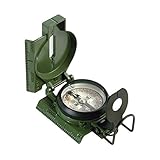
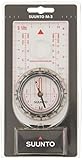
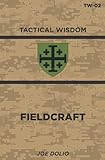
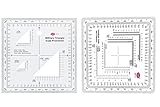


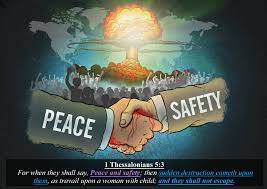

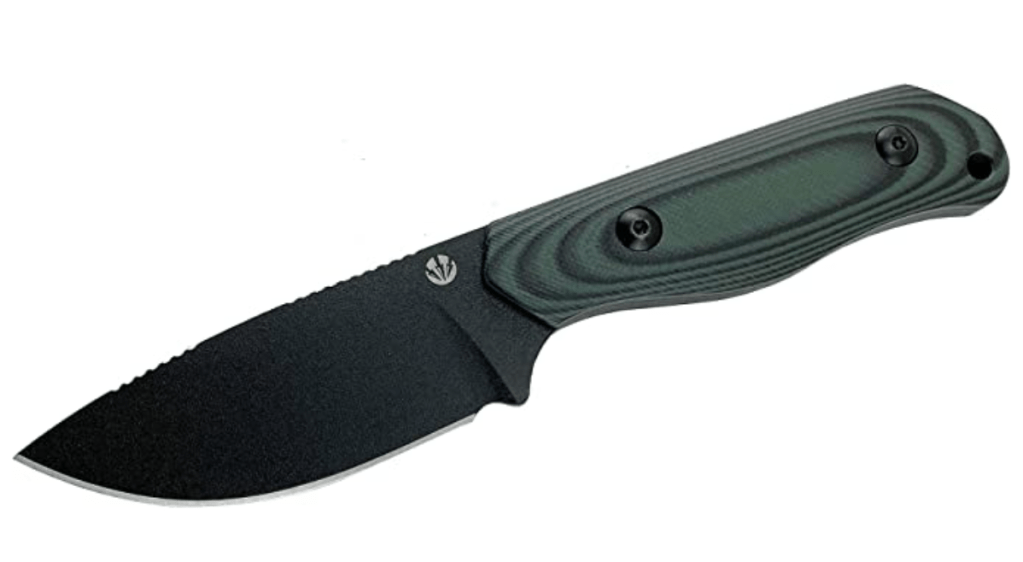


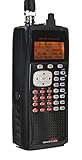
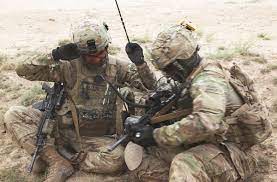
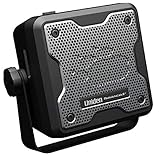

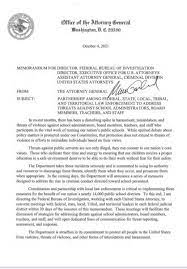

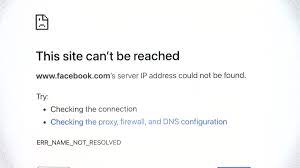
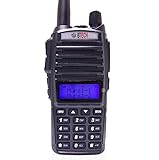

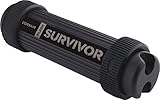

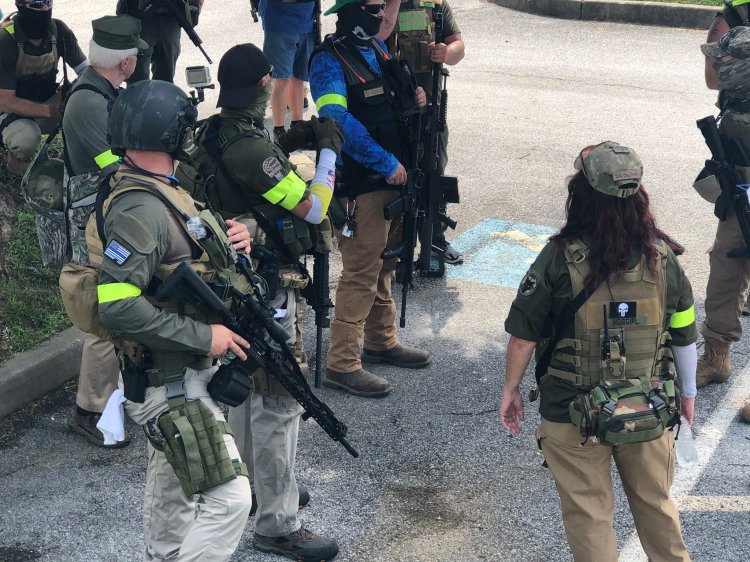

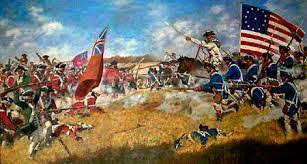
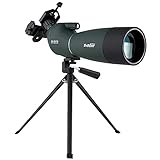


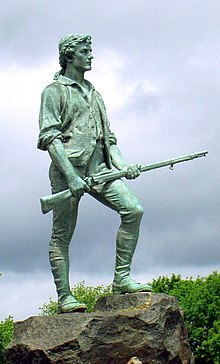

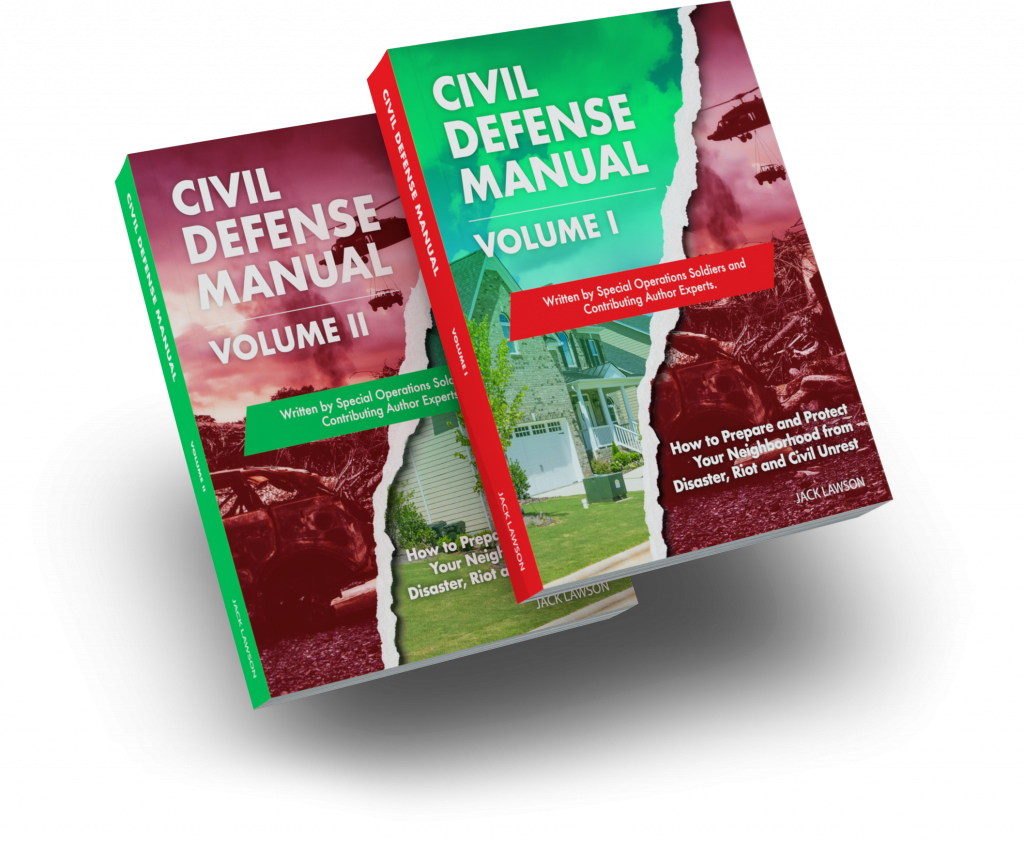


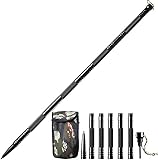
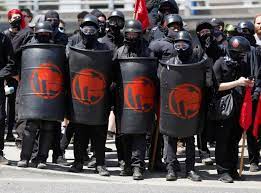

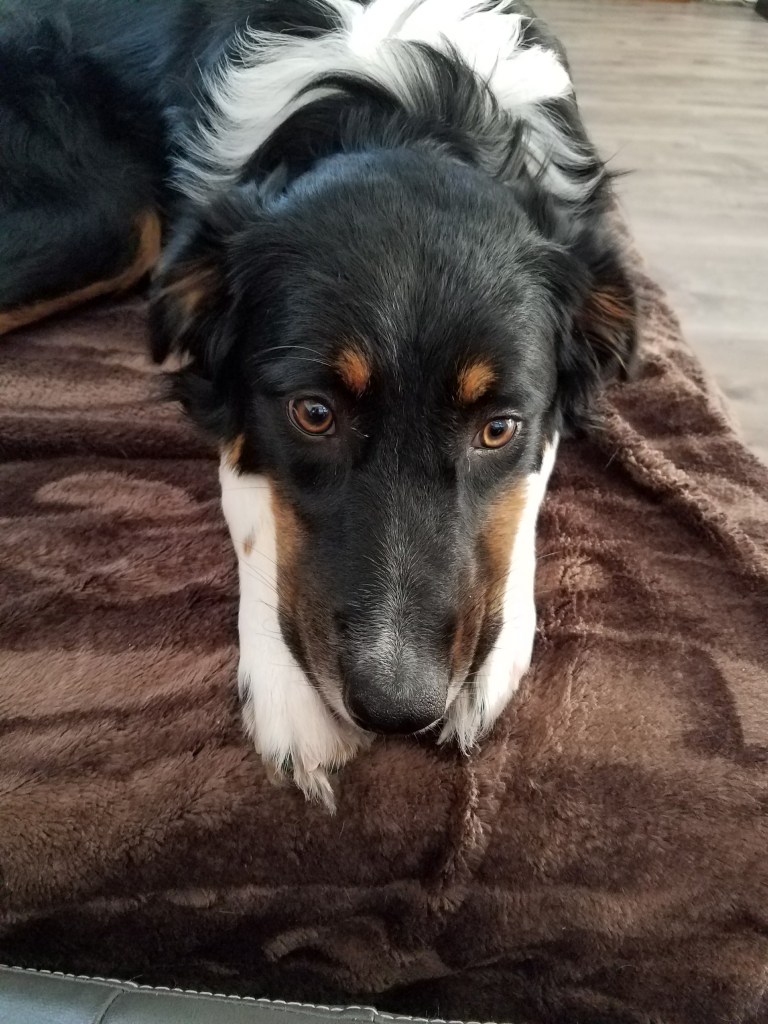

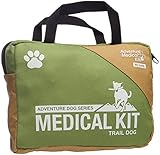
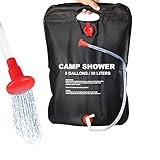



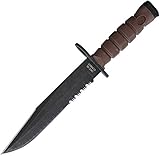
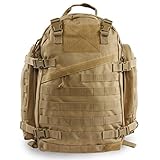




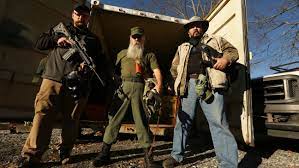

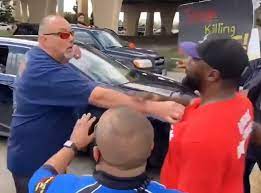


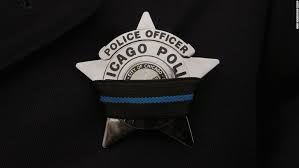

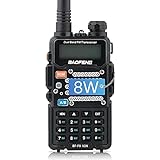

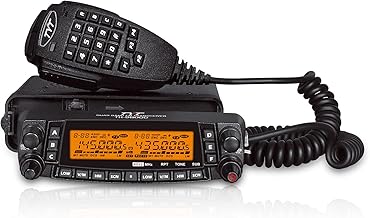






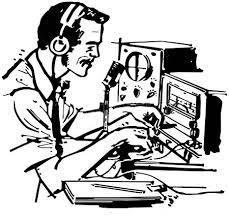
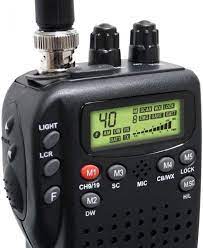
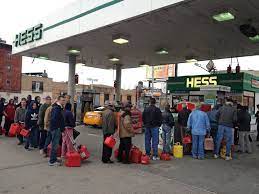
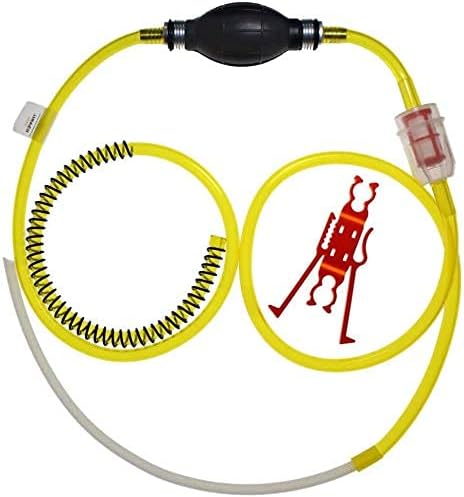
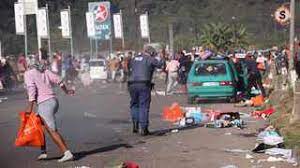


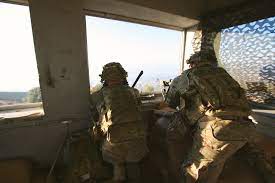

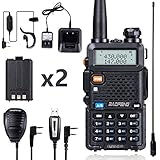

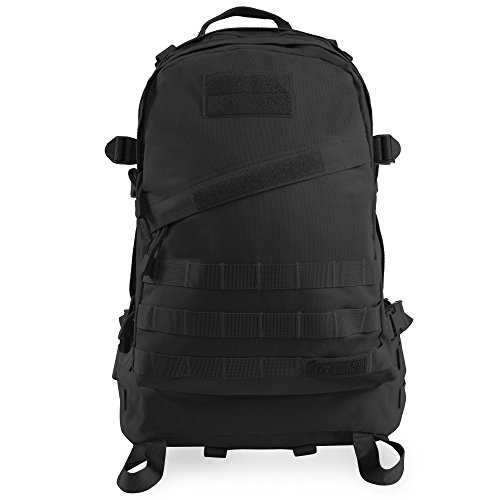

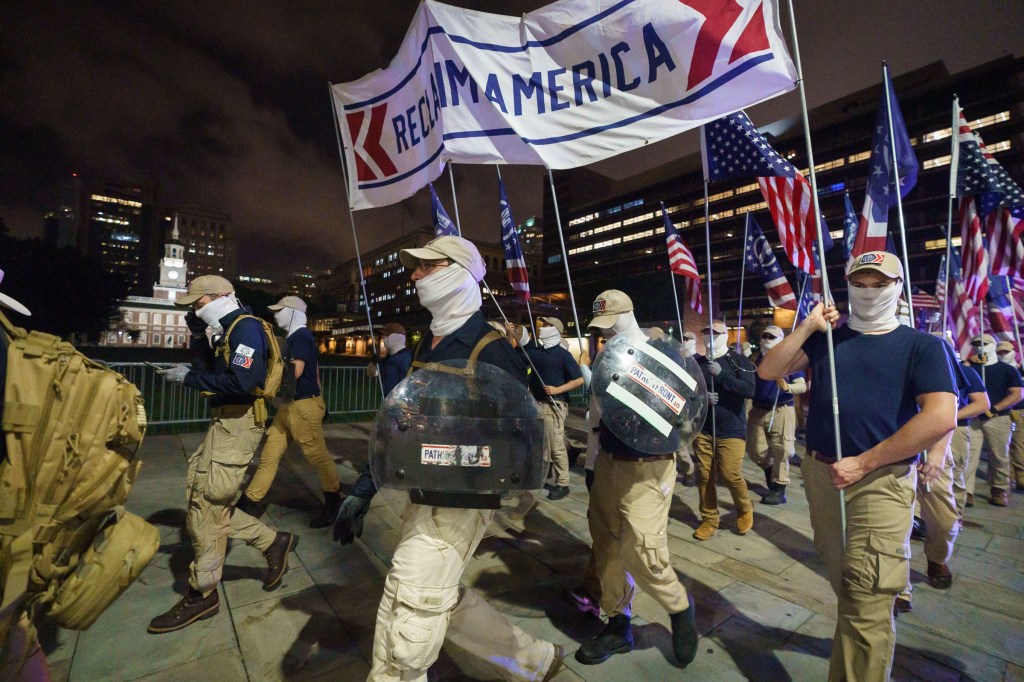





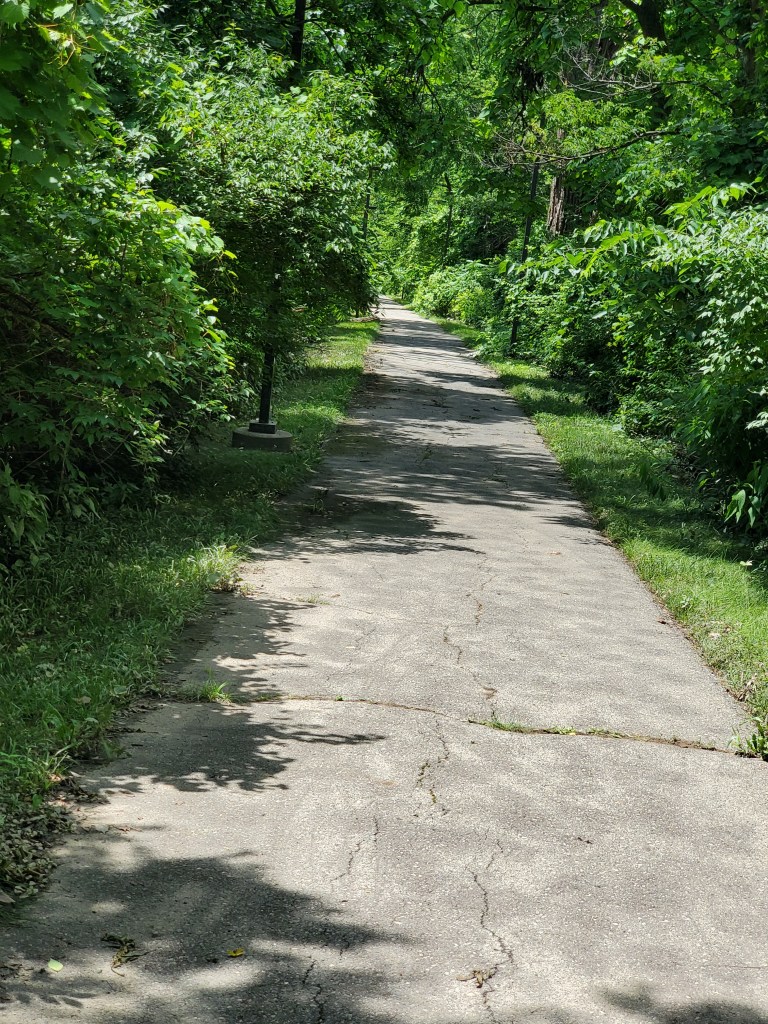
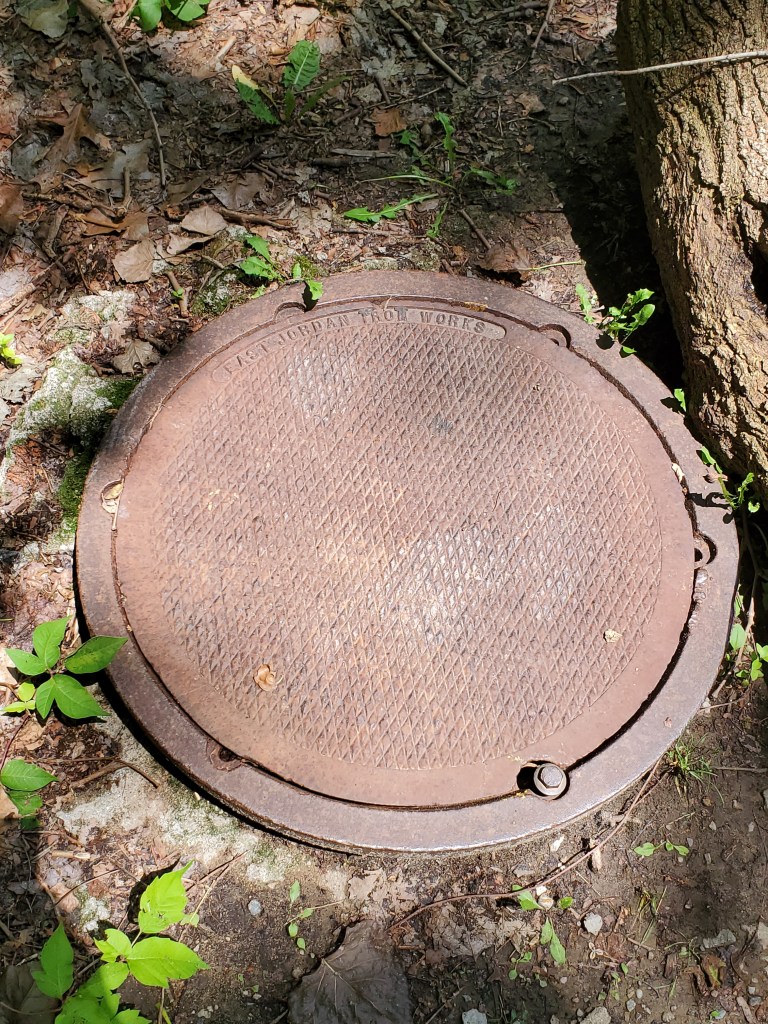



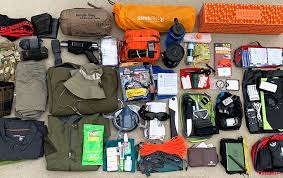
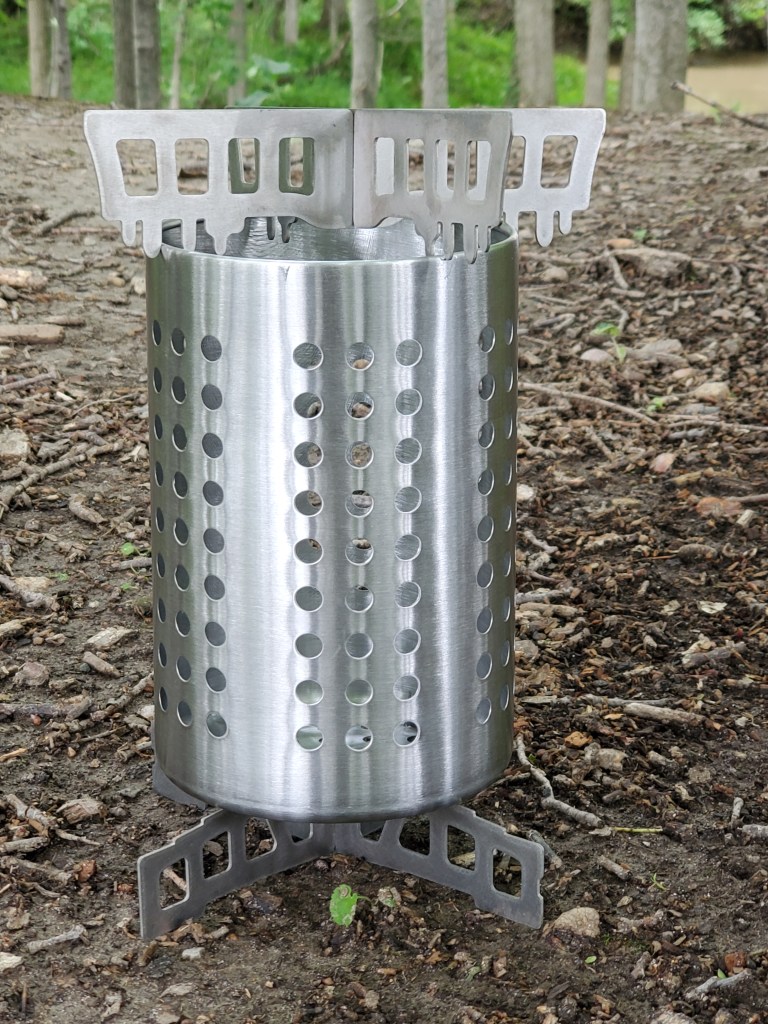
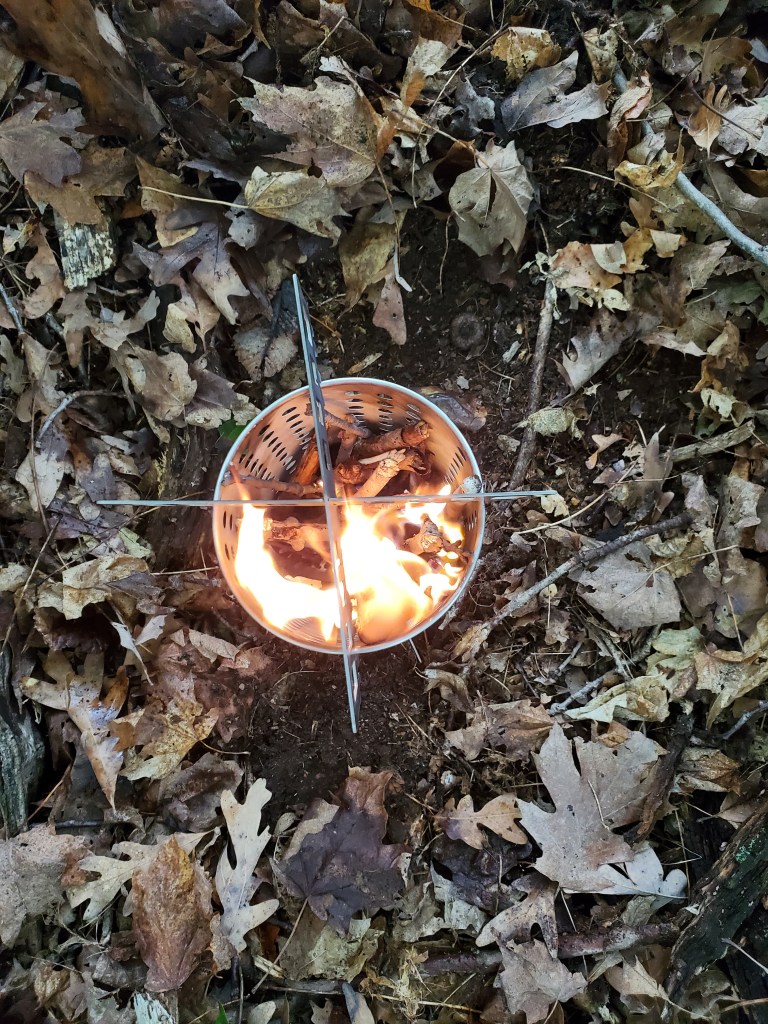
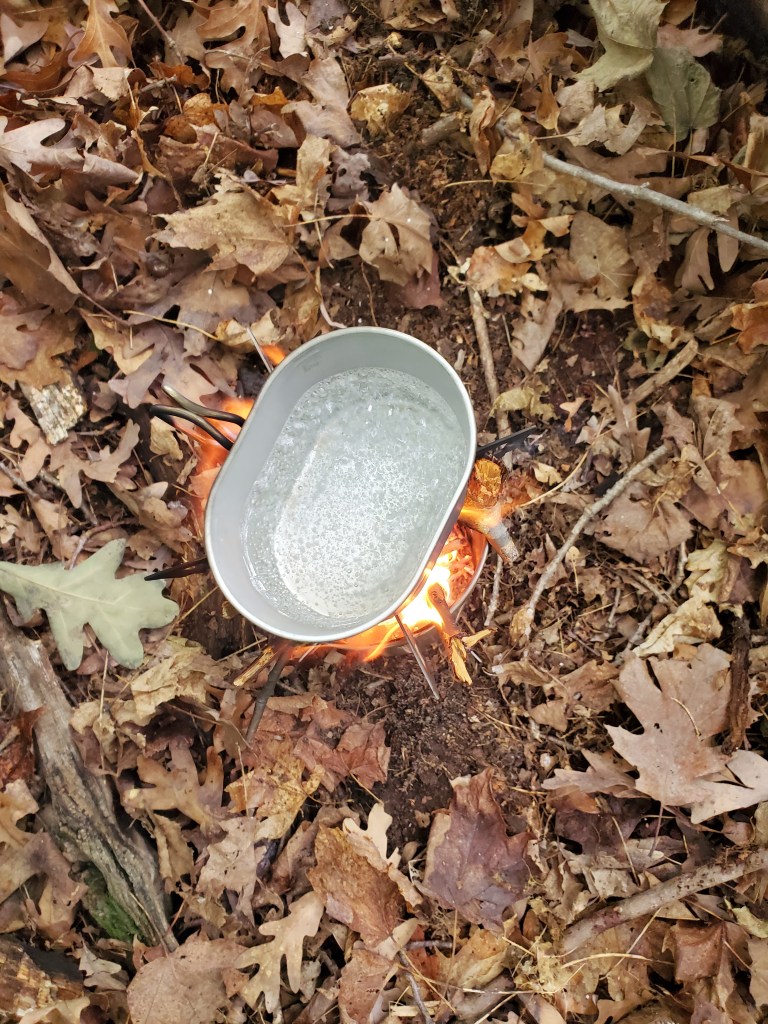


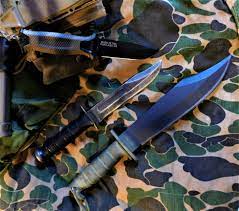
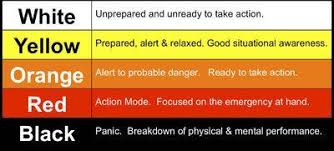
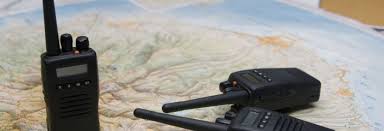







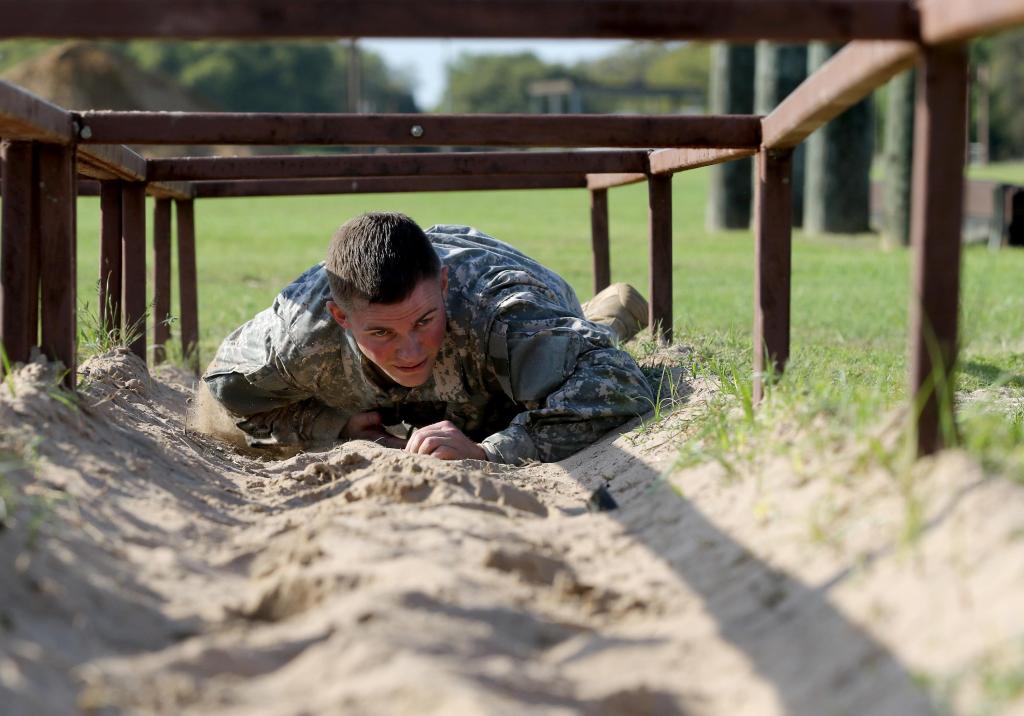
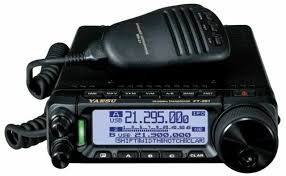
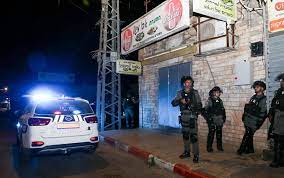
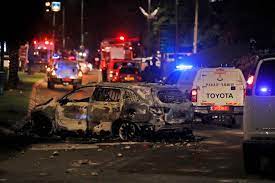

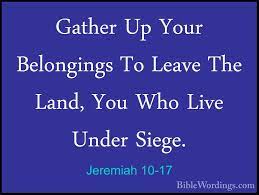

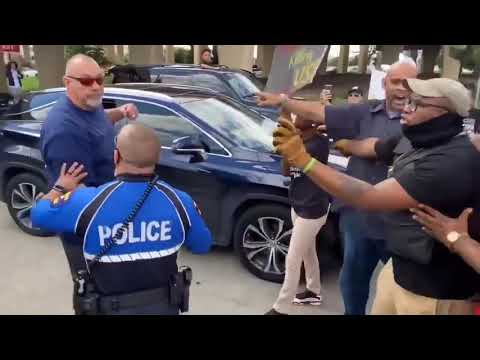
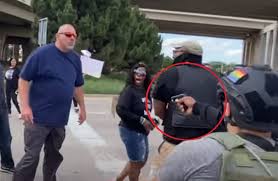
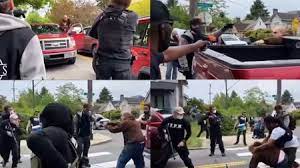
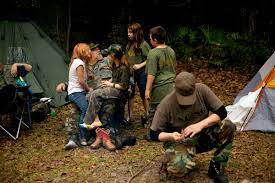

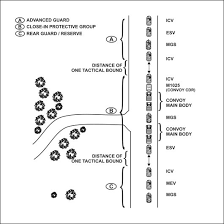
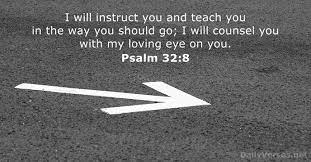
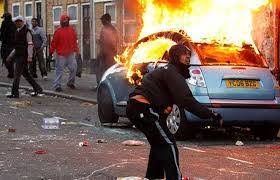
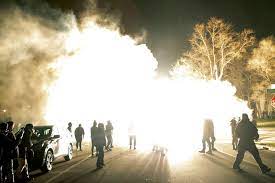

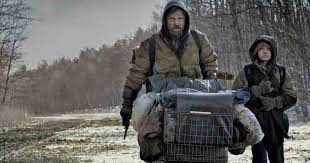

 Tactical Wisdom